
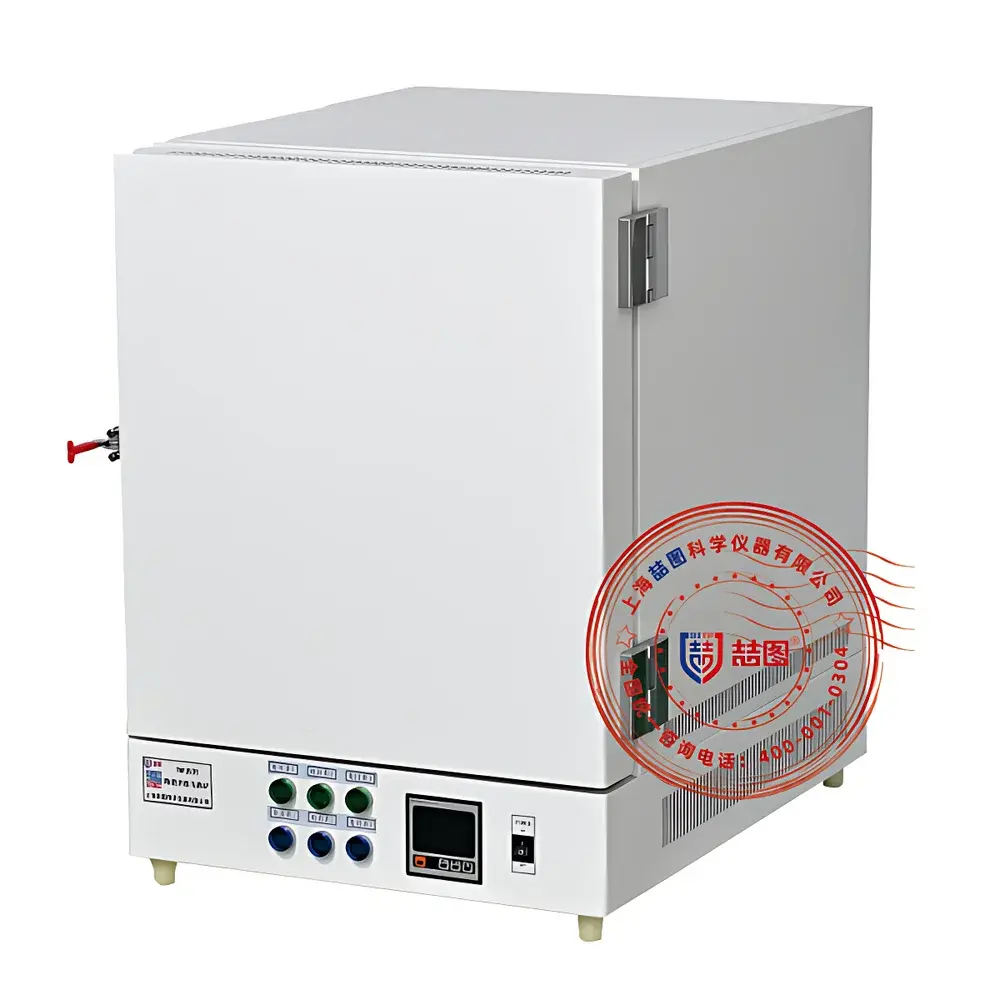
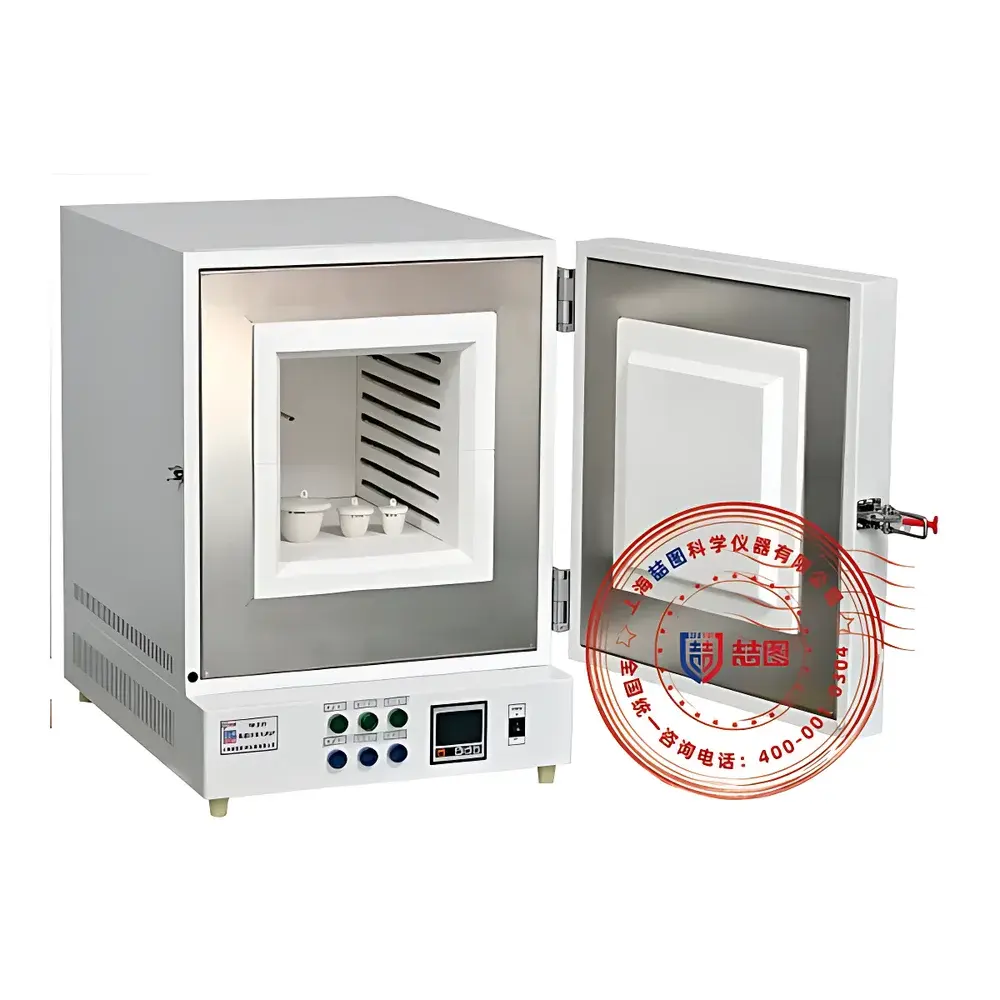
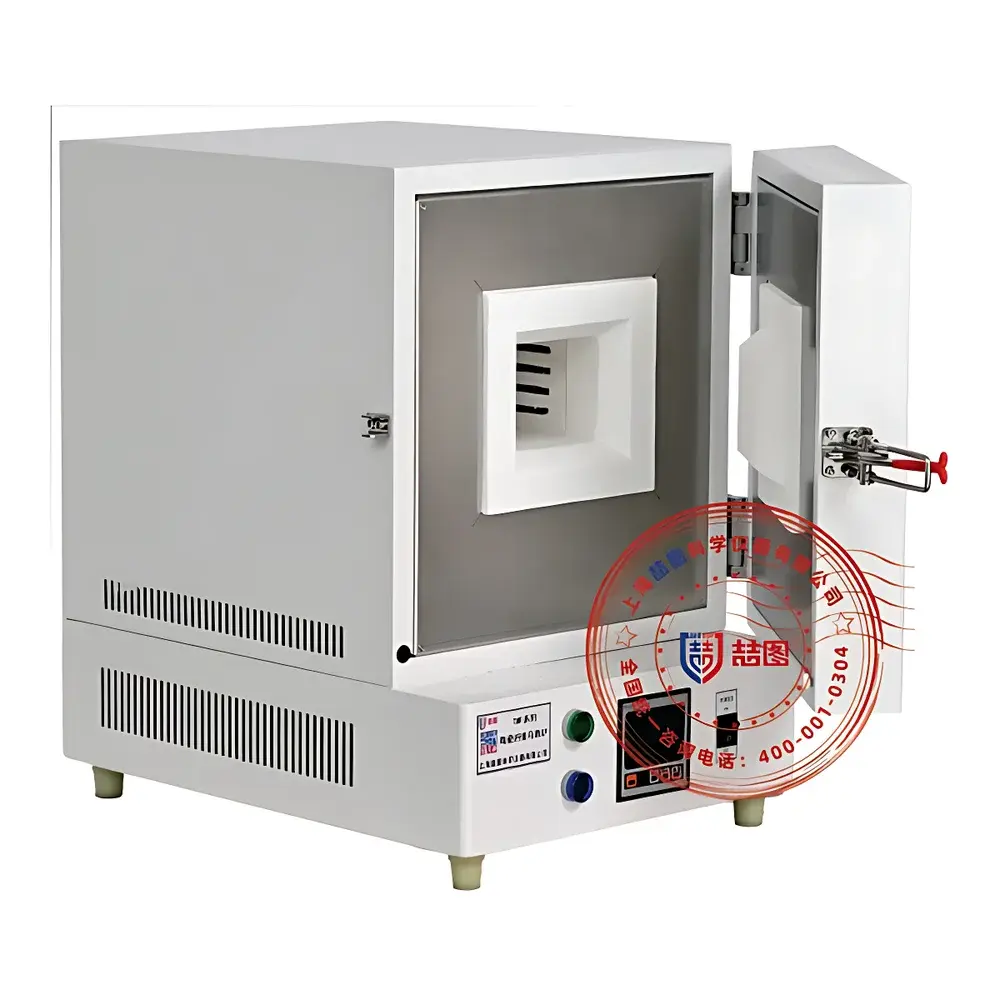
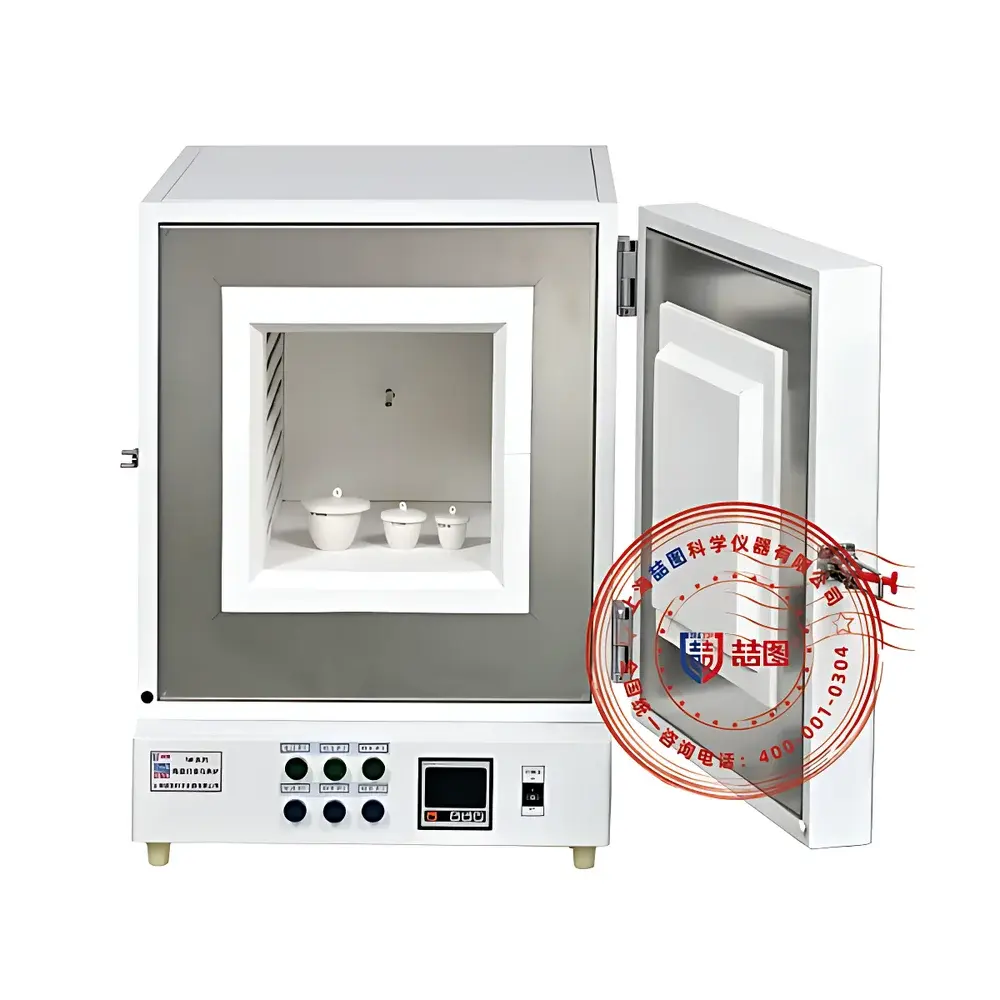
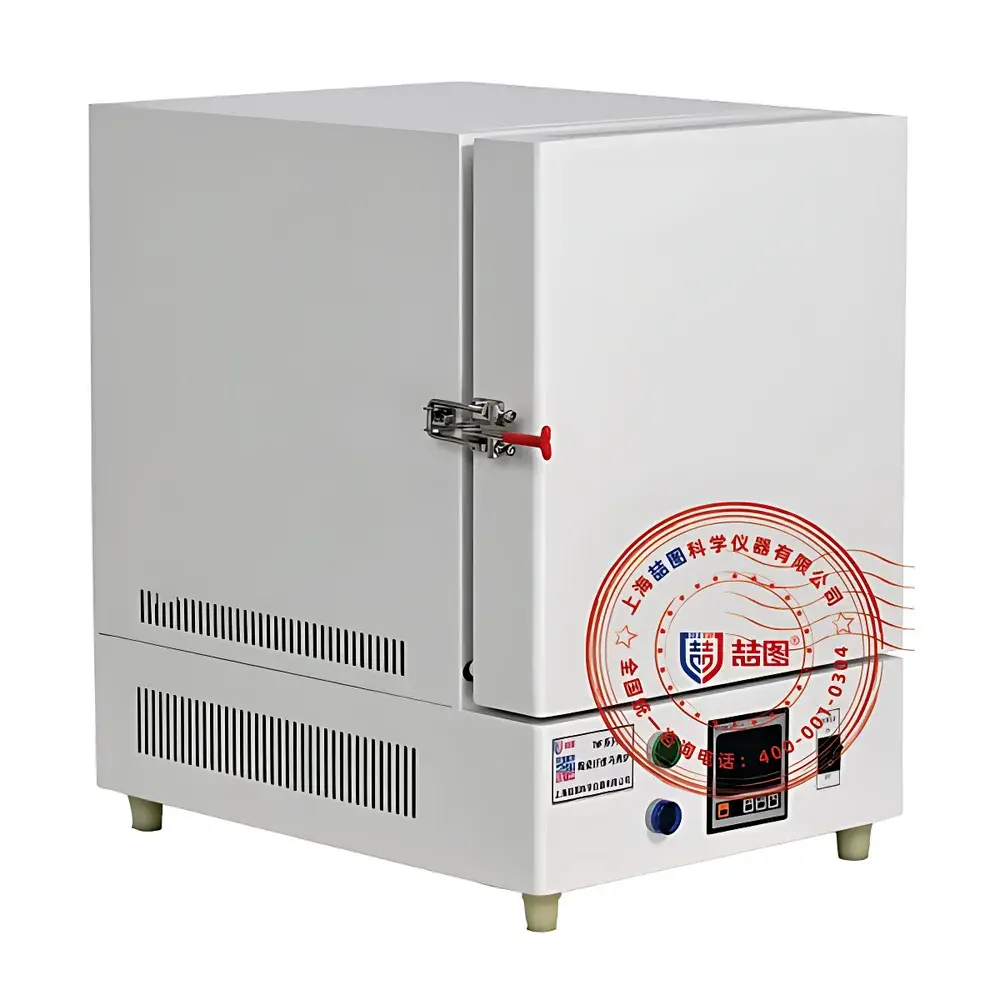
DRETOP TMF-16-12T Ceramic Fiber Muffle Furnace
| Brand | DRETOP |
|---|---|
| Origin | Shanghai, China |
| Manufacturer Type | Direct Manufacturer |
| Product Category | Domestic |
| Model | TMF-16-12T |
| Instrument Type | Box-Type Muffle Furnace |
| Maximum Temperature | 1200°C |
| Temperature Control Accuracy | ±1°C |
| Rated Power | 9 kW |
| Heating Time to Max Temp | 45 min |
| Heating Element Material | High-Temperature Alloy |
| Internal Dimensions (W×D×H) | 250 × 400 × 160 mm |
| Control System | Microcomputer-Based PID Controller |
| Nominal Chamber Volume | 16 L |
Overview
The DRETOP TMF-16-12T Ceramic Fiber Muffle Furnace is a high-performance box-type laboratory furnace engineered for rapid thermal processing under controlled atmospheric conditions. Designed around advanced ceramic fiber insulation and triple-wall heating architecture, it delivers exceptional thermal efficiency, uniform temperature distribution, and precise thermal stability—critical for applications demanding reproducible heat treatment cycles in materials science, metallurgy, ceramics, and analytical chemistry laboratories. Unlike traditional refractory-brick furnaces, the TMF-16-12T employs vacuum-microporous ceramic fiber boards with low thermal mass and high emissivity, enabling rapid heating rates (≤45 minutes to 1200°C) while minimizing standby energy consumption. Its muffle configuration isolates samples from direct contact with heating elements and combustion byproducts, ensuring contamination-free thermal environments suitable for ashing, calcination, sintering, annealing, and thermal gravimetric pre-treatment per ASTM E1131, ISO 1171, and USP .
Key Features
- Triple-surface heating system with helically wound high-temperature alloy heating elements embedded in all three chamber walls—ensuring radial and axial thermal symmetry and ≤±1.5°C uniformity across the 16 L working volume at 1200°C.
- Microcomputer-based PID controller with large-backlit LCD interface; supports 30-segment programmable ramp-soak profiles, automatic power cutoff on door opening, and power-loss memory retention compliant with GLP audit trail requirements.
- Dual-stage overtemperature protection: primary electronic limit (adjustable up to 1250°C) and secondary independent mechanical cut-off; integrated voltage/current digital meters for real-time electrical diagnostics.
- Ergonomic front-loading design with reinforced stainless-steel door seal, dual-latch mechanism, and internal heat-shield baffle—reducing radiant loss at the aperture and maintaining ≥92% thermal retention during repeated access cycles.
- Structural integrity optimized for long-term cyclic operation: phosphate-conversion coated steel housing with high-temp epoxy powder coating; ceramic fiber module joints engineered to resist thermal fatigue and microcracking after >5,000 cycles at 1200°C.
Sample Compatibility & Compliance
The TMF-16-12T accommodates standard crucibles (alumina, quartz, silicon carbide), ceramic setters, metal trays, and inert sample boats up to 230 mm wide × 380 mm deep × 140 mm tall. Its sealed muffle chamber supports ambient air, inert gas purging (via optional N₂/Ar inlet valve), or low-oxygen operation—enabling controlled oxidation state management for battery cathode synthesis, catalyst activation, and oxide phase stabilization. The furnace meets IEC 61000-6-3 (EMC emission limits), UL 61010-1 (safety for lab equipment), and complies with FDA 21 CFR Part 11 when paired with TC-series color touchscreen controllers featuring user-level access control, electronic signature capability, and encrypted data logging.
Software & Data Management
Standard T-series models feature non-volatile profile storage (≥100 programs) and RS485 Modbus RTU communication for integration into centralized lab automation systems. Optional TC-series color touchscreens (available as retrofit) provide real-time temperature curve visualization, multi-tier password-protected engineering mode (admin/operator/technician), CSV export via USB, and time-stamped event logs—including door open/close timestamps, alarm triggers, and setpoint modifications. All firmware adheres to ISO/IEC 17025 documentation standards for calibration traceability and supports NIST-traceable thermocouple verification protocols.
Applications
- Quantitative ash content determination (AOAC 942.05, ASTM D3174) and loss-on-ignition (LOI) analysis in geological and environmental samples.
- Pre-sintering of LiCoO₂, NMC, and LFP cathode precursors under controlled O₂ partial pressure; post-annealing of transparent conducting oxides (e.g., ITO, FTO).
- Thermal dissociation of carbonates (CaCO₃ → CaO + CO₂) and sulfates in cement and metallurgical feedstock QA/QC workflows.
- Stress-relief annealing of precision machined tool steels and normalization of aluminum alloys prior to metallographic sectioning.
- Rapid thermal processing (RTP) of nanoparticle dispersions for crystallinity enhancement without agglomeration—leveraging low thermal inertia and minimized thermal gradients.
FAQ
What is the maximum recommended continuous operating temperature?
The TMF-16-12T is rated for continuous operation at 1200°C; extended exposure above this threshold may accelerate ceramic fiber degradation and compromise dimensional stability.
Can the furnace be used under inert or reducing atmospheres?
Yes—when equipped with the optional inert gas inlet valve and exhaust chimney, it supports N₂, Ar, or forming gas (5% H₂/95% N₂) purging; however, H₂ service requires additional leak testing and ventilation compliance per NFPA 55.
Is calibration certificate included with shipment?
A factory-as-tested calibration report (covering thermocouple linearity, controller accuracy, and uniformity mapping at 600°C/900°C/1200°C) is provided; UKAS-accredited third-party certification is available upon request.
How does the door-open safety interlock function?
Mechanical microswitches instantly de-energize all heating zones upon door displacement >2 mm; full power resumes only after door reseating and manual reset confirmation on the controller interface.
What maintenance intervals are recommended for optimal performance?
Ceramic fiber integrity inspection every 500 operating hours; thermocouple verification every 1000 hours or per ISO/IEC 17025 internal audit schedule; heating element resistance measurement semiannually.



