
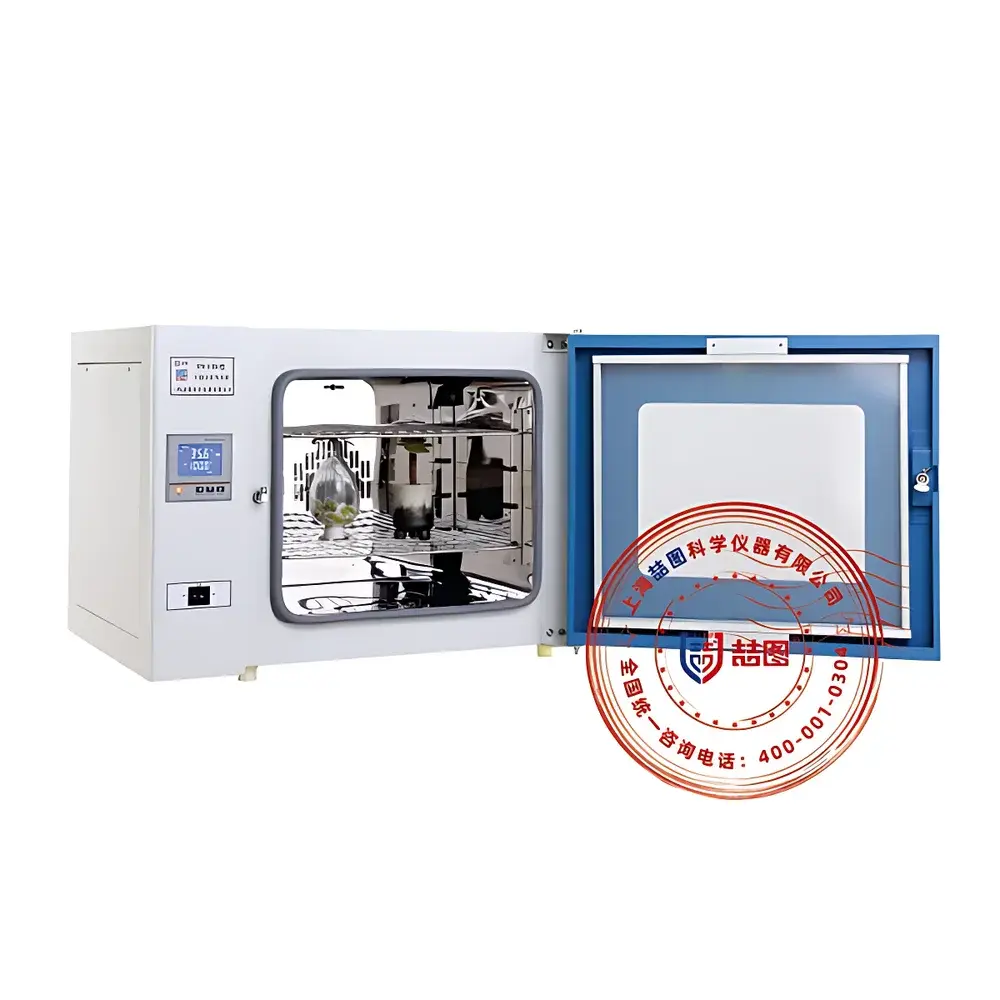
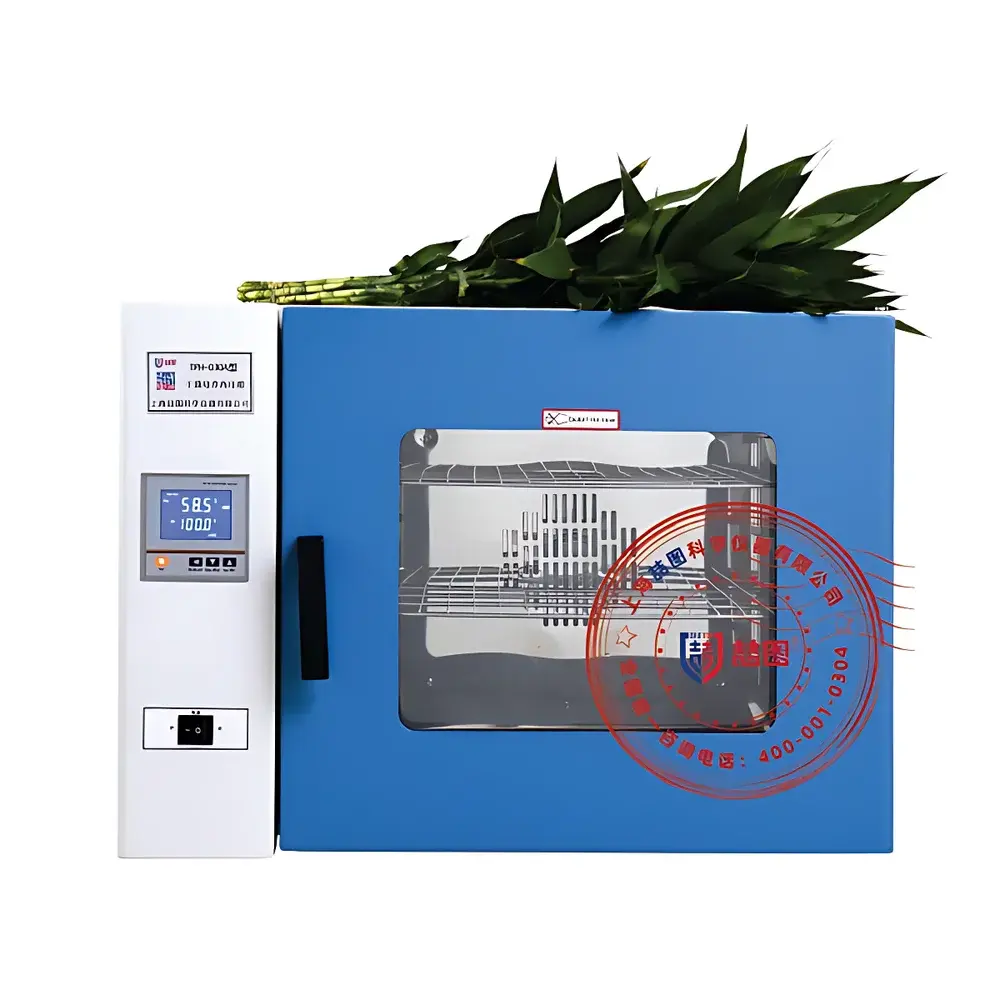
DRETOP TPH-70A Dual-Mode Dry Heat Sterilizer & Incubator
| Brand | DRETOP |
|---|---|
| Origin | Shanghai, China |
| Model | TPH-70A |
| Power Supply | AC 220 V, 50 Hz |
| Temperature Range | RT+5°C to 80°C (Incubation Mode) / 80°C to 250°C (Dry Heat Sterilization Mode) |
| Temperature Uniformity | ±0.5°C (Incubation), ±1°C (Sterilization) |
| Temperature Resolution | 0.1°C |
| Input Power | 1550 W |
| Chamber Dimensions (W×D×H) | 450 × 400 × 450 mm |
| External Dimensions (W×D×H) | 735 × 520 × 635 mm |
| Nominal Volume | 70 L |
| Standard Shelving | 2 adjustable stainless steel trays |
| Insulation | High-density glass fiber |
| Door Seal | High-temperature resistant silicone rubber |
| Control System | Microprocessor-based PID controller with LCD display, timer, and self-diagnostic function |
| Safety Features | Independent over-temperature cutoff, leakage protection, short-circuit protection, thermal overload protection, data retention during power failure |
| Optional Accessories | USB data export interface, programmable multi-segment controller, RS-485 communication port, thermal printer interface, color touch screen upgrade |
Overview
The DRETOP TPH-70A Dual-Mode Dry Heat Sterilizer & Incubator is an engineered laboratory chamber designed to fulfill two distinct yet complementary thermal functions within a single robust platform: precise low-temperature incubation for microbiological growth and high-temperature dry heat sterilization for depyrogenation and microbial inactivation. Unlike conventional ovens or incubators, the TPH-70A employs forced-air convection with optimized airflow routing—featuring a rear-mounted circulation fan and dedicated thermal ducts—to ensure uniform temperature distribution across its 70 L stainless steel chamber. Its operational duality stems from a programmable mode-switching threshold: below 80°C, the unit operates under tightly controlled incubation parameters (±0.5°C stability); above 80°C, it transitions into dry heat sterilization mode (±1°C stability), where sustained exposure to hot, moisture-free air induces irreversible oxidative damage to microbial cellular components—including lipid peroxidation, protein denaturation, and nucleic acid degradation—rendering spores and vegetative cells nonviable. This dual capability eliminates the need for separate equipment in resource-constrained labs, particularly in academic research facilities, QC laboratories, and small-scale pharmaceutical production environments where glassware, metal instruments, and anhydrous materials (e.g., oils, waxes, and powder APIs) require validated thermal processing.
Key Features
- Microprocessor-controlled PID temperature regulation with 0.1°C resolution, real-time deviation monitoring, and automatic alarm triggering upon exceeding user-defined safety limits.
- Large-format backlit LCD interface displaying simultaneous readings of setpoint, actual temperature, elapsed time, and fault codes—enabling rapid troubleshooting without external diagnostics.
- Double-layer insulated chamber construction: inner 304 stainless steel lining with seamless welding, outer electrostatically sprayed cold-rolled steel shell, and high-efficiency glass fiber insulation minimizing thermal loss and improving energy efficiency.
- Reinforced double-gasketed door with high-temperature silicone rubber seal and dual-stage zinc alloy latch mechanism ensuring long-term compression integrity and optimal thermal containment up to 250°C.
- Adjustable stainless steel shelving system (2 standard trays included) with tool-free vertical positioning—supporting flexible load configuration and unrestricted airflow beneath and between samples.
- Integrated safety architecture including independent mechanical over-temperature cut-off, earth leakage circuit breaker, current-limiting thermal fuses, and non-volatile memory preserving all settings and runtime logs after unexpected power interruption.
Sample Compatibility & Compliance
The TPH-70A is validated for use with heat-stable, non-volatile materials that cannot tolerate steam or moist heat. It complies with core principles outlined in ISO 17665-1 (sterilization by moist heat) by contrast—emphasizing dry heat validation per ISO 15883-5 and ASTM E530 (standard guide for dry heat sterilization). Typical compatible items include borosilicate glassware (Petri dishes, pipettes, test tubes), stainless steel surgical instruments, platinum crucibles, anhydrous ointment bases, mineral oil carriers, and powdered excipients. It is explicitly unsuitable for polymeric materials (e.g., PVC, PE, silicone elastomers), thermolabile active pharmaceutical ingredients (APIs), or biological reagents subject to thermal degradation below 100°C. The chamber’s absence of condensation and residual humidity ensures compatibility with USP requirements for depyrogenation of glass containers used in parenteral manufacturing, provided cycle parameters (time/temperature profiles) are qualified per internal SOPs aligned with FDA 21 CFR Part 211 and EU GMP Annex 1.
Software & Data Management
While the base configuration features embedded firmware with local logging capacity, optional digital enhancements extend regulatory readiness and traceability. The USB data export module enables secure transfer of temperature/time records to external U-disks in CSV format—facilitating offline analysis and audit preparation. For GLP/GMP-aligned workflows, the RS-485 serial interface supports integration with centralized Lab Information Management Systems (LIMS) or SCADA platforms, enabling remote monitoring, automated report generation, and electronic signature-capable recordkeeping. An optional color touchscreen controller adds multi-segment programmability (up to 30 steps), real-time trend visualization, and 21 CFR Part 11-compliant audit trail functionality—including operator ID tagging, parameter change history, and tamper-proof timestamping of all critical events.
Applications
- Sterilization of reusable laboratory glassware and metallic tools prior to aseptic procedures in microbiology and cell culture labs.
- Depyrogenation of vials, ampoules, and stoppers in pre-formulation development and sterile manufacturing support.
- Moisture removal from hygroscopic powders, catalysts, and desiccants without chemical alteration.
- Accelerated stability testing of temperature-resistant formulations under controlled dry conditions.
- Baking-out of analytical sample holders (e.g., TGA pans, FTIR plates) to eliminate organic residues before instrumental analysis.
- Low-temperature incubation of fungal cultures, enzyme assays, or biochemical reactions requiring stable ambient-to-moderate heat environments (RT+5°C to 80°C).
FAQ
What is the maximum validated sterilization temperature for the TPH-70A?
The chamber is rated for continuous operation up to 250°C, with full thermal stability and uniformity verified per manufacturer calibration protocols at this upper limit.
Can the TPH-70A be used for sterilizing plastic labware?
No. Most thermoplastics deform or release volatile compounds above 80°C; the unit is intended exclusively for metal, glass, and ceramic substrates.
Is the temperature uniformity specification guaranteed across the entire chamber volume?
Yes—uniformity of ±0.5°C (incubation) and ±1°C (sterilization) refers to spatial variation measured at nine standardized locations per ICH Q5C and ISO 14644-3 guidelines.
Does the device support IQ/OQ/PQ documentation packages?
DRETOP provides factory calibration certificates and configurable test protocols; full qualification support (including protocol templates and execution guidance) is available upon request for regulated users.
How frequently should the door gasket be replaced?
Under normal usage (≤200°C, ≤2 cycles/day), the silicone seal maintains functional integrity for ≥24 months; visual inspection for cracking or compression set is recommended quarterly.



