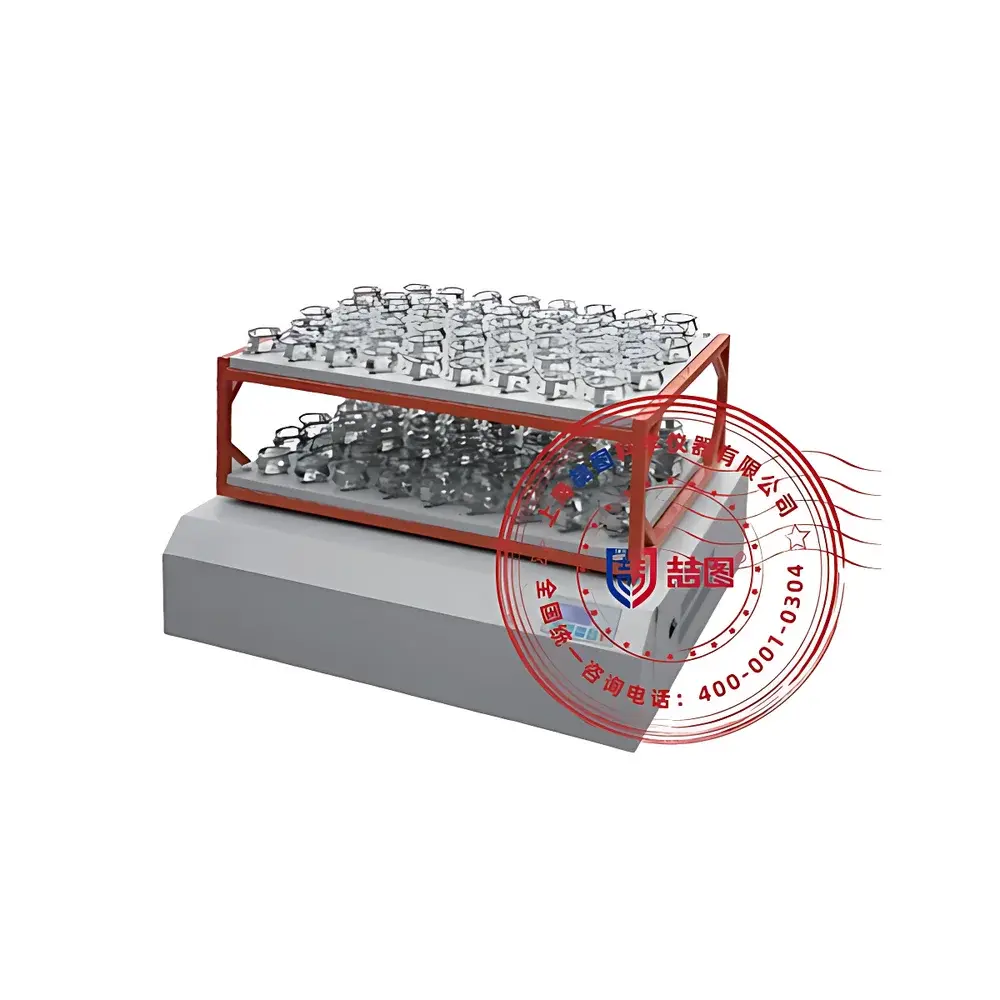
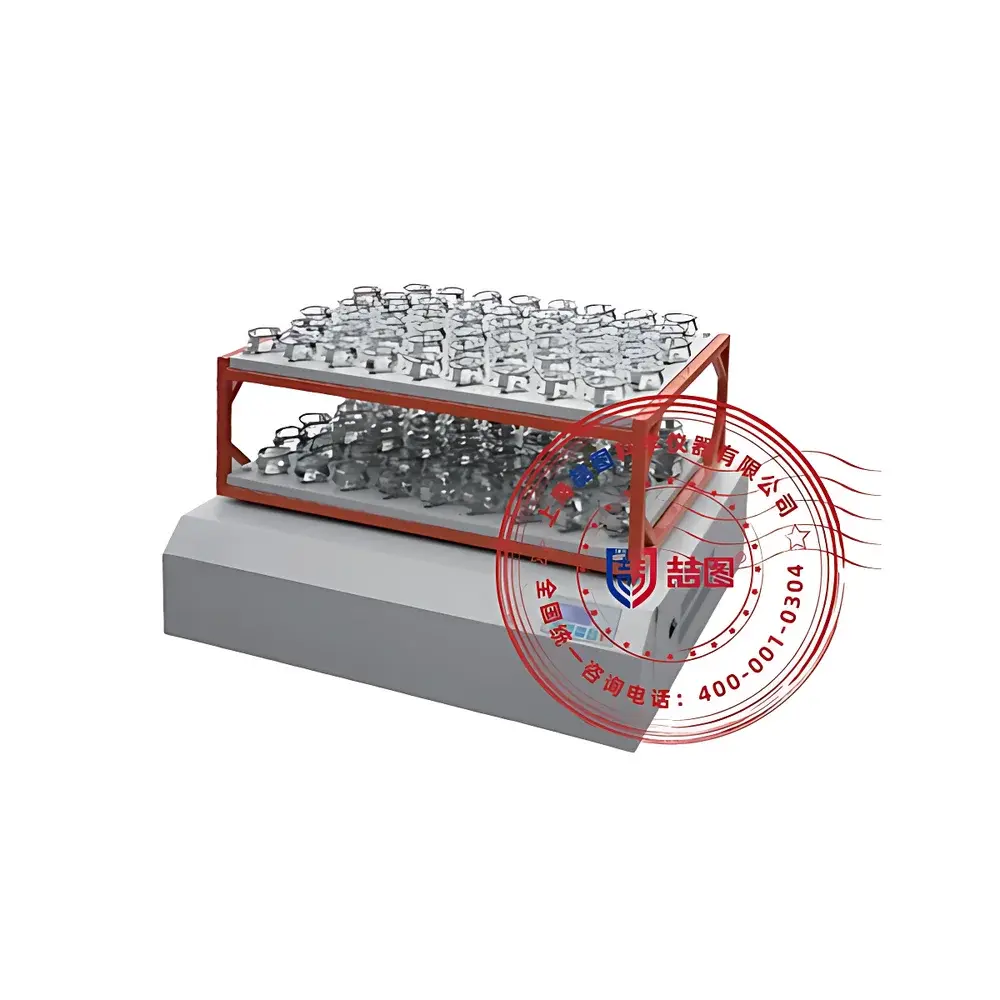
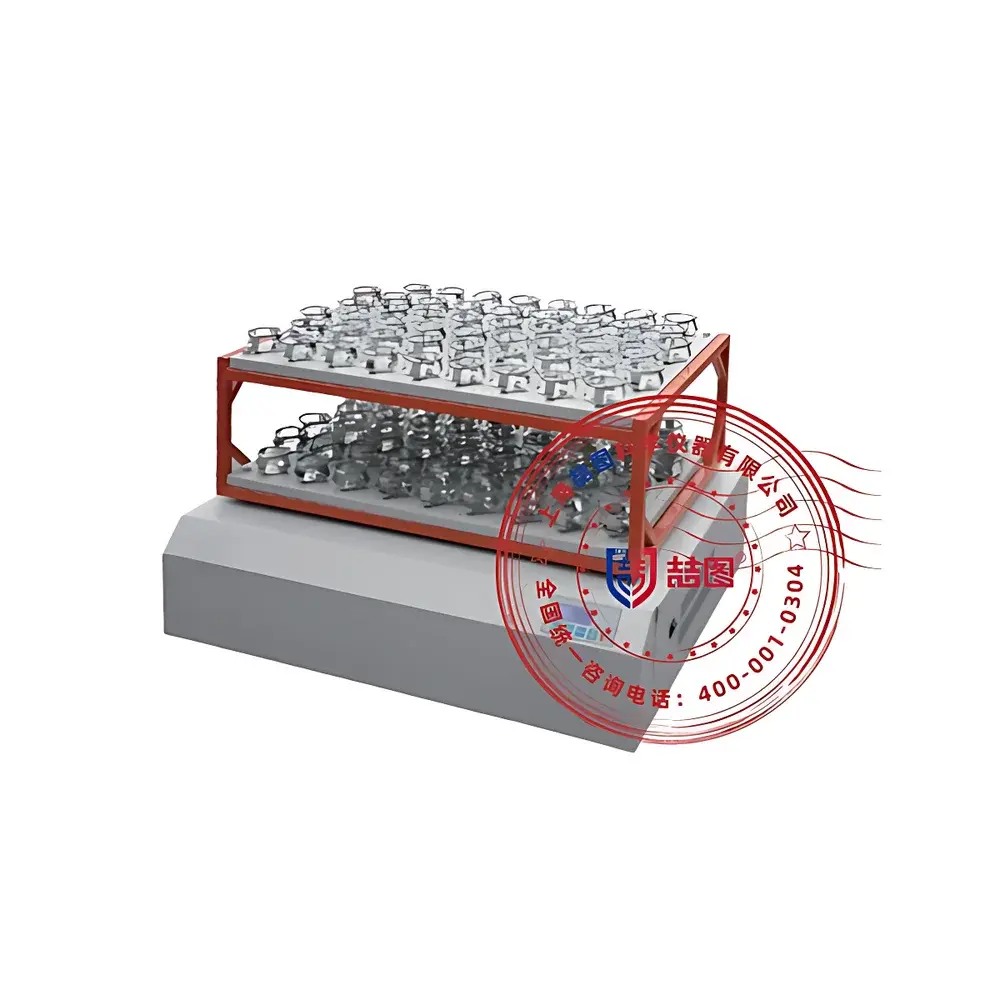
DRETOP TRB-4540-II Open-Deck Orbital Shaker
| Brand | DRETOP |
|---|---|
| Origin | Shanghai, China |
| Model | TRB-4540-II |
| Timer Range | 1–999 min |
| Oscillation Frequency | 40–300 rpm |
| Orbit Diameter | 26 mm (customizable to 35 mm) |
| Temperature Control | Ambient-only |
| Platform Quantity | 2 independently usable platforms |
| Drive Mechanism | Precision-machined 3D eccentric shaft drive |
| Display | LED-backlit LCD with real-time parameter monitoring |
| Control Interface | Touch-sensitive membrane keys |
| Power Supply | AC 220 V, 50 Hz |
| Compliance | Designed for GLP-aligned laboratory workflows |
Overview
The DRETOP TRB-4540-II Open-Deck Orbital Shaker is an engineered solution for high-throughput, reproducible orbital agitation in life science laboratories and bioprocess development environments. Operating on the principle of controlled circular motion—specifically, horizontal orbital oscillation with a fixed 26 mm diameter path—the instrument delivers uniform mixing, suspension, and aeration across multiple vessel types without mechanical coupling or sealed chamber constraints. Its open-deck architecture enables rapid tray exchange, direct visual monitoring of culture conditions, and seamless integration with ambient-temperature incubation workflows. Unlike enclosed shakers, this design eliminates thermal buildup and facilitates compatibility with external environmental control systems (e.g., CO2 cabinets or humidity-controlled rooms), making it especially suited for aerobic microbial cultivation, enzyme kinetics assays, hybridization protocols, and cell-based screening where sterility maintenance and operator accessibility are prioritized.
Key Features
- Dual independent platforms: Two removable, interchangeable stainless-steel trays (450 × 400 mm each) allow concurrent operation of heterogeneous sample sets—e.g., bacterial cultures on one platform and mammalian cell suspensions on the other—with independent speed verification (though speed is synchronized via single controller).
- Precision 3D eccentric shaft drive: A monolithic, CNC-machined camshaft system ensures smooth acceleration from rest to target rpm, minimizing transient shear stress on sensitive biological samples during startup and deceleration phases.
- Intelligent parameter retention: Non-volatile memory preserves user-defined settings—including speed, timer duration, and last-used mode—across power interruptions or system resets, eliminating reconfiguration delays and reducing procedural variability.
- Real-time operational transparency: Backlit LCD interface displays both setpoints (target rpm, remaining time) and live feedback (actual rpm ±2 rpm accuracy, elapsed time), supporting protocol adherence and troubleshooting without interrupting operation.
- Touch-sensitive ergonomic controls: Sealed membrane keypad resists liquid ingress and repeated disinfection cycles, complying with common lab decontamination protocols (e.g., 70% ethanol, quaternary ammonium wipes).
Sample Compatibility & Compliance
The TRB-4540-II accommodates standard laboratory vessels including Erlenmeyer flasks (up to 2 L), test tubes (15–50 mL), deep-well microplates, and custom bioreactor bags mounted on rigid carriers. Its flat, non-perforated deck surface provides stable support for adhesive matting or universal clamping fixtures. The unit conforms to IEC 61010-1:2010 safety standards for electrical equipment used in laboratory environments. While not temperature-regulated, its ambient-only operation aligns with ASTM E2500-13 guidance for qualification of non-critical instrumentation, and its parameter logging capability supports traceability requirements under FDA 21 CFR Part 11 when paired with validated third-party data capture software.
Software & Data Management
The TRB-4540-II operates as a standalone hardware platform with no embedded firmware-based data export. However, its consistent analog signal output (0–10 V DC proportional to actual rpm) enables connection to external data loggers or SCADA systems for continuous speed monitoring and long-term trend analysis. For regulated environments, users may integrate the shaker into electronic lab notebook (ELN) workflows via manual entry of run parameters and timestamps—consistent with ALCOA+ principles (Attributable, Legible, Contemporaneous, Original, Accurate, Complete, Consistent, Enduring, Available). Optional RS-232/USB interface modules (sold separately) provide ASCII command-line control for automated script execution in Python- or LabVIEW-driven validation protocols.
Applications
- Bacterial and yeast fermentation optimization under ambient aeration conditions
- Antibody-antigen binding kinetics in microplate-based ELISA development
- Suspension culture maintenance of insect or CHO cells prior to bioreactor inoculation
- Soil microbiome extraction and nutrient solubilization assays in environmental research
- Pre-analytical sample homogenization for downstream qPCR or HPLC analysis
- Quality control testing of media sterility and growth performance in pharmaceutical manufacturing
FAQ
Is the TRB-4540-II suitable for use inside a CO2 incubator?
Yes—its open-deck design, absence of internal electronics or heat-generating components, and compact height (450 mm) allow safe placement within most standard CO2 incubators, provided the unit remains level and airflow is unobstructed.
Can the orbit diameter be modified in the field?
The standard 26 mm orbit is mechanically fixed; however, DRETOP offers factory-modified units with 35 mm orbit upon order specification—this requires recalibration and updated documentation per ISO/IEC 17025 Clause 6.4.3.
Does the shaker support password-protected parameter locking?
No native password function exists; however, the unit’s parameter encryption logic prevents unauthorized modification during active runs, and physical key-lock covers (optional accessory) can restrict access to control buttons.
What is the maximum load capacity per platform?
Each 450 × 400 mm platform supports up to 15 kg distributed load at 300 rpm, verified per DIN EN 60068-2-6 sinusoidal vibration testing.
How frequently should preventive maintenance be performed?
Biannual inspection of eccentric shaft lubrication and belt tension (if applicable) is recommended; full calibration verification is advised annually or after 2,000 operating hours, whichever occurs first.