
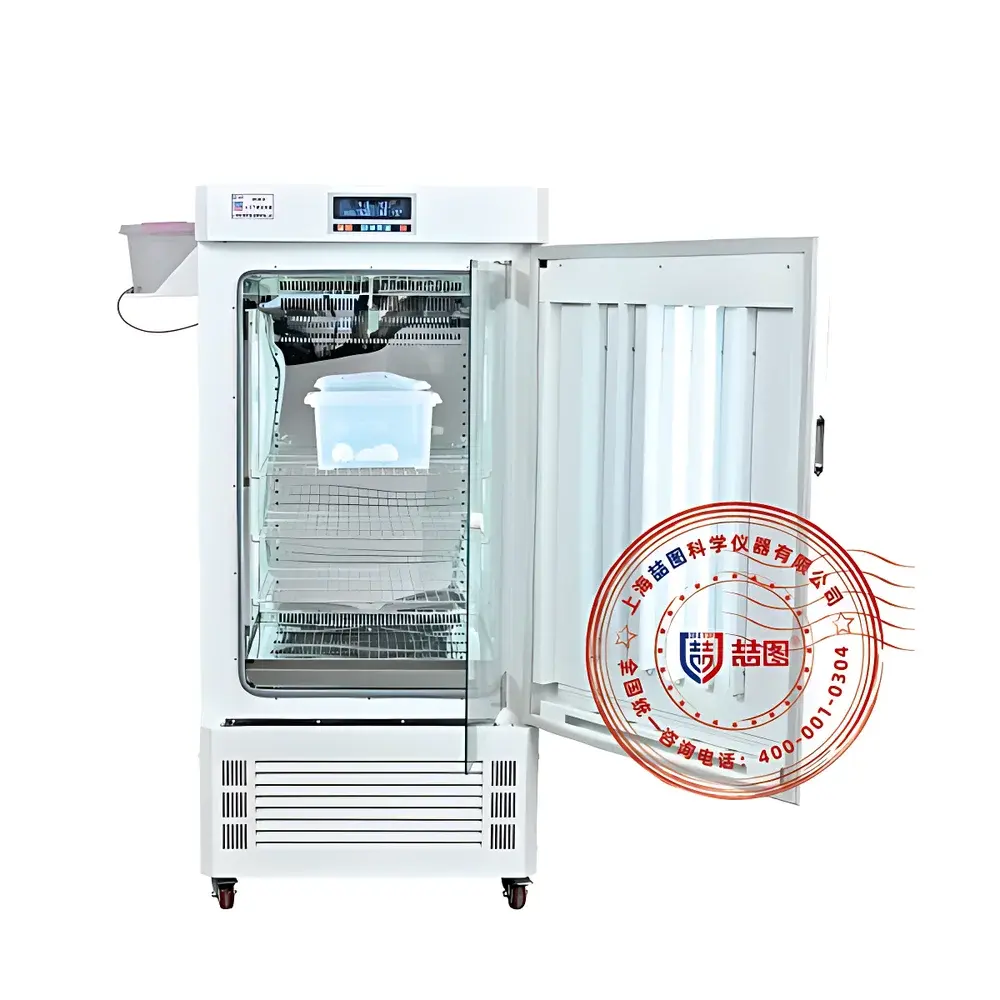
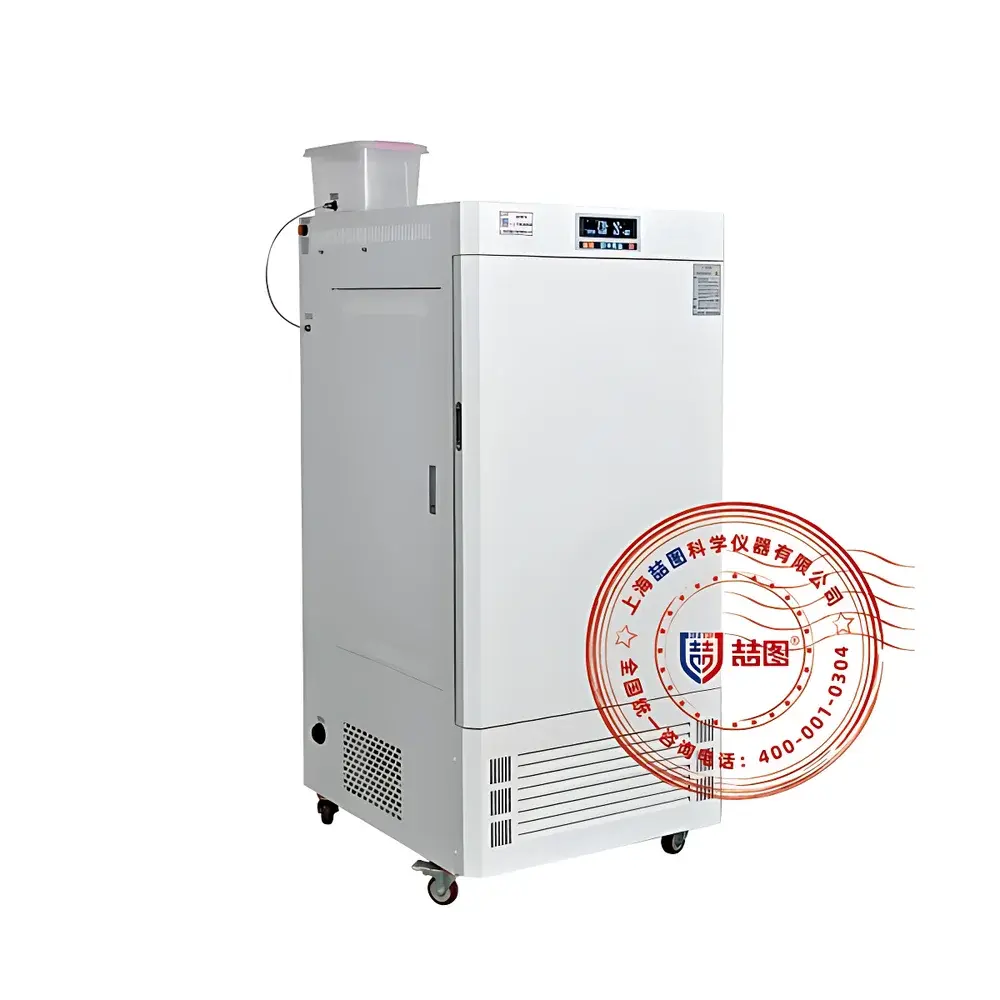
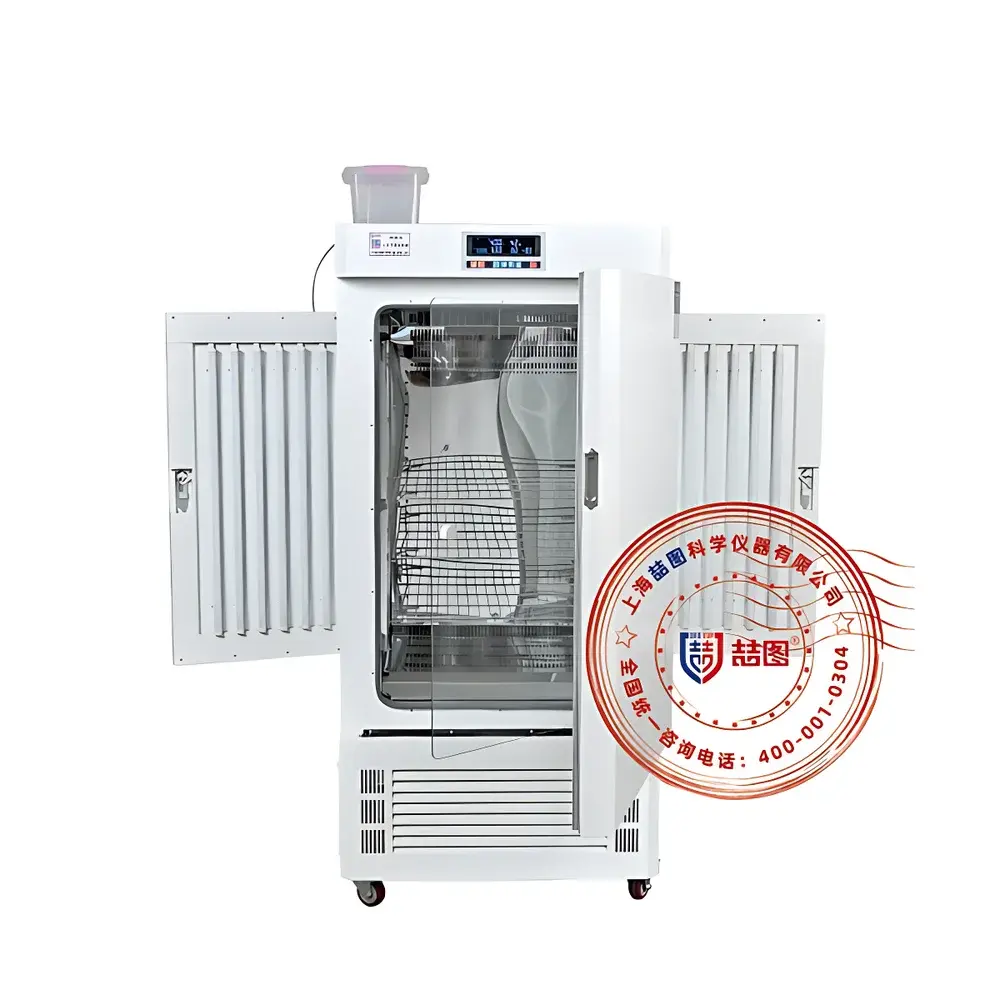
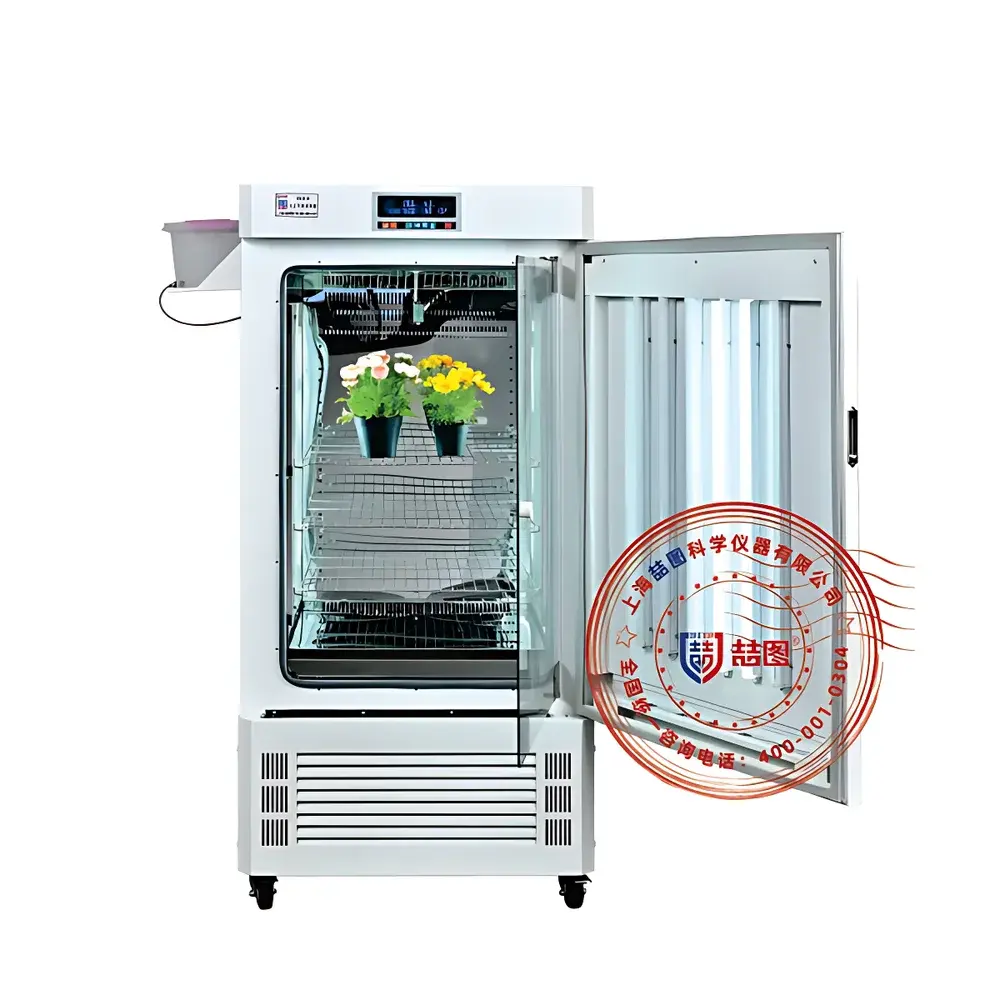
DRETOP ZRQ-500VTS Vertical Illumination Artificial Climate Incubator
| Brand | DRETOP |
|---|---|
| Origin | Shanghai, China |
| Model | ZRQ-500VTS |
| Type | Fully Automated Programmable Incubator |
| Capacity | 500 L |
| Temperature Range | 10–65 °C (with illumination), 0–50 °C (without illumination) |
| Temperature Uniformity | ±0.5 °C |
| Humidity Range | 40–95 %RH |
| Humidity Uniformity | ±3–5 %RH |
| Illumination Intensity | 0–25,000 lx (LED vertical illumination, digitally displayed) |
| Illumination Configuration | Adjustable-height stainless-steel shelf-integrated SMD aluminum substrate LED arrays (R/G/B/W/V spectral channels configurable) |
| External Dimensions (W×D×H) | 900 × 955 × 1780 mm |
| Power Supply | AC 220 V / 50 Hz |
| Input Power | 4000 W |
| Control Interface | Color touchscreen controller with 30-segment programmable logic |
Overview
The DRETOP ZRQ-500VTS is a fully automated, vertically illuminated artificial climate incubator engineered for precision environmental simulation in plant physiology, photobiology, microbial cultivation, and developmental biology research. It operates on a dual-mode thermal-hygrometric control architecture—integrating P.I.D. temperature regulation, ultrasonic or compressor-based humidity modulation, and spectrally tunable solid-state LED illumination—to replicate diurnal cycles, seasonal light gradients, and controlled atmospheric conditions within a sealed 500 L chamber. Unlike conventional horizontal-light incubators, the ZRQ-500VTS employs vertically oriented, shelf-integrated LED modules mounted directly on stainless-steel adjustable partitions—enabling uniform photon flux delivery across sample planes without shadowing or thermal stratification from overhead lamps. This design supports high-fidelity photomorphogenic studies, including phytochrome-mediated germination assays, cryptochrome-dependent circadian entrainment, and wavelength-specific stress response profiling under GLP-compliant experimental conditions.
Key Features
- Vertical illumination system with digitally calibrated 0–25,000 lx output; LED arrays use SMD aluminum substrate construction for thermal stability and spectral fidelity.
- 30-segment programmable controller supporting multi-step temperature/humidity/light profiles—including independent day/night setpoints, ramp-soak sequences, and event-triggered illumination bursts.
- Stainless-steel interior chamber (304 grade) with removable, height-adjustable shelves; corner-radius geometry minimizes condensation pooling and facilitates ISO 14644-compliant cleaning protocols.
- Dual-door structure: outer magnetic seal with nano-composite gasket + inner tempered glass viewport—maintaining thermal integrity during observation without chamber perturbation.
- Energy-optimized refrigeration: R134a-free eco-refrigerant, hermetic compressor with start-delay protection, and auto-defrost cycle governed by evaporator frost-sensor feedback.
- Integrated safety suite: over-temperature/over-humidity alarms, power-fail data retention (EEPROM-backed), real-time deviation logging, and hardware-enforced upper/lower limit clamping.
Sample Compatibility & Compliance
The ZRQ-500VTS accommodates Petri dishes, multi-well plates, tissue culture flasks (up to T225), hydroponic trays, insect rearing cages, and small-animal behavioral enclosures. Its internal dimensions (700 × 700 × 1020 mm) allow full-height vertical growth of model species such as Arabidopsis thaliana, rice seedlings, and Daphnia magna cohorts. The unit conforms to IEC 61000-6-3 (EMC emissions), IEC 61000-6-2 (immunity), and GB/T 2423.1–2008 (environmental testing standards). Optional validation packages support IQ/OQ documentation per ASTM E2500 and EU Annex 15 requirements. Humidity control meets USP hygrometric stability thresholds for non-sterile botanical assay environments.
Software & Data Management
The color touchscreen interface provides real-time graphical display of all process variables (temperature, RH, irradiance, elapsed time) with overlay trend plots. Data are logged at user-defined intervals (1 s to 60 min) to internal flash memory (≥1 year storage at 1-min resolution) and exportable via USB 2.0 to CSV or XML. Audit trail functionality complies with FDA 21 CFR Part 11 when paired with optional network-enabled firmware (DRETOP CloudLink v3.2), enabling remote monitoring, role-based access control, and electronic signature capture for GLP/GMP workflows. All parameter changes are timestamped and attributed to operator ID.
Applications
- Controlled-environment phenotyping: quantifying genotype-by-light-quality interactions in crop breeding programs.
- BOD5 incubation per ISO 5815-1:2019, with uninterrupted 20 °C ±0.5 °C maintenance and dissolved oxygen saturation monitoring.
- Photoperiodic induction of flowering in short-day/long-day species using programmable R:G:B ratio modulation (4:1 to 9:1 red:blue configurable).
- Microbial growth kinetics under defined spectral stressors (e.g., UV-A exclusion, far-red enrichment).
- Developmental toxicology assays requiring synchronized light/dark cycling for zebrafish embryo staging (ISO 15088).
- Algal biomass optimization via dynamic PAR (Photosynthetically Active Radiation) tuning between 400–700 nm bands.
FAQ
What spectral bands are available for illumination customization?
Standard configurations include discrete red (660 nm), blue (450 nm), green (525 nm), white (4000 K CCT), and violet (405 nm) channels; custom narrowband peaks (±5 nm FWHM) can be specified at order entry.
Does the unit support remote calibration verification?
Yes—NIST-traceable PT100 temperature sensors and capacitive RH transducers are field-verifiable via RS485 Modbus RTU; calibration certificates available upon request.
Can humidity be maintained below 40% RH?
No—the system’s humidification/dehumidification range is bounded at 40–95% RH; sub-40% operation requires external desiccant integration.
Is the LED illumination intensity traceable to NIST SRM 2219?
Irradiance sensors are factory-calibrated against NIST SRM 2219; certificate of conformance included with each shipment.
What is the maximum continuous runtime rating?
Designed for unattended 24/7 operation with mean time between failures (MTBF) exceeding 25,000 hours under nominal load conditions per MIL-HDBK-217F predictions.





