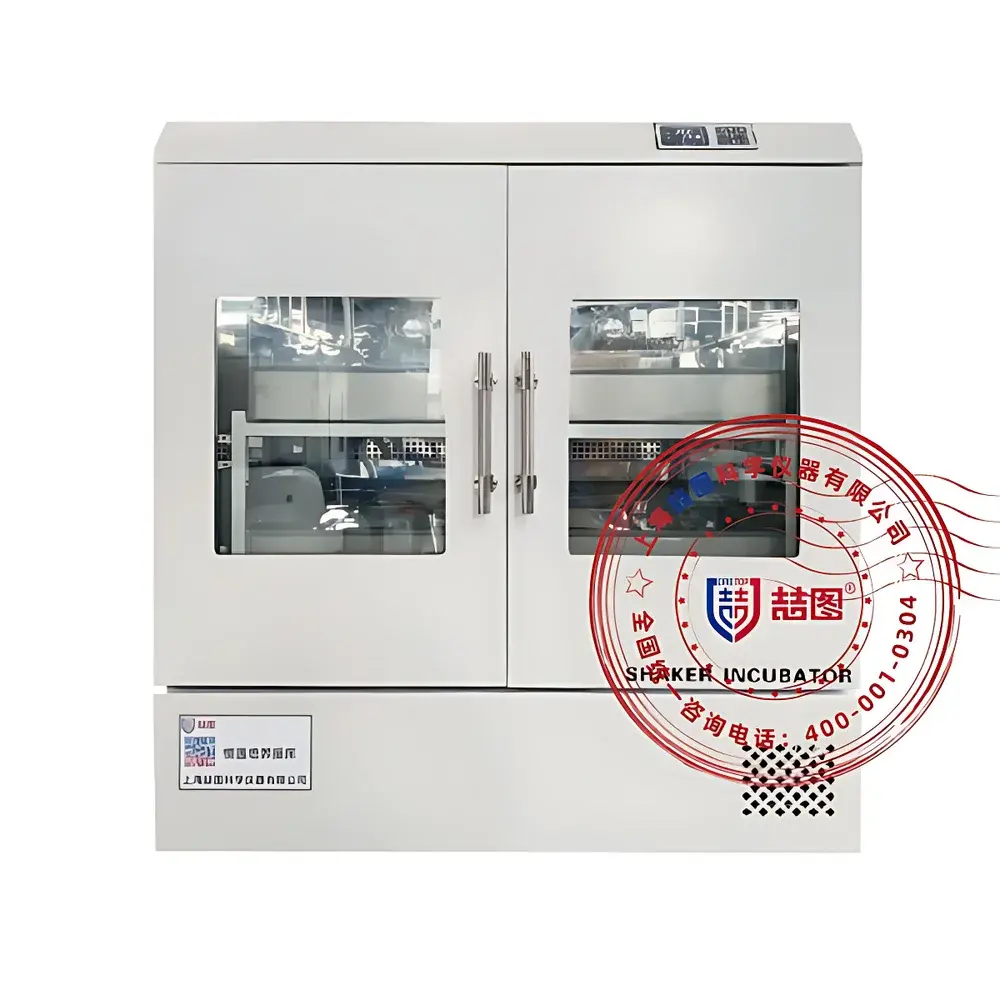
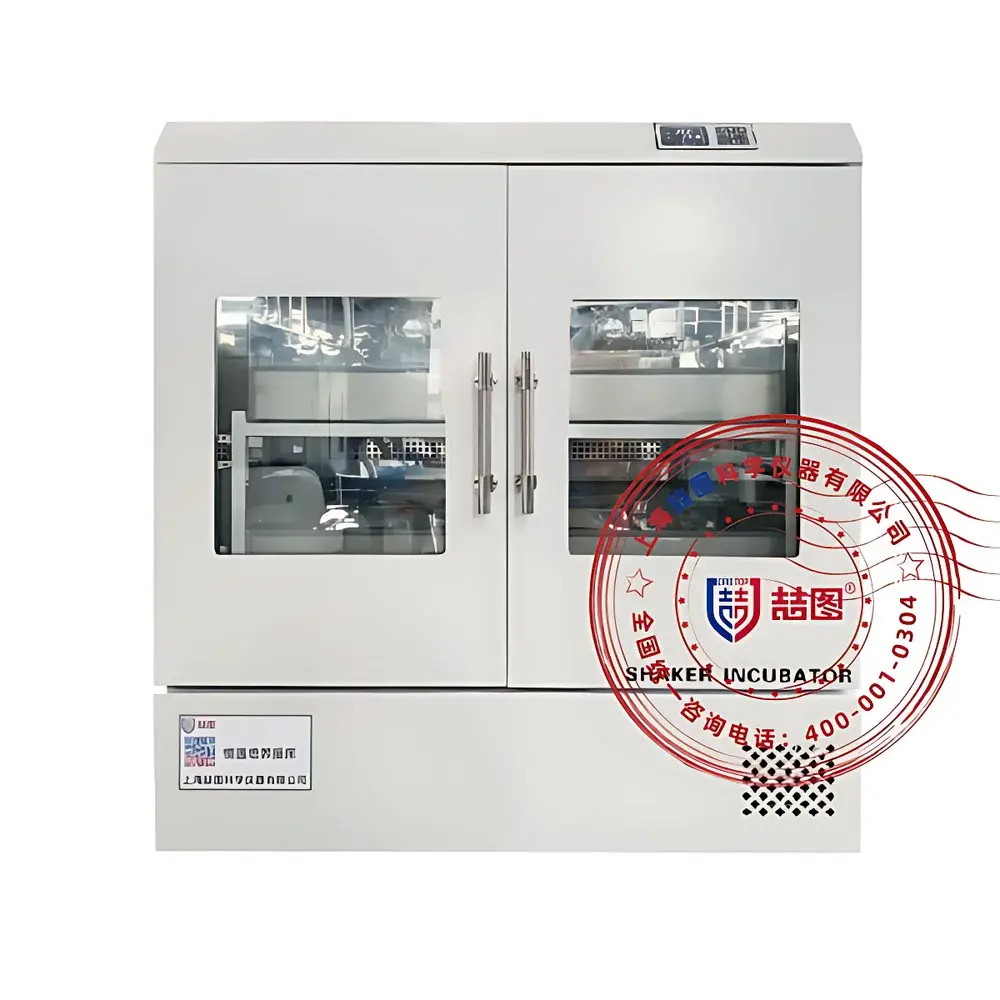
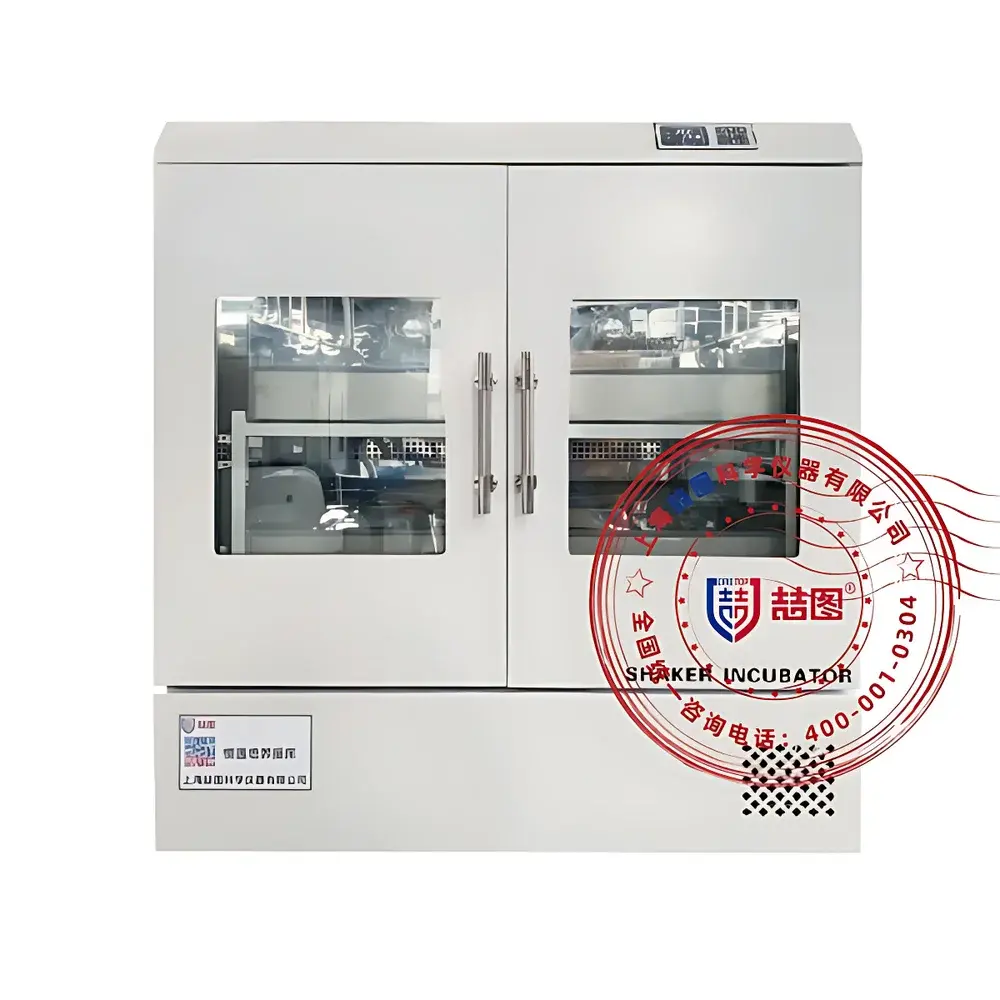
DRETOP ZYL-7145DR Vertical Low-Temperature Constant-Temperature Dual-Door Orbital Shaker
| Brand | DRETOP |
|---|---|
| Origin | Shanghai, China |
| Model | ZYL-7145DR |
| Timer Range | 1–9999 min |
| Oscillation Frequency | 0–300 rpm |
| Orbit Diameter | 26 mm |
| Temperature Range | 4–60 °C |
| Shelf Quantity | 2 |
| Power Supply | AC 220 V, 50 Hz |
Overview
The DRETOP ZYL-7145DR is a vertically configured, dual-door orbital shaker engineered for precise temperature-controlled cultivation and agitation of biological samples under low-temperature conditions. It integrates the functional principles of an incubator and a mechanical orbital shaker—operating on a standard 26 mm circular orbit—within a single robust stainless-steel chassis. The unit employs a high-efficiency compression-based refrigeration system coupled with PID-controlled heating to maintain stable thermal environments from 4 °C (near refrigerated storage) up to 60 °C, making it suitable for applications requiring cold-start inoculation, psychrophilic culture maintenance, or temperature-sensitive enzymatic assays. Its vertical architecture optimizes floor space while accommodating two independently accessible, load-balanced shaking platforms—each supporting standardized flask, tube, or microplate configurations. Designed for GLP-compliant laboratories, the ZYL-7145DR meets foundational requirements for reproducible bioprocess development, microbial fermentation, and cell-based assay preparation in academic, pharmaceutical, and industrial R&D settings.
Key Features
- Microprocessor-based PID temperature and speed control with real-time LCD display (backlit, angled interface), showing setpoint/actual values for temperature (±0.1 °C resolution), rotational speed (±1 rpm accuracy), and elapsed time.
- Dual independent stainless-steel shaking platforms (710 × 455 mm each), each driven by a brushless DC motor ensuring consistent torque delivery across the full 0–300 rpm range without carbon wear or scheduled maintenance.
- Three-dimensional eccentric drive mechanism with soft-start acceleration profile to minimize sample splashing and mechanical shock during startup—critical for fragile suspension cultures and low-volume reagent mixing.
- Double-glazed tempered glass doors with integrated LED interior lighting and manual airflow control ports; optional UV-C germicidal lamp available for periodic decontamination of chamber air and surfaces.
- Comprehensive safety suite including over-temperature cutoff, overspeed protection, timed shutdown, power-failure recovery, parameter lockout (password-protected), and configurable alarm outputs (audible + visual).
- Electrostatically coated steel exterior and electropolished 304 stainless-steel interior chamber, compatible with common laboratory disinfectants and resistant to corrosion from condensate or buffer exposure.
Sample Compatibility & Compliance
The ZYL-7145DR accommodates a broad range of vessel formats—including Erlenmeyer flasks (up to 5 L), test tubes, deep-well plates, and custom bioreactor vessels—via interchangeable clamping systems (fixed bottle holders, universal spring clips, and modular rack adapters). Its dual-door design permits simultaneous operation of two distinct experimental conditions (e.g., parallel strain comparisons or gradient temperature studies) without cross-contamination risk. The unit conforms to IEC 61010-1:2010 safety standards for laboratory equipment and supports traceable operation through optional USB data logging (CSV export, timestamped temperature/speed profiles). While not certified to ISO 13485 or FDA 21 CFR Part 11 out-of-the-box, its audit-ready parameter memory, event logging, and user-access restriction features facilitate alignment with GMP/GLP documentation workflows when deployed with validated SOPs.
Software & Data Management
Data acquisition is supported via embedded non-volatile memory storing up to 99 programmable protocols, each with multi-step ramp/soak profiles for temperature and speed. Optional USB interface enables direct download of continuous operational logs—including temperature deviation history, motor current draw, and alarm event timestamps—to Windows-compatible PCs. Exported datasets are structured for import into LIMS platforms or statistical analysis tools (e.g., JMP, GraphPad Prism). Firmware updates are performed offline via FAT32-formatted USB drives, preserving configuration integrity during version upgrades. No cloud connectivity or remote access capability is included—ensuring full data sovereignty per institutional IT policies.
Applications
- Maintenance and expansion of cryotolerant bacterial and yeast strains at sub-ambient temperatures (4–15 °C).
- Controlled aeration and mixing in aerobic fermentation processes where dissolved oxygen transfer efficiency depends on both temperature and orbital kinetics.
- Preparation of homogeneous cell suspensions for flow cytometry, ELISA plate coating, or transfection reagent optimization.
- Long-term stability testing of protein formulations under accelerated cold-chain stress conditions (e.g., 5 °C/100 rpm for 72 h).
- Enzyme kinetic studies requiring strict thermal regulation during substrate turnover measurements (e.g., lactate dehydrogenase activity assays between 10–37 °C).
- Environmental microbiology applications such as BOD incubation, nitrification monitoring, and biofilm dispersion assays under defined shear stress regimes.
FAQ
What is the minimum operating temperature, and how is refrigeration achieved?
The unit achieves a stable lower limit of 4 °C using a sealed R134a compressor-based cooling circuit integrated with PID-regulated resistive heating—enabling precise thermoregulation across the full 4–60 °C span.
Can both shelves operate at different temperatures or speeds simultaneously?
No—the ZYL-7145DR maintains uniform chamber-wide temperature and synchronized orbital motion across both platforms; independent control per shelf is not supported.
Is the shaker compatible with CO₂-enriched atmospheres?
This model does not include CO₂ sensors, gas inlets, or humidity control; for CO₂-dependent cultures, consider the DRETOP ZYL.CP series.
What validation documentation is provided with the instrument?
Factory calibration certificates for temperature sensor and tachometer are included; IQ/OQ protocols and third-party certification services are available upon request.
How is cleaning and decontamination managed inside the chamber?
The seamless stainless-steel interior allows wipe-down with 70% ethanol or 0.5% sodium hypochlorite; optional UV-C irradiation (254 nm) provides supplementary surface sterilization between runs.
Related Products