
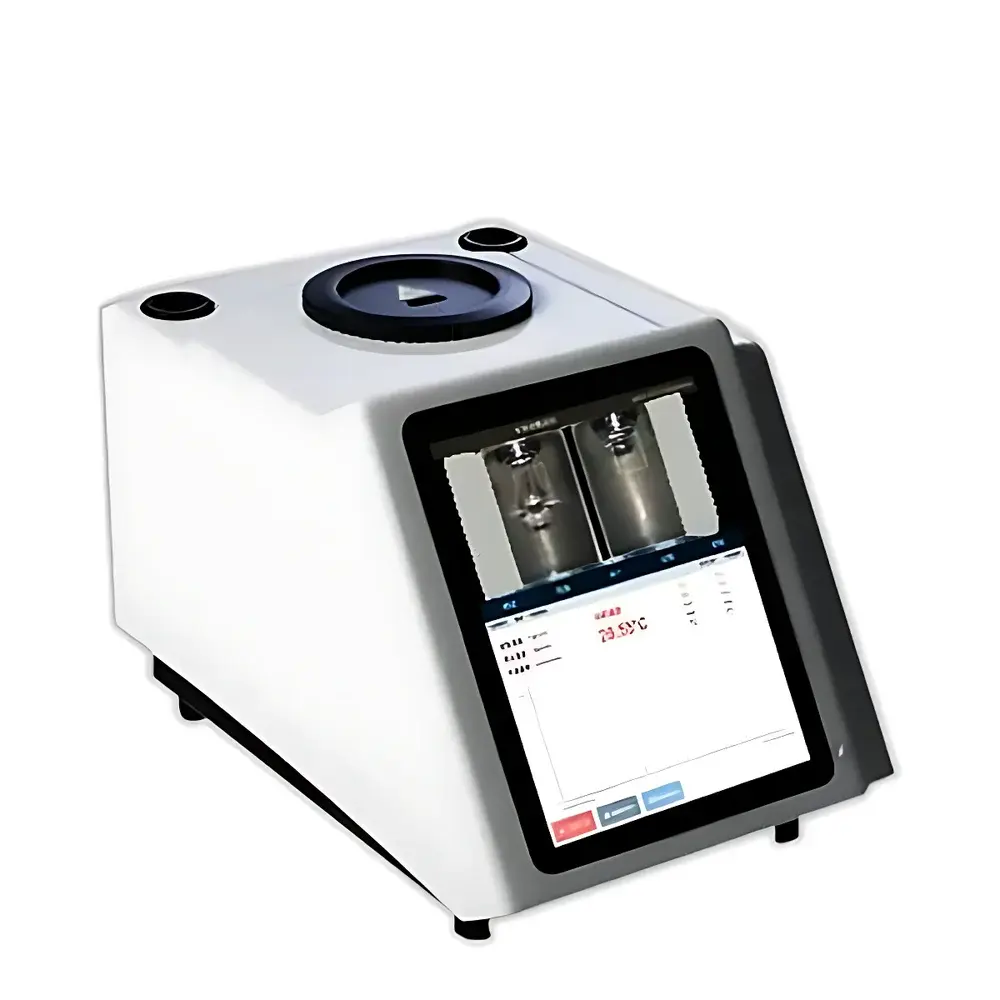
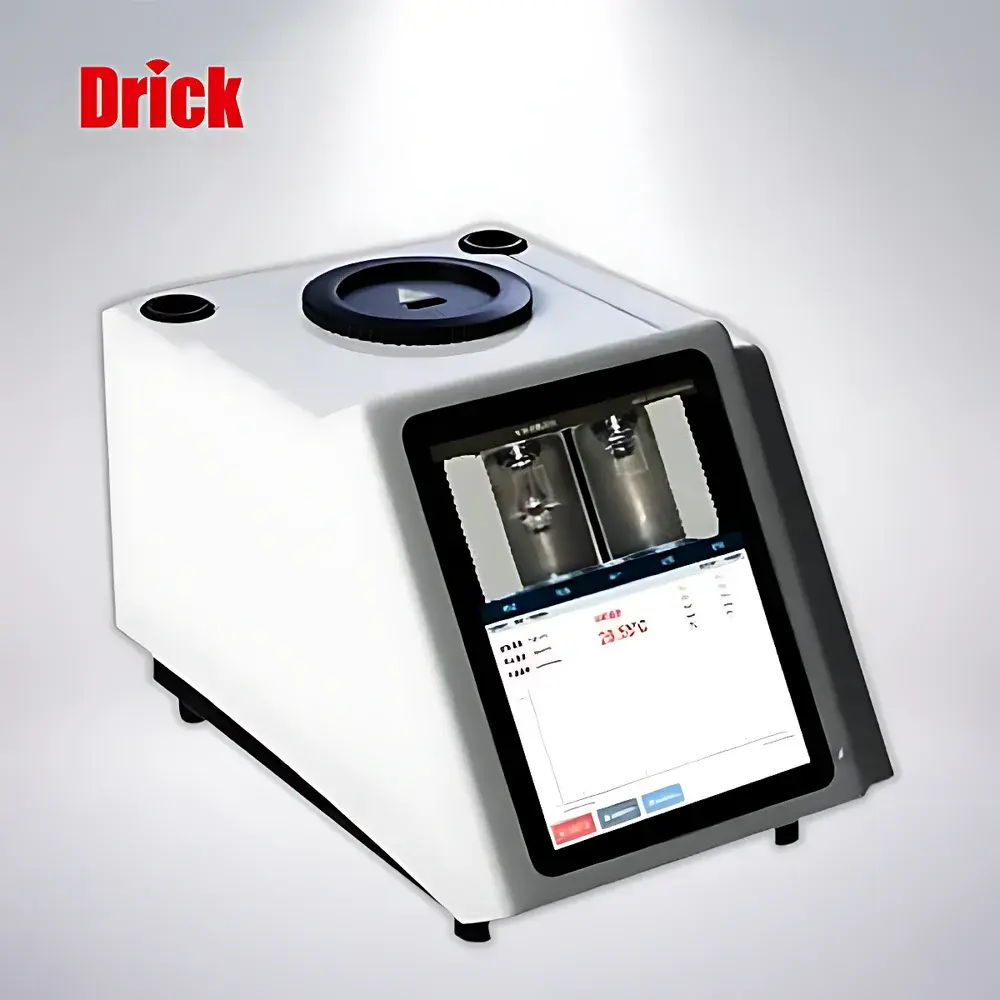
Drick DRK-QD400 Automatic Dropping Point & Softening Point Tester (Cup-and-Ball Method)
| Brand | Drick |
|---|---|
| Origin | Shandong, China |
| Manufacturer Type | Direct Manufacturer |
| Country of Origin | China |
| Model | DRK-QD400 (Cup-and-Ball Method) |
| Temperature Range | Ambient to 400 °C |
| Heating Rate | 0.1–20 °C/min |
| Temperature Accuracy | ±0.2 °C (<250 °C), ±0.5 °C (>250 °C) |
| Temperature Resolution | 0.01 °C |
Overview
The Drick DRK-QD400 Automatic Dropping Point & Softening Point Tester is a precision thermal analysis instrument engineered for the standardized determination of dropping point (DP) and softening point (SP) of semi-solid and thermoplastic materials using the cup-and-ball method—also known as the “cup-and-ball” or “ring-and-ball” principle per ASTM D3461 and ISO 4625-2. It operates on the fundamental thermal transition principle where a defined sample mass is loaded into a standardized metal cup, heated at a controlled linear rate, and observed until the material begins to flow under gravity (dropping point) or deforms sufficiently to allow a calibrated steel ball to descend a fixed distance (softening point). The system integrates high-stability PID temperature control with real-time HD video imaging and AI-assisted endpoint detection, enabling objective, operator-independent identification of thermal transition events without manual visual interpretation bias.
Key Features
- High-definition 10.4-inch color touchscreen display with real-time video feed and scalable thermal transition graphing
- Dual-sample testing capability: simultaneous processing of two independent samples per run, improving laboratory throughput and inter-sample comparability
- Programmable heating rates from 0.1 to 20 °C/min, supporting both slow-scan compliance testing (e.g., ASTM D3204 for greases) and rapid screening protocols
- Temperature accuracy certified to ±0.2 °C below 250 °C and ±0.5 °C above 250 °C, traceable to NIST-traceable reference standards
- Comprehensive user access control with four-tier permission levels (Admin, Supervisor, Technician, Viewer) and support for up to 200 user accounts
- Full 21 CFR Part 11 compliance including electronic signatures, audit trail logging (with immutable timestamps and user attribution), and MD5-verified data integrity for PDF/Excel exports
- Integrated dual-interface connectivity: USB, RS-232, and Ethernet for LIMS integration and remote monitoring
- Onboard 64 GB non-volatile storage with GLP/GMP-compliant data retention, including raw video clips, thermal profiles, metadata, and operator logs
Sample Compatibility & Compliance
The DRK-QD400 accommodates a broad range of thermally responsive materials—including petroleum waxes, bituminous binders, pharmaceutical ointments, polymer resins, adhesives, lubricating greases, and cosmetic bases—using standardized cup geometries conforming to ASTM D3954 (for waxes), ASTM D6090 (for asphalt), DIN 51801 (for bitumen), and GB/T 2294–2019 (for coal tar pitch). All hardware components—including cups, balls, and support frames—meet dimensional tolerances specified in ISO 2176–1972 and USP . The instrument’s validation documentation supports IQ/OQ/PQ execution per GAMP 5 guidelines and satisfies regulatory expectations for analytical instrumentation used in FDA-regulated environments, including ICH Q2(R2) method suitability criteria.
Software & Data Management
The embedded firmware runs on a deterministic real-time OS, ensuring consistent timing for thermal ramping and image capture intervals (1 frame/sec minimum). Test methods are stored as editable, version-controlled protocols (up to 100 preloaded), each enforceable via permission-based locking to prevent unauthorized modification. Data export supports dual-format output (PDF reports with embedded signature fields + Excel-compatible .csv with full metadata), all digitally signed and hash-verified. Audit trails record every action—including parameter changes, result overrides, user logins, and calibration events—with tamper-evident timestamps. Networked units support centralized data archiving via secure HTTPS or SFTP to enterprise servers compliant with ISO/IEC 27001 requirements.
Applications
This instrument serves critical quality control and R&D functions across multiple regulated sectors: In pharmaceutical manufacturing, it verifies thermal stability of suppository bases and topical gels per USP and Chinese Pharmacopoeia 2020 Edition; in petrochemical QA, it characterizes consistency of lubricating greases (ASTM D2265) and road-grade asphalt binders (AASHTO T53); in polymer development, it assesses heat resistance of thermoplastic elastomers and hot-melt adhesives; and in cosmetics, it validates melt behavior of lip balms and solid shampoos. Its dual-sample design also enables comparative studies—e.g., batch-to-batch consistency checks or accelerated aging assessments—without cross-run variability.
FAQ
Does the DRK-QD400 support both dropping point and softening point measurements in a single instrument?
Yes. The system automatically switches between DP and SP test modes based on selected standard method, utilizing identical hardware but distinct endpoint algorithms and cup configurations.
Is external calibration required, and how often should it be performed?
The unit includes internal reference sensors traceable to NIST-certified standards. Annual verification against certified reference materials (e.g., indium, tin, zinc) is recommended per ISO/IEC 17025 and internal SOPs.
Can test results be integrated into an existing LIMS or ELN platform?
Yes—via configurable RS-232 or TCP/IP communication protocols using ASTM E1384 or HL7-compliant message structures; custom API integration is available upon request.
What video resolution and storage duration does the onboard camera provide?
The HD camera captures 1280×720 @ 30 fps with automatic focus and white balance; raw video is retained only for active tests and archived in compressed format with metadata linkage for ≥10 years when exported.
How is method security enforced to prevent unauthorized edits?
All methods are digitally signed and locked by role-based permissions; any modification triggers a new version ID, full audit trail entry, and re-approval workflow requiring dual-signature authorization.



