
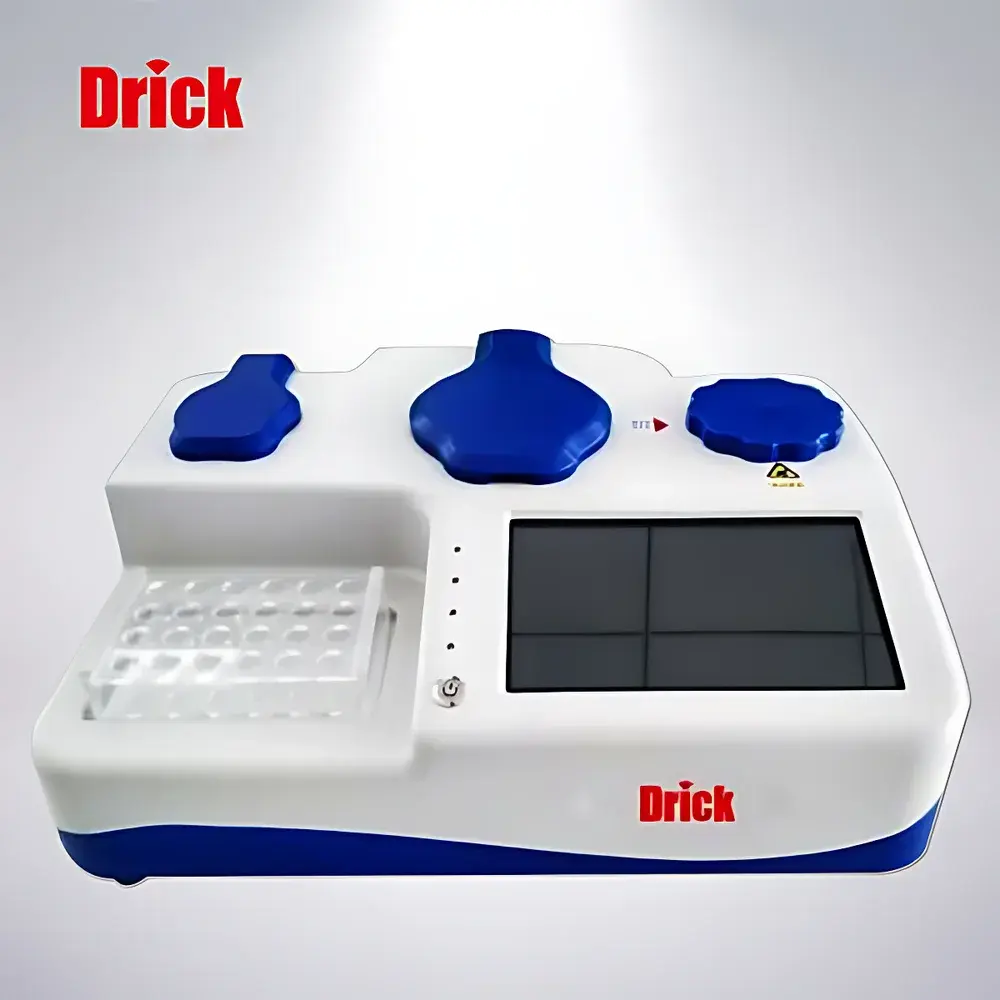
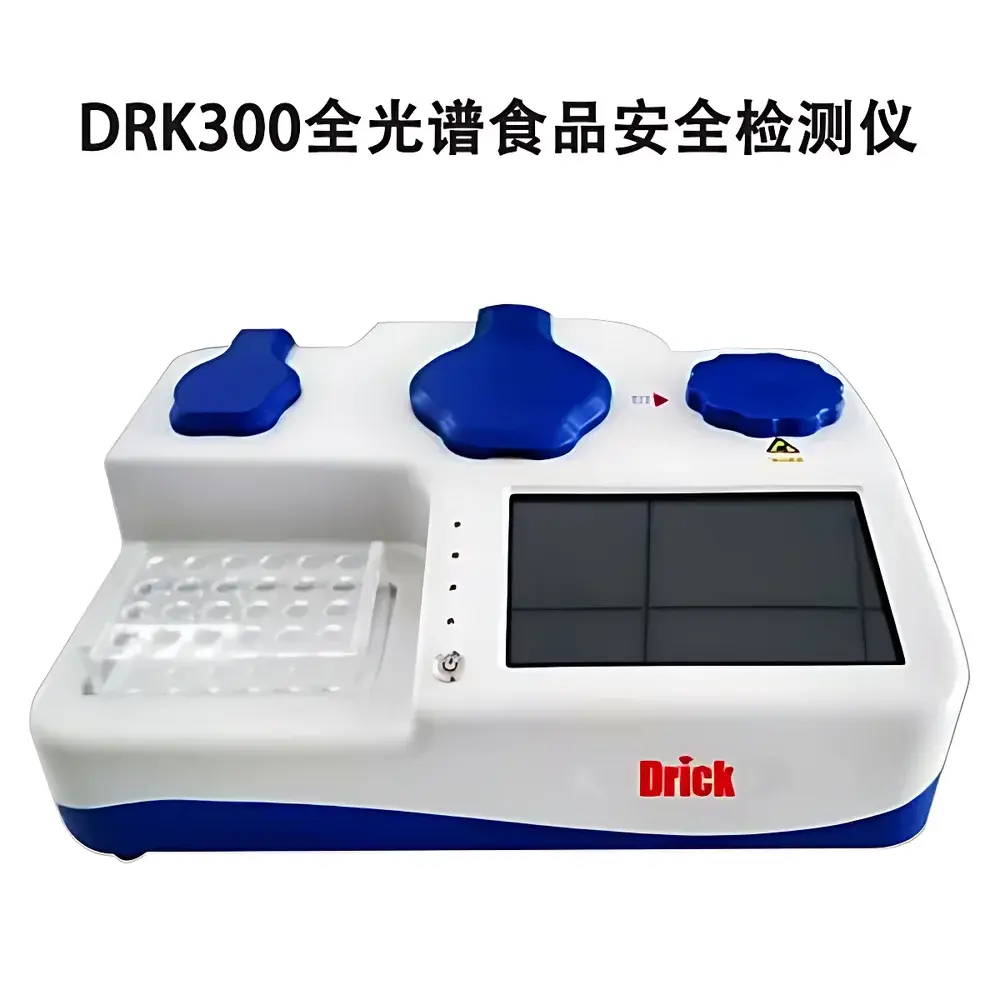
Drick DRK300 Full-Spectrum Food Safety & Water Quality Analyzer
| Brand | Drick |
|---|---|
| Model | DRK300 |
| Origin | Shandong, China |
| Manufacturer Type | Direct Manufacturer |
| Category | Domestic Instrument |
| Spectral Range (VIS) | 350–800 nm |
| Spectral Range (UV-Vis) | 190–1020 nm |
| Wavelength Accuracy | ±0.1 nm (VIS), ±0.13 nm (UV-Vis) |
| Wavelength Repeatability | ≤0.1 nm |
| Optical Resolution | 1 nm |
| Detector | 2048-pixel linear CCD array |
| Sample Throughput | 8-channel simultaneous measurement |
| Measurement Speed | <10 ms per full spectrum |
| Light Source | Pulsed xenon lamp (UV-Vis) or tungsten-halogen lamp (VIS) |
| Baseline Flatness | ±0.005 Abs |
| Photometric Noise | ≤0.5% τ |
| Drift | ≤0.5% τ / 30 min |
| Stray Light | ±1.0% τ at 420 nm |
| Cuvette Compatibility | 10 mm standard (VIS) / quartz (UV-Vis) |
| Display | 7-inch capacitive touchscreen (1280×720) |
| Onboard Functions | Ultrasonic dissolution, thermostatic water bath (±0.5 °C), air-drying module, odor adsorption chamber, integrated analytical balance (0.001 g resolution) |
| Data Storage | 16 GB internal + 2 GB RAM |
| Connectivity | Optional GPS/GPRS expansion |
| Power | 220 V / 50 Hz, 60 W |
| Dimensions | 345 × 290 × 150 mm |
| Weight | 7 kg |
| Operating Environment | −10 to 40 °C, RH ≤85% non-condensing |
Overview
The Drick DRK300 Full-Spectrum Food Safety & Water Quality Analyzer is a benchtop dual-mode spectrophotometer engineered for quantitative and qualitative analysis across food safety, environmental water testing, and applied biochemical research. It operates on the principle of absorption spectroscopy—measuring transmitted light intensity across a continuous wavelength range to determine analyte concentration via Beer–Lambert law correlation. Unlike scanning monochromator-based systems, the DRK300 employs a fixed-grating, full-spectrum optical architecture with a pulsed xenon lamp (190–1020 nm) or tungsten-halogen source (350–800 nm), coupled to a high-resolution 2048-pixel linear CCD detector. This solid-state design eliminates moving parts, ensuring long-term wavelength stability, superior photometric reproducibility, and sub-millisecond spectral acquisition—critical for high-throughput screening in regulated QC laboratories.
Key Features
- Simultaneous 8-channel measurement capability using standardized 10 mm cuvettes—enabling parallel analysis of multiple samples or calibration standards without sequential repositioning.
- Integrated sample preparation modules: ultrasonic dissolution (40 kHz, programmable duration), precision thermostatic water bath (±0.5 °C control), nitrogen-assisted air-drying station, activated carbon-based odor adsorption chamber, and an embedded analytical balance (0.001 g resolution, 200 g capacity).
- True full-spectrum acquisition in under 10 ms—capturing complete absorbance profiles from 190 nm to 1020 nm in a single exposure, eliminating wavelength-scanning artifacts and enabling kinetic time-course studies.
- High-fidelity optical performance: wavelength accuracy ±0.13 nm (UV-Vis), repeatability ≤0.1 nm, spectral bandwidth 1 nm, baseline flatness ±0.005 Abs, and stray light <1.0% τ at 420 nm—meeting ISO 17025 method validation requirements for routine quantification.
- 7-inch capacitive multi-touch display (1280×720) with intuitive GUI supporting method creation, calibration curve generation (linear, quadratic, cubic), and real-time spectral overlay—no external PC required for basic operation.
- Expandable architecture: optional GPS geotagging and GPRS data transmission modules support field-deployable monitoring networks compliant with national food surveillance protocols.
Sample Compatibility & Compliance
The DRK300 accommodates liquid, semi-solid, and extract-based samples across diverse matrices—including dairy products, edible oils, fruit juices, processed meats, drinking water, wastewater effluents, and agricultural runoff. Its UV-Vis configuration supports detection of trace contaminants such as formaldehyde, melamine, nitrite, arsenic (via hydride generation), chromium(VI), lead (by dithizone complexation), and pesticide residues (e.g., organophosphates after enzymatic inhibition assays). The instrument’s photometric specifications align with ASTM E275, ISO 6060, and USP for spectrophotometric system suitability. When configured with validated test kits and reference standards, it supports compliance with GB 5009 series (China National Food Safety Standards), EPA Method 365.1 (phosphate), and APHA Standard Methods 4500-NO₂⁻. All onboard data logging includes timestamp, operator ID, and environmental sensor readings (temperature/humidity)—facilitating GLP/GMP audit readiness and 21 CFR Part 11-compliant electronic records when paired with secure network authentication.
Software & Data Management
The embedded firmware provides native support for calibration curve construction, multi-point standard addition, and differential spectral subtraction—essential for matrix-matched correction in complex food extracts. Raw spectral data (ABS, %T, or first-derivative formats) are stored in vendor-neutral CSV and JCAMP-DX formats. Internal 16 GB flash memory retains ≥50,000 spectra with full metadata; USB 2.0 port enables bulk export and firmware updates. Optional PC software (Windows/macOS) adds advanced chemometric tools—including PCA, PLS regression, and spectral library matching—for identification of adulterants (e.g., sesame oil dilution, honey falsification). Audit trails record all parameter changes, method edits, and result exports—with configurable retention policies and role-based access control.
Applications
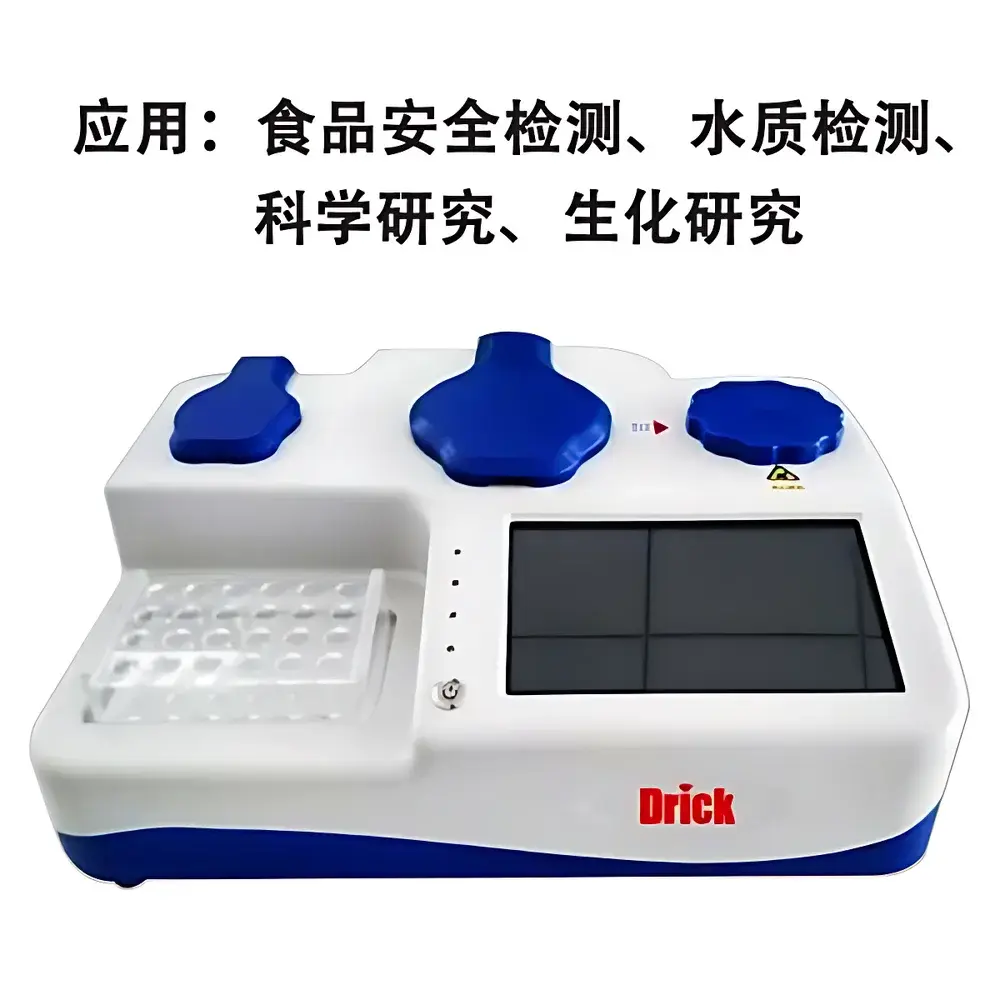
- Food safety screening: Quantitative determination of preservatives (sorbic acid, benzoic acid), sweeteners (saccharin, acesulfame-K), colorants (Allura Red, Tartrazine), oxidants (H₂O₂, peroxide value), heavy metals (Cd, Pb, As), and processing contaminants (hydroxymethylfurfural, acrylamide precursors).
- Water quality assessment: Measurement of residual chlorine, nitrate/nitrite, fluoride, sulfate, phosphate, COD surrogates (e.g., dichromate reduction), and organic micropollutants via derivatization protocols.
- Research & development: Enzyme kinetics (e.g., glucose oxidase activity), protein quantification (Bradford/Lowry), polyphenol profiling (Folin–Ciocalteu), lipid oxidation monitoring (TBARS assay), and pigment stability studies under thermal/photo-stress conditions.
- Regulatory verification: On-site verification of supplier declarations, lot release testing in contract manufacturing organizations (CMOs), and rapid response to foodborne outbreak investigations.
FAQ
Does the DRK300 require annual recalibration by a certified service provider?
No—its solid-state optical path and factory-calibrated xenon lamp (10-year rated lifetime) eliminate routine wavelength recalibration. Users perform daily photometric verification using NIST-traceable neutral density filters; full system verification is recommended every 6 months per ISO/IEC 17025 Clause 6.5.2.
Can the DRK300 quantify analytes without pre-installed methods?
Yes—users may define custom methods via wavelength selection, baseline correction zones, and calibration equation types. Method templates for >120 analytes (including GB 5009-compliant workflows) are available for download from Drick’s secure customer portal.
Is the integrated balance compliant with OIML R76 or ASTM E1132?
The onboard balance meets OIML R76 Class II specifications (0.001 g readability, 200 g capacity) and includes automatic internal calibration with certified weights—valid for sample mass input in gravimetric dilution protocols.
How is data integrity ensured during GPRS transmission?
All wireless data packets are encrypted using TLS 1.2, digitally signed, and accompanied by SHA-256 checksums. Failed transmissions trigger local retry queues with persistent storage until acknowledgment is received by the central LIMS server.
What maintenance is required beyond routine cleaning?
No lamp replacement or optical alignment is needed within the first 10 years. Recommended quarterly tasks include CCD sensor dust inspection (using included lens brush), cuvette holder alignment check, and verification of air-drying flow rate using an anemometer (≥2.5 L/min at nozzle outlet).





