
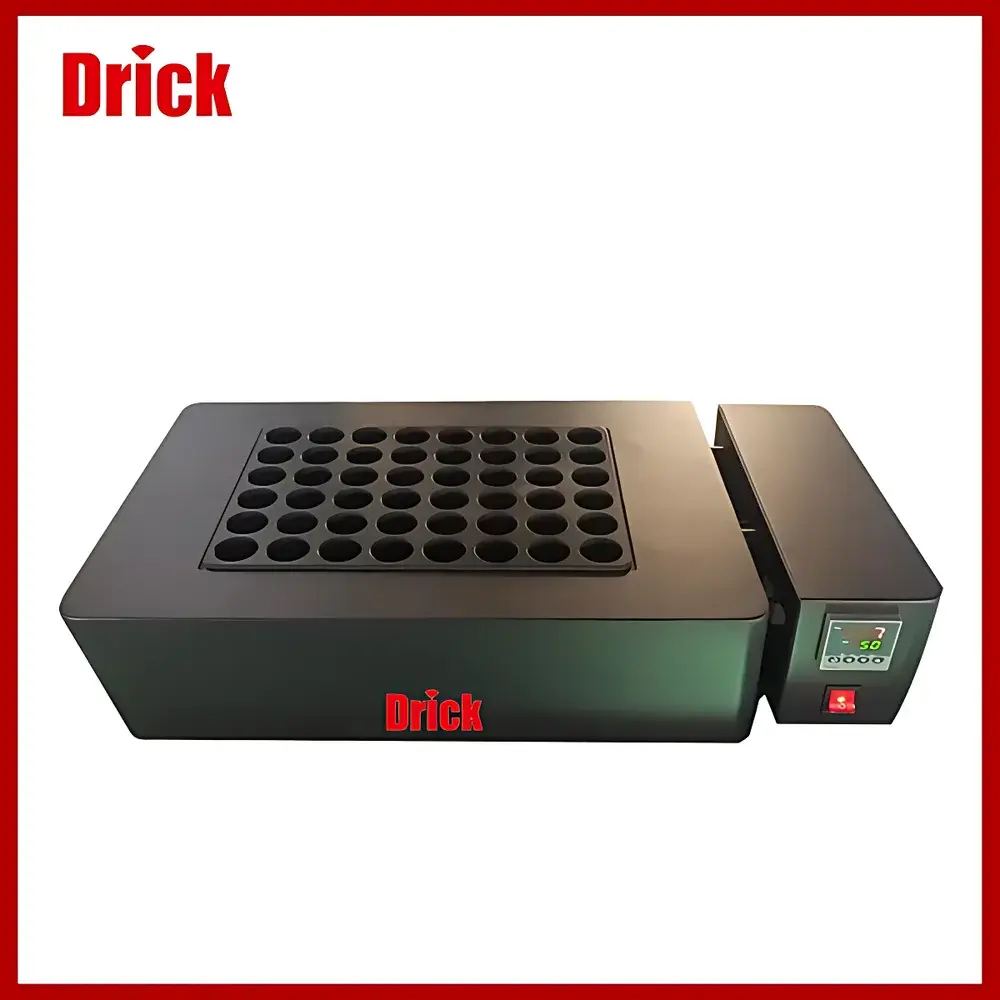
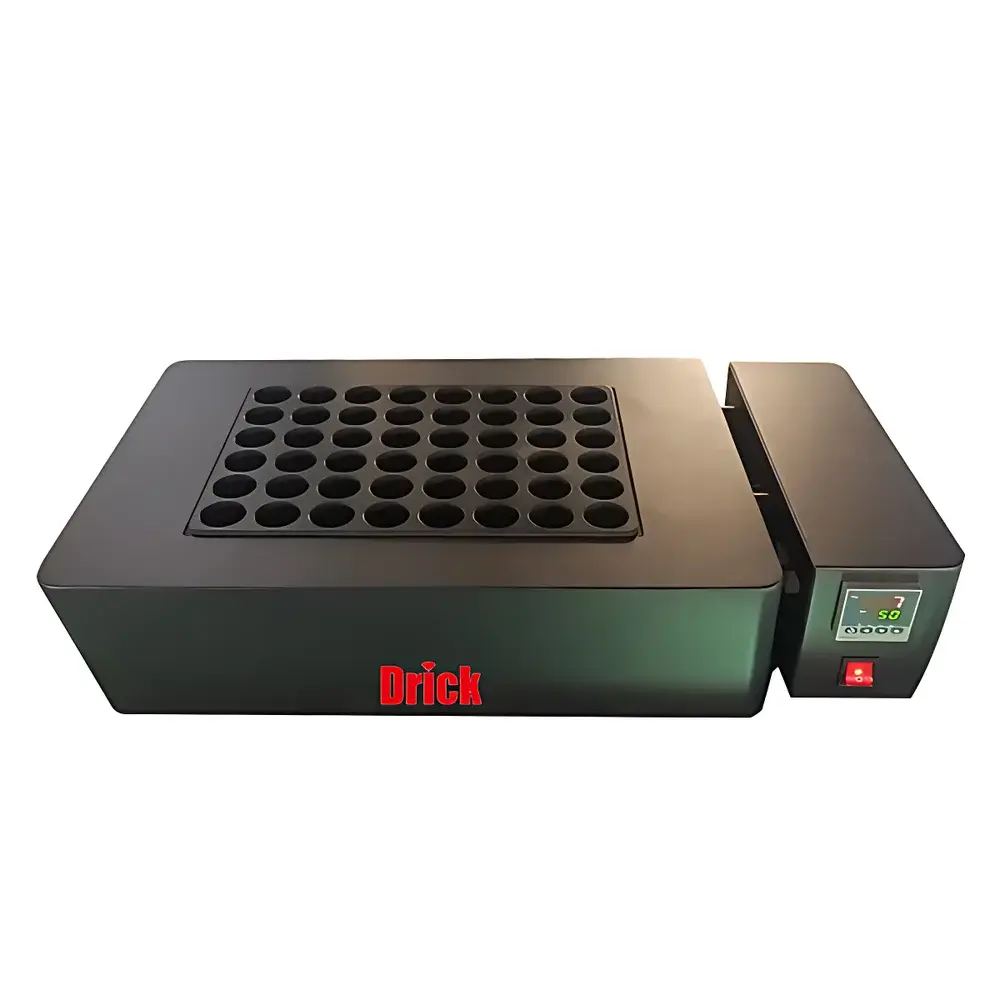
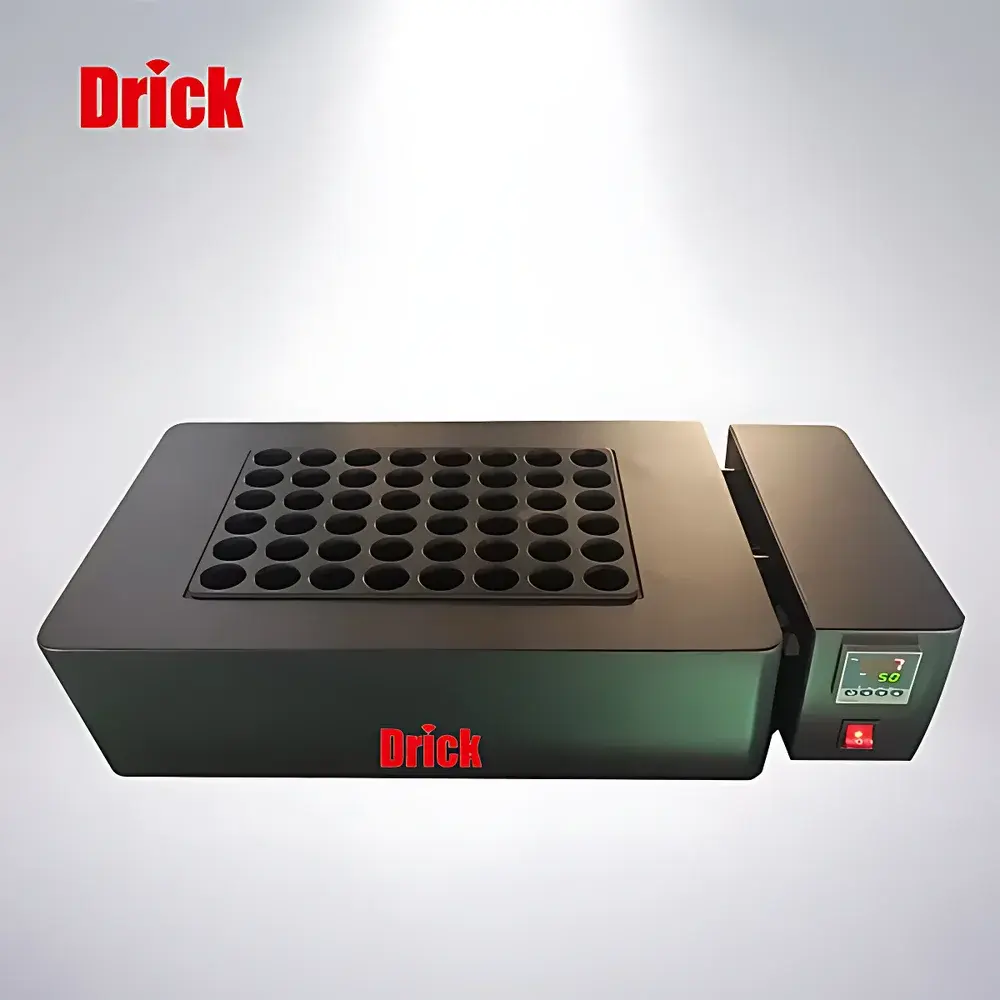
Drick DRK-SM-20K Graphite Block Digestion System
| Brand | Drick |
|---|---|
| Origin | Shandong, China |
| Manufacturer Type | Direct Manufacturer |
| Instrument Category | Domestic |
| Model | DRK-SM-20K |
| Instrument Type | Graphite Digestion System |
| Automation Level | Fully Automatic |
| Digestion Positions | 20 |
| Temperature Control Accuracy | ±0.5 °C |
| Heating Principle | Graphite Block Resistive Heating |
Overview
The Drick DRK-SM-20K Graphite Block Digestion System is a fully automated, high-throughput sample preparation instrument engineered for precise and reproducible acid digestion of solid and semi-solid matrices in environmental, food, pharmaceutical, and regulatory testing laboratories. Unlike traditional hot plates or open-vessel systems, the DRK-SM-20K employs uniform resistive heating via a machined, high-density graphite block—ensuring exceptional thermal homogeneity across all 20 digestion wells. This architecture minimizes inter-position temperature deviation and eliminates hot-spot formation, critical for achieving consistent recoveries of trace metals (e.g., Pb, Cd, As, Hg) and nutrient elements (e.g., K, Ca, Mg) under standardized protocols such as EPA Method 3050B, ISO 11466, and GB/T 5009.11–2014. The system operates within a controlled thermal range optimized for HNO₃–H₂O₂, HCl–HNO₃ (aqua regia), and HF-based digestion chemistries, supporting both closed-vessel and open-vessel configurations compatible with standard PTFE, quartz, or borosilicate digestion tubes.
Key Features
- Fully automatic operation with programmable multi-step temperature ramping, hold times, and cooling cycles—reducing manual intervention and operator variability.
- 20-position graphite block with CNC-machined well geometry ensuring identical thermal mass and contact area for each sample tube, directly contributing to inter-sample precision ≤3% RSD for certified reference materials (CRMs).
- High-stability PID temperature control with real-time feedback from dual platinum resistance thermometers (Pt100), delivering ±0.5 °C accuracy over the full operating range (room temperature to 220 °C).
- Corrosion-resistant graphite surface coated with inert ceramic layer, extending service life during repeated exposure to aggressive mineral acids including hydrofluoric acid (HF) at concentrations up to 5% v/v.
- Integrated fume extraction interface compliant with EN 14175-3 laboratory hood specifications, enabling safe integration into ventilated lab workstations without auxiliary ducting modifications.
- Front-panel touchscreen interface with on-device method storage (≥100 user-defined programs), password-protected parameter editing, and audit-ready event logging (start/stop time, max temp reached, error codes).
Sample Compatibility & Compliance
The DRK-SM-20K accommodates standard digestion vessels ranging from 15 mL to 50 mL volume—including conical PTFE (Teflon™-lined), quartz, and borosilicate glass tubes—enabling direct compatibility with widely adopted CRM digestion workflows (e.g., NIST SRM 1573a Tomato Leaves, GBW 07605 Tea). Its thermal performance meets key requirements for GLP-compliant trace metal analysis, supporting documentation alignment with ISO/IEC 17025:2017 clause 6.4.2 (equipment verification) and USP heavy metals testing. While not inherently 21 CFR Part 11–compliant, the system’s embedded logging function provides timestamped, non-editable records suitable for supplementary data integrity validation when paired with validated LIMS or ELN platforms.
Software & Data Management
The DRK-SM-20K operates autonomously via its embedded firmware; no external PC is required for routine operation. All method parameters, run logs, and error histories are stored locally in non-volatile memory with automatic overwrite protection for the most recent 1,000 cycles. Optional USB export enables transfer of CSV-formatted run reports—including setpoint profiles, actual temperature curves, and duration metrics—for inclusion in analytical batch records. Firmware updates are delivered via encrypted USB stick, with version rollback capability and SHA-256 checksum verification to ensure integrity—supporting laboratory change control procedures per ISO 17025 section 8.9.
Applications
- Environmental testing: Digestion of soil, sediment, sludge, and airborne particulate filters prior to ICP-MS or AAS quantification.
- Food safety labs: Total arsenic, cadmium, and lead determination in cereals, seafood, infant formula, and dietary supplements per EU Commission Regulation (EC) No 1881/2006.
- Clinical & forensic toxicology: Preparation of hair, nail, and tissue samples for elemental profiling in exposure assessment studies.
- Materials science: Decomposition of polymer composites, catalysts, and battery electrode materials for elemental mapping and stoichiometric analysis.
- Regulatory QA/QC: Routine digestion of QC check standards and blanks in accredited food testing laboratories operating under CNAS accreditation scope.
FAQ
What vessel types are supported by the DRK-SM-20K?
Standard 15–50 mL PTFE, quartz, and borosilicate glass digestion tubes with outer diameters between 16 mm and 32 mm.
Is the system compatible with hydrofluoric acid (HF) digestion?
Yes—the graphite block features a ceramic-enhanced surface resistant to HF concentrations up to 5% v/v when used with appropriate PTFE or quartz vessels.
Does the instrument include temperature calibration certification?
Each unit ships with a factory-verified temperature uniformity report (per ASTM E220-17 Annex A1) and optional NIST-traceable calibration certificate available upon request.
Can digestion methods be exported or backed up?
Yes—via USB port, users may export method files (.drm) and run logs (.csv) for archival or audit review.
What maintenance is required for long-term reliability?
Annual inspection of graphite block surface integrity and thermocouple calibration verification is recommended; no consumable parts require scheduled replacement under normal usage conditions.



