
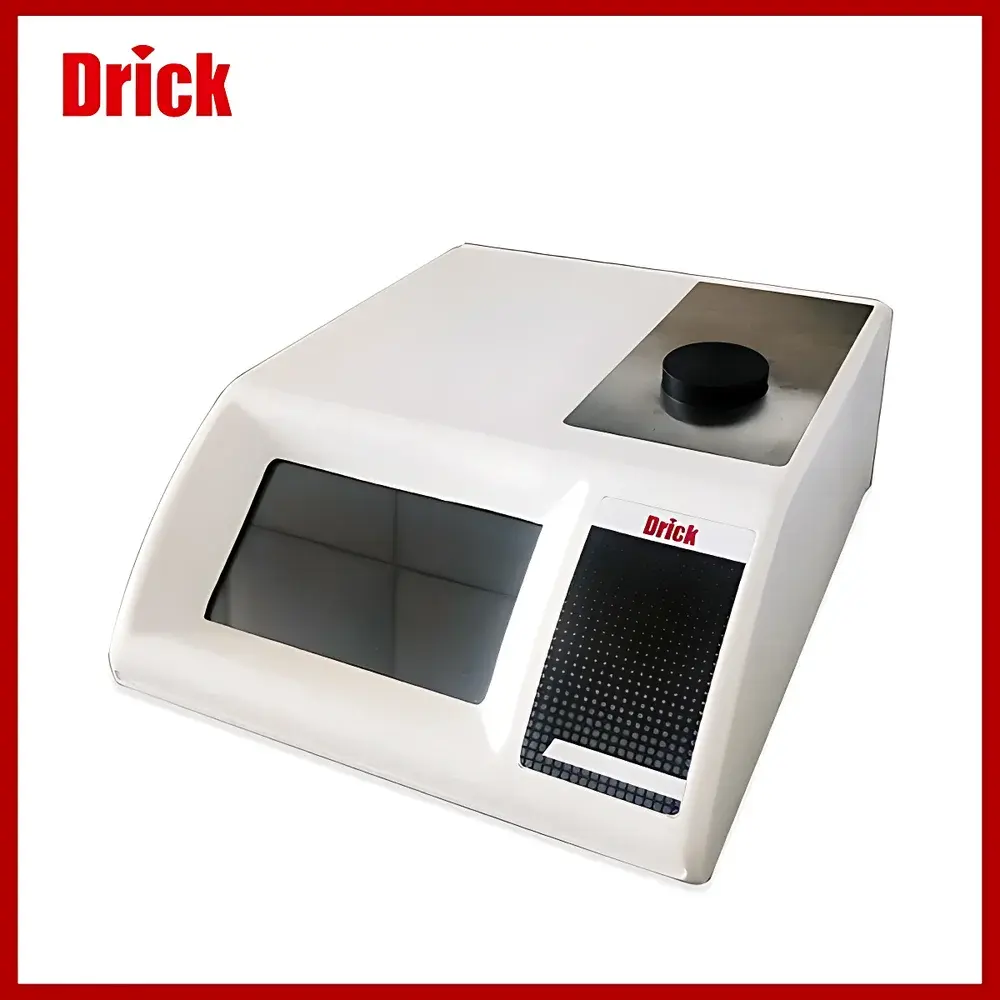
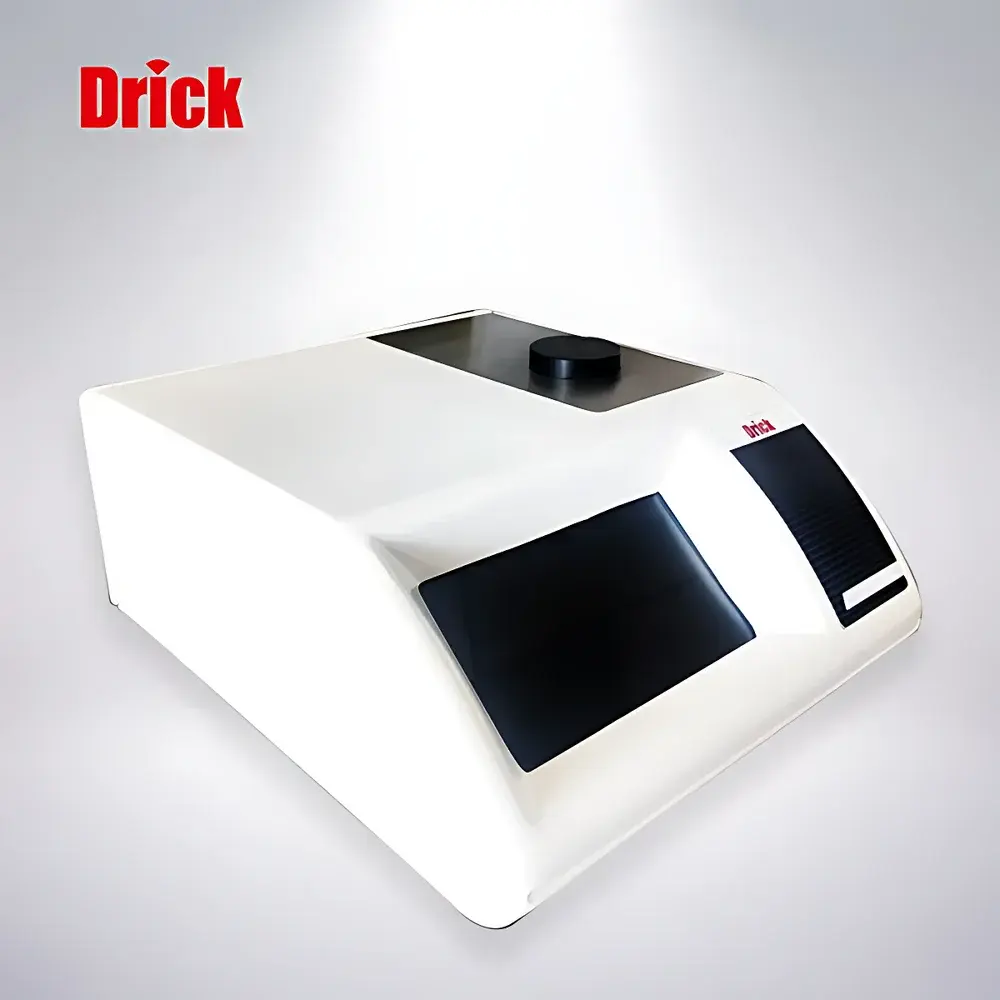
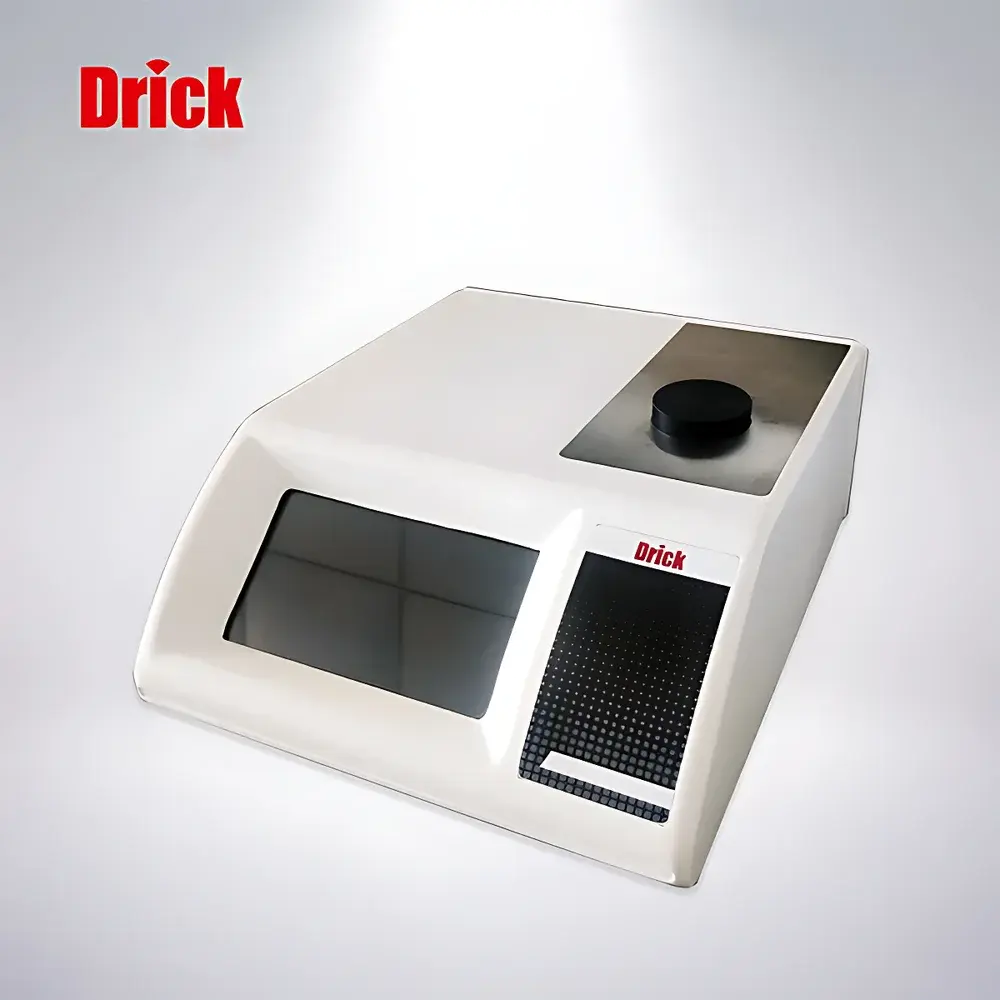
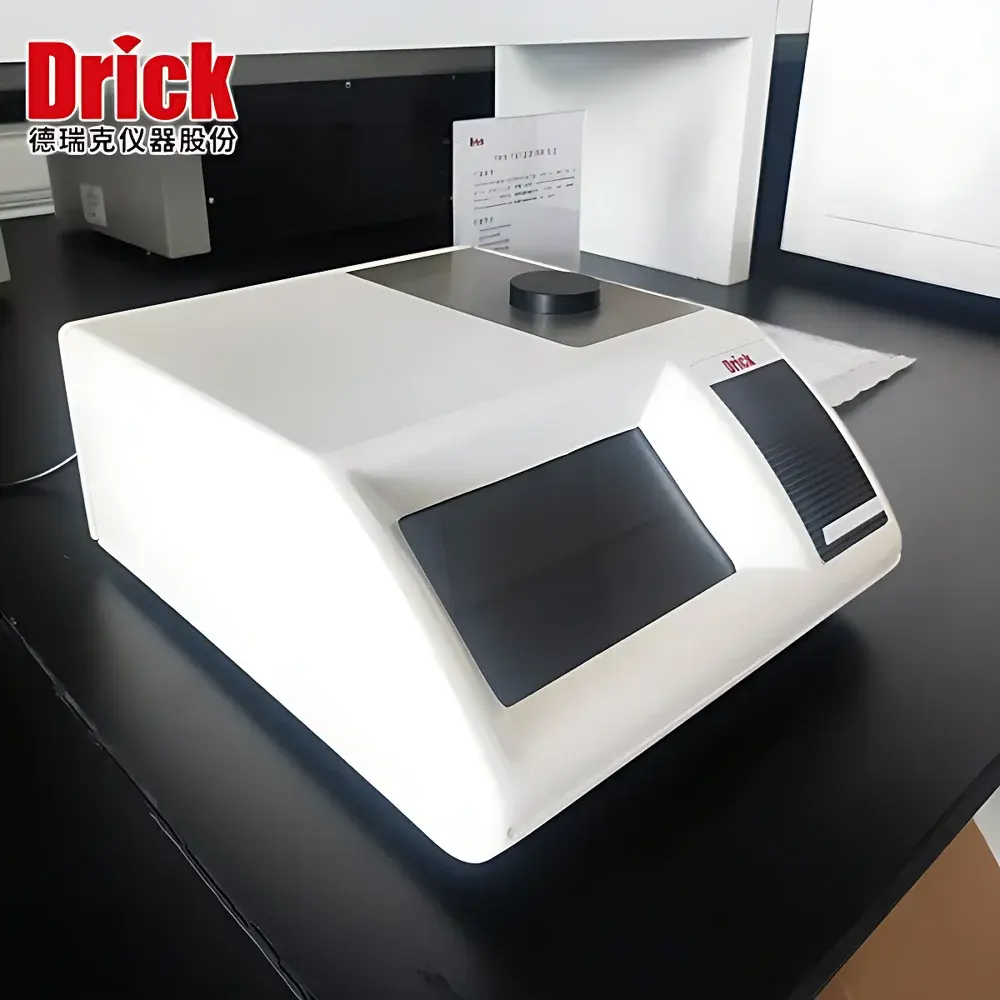
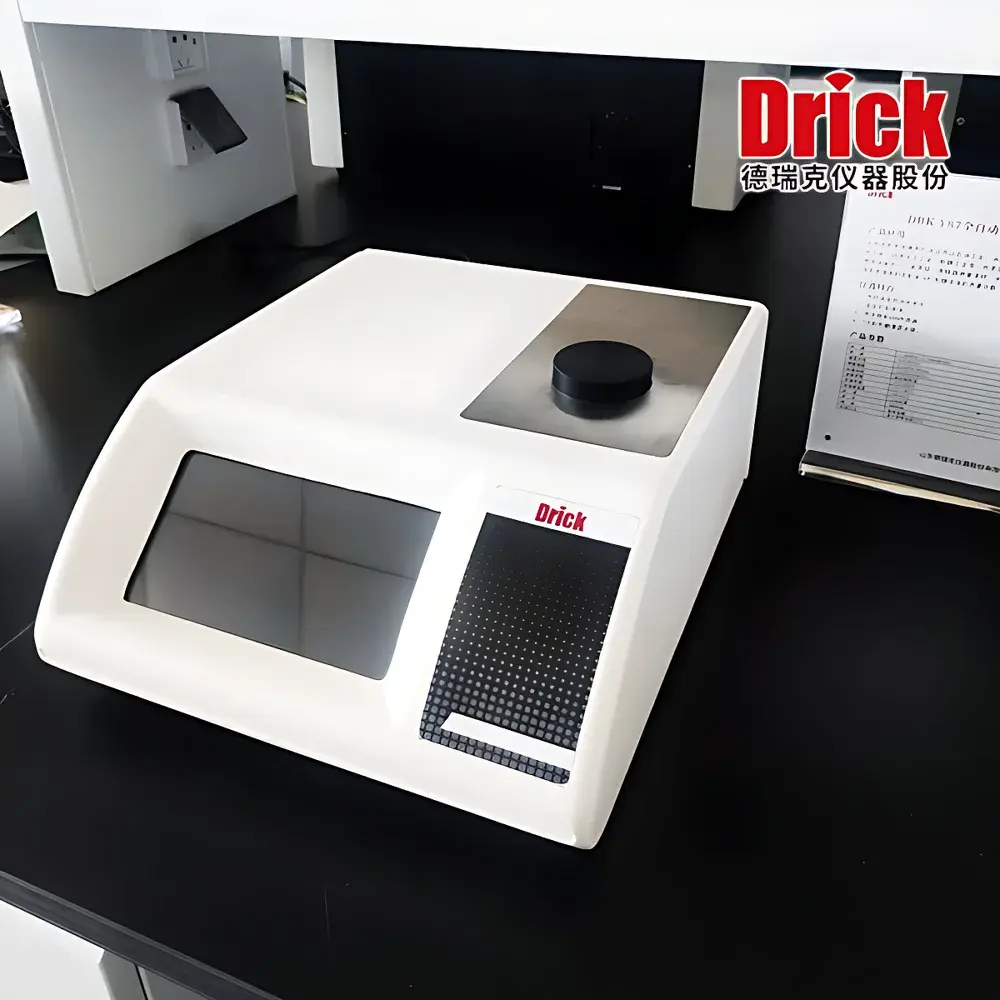
Drick DRK-Y87 Automated Refractometer with Peltier Temperature Control
| Brand | Drick |
|---|---|
| Origin | Shandong, China |
| Manufacturer Type | Direct Manufacturer |
| Product Category | Domestic |
| Model | DRK-Y87 |
| Product Type | Automated Refractometer |
| Temperature Control | Yes (Peltier) |
| Digital Display | Yes |
| Light Source | LED |
| Refractive Index Range | 1.30000–1.70000 (nD) |
| Refractive Index Accuracy | ±0.00002 |
| Brix Range | 0–100% |
| Brix Accuracy | ±0.01% |
| Temperature Range | 0–100 °C |
| Temperature Control Range | 5–90 °C |
| Temperature Stability | ±0.01 °C |
| Wavelength | 589 nm |
| Prism Material | Sapphire-grade |
| Sample Cell | Stainless Steel |
| Detector | High-resolution linear CCD array |
| Display | 7-inch FTF color touchscreen |
| Data Interfaces | USB, RS-232 |
| Dimensions | 430 × 380 × 300 mm |
| Weight | 5 kg |
| Power Supply | 110–220 V, 50–60 Hz |
Overview
The Drick DRK-Y87 Automated Refractometer is a precision optical instrument engineered for high-accuracy, temperature-stabilized measurement of refractive index (nD) and Brix concentration in liquid samples. Based on the principle of total internal reflection at a solid–liquid interface, the instrument determines nD by detecting the critical angle shift using a high-resolution linear CCD sensor array. Its integrated Peltier thermoelectric module enables precise, bidirectional temperature control—critical for eliminating thermal drift and ensuring metrological traceability in regulated environments. Designed for routine QC/QA laboratories and R&D settings, the DRK-Y87 complies with foundational requirements of ISO 21744:2018 (Refractometry — General principles), ASTM D1218 (Standard Test Method for Refractive Index of Hydrocarbon Liquids), and USP <731> (Refractive Index). The 589 nm monochromatic LED light source replicates the sodium D-line standard, guaranteeing spectral consistency without lamp aging or warm-up delays.
Key Features
- Double-temperature-controlled optical path: Independent control of prism and sample chamber ensures thermal equilibrium across the entire measurement interface, minimizing boundary-layer artifacts.
- Sapphire-grade measuring prism: Chemically inert, scratch-resistant, and thermally stable—ideal for aggressive solvents, viscous oils, and abrasive suspensions.
- High-resolution linear CCD detector: Captures >4096 pixels per scan with real-time centroid analysis, enabling sub-microrefractive-index resolution and robust signal-to-noise performance.
- 7-inch capacitive FTF color touchscreen: Intuitive GUI with multi-language support (English, German, French, Spanish), configurable calibration workflows, and on-device data review including trend graphs and statistical summaries (mean, SD, CV%).
- Stainless-steel sample cell with optimized fluidics: Supports manual pipetting or optional autosampler integration; accommodates volumes as low as 0.5 mL while minimizing residual carryover.
- Comprehensive thermal management: Peltier system achieves ±0.01 °C stability over 5–90 °C operating range, validated per ISO/IEC 17025:2017 clause 6.4.2 for equipment calibration traceability.
Sample Compatibility & Compliance
The DRK-Y87 reliably measures transparent, translucent, deeply colored, and moderately viscous liquids—including crude oil fractions, glycerol-based formulations, pharmaceutical syrups, fruit concentrates, essential oils, and polymer solutions—without requiring dilution or filtration. Its wide nD range (1.30000–1.70000) covers most organic solvents, aqueous electrolytes, and high-refractive-index resins. For regulated industries, the instrument supports audit-ready operation: timestamped measurements, user-access logging, and exportable CSV/Excel reports meet GLP and GMP documentation expectations. While not FDA 21 CFR Part 11–certified out-of-the-box, its firmware architecture permits configuration for electronic signature and audit trail compliance when deployed with validated LIMS or ELN systems.
Software & Data Management
Built-in firmware provides full local operation—no PC dependency required. All measurements are stored internally (≥10,000 records) with metadata (operator ID, date/time, temperature, calibration ID). USB and RS-232 interfaces enable direct export to laboratory information systems or spreadsheet applications. Optional PC software (DRK-DataLink v3.2) adds advanced features: multi-curve overlay, custom Brix/nD conversion tables (e.g., for sucrose vs. glucose matrices), statistical process control (SPC) charting, and PDF report generation compliant with ISO 17025 clause 7.8. Data integrity safeguards include write-protection modes, password-protected method editing, and automatic checksum validation on file transfer.
Applications
- Petrochemical QA: Determination of hydrocarbon purity, solvent recovery efficiency, and blending ratios in refinery streams.
- Food & Beverage: Brix quantification in juices, jams, dairy concentrates, and fermented beverages—aligned with AOAC 932.12 and ICUMSA methods.
- Pharmaceutical manufacturing: Excipient concentration verification (e.g., sorbitol, propylene glycol), syrup density monitoring, and cleaning validation rinse water analysis.
- Chemical R&D: Real-time reaction progress tracking via refractive index changes during esterification, polymerization, or hydrolysis.
- Academic research: Teaching optical property fundamentals, calibrating Abbe refractometers, and supporting physical chemistry labs on colligative properties.
FAQ
What is the wavelength accuracy specification for the 589 nm LED source?
The LED is spectrally centered at 589.3 ± 0.5 nm with full-width-at-half-maximum (FWHM) ≤2.0 nm, verified during factory calibration against NIST-traceable interference filters.
Can the DRK-Y87 measure turbid or suspended samples?
It is optimized for homogeneous liquids; highly scattering samples (e.g., emulsions with >1 µm droplets or particulates) may require centrifugation or filtration to avoid signal attenuation and edge-detection error.
Is external calibration verification possible?
Yes—users may perform intermediate checks using certified reference materials (CRMs) such as NIST SRM 1791 (water) or CMC-certified sucrose standards; calibration certificate templates are included in the software suite.
How often does the sapphire prism require cleaning or maintenance?
Under normal use, weekly ethanol/isopropanol wipe-down suffices; no polishing or re-coating is needed due to sapphire’s hardness (Mohs 9) and chemical resistance.
Does the instrument support multi-point temperature calibration?
Yes—up to five user-defined temperature points (e.g., 20 °C, 25 °C, 40 °C, 60 °C, 80 °C) can be validated and compensated within the calibration menu to correct for non-linear thermal response.





