
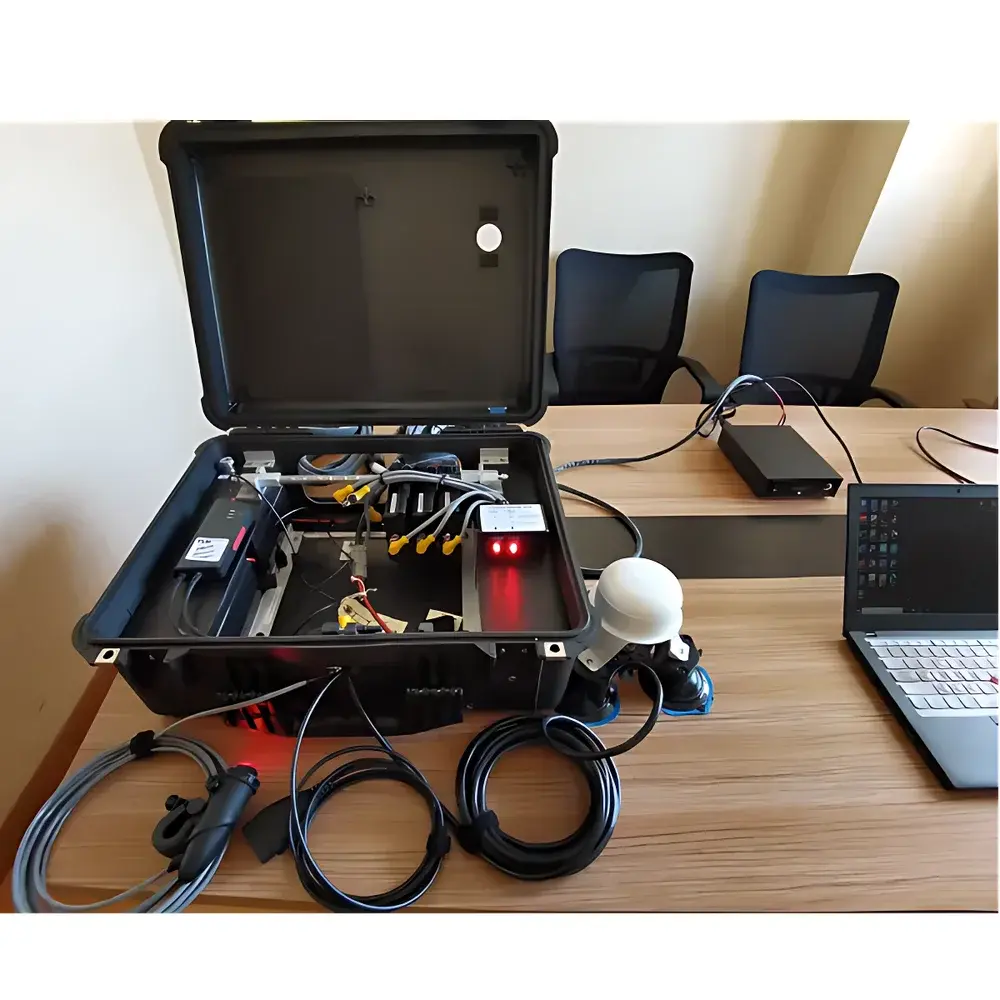
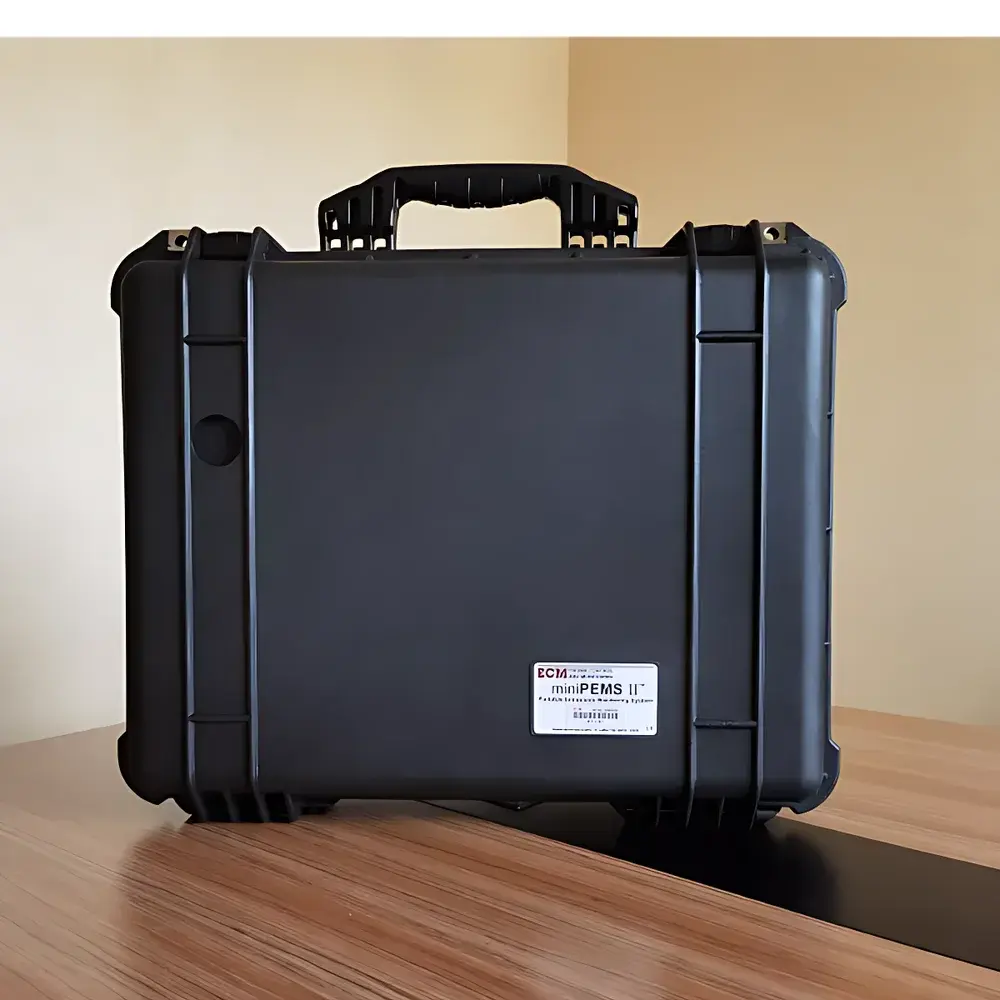
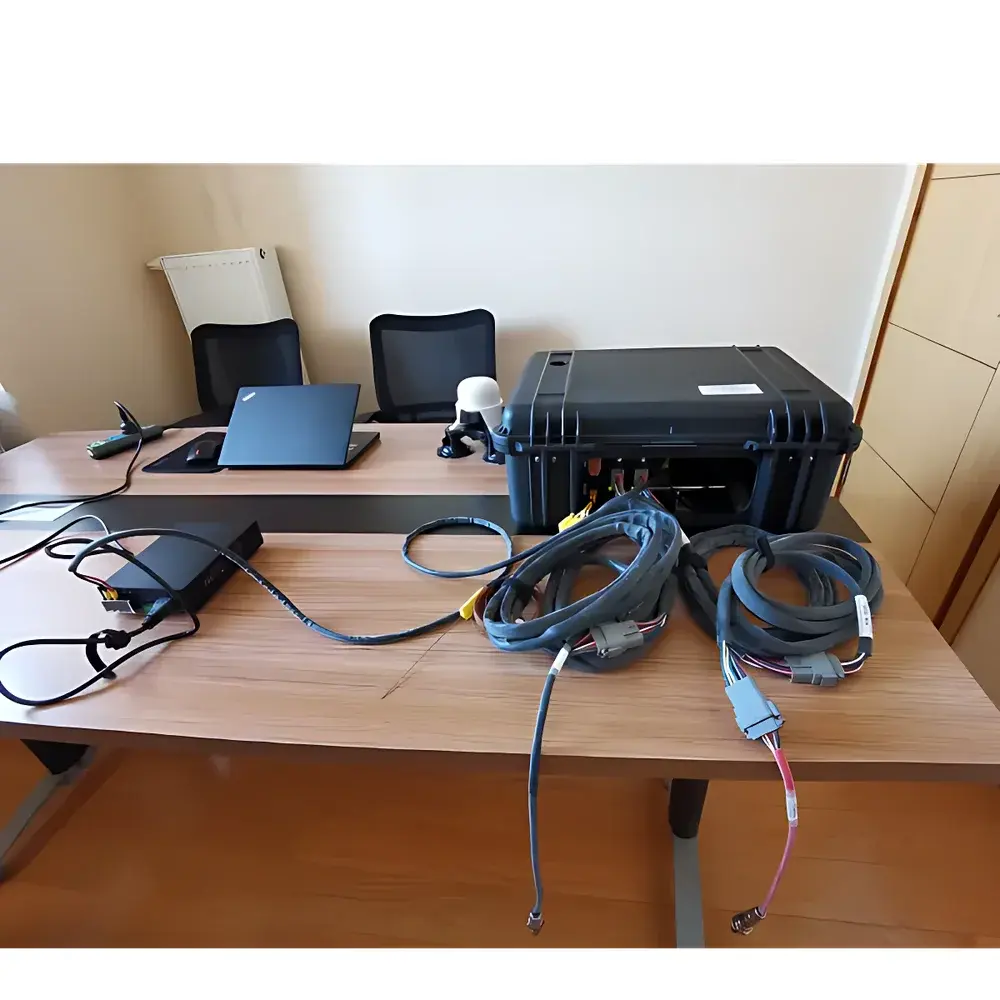
ECM miniPEMS2 Portable Emission Measurement System
| Brand | ECM |
|---|---|
| Origin | USA |
| Model | miniPEMS2 |
| Instrument Type | Portable |
| Detection Principle | Electrochemical Sensing |
| Dimensions (Case) | 535 mm × 445 mm × 222 mm |
| Weight (Fully Loaded) | ~13 kg |
| Power Supply | Four Parallel 12 V Batteries + External Charger & AC Input |
| Data Logging | Integrated CAN-based Recorder with Remote Control Interface |
| Modular Sensor Capacity | Up to 7 Simultaneous Measurement Modules |
| Communication | CAN 2.0B, GPS (10 Hz, WAAS-enabled), OBD-II Gateway Support |
| Compliance Context | Designed for field-deployable RDE (Real Driving Emissions) testing per UN Regulation No. 83, EU 2016/427, and EPA 40 CFR Part 1065 subpart J |
Overview
The ECM miniPEMS2 Portable Emission Measurement System is an engineered solution for real-world, on-road and on-engine exhaust gas analysis under dynamic operating conditions. Built upon electrochemical sensing principles—optimized for high selectivity, low cross-sensitivity, and rapid response—the system delivers trace-level quantification of regulated gaseous pollutants including NOx, CO, CO2, O2, NH3, and lambda (air–fuel ratio), alongside concurrent physical parameters such as temperature, pressure, relative humidity, dew point, and vehicle kinematics. Its compact architecture integrates ceramic-based electrochemical sensors—significantly smaller, thermally stable, and mechanically robust compared to conventional heated zirconia or NDIR-based units—enabling reliable deployment in mobile test benches, chassis dynamometers, and uncontrolled ambient environments. The miniPEMS2 complies with the hardware performance requirements defined in UN Regulation No. 83 (RDE), EU Commission Regulation (EU) 2016/427, and U.S. EPA 40 CFR Part 1065 Subpart J for portable emission measurement systems used in regulatory conformity and engineering development.
Key Features
- Ceramic electrochemical sensor platform offering improved thermal shock resistance, reduced warm-up time (<60 s typical), and extended operational lifetime under cyclic thermal loading.
- Modular CAN-based architecture supporting up to seven simultaneous measurement modules—including NOx/O2/lambda, CO/CO2/O2/lambda, NH3, PM mass & number concentration, barometric & environmental parameters, multi-channel temperature, analog signal acquisition (10-channel GPI), GPS/WAAS positioning (10 Hz), and full OBD-II data streaming.
- Integrated data logging unit with internal storage, timestamp synchronization (GPS-derived UTC), and dual-mode communication (CAN bus + USB/RS232) for real-time telemetry or post-test download.
- Self-contained portable enclosure (535 × 445 × 222 mm) housing all electronics, four parallel 12 V rechargeable batteries (with external charger), power distribution board, remote control interface, and configurable I/O routing.
- Factory-calibrated sensor modules traceable to NIST-certified reference gases; calibration verification supported via built-in zero/span check routines and user-initiated multi-point adjustment.
Sample Compatibility & Compliance
The miniPEMS2 is validated for direct sampling from raw or diluted exhaust streams across light-duty, heavy-duty, and non-road diesel and gasoline engines. It accommodates exhaust gas temperatures up to 200 °C at the probe inlet (with optional cooled probe configurations for higher-temperature applications). All gas measurement modules meet ISO 16183:2019 (portable emissions measurement systems) linearity, repeatability, and response time criteria. The system supports audit-ready data integrity through time-stamped, tamper-evident binary logging, metadata tagging (vehicle ID, test route, operator ID), and optional integration with GLP/GMP-compliant laboratory information management systems (LIMS). While not a certified reference method per ISO 8712 or EN 15085, it serves as a primary tool for engineering-grade emission mapping, RDE route validation, and pre-certification durability screening under ISO 26262 functional safety-aware test protocols.
Software & Data Management
ECM’s miniPEMS2 Configuration Tool is a Windows-based desktop application enabling comprehensive instrument setup, calibration management, real-time parameter visualization, and structured data export. Users configure module-specific sampling rates (1–100 Hz), apply linear/nonlinear correction algorithms, define trigger events (e.g., engine start, speed threshold crossing), and assign CAN message IDs for OBD-II and vehicle bus integration. All logged datasets are stored in standardized .csv and binary .ecmlog formats, preserving native resolution, timestamps, and sensor health flags. The software supports batch processing, spectral averaging, and alignment with external GPS tracks or video logs. Exported data conforms to SAE J2932 and EU 2017/1151 Annex IIIa metadata schemas, facilitating automated ingestion into regulatory reporting platforms and third-party analytics tools such as MATLAB, Python Pandas, or AVL PUMA.
Applications
- Real Driving Emissions (RDE) testing for EU type-approval and conformity-of-production audits.
- Engine development and calibration—especially for SCR, GPF, and lean-burn strategies requiring fast-response NH3 and particulate metrics.
- In-use compliance monitoring for municipal fleets, transit authorities, and government procurement programs.
- Mobile source air toxics (MSAT) research, including cold-start and transient-cycle pollutant profiling.
- Verification of aftertreatment system efficiency under variable load, ambient, and fuel composition conditions.
- Academic and independent lab studies on alternative fuels (e.g., bio-CNG, hydrogen blends) and low-carbon combustion modes.
FAQ
What gas species can the miniPEMS2 measure simultaneously?
The system supports concurrent measurement of NO, NO2, NOx, CO, CO2, O2, NH3, lambda, PM mass concentration (mg/m³), and PM number concentration (#/cm³), depending on selected module combinations.
Is the miniPEMS2 compliant with EPA or EU certification requirements?
It meets the technical specifications for portable emission measurement systems outlined in EPA 40 CFR Part 1065 Subpart J and EU 2016/427 Annex II, but final certification requires full system validation by an accredited test laboratory per UN R83 Annex 8B procedures.
Can the system be integrated with chassis dynamometers or engine test stands?
Yes—via standard CAN 2.0B interface, analog I/O expansion (10-channel GPI module), and programmable trigger logic, enabling synchronized acquisition with torque, speed, fuel flow, and coolant temperature signals.
How is calibration maintained during extended field deployments?
Each electrochemical module includes onboard temperature and pressure compensation; zero/span checks are performed using certified span gases before and after critical test cycles, with drift logs automatically appended to dataset metadata.
Does the miniPEMS2 support remote diagnostics or over-the-air updates?
Firmware updates are delivered via USB or SD card; remote diagnostics require local network access to the recorder’s embedded web interface, which provides live status, error logs, and sensor voltage diagnostics—but no cloud connectivity is enabled by default for data security and regulatory traceability.







