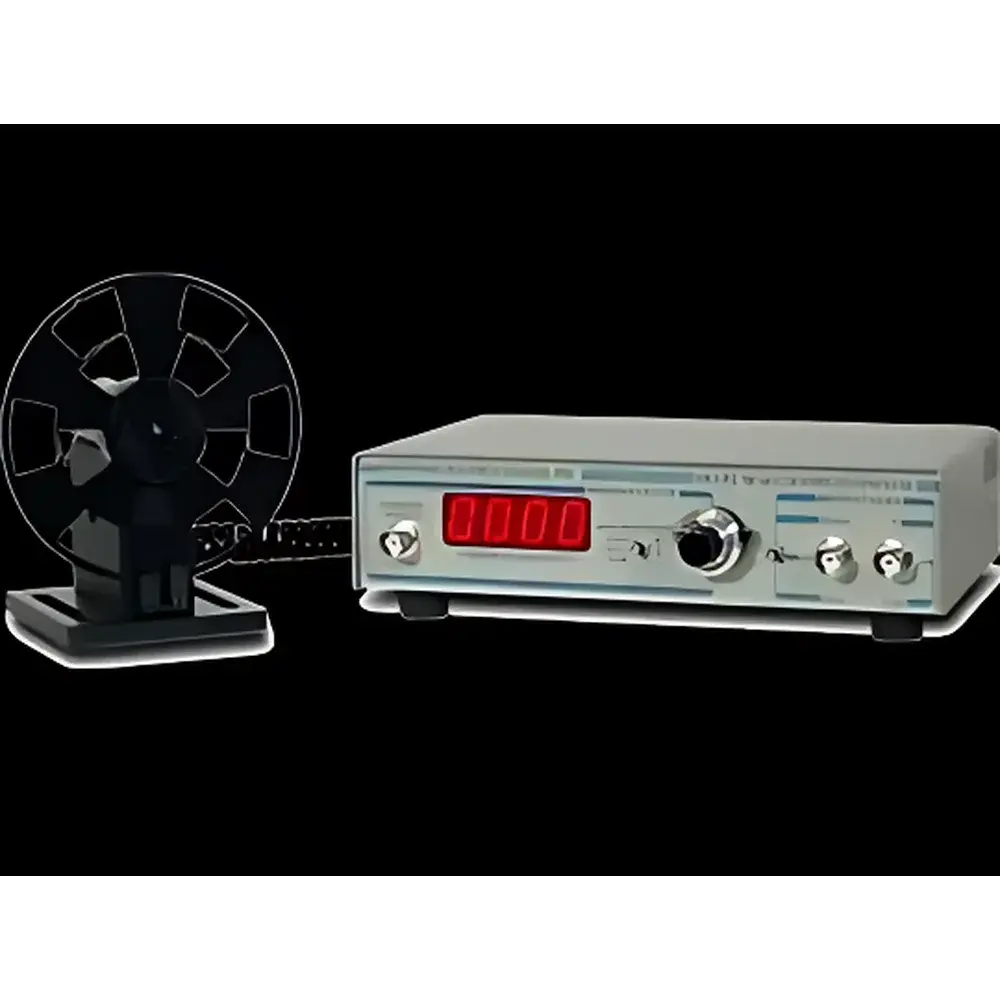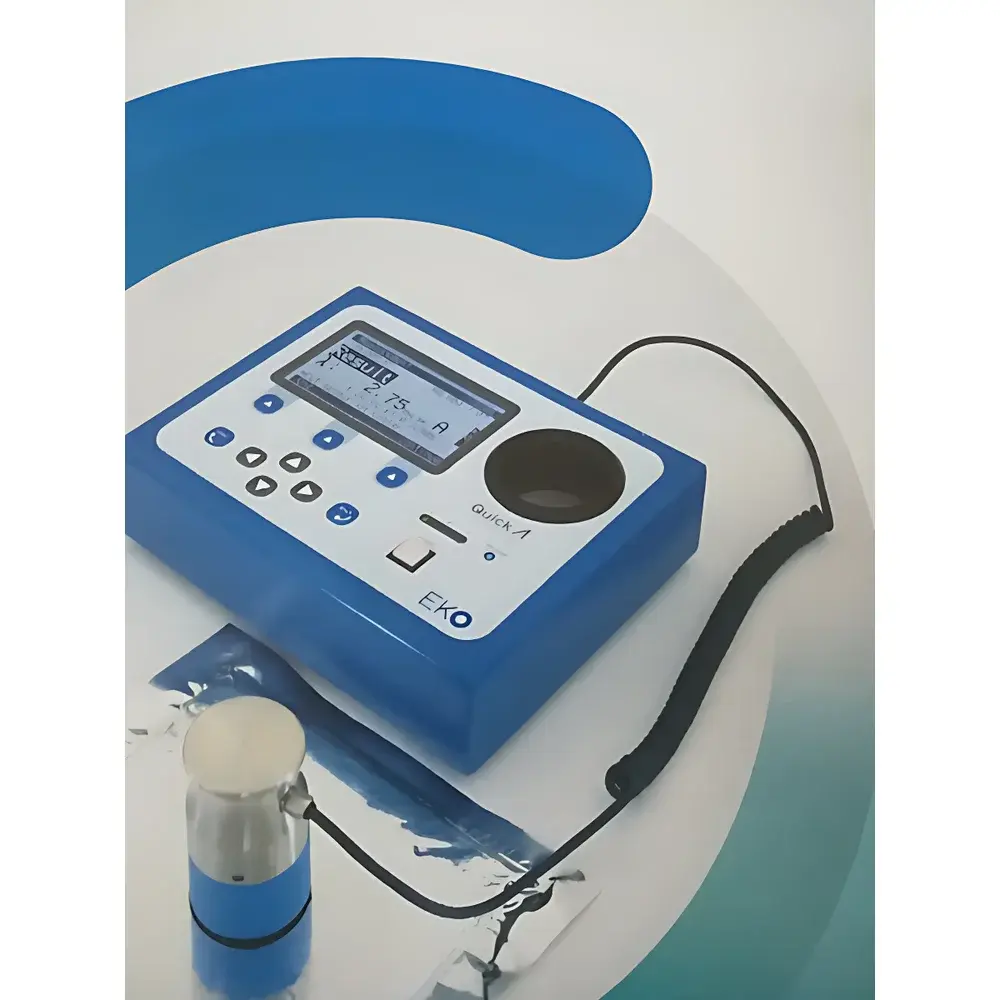
EKO HC-10 Portable Transient Plane Source (TPS) Thermal Conductivity Analyzer
| Origin | Japan |
|---|---|
| Manufacturer Type | Authorized Distributor |
| Origin Category | Imported Instrument |
| Model | HC-10 |
| Pricing | Available Upon Request |
Overview
The EKO HC-10 Portable Thermal Conductivity Analyzer is a handheld, transient-plane-source (TPS)–based instrument engineered for rapid, non-destructive thermal property assessment of solid and quasi-solid materials. It operates on the principle of transient heat conduction: a thin, resistively heated sensor—acting simultaneously as both heat source and temperature probe—is placed in direct contact with the sample surface. A short-duration, controlled current pulse generates a known thermal impulse; the resulting temperature rise over time is recorded with high temporal resolution. Thermal conductivity (λ, W/m·K) is derived from the slope of the log(ΔT) vs. log(t) curve during the early-time transient regime, under conditions satisfying the infinite-slab approximation. This method eliminates the need for steady-state equilibration, enabling reliable measurements within 60 seconds per test—ideal for high-throughput QC labs, R&D screening, and field-deployable material evaluation where conventional guarded-hot-plate or laser-flash systems are impractical.
Key Features
- Handheld, battery-operated design with integrated sensor probe for on-site and benchtop use without external fixtures or clamping mechanisms.
- Transient plane source (TPS) measurement principle compliant with ISO 22007-2 and ASTM D5470 for thermal conductivity determination of isotropic, homogeneous solids.
- Single-button operation with real-time display of measured λ-value, elapsed time, and sensor contact status indicator.
- Auto-calibration function using certified reference standards (e.g., Pyrex glass, PMMA, expanded polystyrene) traceable to NIST-maintained thermal property databases.
- USB 2.0 interface supporting data export and remote control via proprietary Windows-compatible software with audit-trail logging capability.
- Rugged aluminum housing rated IP54 for dust and splash resistance; operational ambient range: 5–40 °C with <±0.5 °C internal temperature stabilization.
Sample Compatibility & Compliance
The HC-10 accommodates a broad spectrum of low-to-medium-conductivity materials, including vacuum-insulated panels (VIPs), elastomers, thermoplastics, ceramics, sintered powders, float glass, and metallic foils (with appropriate surface preparation). It is validated for use with heterogeneous composites exhibiting thickness ≥3 mm and lateral dimensions ≥50 mm × 50 mm. Measurement validity requires planar, dry, and thermally stable surfaces; highly reflective or ultra-low-emissivity metals require graphite-based thermal interface enhancement. The system meets essential requirements of IEC 61000-6-3 (EMC) and conforms to CE marking directives. Data acquisition protocols support GLP-compliant documentation when used with enabled software audit trails, and raw measurement logs are timestamped and user-ID tagged for FDA 21 CFR Part 11 readiness (electronic signature configuration optional).
Software & Data Management
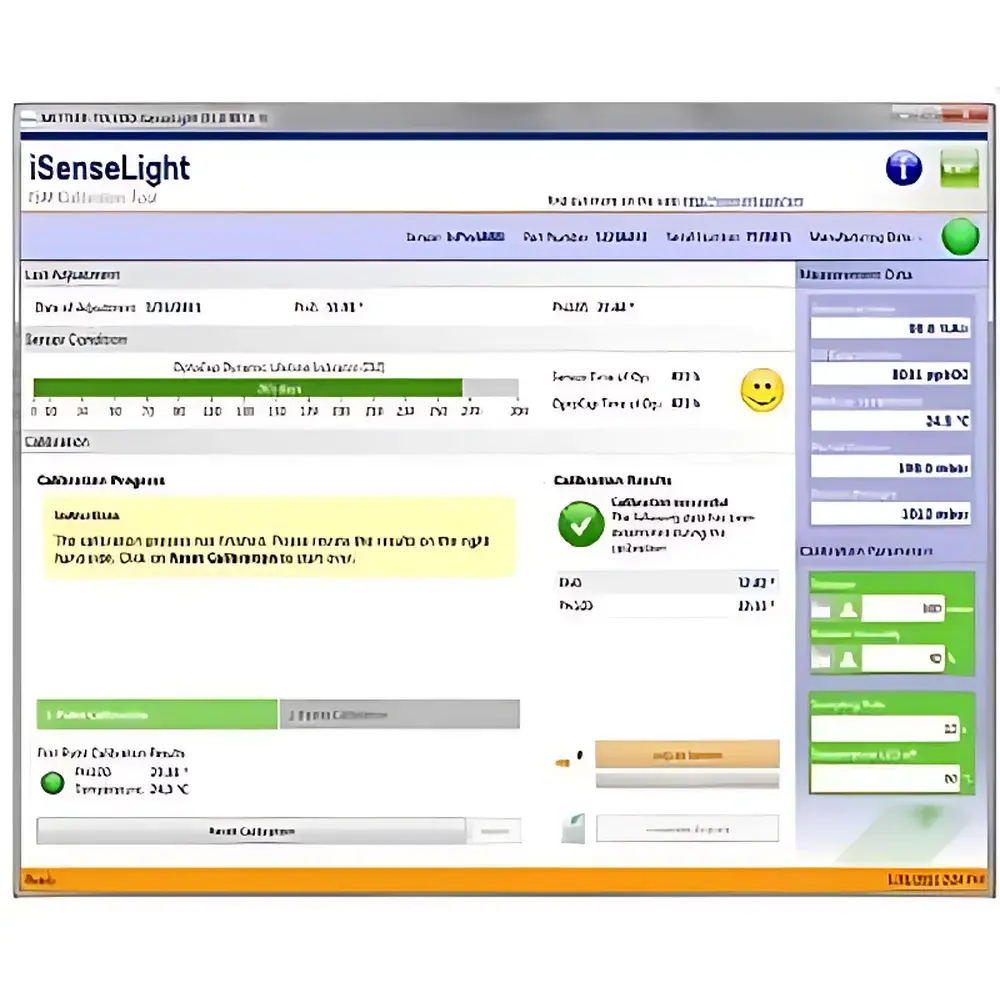
The HC-10 PC software provides full instrument control, real-time graphing of ΔT(t) curves, automatic λ-calculation with uncertainty estimation (based on standard deviation across three consecutive pulses), and batch report generation in PDF/CSV formats. All measurement sessions are archived with metadata—including operator ID, calibration certificate ID, environmental temperature/humidity (if connected external sensor), and raw voltage-time records. Software supports custom material classification rules (e.g., “VIP Grade A: λ ≤ 0.008 W/m·K”) with pass/fail flagging and export to LIMS via ODBC. Firmware updates and calibration certificate import are managed through secure, version-locked software modules.
Applications
- Quality assurance of vacuum-insulated panels (VIPs) in cold-chain packaging and building envelope systems.
- Rapid screening of polymer formulations during compounding and extrusion process development.
- In-line thermal grading of ceramic substrates for power electronics and LED heat sinks.
- Material qualification for aerospace insulation blankets and cryogenic gaskets.
- Educational laboratories requiring intuitive, safe, and repeatable thermal transport demonstrations.
- Field verification of thermal performance degradation in aged elastomeric seals and composite laminates.
FAQ
What is the minimum sample thickness required for accurate measurement?
A minimum thickness of 3 mm is recommended to ensure one-dimensional heat flow and avoid backside boundary effects.
Can the HC-10 measure anisotropic materials such as fiber-reinforced composites?
It provides bulk effective thermal conductivity perpendicular to the sensor contact plane; directional anisotropy requires orthogonal reorientation and comparative testing.
Is calibration traceable to national metrology institutes?
Yes—certified reference samples (glass, PMMA, EPS) are supplied with calibration certificates traceable to NMIJ/AIST (Japan) and cross-validated against NIST SRM 1450c.
Does the instrument require periodic recalibration by the user?
No routine recalibration is needed; however, daily verification using the included reference standard is recommended prior to critical measurements.
Can data be exported directly to Excel or statistical analysis platforms?
Yes—CSV exports include raw voltage-time series, fitted parameters, and metadata; Python and MATLAB APIs are available upon request for automated integration.