
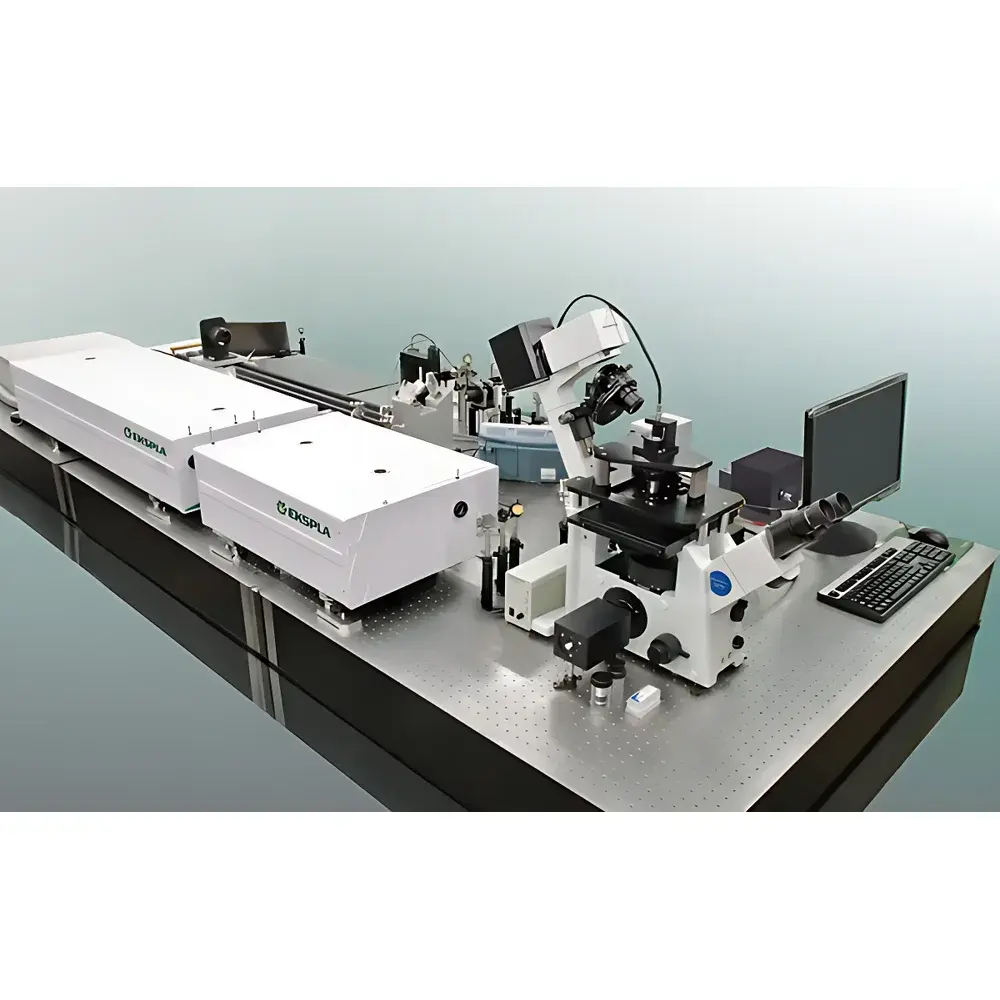
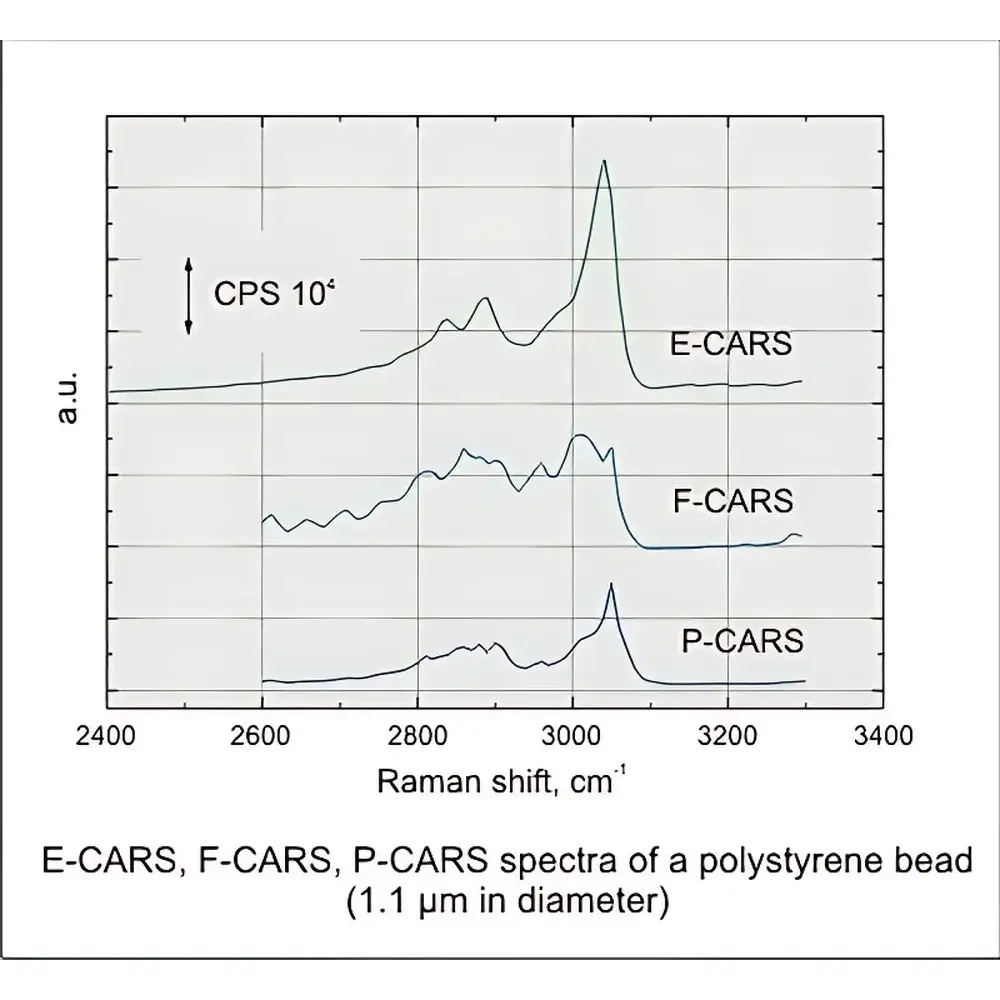
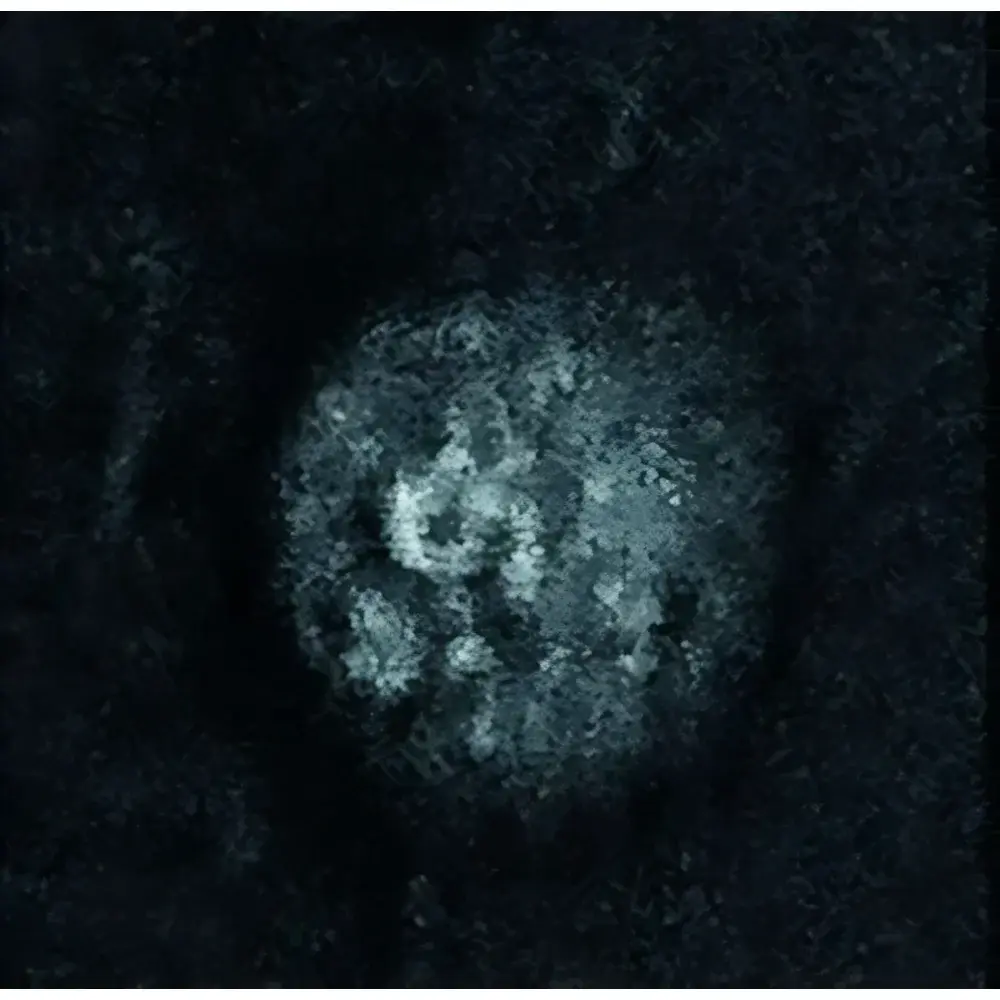
Ekspla CARS Coherent Anti-Stokes Raman Scattering Microspectroscope
| Brand | Ekspla |
|---|---|
| Origin | Lithuania |
| Manufacturer Type | Authorized Distributor |
| Import Status | Imported Instrument |
| Model | CARS |
| Instrument Type | Confocal Micro-Raman Spectrometer |
| Spectral Range | 740–4000 cm⁻¹ |
| Spectral Resolution | 1 cm⁻¹ |
| Spatial Resolution | 0.5 µm |
| Minimum Wavenumber | 740 cm⁻¹ |
| Spectral Reproducibility | ±1% |
Overview
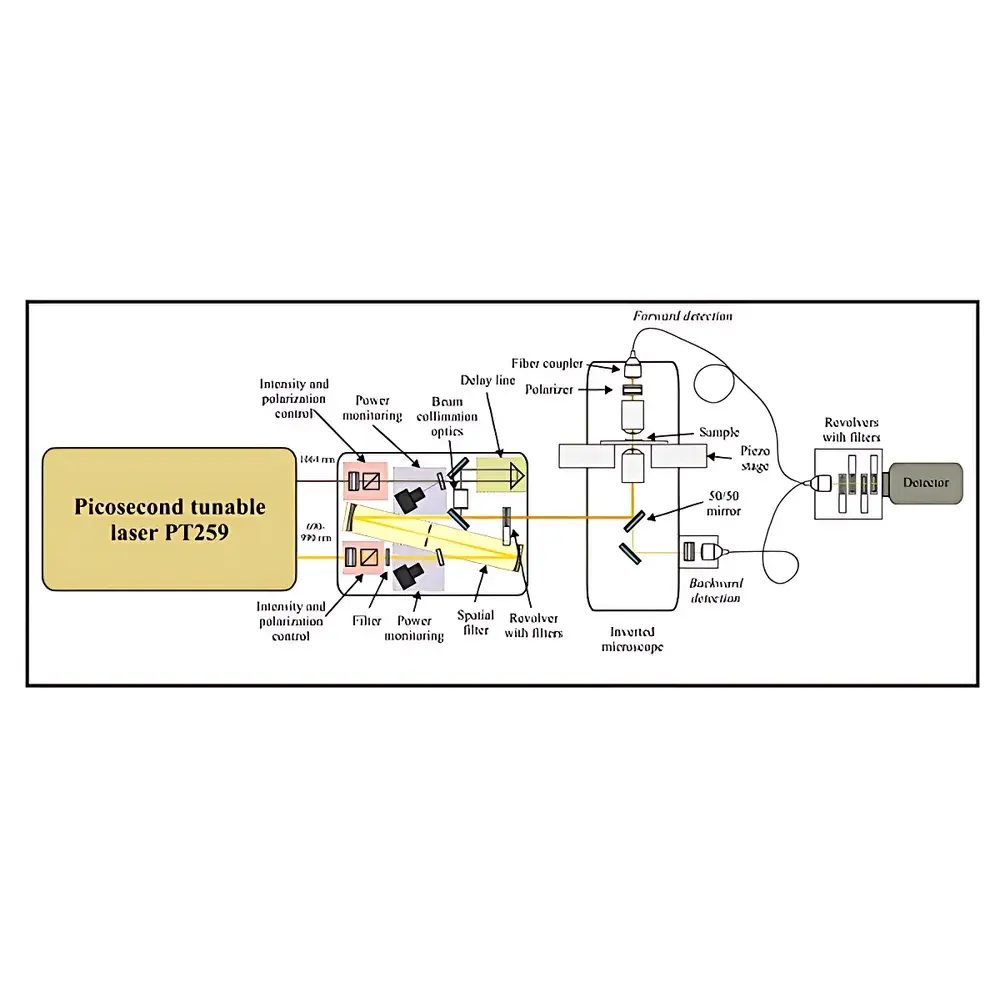
The Ekspla CARS Coherent Anti-Stokes Raman Scattering Microspectroscope is a high-performance, label-free nonlinear optical imaging platform engineered for quantitative vibrational microspectroscopy at sub-diffraction spatial resolution. Unlike spontaneous Raman scattering—which suffers from weak signal intensity and long acquisition times—CARS leverages a third-order nonlinear optical process involving three synchronized laser fields (pump, Stokes, and probe) to generate coherent, resonantly enhanced anti-Stokes radiation at frequency ωCARS = ωpump − ωStokes + ωprobe. When the frequency difference (ωpump − ωStokes) matches a molecular vibrational resonance (ωvib), the CARS signal exhibits strong, background-suppressed enhancement—enabling rapid, chemically specific imaging of intrinsic biomolecular vibrations without exogenous labeling or photobleaching. Integrated with Ekspla’s PT259 ultrafast tunable laser system, this instrument delivers broadband spectral coverage from 740 to 4000 cm⁻¹ with 1 cm⁻¹ spectral resolution and diffraction-limited spatial resolution down to 0.5 µm in confocal configuration—making it suitable for dynamic, non-invasive interrogation of live cells, tissue sections, and soft materials under physiological conditions.
Key Features
- Label-free, non-destructive chemical imaging with inherent molecular specificity based on intrinsic vibrational modes
- Sub-micron spatial resolution (0.5 µm) enabled by confocal laser scanning architecture and high-NA objective integration
- Broadband tunability across 740–4000 cm⁻¹, covering key biochemical fingerprint regions (e.g., CH-stretching, C=O, C–H bending, and skeletal vibrations)
- High spectral reproducibility (±1%) supported by active wavelength stabilization and real-time dispersion calibration
- Integrated Ekspla PT259 ultrafast optical parametric amplifier (OPA) delivering synchronized pump (1030 nm), Stokes (tunable 1150–1600 nm), and probe (800 nm) pulses with <100 fs duration and kHz repetition rate
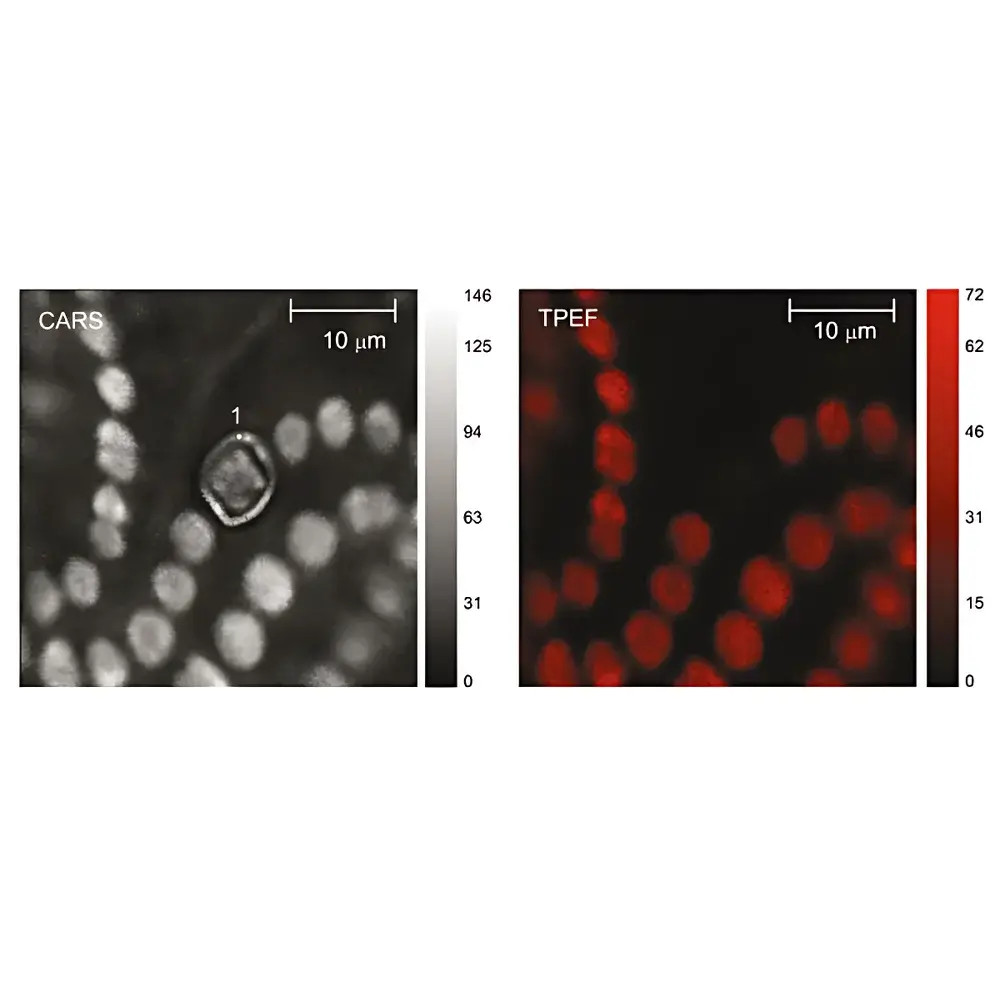
- Modular optical design supporting seamless reconfiguration for complementary modalities: two-photon excitation fluorescence (TPEF) and second-harmonic generation (SHG) microscopy
- Real-time spectral acquisition with lock-in detection and balanced photodiode readout to suppress non-resonant background contributions
Sample Compatibility & Compliance
The Ekspla CARS system is optimized for transparent and semi-transparent biological specimens—including live adherent and suspended mammalian cells, 3D organoids, thin tissue cryosections, lipid droplets, and polymer-based biomaterials. Its near-infrared excitation scheme minimizes photon-induced damage and autofluorescence interference, satisfying critical requirements for longitudinal live-cell monitoring (e.g., lipid metabolism tracking over hours). The instrument complies with IEC 61000-6-3 (EMC emission standards) and IEC 60825-1:2014 (laser safety Class IV certification). Data acquisition workflows support audit-trail-enabled operation per FDA 21 CFR Part 11 guidelines when paired with validated third-party laboratory information management systems (LIMS). All spectral metadata—including laser parameters, detector gain, scan settings, and calibration references—are embedded in vendor-neutral HDF5 files compliant with NIH-supported Bio-Formats specifications.
Software & Data Management
Control, acquisition, and analysis are unified within Ekspla’s CARS Studio software suite—a Windows-based application built on Qt and Python (SciPy, NumPy, scikit-image). It provides real-time spectral visualization, point-scan, line-scan, and hyperspectral image cube acquisition with automated background subtraction, Lorentzian/Gaussian peak fitting, and multivariate curve resolution (MCR-ALS). Raw interferograms and calibrated spectra are stored in open-format HDF5 containers with embedded JSON metadata headers. Batch processing pipelines support spectral unmixing, PCA-based clustering, and registration to co-acquired TPEF/SHG channels. Export options include CSV, SPC, JCAMP-DX, and MIR-XML for interoperability with commercial chemometric platforms (e.g., Unscrambler X, MATLAB, OriginLab) and public spectral libraries (NIST, SDBS).
Applications
- Intracellular lipid droplet dynamics and composition mapping in live adipocytes and hepatocytes
- Myelin sheath integrity assessment in neural tissue without fixation or staining
- Real-time monitoring of drug uptake and intracellular distribution in tumor spheroids
- Quantitative protein secondary structure analysis in hydrated biofilms and hydrogels
- 3D volumetric chemical tomography of plant cell walls and fungal hyphae
- Correlative CARS–TPEF–SHG imaging for multimodal structural–functional phenotyping in developmental biology
- Process analytical technology (PAT) applications in biopharmaceutical manufacturing (e.g., in-line monitoring of monoclonal antibody aggregation states)
FAQ
What distinguishes CARS from spontaneous Raman spectroscopy?
CARS is a coherent, nonlinear process generating directional, laser-like signal output with orders-of-magnitude higher intensity than spontaneous Raman scattering—enabling video-rate imaging and reduced phototoxicity in live samples.
Can this system perform quantitative concentration measurements?
Yes—when combined with internal reference standards and calibrated using known polymer or lipid phantoms, CARS signal intensities exhibit linear response to molecular number density within defined dynamic ranges (validated per ISO 17025 protocols).
Is the system compatible with standard inverted or upright microscope frames?
It integrates natively with Nikon Eclipse Ti2 and Zeiss Axio Observer platforms via OEM-compatible optical coupling ports and motorized filter turret interfaces.
Does the software support automated spectral library matching?
Yes—CARS Studio includes a customizable spectral matching engine using dot-product correlation and constrained least-squares fitting against user-defined or NIST-referenced vibrational databases.
What maintenance is required for long-term stability?
Annual wavelength recalibration and OPA crystal alignment verification are recommended; all optical components are sealed and humidity-controlled to ensure >5 years operational lifetime under GLP-compliant lab environments.




