
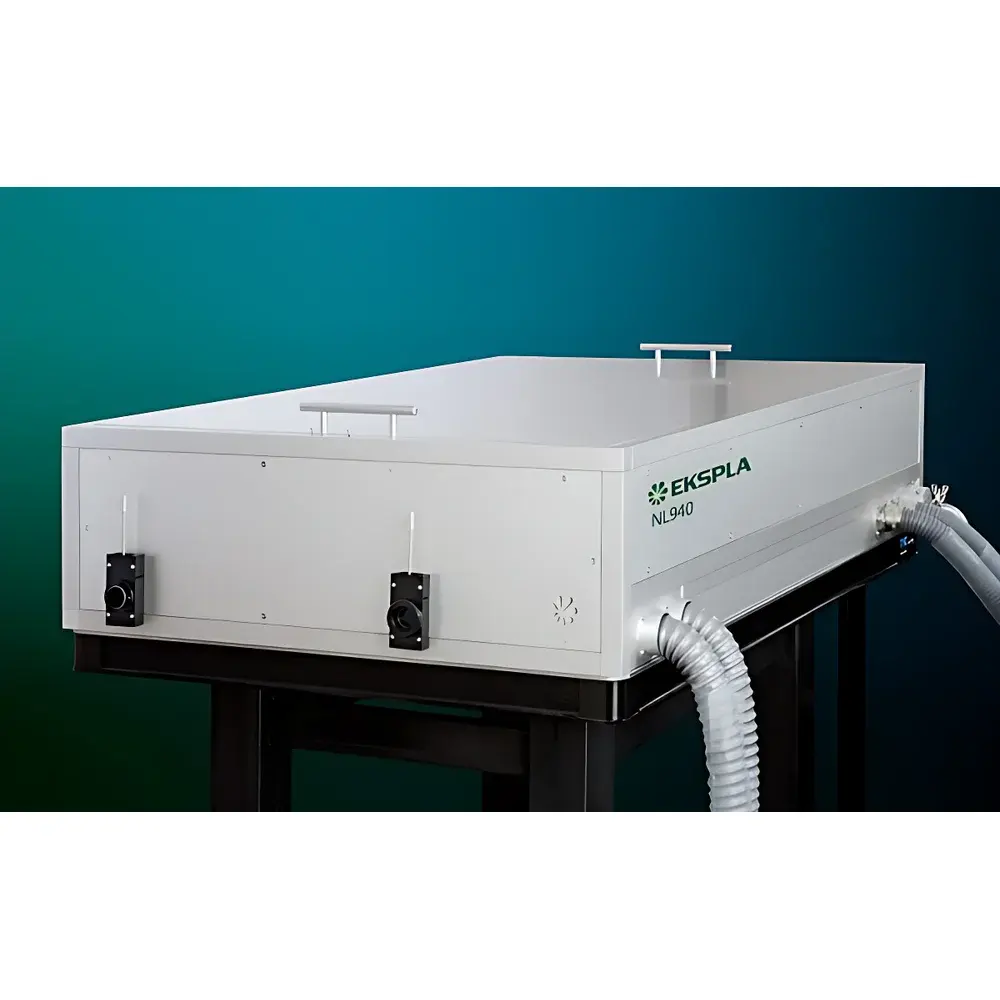
Ekspla NL940 High-Energy Temporal-Shaping Nanosecond Laser System
| Brand | Ekspla |
|---|---|
| Origin | Lithuania |
| Manufacturer Type | Original Equipment Manufacturer (OEM) |
| Product Category | Imported Scientific Laser System |
| Model | NL940 |
| Core Architecture | Diode-Pumped Solid-State (DPSS) Regenerative Amplifier with OPCPA Front-End Pumping Capability |
| Output Wavelengths | 1064 nm (fundamental), 532 nm (frequency-doubled) |
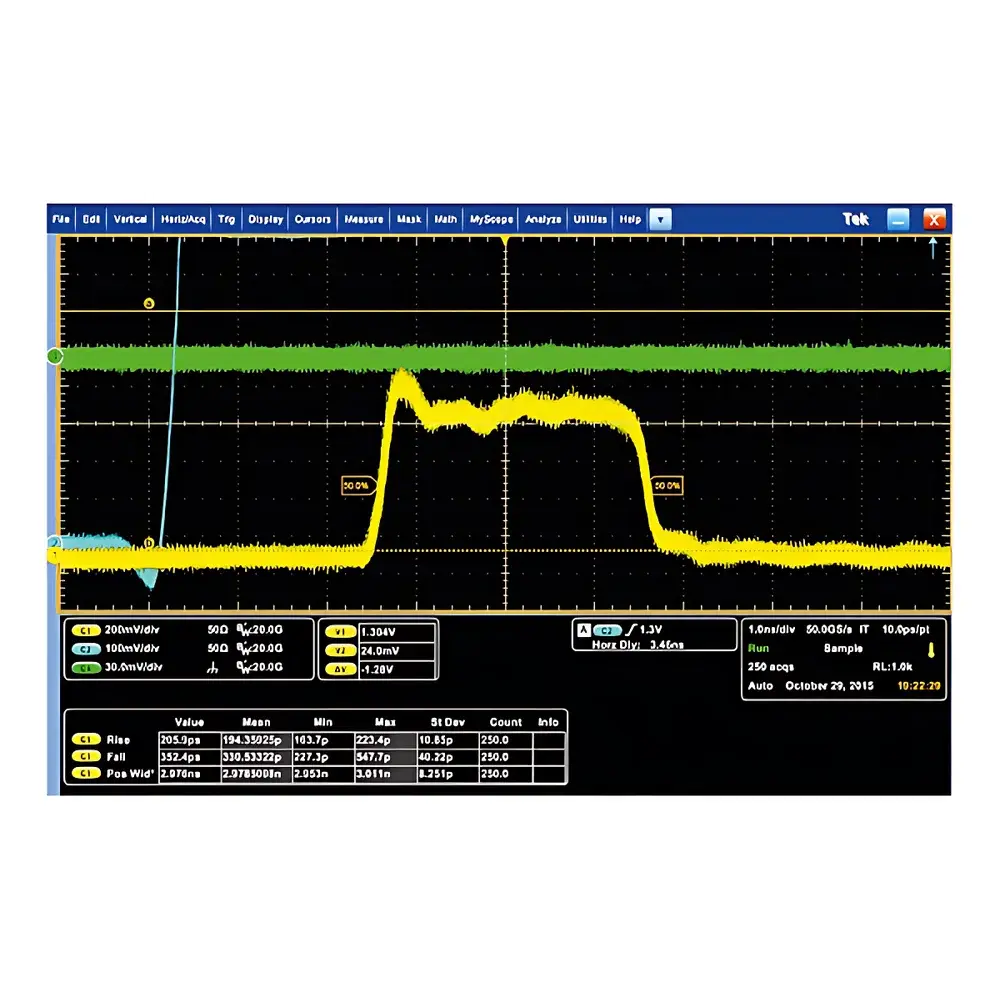
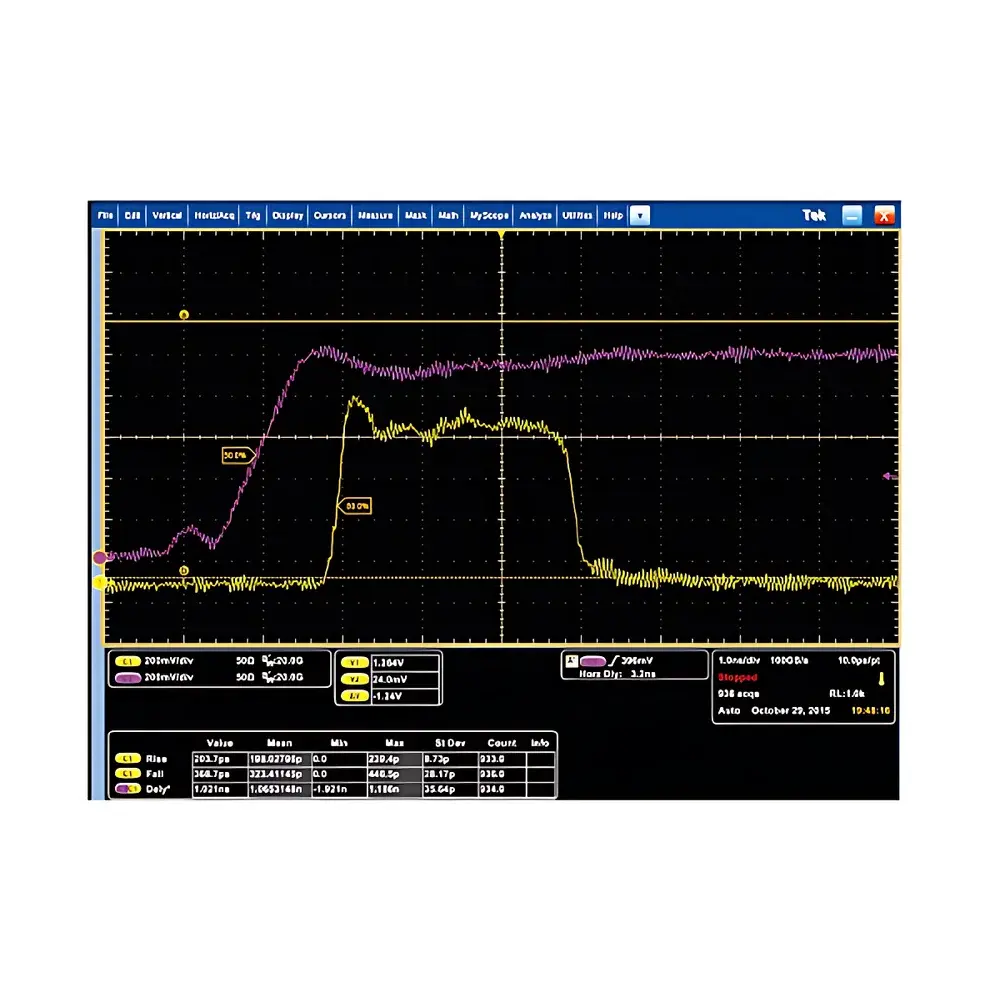
| Pulse Duration | 3–10 ns (adjustable, temporally shaped) |
| Repetition Rate | Up to 10 Hz |
| Maximum Pulse Energy | 10 J @ 1064 nm |
| Beam Delivery | Free-space collimated output on optical table platform |
| Primary Applications | OPCPA pump source, Ti:Sapphire amplifier pumping, laser peening, high-energy plasma and shockwave physics |
Overview
The Ekspla NL940 is a high-energy, diode-pumped solid-state (DPSS) nanosecond laser system engineered for demanding scientific and industrial applications requiring precise temporal pulse shaping, exceptional energy stability, and robust long-term operation. Based on a regenerative amplifier architecture seeded by a mode-locked oscillator and pre-amplified via semiconductor-pumped stages, the NL940 delivers temporally controllable pulses in the 3–10 ns range at repetition rates up to 10 Hz. Its fundamental output at 1064 nm achieves up to 10 J per pulse, with harmonics generation enabling stable 532 nm output suitable for nonlinear pumping and material interaction studies. Designed for integration into large-scale laser systems—including optical parametric chirped-pulse amplification (OPCPA) architectures—the NL940 serves as a high-fidelity pump source for Ti:sapphire amplifier chains and enables reproducible high-irradiance experiments in laser-matter interaction physics.
Key Features
- Diode-pumped regenerative amplifier architecture ensuring high wall-plug efficiency and reduced thermal lensing compared to flashlamp-pumped systems
- Adjustable pulse duration (3–10 ns) with temporal profile control—enabling optimization of peak power and fluence for specific ablation or shock-generation thresholds
- High pulse-to-pulse energy stability (<±1.5% RMS over 1 hour, measured with calibrated calorimetry)
- Integrated harmonic generation module supporting simultaneous or switchable 1064 nm / 532 nm output with >60% conversion efficiency
- Rugged mechanical design with active cooling and vibration-damped optical platform mounting—optimized for cleanroom and industrial floor deployment
- Comprehensive interlock and safety subsystem compliant with IEC 60825-1:2014 Class 4 laser requirements
Sample Compatibility & Compliance
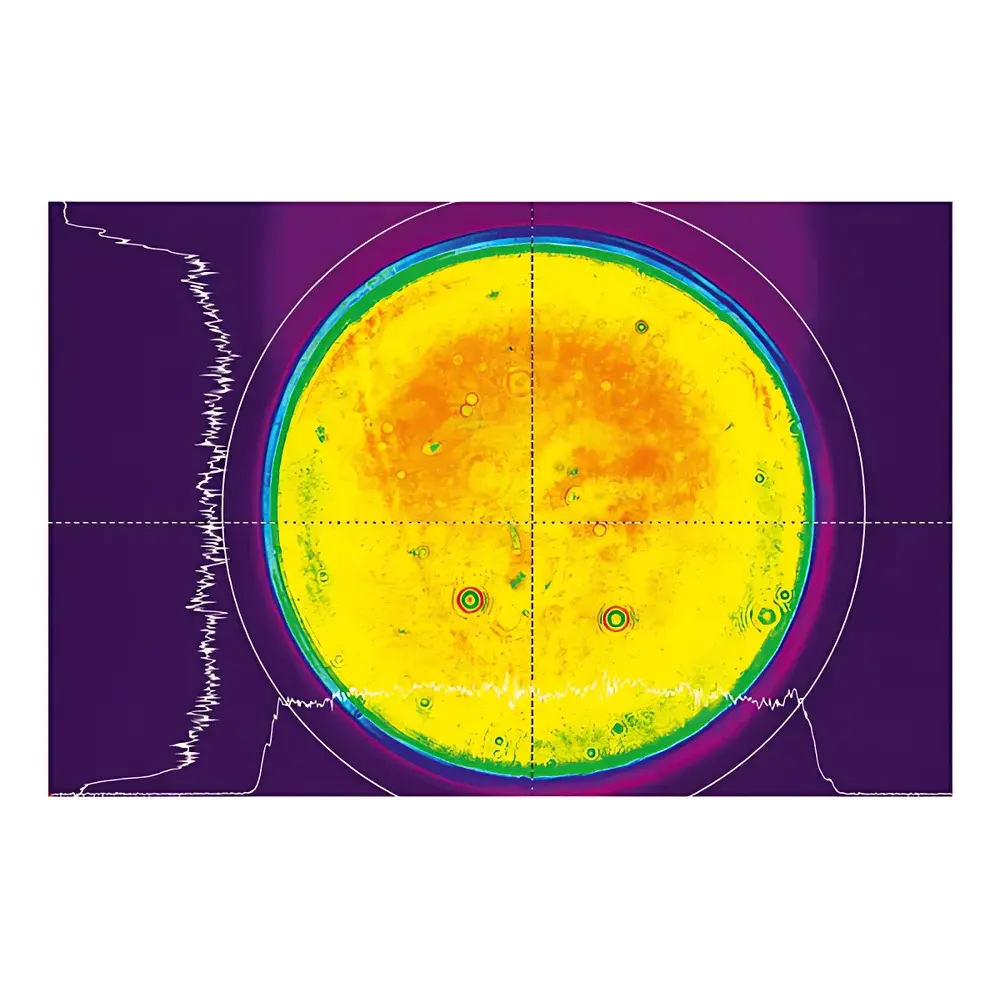
The NL940 is compatible with standard optical tables (M6 or 1/4″-20 threaded mounts), vacuum-compatible beamlines (via optional sealed purge ports), and OEM integration into multi-stage amplifier systems. Its free-space Gaussian-like beam profile (M² < 1.3) supports efficient coupling into large-aperture Ti:sapphire crystals, OPCPA BBO/LBO stages, and laser peening nozzles. The system meets CE marking requirements under the EU Machinery Directive 2006/42/EC and Electromagnetic Compatibility Directive 2014/30/EU. Laser safety documentation includes full hazard classification reports, nominal ocular hazard distance (NOHD) calculations, and alignment procedure protocols aligned with ANSI Z136.1-2022. For regulated environments (e.g., aerospace component processing or nuclear materials research), the NL940 supports audit-ready operational logs and configurable access controls per ISO 9001 and AS9100 process validation frameworks.
Software & Data Management
Control is managed via Ekspla’s proprietary Lighthouse software suite (v4.2+), running on Windows 10/11 x64 platforms. The interface provides real-time monitoring of pulse energy (via internal pyroelectric sensor), repetition rate, cavity alignment status, coolant temperature, and diode current diagnostics. All operational parameters are timestamped and exportable in CSV or HDF5 format for traceability. Remote operation is supported via TCP/IP Ethernet (SCPI-compliant command set) and optional RS-232 fallback. For GLP/GMP environments, optional 21 CFR Part 11 compliance packages include electronic signatures, role-based user permissions, and immutable audit trails with SHA-256 log hashing. Firmware updates are delivered via secure HTTPS channels with cryptographic signature verification.
Applications
- OPCPA Pumping: Stable 1064 nm output serves as the primary pump for broadband NOPA and white-light generation stages in ultrafast science facilities
- Ti:Sapphire Amplifier Pumping: High-energy 532 nm pulses drive multi-terawatt-class CPA systems for attosecond pulse generation and strong-field physics
- Laser Peening: Controlled shockwave induction in metallic alloys (e.g., Ti-6Al-4V, Inconel 718) for residual stress modification and fatigue life extension—validated per SAE AMS 2430 and ASTM F3019
- Plasma & Shock Physics: Single-shot irradiation of solid, liquid, or gaseous targets to study equation-of-state behavior, ionization dynamics, and shock front propagation under controlled pressure regimes (1–100 GPa)
- Calibration Source: Reference-grade pulse energy and timing stability enable use in metrology labs for radiometric calibration of high-dynamic-range photodetectors and streak cameras
FAQ
What is the maximum average power output of the NL940 at 1064 nm?
At 10 Hz repetition rate and 10 J/pulse, the NL940 delivers up to 100 W average power at 1064 nm. Average power scales linearly with repetition rate down to 1 Hz.
Can the NL940 be synchronized with external timing systems?
Yes—it features TTL-compatible trigger input/output ports with jitter < 1 ns RMS and programmable delay (0–100 ms, 10 ps resolution) for synchronization with pump-probe setups, ICCD cameras, or RF-driven plasma sources.
Is fiber delivery available as a standard configuration?
Free-space output is standard; however, an optional fiber-coupling module (with Ø800 µm core multimode fiber and integrated collimation optics) is available for OEM integration where beam transport flexibility is required.
Does the system support automated wavelength switching between 1064 nm and 532 nm?
Yes—motorized harmonic separator and dichroic mirror positioning enable software-controlled, repeatable switching with < 5 s transition time and no realignment needed.
What maintenance intervals are recommended for long-term reliability?
Laser diode arrays are rated for >20,000 hours; crystal sets require inspection every 12 months under continuous operation. Ekspla recommends annual preventive maintenance including cavity realignment verification, coolant filtration, and thermal sensor calibration—documented per ISO/IEC 17025 guidelines.




