
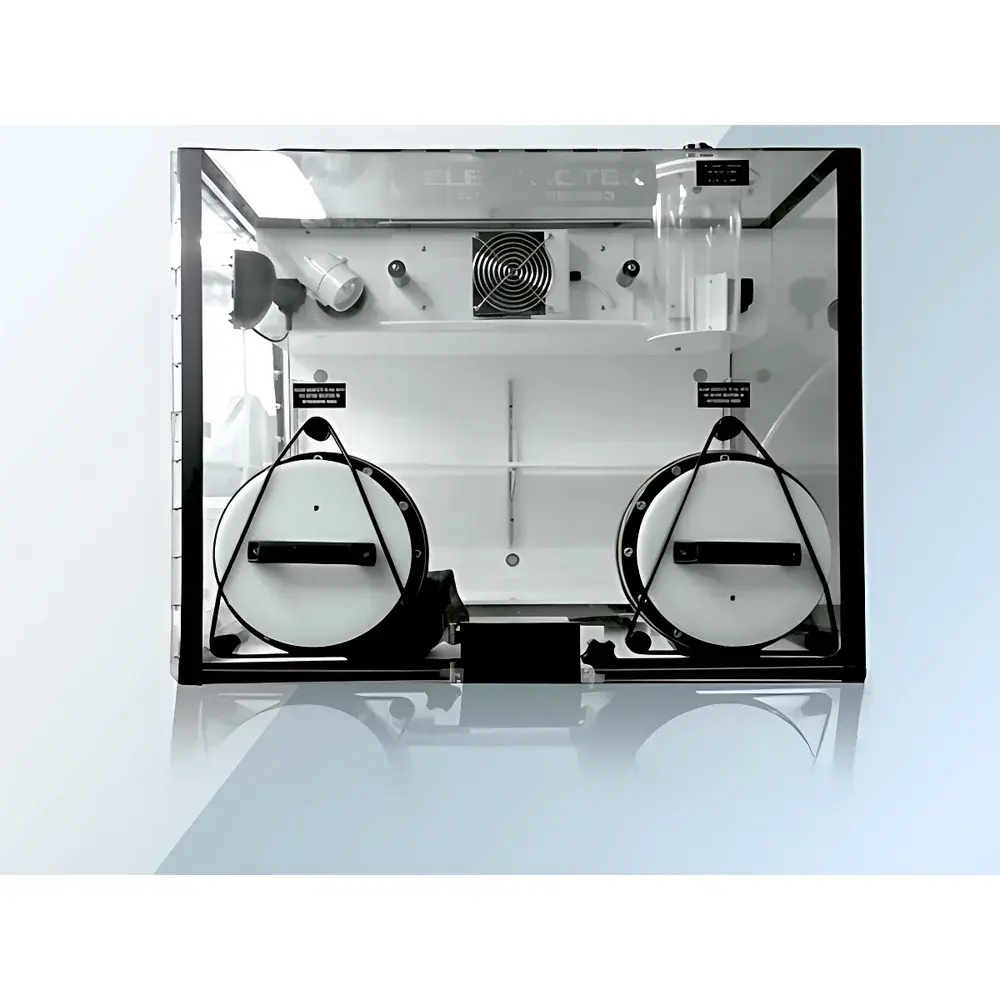
ELECTROTEK AW 300SG Anaerobic Workstation
| Brand | ELECTROTEK |
|---|---|
| Origin | United Kingdom |
| Model | AW 300SG |
| Incubation Temperature Range | +4 °C to 48 °C |
| Temperature Uniformity & Stability | ±0.5 °C |
| Humidity Range | 35–100 % RH |
| Chamber Capacity | 300 Petri Dishes |
| Transfer Lock Capacity | 10 Petri Dishes |
| Gas System | Single-Cylinder Mixed-Gas (N₂/H₂/CO₂) with Integrated Catalyst |
| Anaerobic Verification | ANO2 Indicator System with Chemical Reagent |
| Construction | Acrylic-Modified Polypropylene Housing with Condensation-Resistant Viewing Panels |
| Control System | Microprocessor-Based with Programmable Temperature & Humidity Profiles |
| Safety Alarms | Leak Detection, Low Gas Pressure, Catalyst Exhaustion, and Environmental Deviation Alerts |
Overview
The ELECTROTEK AW 300SG Anaerobic Workstation is a purpose-engineered, compact yet high-capacity controlled-atmosphere system designed for the reliable isolation, cultivation, and identification of obligate and facultative anaerobic microorganisms in clinical, pharmaceutical, and research microbiology laboratories. It operates on the principle of catalytic deoxygenation within a sealed, positively sealed acrylic-modified polypropylene chamber, where a precisely blended mixture of nitrogen, hydrogen, and carbon dioxide is continuously recirculated through a palladium-based catalyst to remove residual oxygen (<10 ppm O₂). This enables stable, reproducible anaerobic conditions—critical for the growth of fastidious strains such as Clostridium, Bacteroides, Fusobacterium, and Prevotella. Unlike conventional anaerobic jars or glove boxes requiring frequent gas replenishment or manual catalyst regeneration, the AW 300SG integrates real-time environmental monitoring, automated humidity regulation, and fail-safe alarm protocols compliant with ISO 13485–aligned quality management frameworks for diagnostic microbiology workflows.
Key Features
- Compact footprint with 300-Petri-dish working capacity and ergonomic top-mounted transfer lock accommodating up to 10 plates per cycle—optimized for high-throughput clinical labs without compromising anaerobic integrity.
- Glove-free operation via wrist-seal sleeve interface: eliminates traditional rigid gloves and foot pedals, increasing effective workspace volume by >25% while maintaining continuous anaerobic containment during sample handling.
- Integrated ANO2 visual oxygen indicator system with replaceable chemical reagent vials provides immediate, qualitative confirmation of anaerobic status; validated against ISO 11133:2014 Annex B for anaerobic environment verification.
- Microprocessor-controlled environmental management: independent PID-regulated temperature control (+4 °C to 48 °C, ±0.5 °C uniformity), programmable humidity profiles (35–100% RH), and automatic condensate suppression via low-power internal heating elements.
- Dual-lighting configuration: low-voltage internal LED illumination for routine colony inspection and external UV/fluorescent lamp port for Gram staining or fluorescence-based assays—designed to minimize thermal load and oxygen diffusion.
- Comprehensive safety architecture: real-time leak detection, low-gas-pressure alerts, catalyst saturation warnings, and power-failure memory retention—all logged with timestamped event history for GLP/GMP audit readiness.
Sample Compatibility & Compliance
The AW 300SG supports standard microbiological consumables including Petri dishes (90 mm and 150 mm), anaerobic agar plates (e.g., CDC, Brucella, Schaedler), blood culture bottles (with compatible transfer adapters), and cryovials. Its chamber geometry and airflow dynamics comply with EU Directive 2014/34/EU (ATEX) for safe operation in low-oxygen environments. All control firmware adheres to IEC 62304 Class B software safety requirements, and environmental logging meets FDA 21 CFR Part 11 data integrity standards when paired with ELECTROTEK’s optional SecureLog™ module. The workstation is routinely validated per CLSI M22-A4 and UK NEQAS Microbiology guidelines for anaerobic culture performance.
Software & Data Management
While the AW 300SG operates via an embedded touchscreen HMI with local parameter programming, it supports RS-485 and Ethernet connectivity for integration into laboratory information management systems (LIMS). Optional SecureLog™ software enables encrypted, time-stamped recording of all environmental parameters (temperature, humidity, O₂ level proxy, alarm events), user access logs, and maintenance cycles. Audit trails are exportable in CSV/PDF formats and support electronic signature functionality aligned with GxP documentation practices. Remote diagnostics and firmware updates are available via secure TLS 1.2–encrypted channels.
Applications
- Clinical microbiology: primary isolation and subculture of anaerobic pathogens from wound swabs, abscess aspirates, and intra-abdominal specimens.
- Antimicrobial susceptibility testing (AST): preparation of anaerobic inocula under strict O₂-free conditions per CLSI M11-A8 methodology.
- Probiotic and gut microbiome research: cultivation of strict anaerobes for metagenomic library construction and functional screening.
- Pharmaceutical QC: sterility testing of anaerobic product lines and validation of anaerobic media performance.
- Veterinary diagnostics: isolation of Actinobacillus, Treponema, and other host-specific anaerobes from equine, bovine, and porcine samples.
FAQ
What gas mixture is required for operation?
The AW 300SG uses a pre-mixed cylinder containing 85% N₂, 10% H₂, and 5% CO₂—no additional gas blending equipment is needed.
Is catalyst replacement required, and how often?
The integrated palladium catalyst typically lasts 12–18 months under continuous use; replacement is indicated by persistent ANO2 color change despite adequate gas flow.
Can the workstation be validated for ISO 13485 or GMP compliance?
Yes—ELECTROTEK provides IQ/OQ documentation templates, calibration certificates traceable to UKAS, and on-site validation support per Annex 15 of the EU GMP Guide.
Does it support humidification for extended incubation periods?
Yes—the microprocessor-controlled humidification system maintains stable RH across the full 35–100% range, with anti-condensation heating preventing moisture accumulation on viewing panels and culture surfaces.
What electrical requirements does it have?
Standard 230 V AC, 50 Hz, 16 A supply; includes internal GFCI-protected outlets for auxiliary equipment such as microscopes or centrifuges.



