
ELGA PURELAB Ultra Ultra Pure Water System
| Brand | ELGA (Veolia) |
|---|---|
| Origin | United Kingdom |
| Manufacturer | Veolia Water Technologies |
| Product Type | Imported Ultra-Pure Water System |
| Model | PURELAB Ultra |
| Purified Water Grade | ASTM Type I / ISO 3696 Grade 1 |
| Resistivity | 18.2 MΩ·cm @ 25 °C |
| Heavy Metals & Soluble Silica | <0.1 ppb |
| Total Organic Carbon (TOC) | 1–3 ppb (Genetic variant: real-time online TOC monitoring) |
| Microbial Count | <0.1 CFU/mL (with optional 0.2 µm terminal filter) |
| Endotoxins | <0.001 EU/mL |
| Particles (>0.1 µm) | <1 particle/mL |
| DNase | <0.02 pg/µL |
| RNase | <0.002 ng/mL |
| Flow Rate | Adjustable from single drop to 2 L/min |
| UV Lamps | Dual-wavelength (185 nm + 254 nm) |
Overview
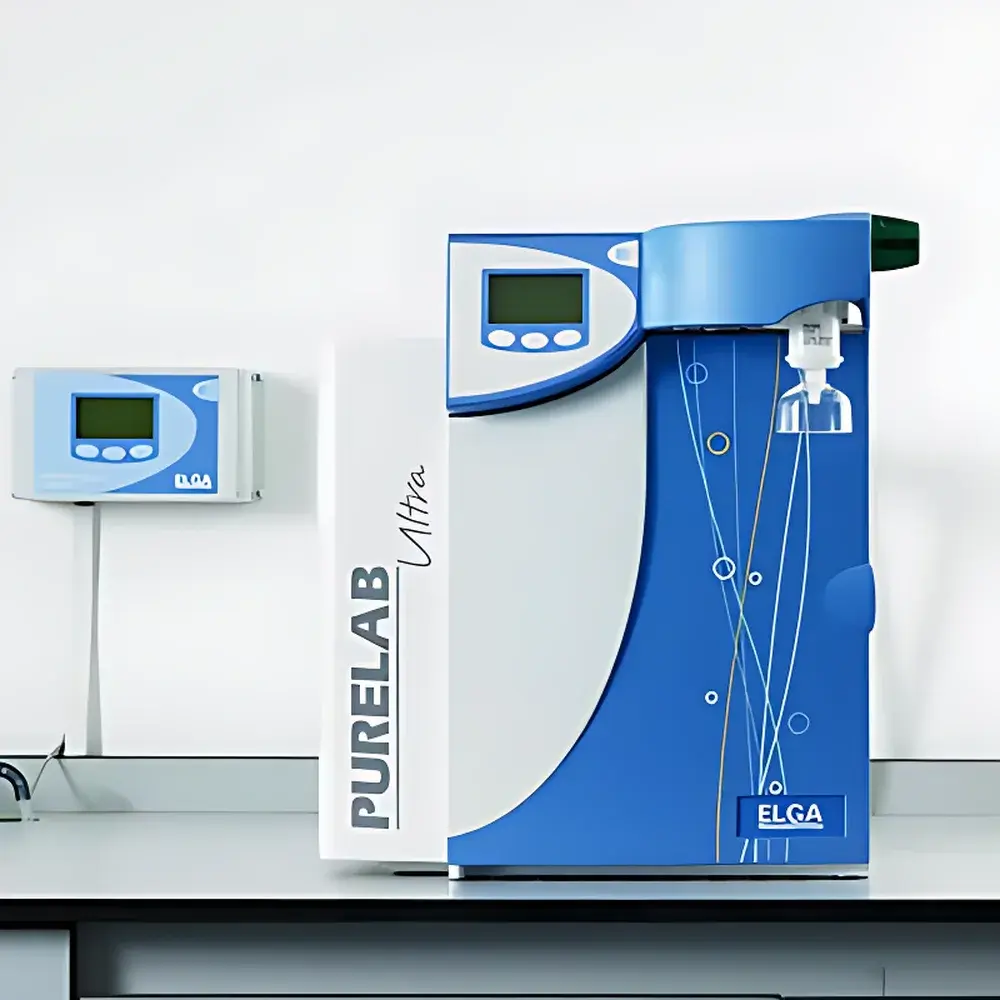
The ELGA PURELAB Ultra Ultra Pure Water System is an engineered solution for laboratories requiring consistent, trace-level purity in water for critical life science applications. Designed and originally manufactured in the United Kingdom by Veolia Water Technologies (formerly ELGA LabWater), this system delivers ASTM Type I and ISO 3696 Grade 1 ultrapure water through a multi-stage purification architecture. Its core principle integrates reverse osmosis pretreatment, electrodeionization (EDI), dual-wavelength UV photo-oxidation (185 nm for TOC reduction and 254 nm for microbial inactivation), and final polishing via ion-exchange and ultrafiltration. The proprietary PureSure® recirculating loop ensures continuous post-polishing circulation and real-time resistivity stabilization at 18.2 MΩ·cm — the theoretical maximum for deionized water at 25 °C. Though production of the PURELAB Ultra line has ceased at the UK facility, the system remains fully supported with validated consumables, service kits, and firmware-compatible replacement cartridges through 2026.
Key Features
- Dual-wavelength UV oxidation: 185 nm photolysis reduces TOC to 1–3 ppb; 254 nm irradiation suppresses microbial regrowth in the distribution loop.
- PureSure® integrated recirculation loop: Maintains stable 18.2 MΩ·cm resistivity and minimizes stagnation-related contamination risks.
- Labpure® high-capacity purification cartridges: Engineered for extended service life and reduced total cost of ownership; RFID-enabled for automated cartridge authentication and usage tracking.
- Quantitative dispensing software: Enables programmable volume delivery (from microliter-scale drops to 2 L/min), audit-ready dispense logging, and repeatable protocol recall.
- Real-time online TOC monitoring (PURELAB Ultra Genetic variant): Provides continuous, non-invasive TOC measurement without sample diversion or reagent consumption.
- Automated thermal and chemical disinfection cycles: Scheduled or on-demand protocols ensure microbiological control across the entire water path — including reservoir, loop, and dispensing arm.
- Terminal filtration options: 0.2 µm hydrophilic membrane filters reduce viable microbes to <0.1 CFU/mL; optional ultrafiltration modules achieve endotoxin levels <0.001 EU/mL.
Sample Compatibility & Compliance
The PURELAB Ultra meets stringent international standards for ultrapure water used in molecular biology, cell culture, and diagnostic assay development. It complies with ASTM D1193-20 (Type I), ISO 3696:1987 (Grade 1), CLSI EP22-A (water quality for clinical laboratories), and supports adherence to USP “Water for Pharmaceutical Purposes”. When operated with recommended feedwater (TOC <50 ppb, conductivity <50 µS/cm), the system consistently achieves specifications required for sensitive techniques including qPCR, next-generation sequencing library prep, monoclonal antibody formulation, and electrophysiology. All dispensing events, cartridge replacements, and disinfection logs are timestamped and exportable — facilitating GLP/GMP-aligned documentation and FDA 21 CFR Part 11-compliant data integrity when paired with appropriate LIMS integration.
Software & Data Management
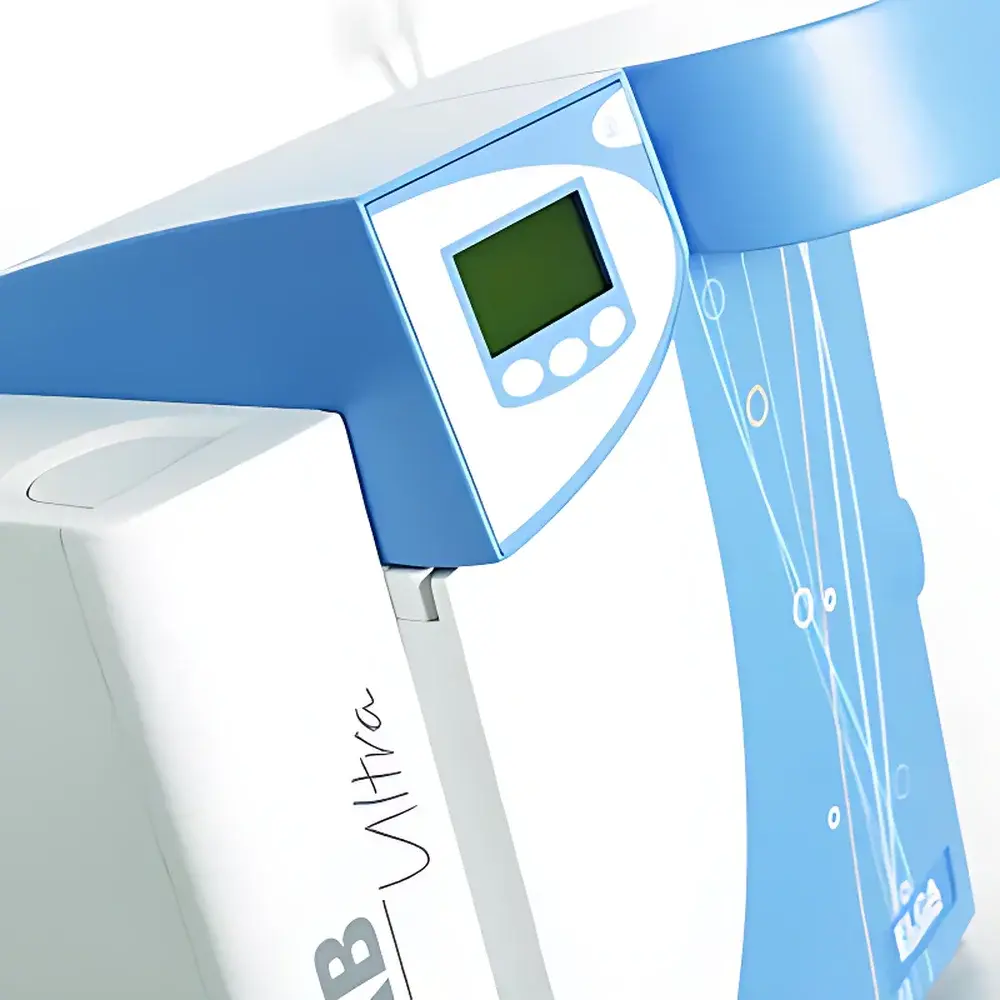
The onboard touchscreen interface hosts ELGA’s proprietary water management software, supporting full lifecycle tracking of purification performance. Key functions include real-time display of resistivity, TOC (Genetic model), temperature, flow rate, and UV lamp intensity; predictive cartridge lifetime estimation based on usage metrics; and secure user-access levels (operator, supervisor, administrator). Dispense records include date/time stamp, volume delivered, user ID, and associated protocol name — all stored locally with USB export capability. Audit trails are immutable and retain >12 months of operational history. Remote diagnostics and firmware updates are supported via Ethernet connection under controlled IT policies.
Applications
This system is routinely deployed in environments where water purity directly impacts experimental reproducibility and regulatory compliance. Primary use cases include: preparation of PCR master mixes and NGS reagents; mammalian cell culture media and transfection buffers; HPLC and LC-MS mobile phase preparation; electrophoresis running and transfer buffers; ELISA and immunoassay diluents; and formulation of therapeutic proteins and vaccines. Its low DNase/RNase and endotoxin specifications make it suitable for primary neuronal culture, stem cell expansion, and CRISPR-Cas9 editing workflows where nucleic acid integrity and pyrogen-free conditions are non-negotiable.
FAQ
Is the PURELAB Ultra still in active production?
No — manufacturing ceased at the UK facility. However, certified spare parts, consumables (including Labpure® cartridges and UV lamps), and technical support remain available through authorized distributors until December 31, 2026.
Can the system be validated per GMP requirements?
Yes — the PURELAB Ultra supports IQ/OQ/PQ documentation packages. Its automated logging, user access controls, and alarm history meet baseline expectations for regulated environments; full 21 CFR Part 11 compliance requires site-specific configuration and third-party validation.
What feedwater quality is required?
Optimal performance requires municipal or pre-treated feedwater with TOC <50 ppb, hardness <1 ppm CaCO₃, and chlorine <0.1 ppm. A dedicated pretreatment unit (e.g., ELGA OptionPack RO) is recommended for variable or hard source water.
How often must the Labpure® cartridges be replaced?
Typical service life ranges from 6–12 months depending on daily usage volume and feedwater quality. The system calculates remaining capacity using RFID-tracked usage metrics and alerts users 72 hours prior to expiry.
Does the system support remote monitoring?
Yes — via Ethernet-connected network infrastructure, enabling centralized status viewing, alarm notifications, and historical data retrieval through standard SNMP or HTTP protocols.



