
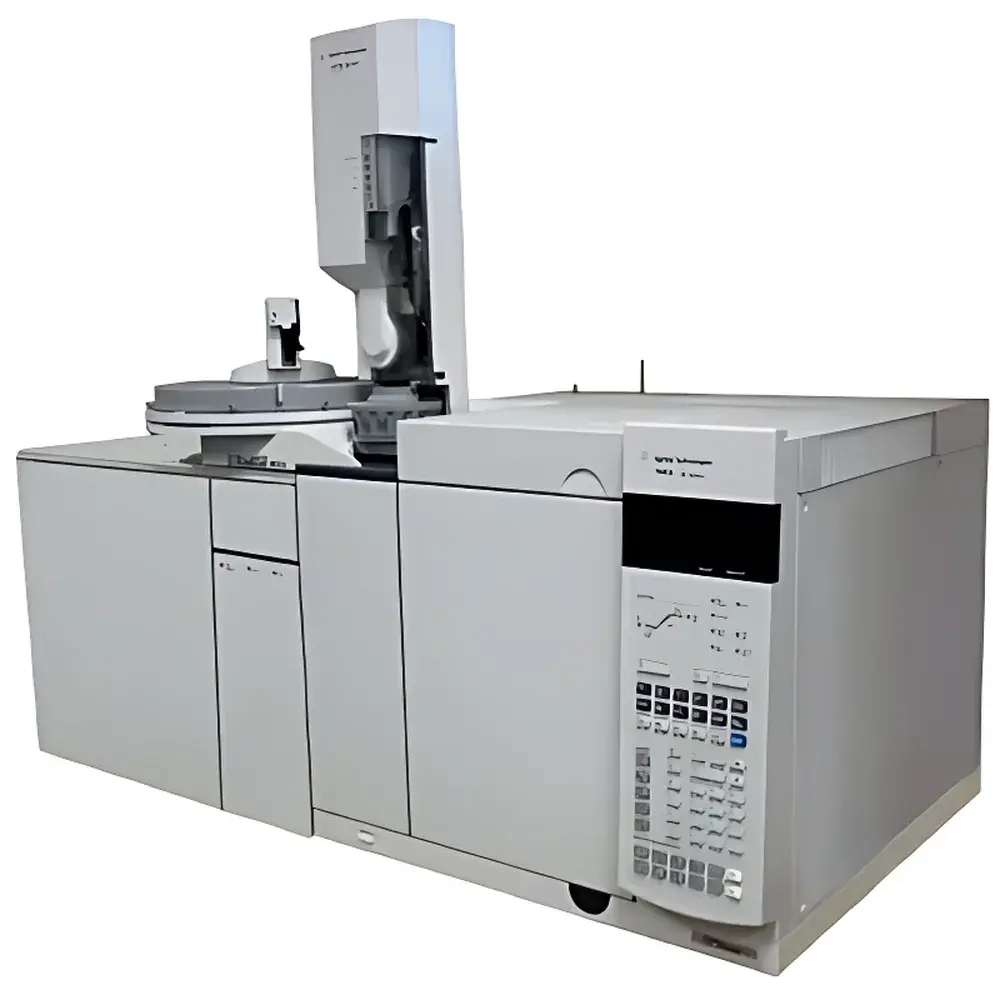
Elsima TOF Time-of-Flight Mass Spectrometer
| Brand | MSI |
|---|---|
| Origin | United Kingdom |
| Model | Elsima TOF |
| Instrument Type | Time-of-Flight Mass Spectrometer |
| Chromatography Interface | GC-compatible (including fast GC and GC×GC) |
| Mass Range | 0–1000 m/z |
| Resolution | ≥2000 (FWHM at m/z 502) |
| Sensitivity | >300:1 (S/N, full-scan, 1 pg octafluoronaphthalene) |
| Scan Speed | 15,000 u/s |
| Dynamic Range | 5 orders of magnitude (full-spectrum) |
| Mass Accuracy | ±0.02 AMU (without internal calibration) |
| Mass Stability | ±0.1 AMU over 24 h |
| SIM capability | up to 10 ions simultaneously |
Overview
The Elsima TOF Time-of-Flight Mass Spectrometer is a compact, benchtop GC/MS system engineered for high-speed, high-fidelity mass spectral acquisition in demanding analytical environments. Based on orthogonal acceleration time-of-flight (oa-TOF) mass analysis, the instrument employs pulsed ion extraction, reflectron energy focusing, and high-frequency time-to-digital conversion (TDC) to achieve exceptional duty cycle efficiency and mass resolution. Unlike quadrupole or ion trap-based GC/MS systems, the Elsima TOF acquires complete mass spectra across the full 0–1000 m/z range without scanning—enabling true simultaneous detection of all ions per microsecond-scale acquisition window. This architecture supports ultra-fast gas chromatographic separations, including sub-second peak widths typical of high-resolution GC×GC and microbore fast-GC methods. The system is designed for laboratories requiring unambiguous compound identification, robust quantitation, and comprehensive data capture from complex matrices—without sacrificing throughput or spectral fidelity.
Key Features
- Full-spectrum acquisition at up to 2,048 spectra per second (522,240 TDC events per spectrum), enabling retention time alignment with <100 ms peak widths
- Reflectron optics correct for initial kinetic energy spread, delivering ≥2000 resolution (FWHM) at m/z 502 and maintaining mass accuracy within ±0.02 AMU without internal standard calibration
- Mass stability of ±0.1 AMU over 24 hours ensures long-duration batch analysis without recalibration drift
- Variable low-mass energy filter extends detector lifetime by reducing electron multiplier exposure to abundant low-m/z background ions
- Onboard electronic self-diagnostic system continuously monitors all HV supplies, lens voltages, and detector currents for operational integrity and predictive maintenance readiness
- Simultaneous Selected Ion Monitoring (SIM) for up to 10 user-defined m/z values alongside full-scan acquisition—ideal for targeted quantitation in regulated workflows
- Two-point mass calibration routine completed in under 60 seconds, minimizing instrument downtime between method changes
- Full-spectrum dynamic range exceeding 5 orders of magnitude enables reliable detection and quantitation of trace analytes co-eluting with major matrix components
Sample Compatibility & Compliance
The Elsima TOF is fully compatible with standard split/splitless GC injectors, PTV inlets, and cryo-focused interfaces. It supports both single-quadrupole and tandem GC configurations, including comprehensive two-dimensional gas chromatography (GC×GC) with modulator synchronization via TTL trigger input. The system meets key regulatory requirements for analytical instrumentation: data acquisition and processing software support audit trail functionality compliant with FDA 21 CFR Part 11 (electronic records and signatures), and raw data files are stored in vendor-neutral, open-format HDF5 containers for long-term archival and third-party reprocessing. Instrument performance verification follows ASTM E2973 (Standard Practice for Performance Verification of Time-of-Flight Mass Spectrometers) and ISO/IEC 17025:2017 principles for testing and calibration laboratories. Routine operation adheres to GLP and GMP-aligned QC protocols—including daily mass calibration checks, sensitivity verification using NIST-traceable standards (e.g., OFN), and system suitability assessments per USP guidelines where applicable.
Software & Data Management
The Elsima TOF is operated via the Elsima Control Suite—a Windows-based platform supporting real-time spectral visualization, automated peak deconvolution, library searching (NIST, Wiley, custom libraries), and quantitative reporting with integrated calibration curve generation. All raw transient data (TDC timestamps, ADC waveforms) are preserved without lossy compression, permitting retrospective reprocessing with updated algorithms or alternative peak integration parameters. Batch processing supports method templates, sample group metadata tagging, and export to LIMS-compatible CSV, mzML, or ANDI-NetCDF formats. Software validation packages—including IQ/OQ documentation, configuration control logs, and electronic signature workflows—are available for regulated environments. Remote monitoring and diagnostic telemetry (via encrypted TLS 1.3) enable proactive service intervention without on-site access.
Applications
The Elsima TOF delivers proven utility across diverse sectors requiring rapid, high-information-content chemical profiling. In petrochemical analysis, it resolves co-eluting hydrocarbon isomers in refinery streams and detects trace sulfur/nitrogen species at sub-ppb levels. Environmental labs deploy it for non-target screening of emerging contaminants (e.g., PFAS, pharmaceutical metabolites) in wastewater and soil extracts. Forensic toxicology applications include rapid confirmation of controlled substances and metabolite mapping in biological fluids. Natural product chemists leverage its wide dynamic range and high mass accuracy for dereplication of plant extracts and microbial fermentation broths. Flavor & fragrance R&D benefits from its ability to separate and identify volatile terpenoids, lactones, and aldehydes in complex perfume matrices—even when present at ng/g concentrations alongside dominant solvents or fixatives.
FAQ
What GC column dimensions and temperature programs are supported?
The Elsima TOF is compatible with standard 0.1–0.32 mm ID capillary columns, including short fast-GC (1–5 m) and conventional 15–60 m lengths. Maximum oven ramp rates of 120 °C/min are fully supported, with data acquisition synchronized to modulator triggers for GC×GC.
Is the instrument compatible with electron ionization (EI) only, or does it support other ionization modes?
The base configuration includes a standard 70 eV EI source. Optional add-ons include chemical ionization (CI) with methane/isobutane reagent gases and a dedicated GC-APCI interface for thermally labile compounds.
How is mass calibration maintained during extended unattended operation?
An integrated reference ion source introduces perfluorotributylamine (PFTBA) vapor at user-defined intervals (e.g., every 30 min), enabling automatic recalibration without interrupting sample analysis.
Can raw TDC data be exported for third-party processing?
Yes—time-stamped TDC event lists and digitized ion current waveforms are written to HDF5 files with embedded metadata (acquisition time, GC retention, instrument settings), supporting open-source tools such as OpenMS, MZmine, or custom Python/MATLAB workflows.
What service and support options are available outside the UK?
MSI provides global field service coverage through certified partners, with remote diagnostics, annual preventive maintenance contracts, and application-specific training delivered on-site or via secure virtual lab sessions.





