
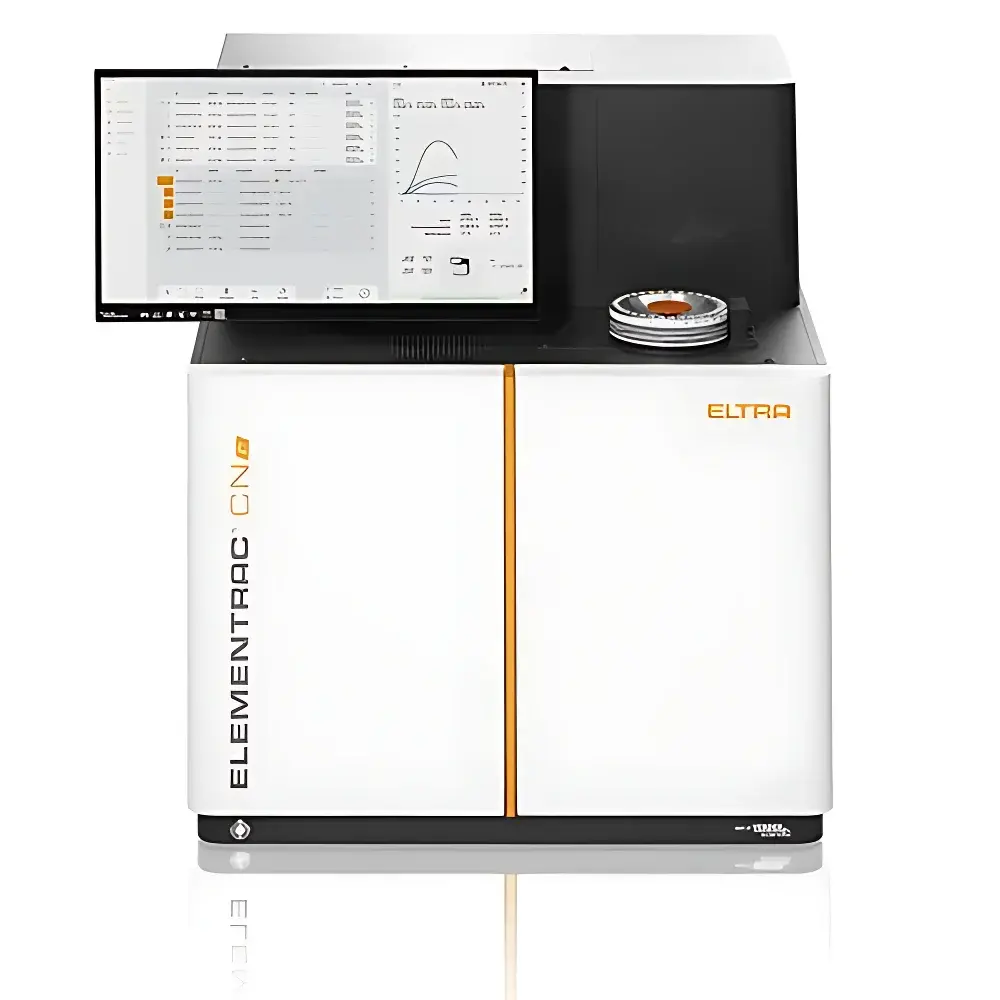
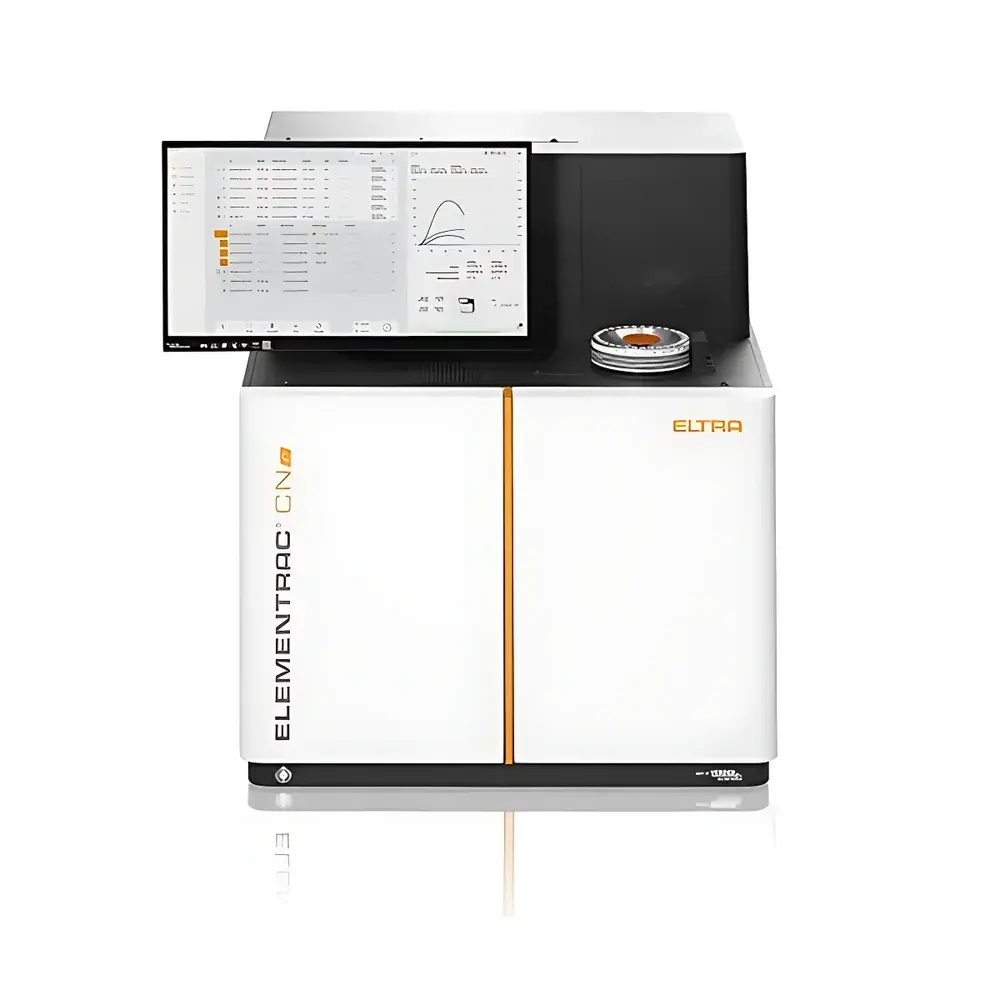
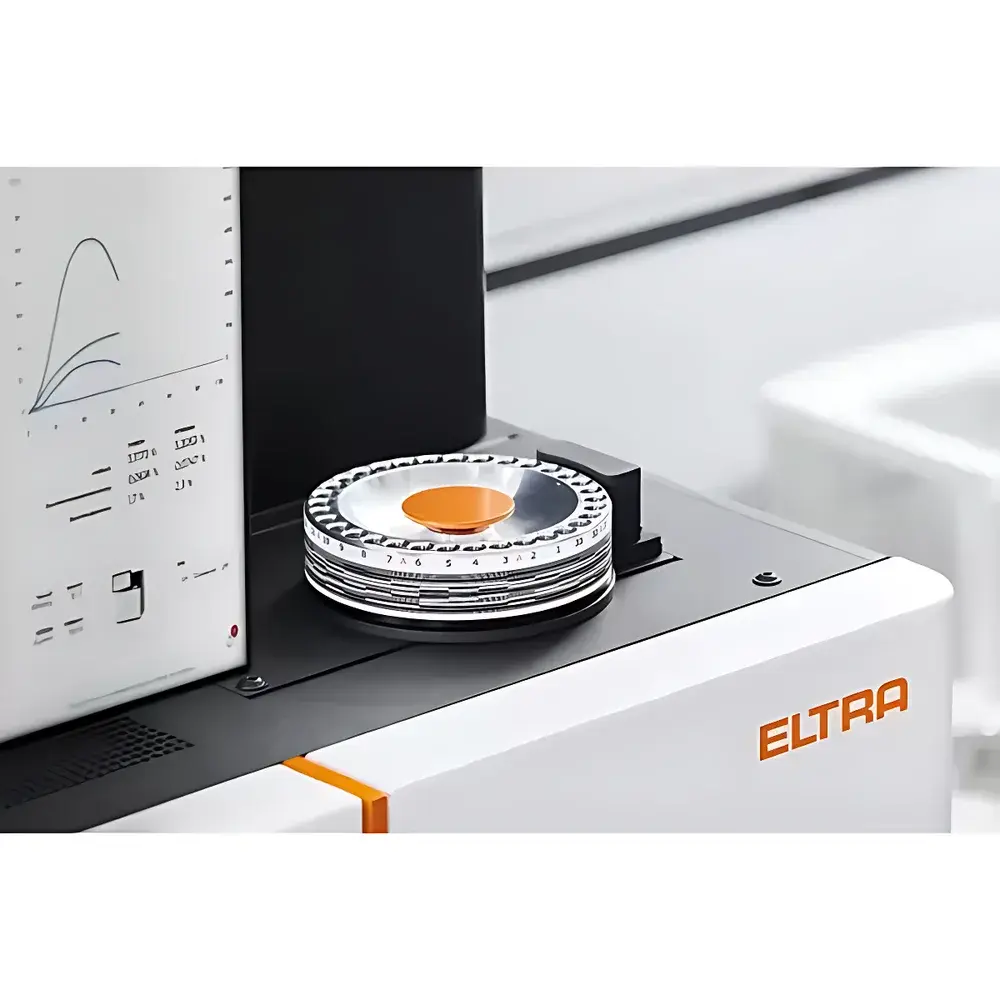
ELTRA ELEMENTRAC CN-r Carbon/Nitrogen/Protein Analyzer
| Brand | ELTRA |
|---|---|
| Origin | Germany |
| Model | CN-r |
| Measurement Principle | Dumas Combustion |
| Analysis Time | < 3 min per sample |
| Sample Throughput | High-throughput automated operation |
| Software | ELEMENTS v5.x (with audit trail, user management, and network access) |
| Compliance | AOAC 992.15, ISO 16634-1:2016, DIN ISO 16634-1, AACC 46-30A, ASBC Beer-3, AOCS Ba 4e-93, OIV-OENO 487-2017 |
| Sample Types | Solids (powders, pellets, granules), Liquids (homogenized suspensions), and Heterogeneous Matrices |
| Data Management | 21 CFR Part 11–compliant optional module available |
| Interface | Integrated industrial PC with 12.1" adjustable touchscreen |
| Maintenance | Full consumables replacement in < 20 min |
Overview
The ELTRA ELEMENTRAC CN-r is a high-performance, fully automated elemental analyzer engineered for precise, rapid quantification of total carbon (C) and nitrogen (N) content in solid and liquid samples using the Dumas combustion method. Unlike classical Kjeldahl digestion—requiring hazardous reagents, prolonged heating, and manual intervention—the CN-r employs flash combustion at 1,150 °C in an oxygen-rich environment, followed by selective gas chromatographic separation and thermal conductivity detection (TCD) or infrared (IR) detection for CO₂ and N₂. The instrument calculates protein content directly from nitrogen values using standardized conversion factors (e.g., 6.25 for cereals, 5.7 for milk, 6.38 for meat), enabling full compliance with internationally recognized protocols including AOAC 992.15, ISO 16634-1:2016, and AACC 46-30A. Designed for routine laboratory environments—from QC labs in food & feed manufacturing to agricultural research institutes and pharmaceutical quality control—the CN-r delivers robust repeatability (< 0.5% RSD for homogeneous matrices) and traceable accuracy across diverse sample types without matrix-specific method development.
Key Features
- Sub-3-minute analysis cycle enabled by parallel processing architecture: combustion of the current sample occurs simultaneously with gas detection and data evaluation of the preceding run.
- Integrated industrial-grade PC with 12.1-inch articulating touchscreen interface, supporting ergonomic operation and real-time monitoring without external peripherals.
- Dual configuration flexibility: selectable hardware modules allow deployment as either a C+N+Protein analyzer or N+Protein-only system, optimizing capital expenditure for application-specific needs.
- Smart gas management system reduces helium and oxygen consumption by up to 40% versus conventional Dumas analyzers, lowering operational cost per analysis.
- Prioritized emergency analysis mode bypasses auto-sampler queue logic, permitting immediate injection and measurement of urgent samples without workflow interruption.
- All consumables—including ceramic combustion tube, quartz liner, CO₂ and H₂O absorbents, and catalyst beds—are designed for tool-free, under-20-minute replacement—minimizing downtime and supporting GLP-aligned maintenance logging.
Sample Compatibility & Compliance
The ELEMENTRAC CN-r accommodates a broad spectrum of sample forms: milled grains, ground feedstuffs, freeze-dried tissues, homogenized dairy emulsions, soil extracts, fertilizer slurries, coal powders, and pharmaceutical excipients. Its optimized combustion chamber geometry and adaptive oxygen dosing ensure complete oxidation of refractory carbon species (e.g., lignin, char) and nitrogen-rich compounds (e.g., nitrates, heterocyclics) without pre-treatment. Regulatory alignment includes validation against AOAC, ISO, DIN, AACC, ASBC, AOCS, and OIV reference methods. Optional 21 CFR Part 11-compliant software module provides electronic signatures, audit trails, role-based access control, and immutable result archiving—supporting FDA-inspected facilities and GMP-certified production environments.
Software & Data Management
ELEMENTS software v5.x serves as the unified control and data handling platform for all ELEMENTRAC instruments. Its modular interface centers on the Analysis & Results dashboard, where users define sample batches, assign methods, initiate runs, and review calibrated outputs in real time. Navigation tabs provide direct access to calibration management (single-point and multi-point), method editor (retention time adjustment, peak integration settings), diagnostic logs (gas pressure trends, detector baseline stability), and instrument status (temperature profiles, valve actuation history). Network-enabled architecture permits remote monitoring and data retrieval via standard Ethernet—enabling centralized lab informatics integration (LIMS/SAP) and cross-site method synchronization. Raw chromatograms, calibration curves, and QC reports are exportable in CSV, PDF, and XML formats for external validation or regulatory submission.
Applications
The CN-r supports mission-critical applications across regulated and industrial sectors. In food safety laboratories, it quantifies crude protein in wheat flour (AACC 46-30A), casein in infant formula (ISO 8968-1), and total nitrogen in plant-based meat alternatives. Feed mills rely on its precision for amino acid profile estimation via N balance in soybean meal and fishmeal. Environmental labs apply it to soil nitrate-nitrogen assessment (ISO 13878) and compost maturity indexing. Fertilizer producers use it for guaranteed analysis reporting per ISO 5315, while coal testing labs determine fuel-grade nitrogen per ASTM D3179. Additionally, biopharmaceutical manufacturers employ it for residual host-cell protein screening in purified monoclonal antibodies—leveraging its low detection limit (~0.005 mg N) and high inter-laboratory reproducibility.
FAQ
What combustion temperature does the CN-r operate at?
The furnace operates at a stable 1,150 °C, ensuring complete oxidation of organic and inorganic nitrogen and carbon compounds.
Is calibration required before every analysis batch?
No—multi-point calibration is performed periodically (e.g., daily or per 20 samples); drift correction is supported via internal reference standards and automatic baseline normalization.
Can the CN-r analyze liquid samples directly?
Yes, when used with the optional liquid autosampler and sealed tin capsules; homogenized suspensions (e.g., milk, slurry) are compatible with validated drying protocols.
How is data integrity ensured for regulated environments?
With the optional 21 CFR Part 11 module, ELEMENTS enforces electronic signatures, session locking, change tracking, and encrypted database storage—fully auditable during regulatory inspections.
What maintenance intervals are recommended for routine operation?
Catalyst replacement every 1,000–1,500 analyses; CO₂/H₂O absorbent cartridges every 500 analyses; full system leak check monthly—documented via built-in diagnostics and service log export.
Related Products




