

EN 367 Thermal Protective Performance (TPP) Tester
| Origin | Germany |
|---|---|
| Manufacturer Type | Authorized Distributor |
| Origin Category | Imported |
| Model | EN 367 |
| Pricing | Upon Request |
Overview
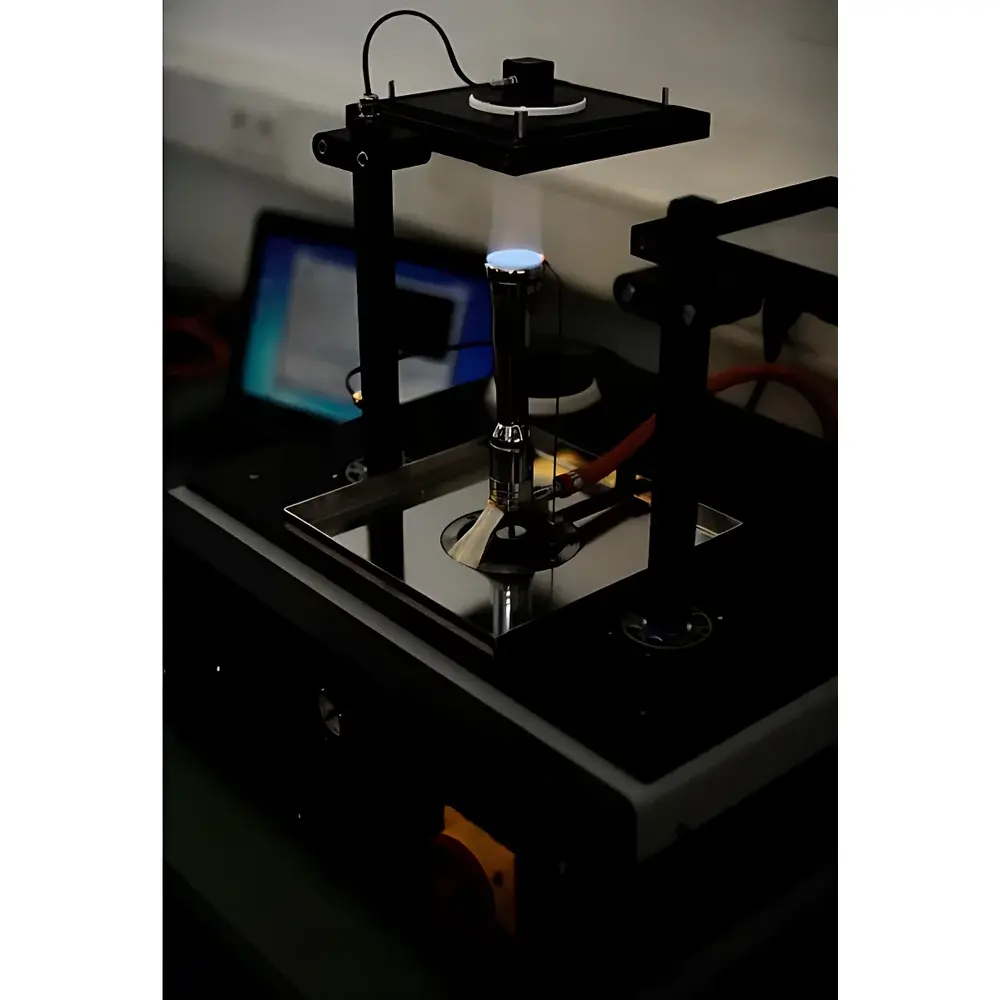
The EN 367 Thermal Protective Performance (TPP) Tester is a precision-engineered benchtop instrument designed to quantify the thermal protective capability of flame-resistant (FR) textiles and composite materials under controlled convective and radiant heat exposure. It operates in strict accordance with the internationally recognized test standard ISO 9151:2016 (identical to EN 367:2013), which defines the methodology for determining the Thermal Protective Performance index—commonly referred to as the TPP value—expressed in cal/cm². The system employs a calibrated propane gas burner generating a reproducible incident heat flux of 80 kW/m² (≈ 18.9 cal/cm²·s), simulating the thermal intensity encountered during flash fire or short-duration flame exposure. A water-cooled copper calorimeter, positioned in direct contact with the upper surface of the horizontally mounted specimen, continuously records temperature rise over time. The TPP value is calculated as the product of the measured time (in seconds) required for the calorimeter to reach either a 12 °C or 24 °C temperature rise (per standard option) and the incident heat flux, yielding a quantitative metric directly correlating to predicted skin burn threshold under standardized thermal insult.
Key Features
- Compliance-certified hardware architecture engineered to meet the dimensional, thermal, and timing tolerances specified in ISO 9151/EN 367:2013
- Propane-fueled combustion system with mass-flow-controlled gas delivery and integrated flame stabilization grid ensuring stable 80 kW/m² heat flux (±5% tolerance)
- High-precision water-cooled copper calorimeter (diameter: 25.4 mm, thickness: 6.35 mm) with embedded thermocouple (Type K, Class 1 accuracy) and real-time 100 Hz data acquisition
- Pneumatically actuated specimen holder with adjustable clamping force and thermal shielding to minimize edge conduction artifacts
- Integrated thermal barrier assembly to isolate calorimeter from ambient radiation and ensure measurement fidelity
- Automated test sequence initiation, calorimeter pre-cooling control, and endpoint detection based on user-defined ΔT thresholds (12 °C or 24 °C ± 0.2 °C)
Sample Compatibility & Compliance
The EN 367 TPP Tester accommodates flat textile specimens measuring 150 mm × 150 mm, including multilayer FR garments, turnout gear laminates, glove shell materials, and insulative batting systems. Specimens are mounted horizontally without tension, replicating realistic wear configuration. All mechanical, thermal, and timing parameters adhere to the metrological requirements defined in ISO/IEC 17025-accredited testing laboratories. The system supports full traceability for GLP-compliant reporting and is compatible with audit-ready documentation workflows required by NFPA 1971, EN 469, and ASTM F2703 certification programs. Calibration verification procedures follow NIST-traceable reference standards for heat flux and temperature.
Software & Data Management
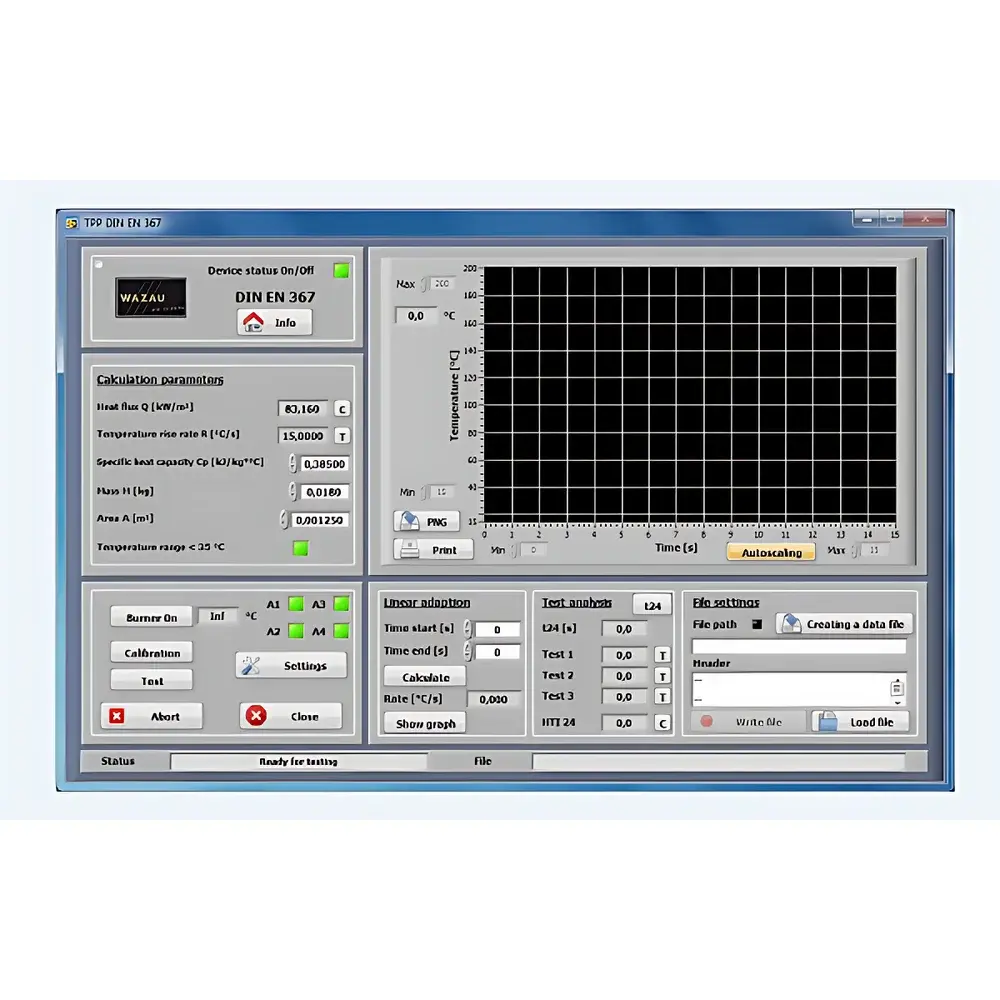
The dedicated Windows-based evaluation software provides real-time calorimeter temperature monitoring, automatic TPP calculation per ISO 9151 Annex B, and statistical aggregation across triplicate test runs. Raw time-temperature datasets are exported in CSV and XML formats for secondary analysis. Audit trail functionality logs operator ID, calibration status, environmental conditions (ambient temperature/humidity), and test parameter settings—supporting compliance with FDA 21 CFR Part 11 and EU Annex 11 requirements where applicable. Software includes built-in pass/fail flagging against user-defined TPP thresholds and generates PDF test reports compliant with ISO/IEC 17025 clause 7.8.
Applications
- Qualification testing of firefighter turnout gear components per NFPA 1971 Chapter 5
- Development and benchmarking of next-generation FR fibers (e.g., modacrylic, aramid, polybenzimidazole blends)
- Regulatory submission support for CE marking under PPE Regulation (EU) 2016/425
- In-process quality control of thermal barrier layers in structural firefighting ensembles
- Comparative evaluation of thermal insulation efficacy between single-layer vs. multi-layer fabric constructions
- Research into heat transfer dynamics through moisture-barrier membranes and thermal liners
FAQ
What does the TPP value represent physiologically?
The TPP value (in cal/cm²) estimates the incident energy at which second-degree burn injury is predicted to occur on human skin, based on the Stoll curve correlation model incorporated in ISO 9151.
Is pre-conditioning of specimens required before testing?
Yes—specimens must be conditioned at 20 ± 2 °C and 65 ± 5% RH for a minimum of 24 hours per ISO 139 and EN 367 Clause 6.2.
Can the system be used for radiant-only exposure testing?
No—the EN 367 configuration is specifically validated for combined convective-radiant heat flux; radiant-only protocols require ISO 6942-compliant apparatus.
How often must the calorimeter be recalibrated?
Annual calibration is recommended, with interim verification using certified heat flux reference sensors prior to each test series.
Does the system include flame extinction safety interlocks?
Yes—integrated flame supervision via UV sensor, gas pressure monitoring, and emergency shutdown solenoid valve comply with EN 61508 SIL2 functional safety requirements.



