
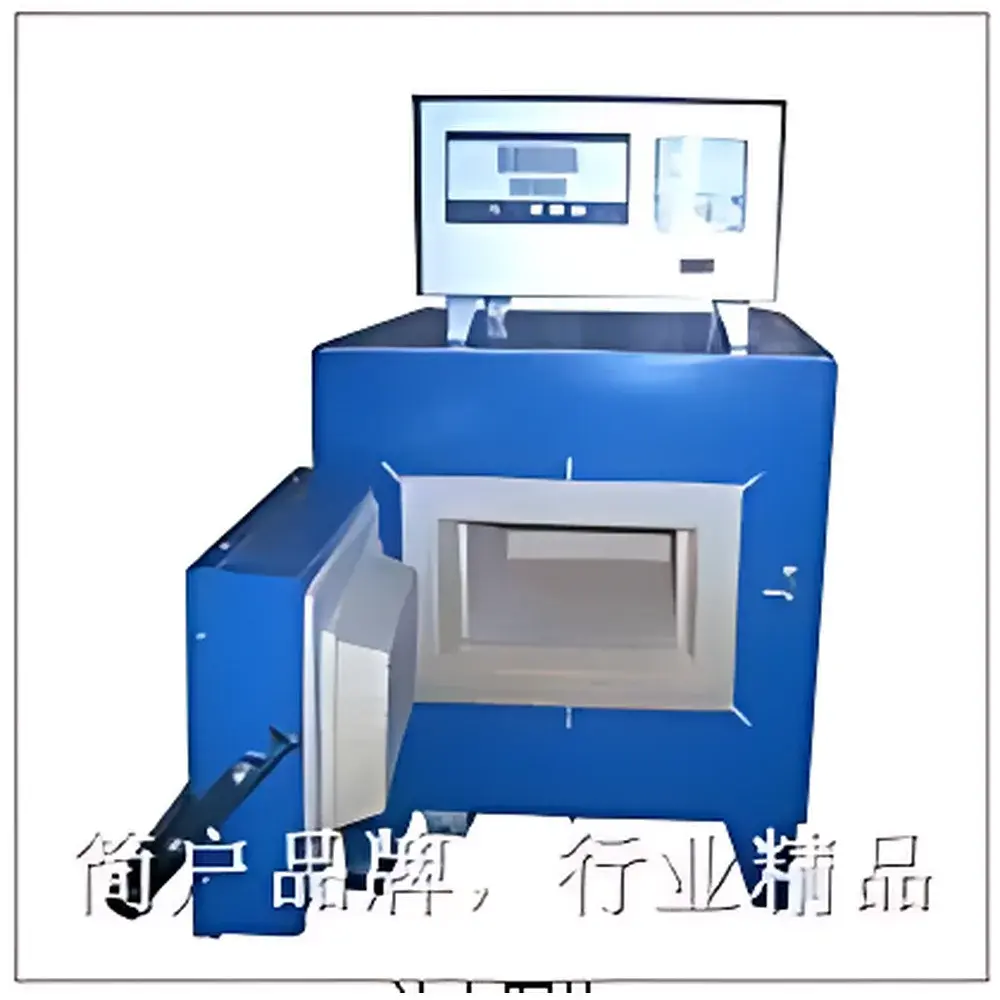
English Product Name
| Origin | Chongqing, China |
|---|---|
| Manufacturer Type | Authorized Distributor |
| Regional Origin | Domestic (PRC) |
| Model | JH-2.5-10 |
| Price Range | USD 140–700 (FOB) |
| Instrument Type | Box-Type Muffle Furnace |
Overview
The JH-2.5-10 is a benchtop box-type muffle furnace engineered for precise, repeatable high-temperature thermal processing up to 1200 °C. It operates on resistive heating principles—utilizing high-temperature alloy wire or silicon carbide (SiC) rod elements embedded within a sealed refractory chamber—to achieve uniform temperature distribution and stable thermal profiles during batch-mode operation. Designed for laboratory-scale applications in materials science, metallurgy, ceramics, and quality control laboratories, this furnace delivers reliable performance in heat treatment, ashing, sintering, calcination, and thermal decomposition protocols. Its architecture adheres to fundamental safety and thermal efficiency standards common to Class I industrial laboratory furnaces, with integral thermal insulation and mechanical interlock systems ensuring compliance with basic occupational safety requirements (e.g., OSHA 1910.106 and IEC 61000-6-3 for electromagnetic compatibility).
Key Features
- Robust steel outer casing with baked enamel finish for corrosion resistance and long-term structural integrity.
- Double-layer insulation system: inner lining composed of high-alumina lightweight refractory bricks or silicon carbide (SiC), backed by ceramic fiber blanket and expanded perlite insulation—minimizing heat loss and external surface temperature rise.
- High-stability heating elements: either Kanthal A1 alloy wire wound in serpentine configuration across four wall slots, or horizontal SiC rods mounted at top/bottom positions—ensuring symmetrical heat flux and reduced thermal gradient across the chamber.
- Interlocked door mechanism with limit switch: automatic power cutoff upon door opening, meeting mandatory electrical safety provisions per EN 61000-6-2 and UL 61010-1.
- Integrated thermocouple port with fixed mounting bracket at rear panel—compatible with standard K-type (NiCr–NiSi), S-type (PtRh10–Pt), or B-type (PtRh30–PtRh6) sensors for accurate in-chamber temperature monitoring.
- Front-accessible terminal block for heater and controller wiring—facilitating maintenance and calibration traceability.
Sample Compatibility & Compliance
The JH-2.5-10 accommodates crucibles, boats, and shallow trays made from alumina, quartz, silicon carbide, or stainless steel (up to Grade 310S), supporting sample masses ≤2.5 kg. Its internal chamber dimensions (approx. 200 × 120 × 80 mm W×D×H) are optimized for small-batch processing typical in R&D labs and QC workflows. While not certified to GLP/GMP or ISO/IEC 17025 as a standalone system, it supports compliance-ready operation when paired with validated temperature mapping procedures (per ASTM E220, ISO/IEC 17025 Clause 5.4.2) and external data loggers meeting FDA 21 CFR Part 11 audit-trail requirements. The furnace meets CE marking prerequisites for low-voltage directive (2014/35/EU) and EMC directive (2014/30/EU) when installed with appropriate grounding and line filtering.
Software & Data Management
This model features analog or digital PID temperature controllers (depending on configuration), offering manual setpoint adjustment and auto-tuning capability. Optional upgrades include RS485 Modbus RTU interface for integration into SCADA or LIMS environments. When used with third-party data acquisition hardware (e.g., Omega OM-DAQPRO-5300), users can record time-stamped temperature profiles, generate calibration certificates, and maintain electronic records compliant with ISO 9001:2015 clause 7.1.5.2 (monitoring and measuring resources). No proprietary software is bundled; all control logic remains vendor-agnostic to ensure interoperability with existing lab infrastructure.
Applications
- Thermal analysis of catalysts, battery electrode materials, and metal oxides under inert or air atmospheres.
- Ash content determination in food, pharmaceutical, and environmental samples per AOAC 942.05 and EPA Method 200.2.
- Pre-sintering of ceramic green bodies prior to final firing in tunnel kilns.
- Heat treatment of small tool steels and alloy specimens for hardness testing preparation (ASTM E18).
- Residue ignition in cement and fly ash analysis (ASTM C114).
- Calibration verification of thermocouples and infrared pyrometers using fixed-point reference materials (e.g., Al₂O₃, Zn).
FAQ
What is the maximum continuous operating temperature?
The furnace is rated for continuous operation at 1200 °C, with short-term excursions up to 1250 °C permissible for ≤30 minutes per cycle.
Is atmosphere control possible?
Standard configuration operates in ambient air only; optional flanged ports and gas inlet/outlet fittings enable inert (N₂, Ar) or reducing (5% H₂/N₂) atmosphere use with external gas supply and flowmeter.
Does it support programmable ramp/soak cycles?
Yes—when equipped with a multi-segment digital controller (e.g., Yudian UT520), up to 30 segments with independent rate and dwell settings can be defined.
What maintenance intervals are recommended?
Inspect heating elements and insulation integrity every 200 operational hours; recalibrate thermocouple input annually or after any physical impact to the sensor assembly.
Can it be integrated into an automated lab workflow?
Yes—via Modbus RTU over RS485, the furnace accepts remote setpoint commands and reports real-time PV/SV values to PLCs or central monitoring systems.



