
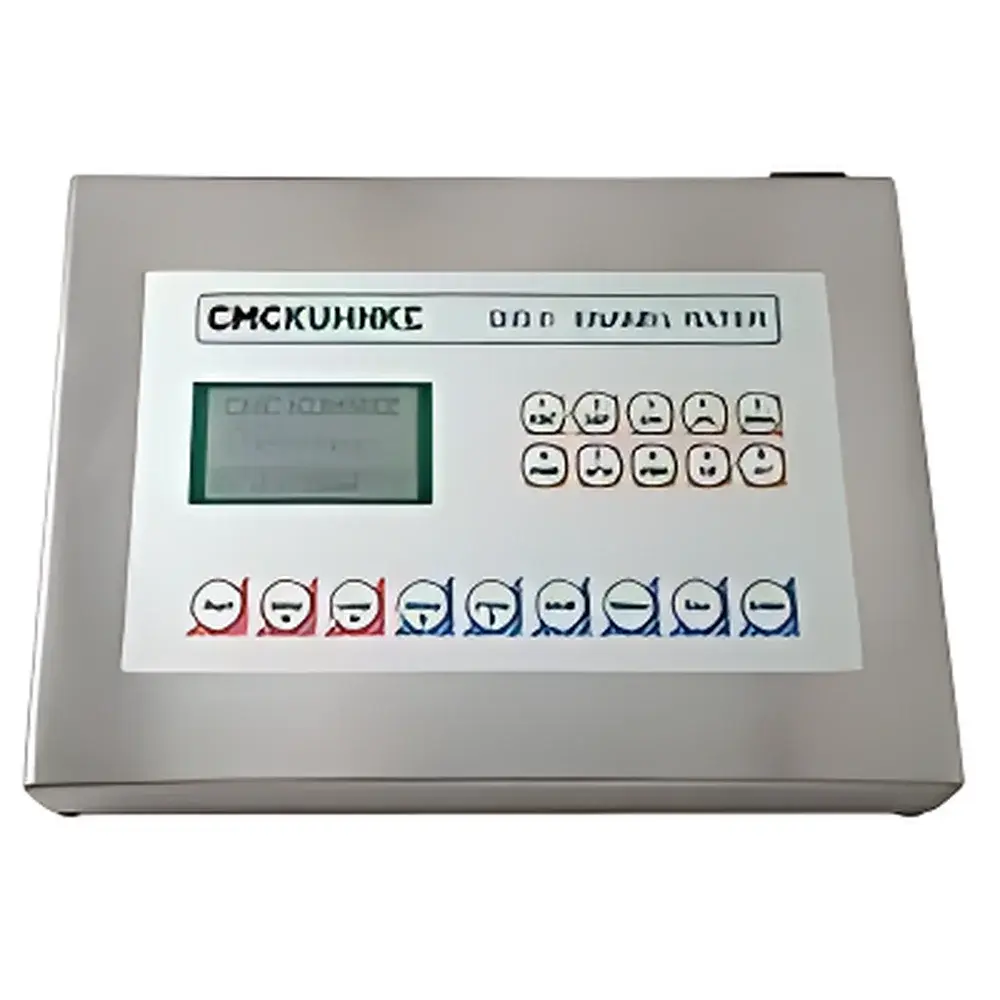
ENR-2000 Coating Integrity Tester (Conductivity-Based)
| Origin | Guangdong, China |
|---|---|
| Manufacturer Type | Authorized Distributor |
| Origin Classification | Domestic (China) |
| Model | ENR-2000 |
| Pricing | Upon Request |
Overview
The ENR-2000 Coating Integrity Tester is a precision-engineered, manually operated instrument designed for non-destructive evaluation of electrically insulating organic coatings applied to metallic substrates—primarily in metal packaging manufacturing. It operates on the principle of low-voltage direct current (DC) conductivity testing: a controlled test voltage (4.0 V, 6.3 V, or 10.0 V DC) is applied between the conductive substrate and an electrolytic test solution (e.g., saline or proprietary conductive liquid), while the resulting leakage current (0–1000 mA) is measured. Any discontinuity—pinholes, thin spots, or uncoated areas—in the dielectric coating allows current flow proportional to defect size and conductivity path; thus, current magnitude serves as a quantitative indicator of coating integrity. The instrument complies with GB/T 9106.1–2019 (“Metal Two-Piece and Three-Piece Cans — Part 1: Technical Requirements”), aligning with broader international practices for coated can quality assurance in food, beverage, and aerosol packaging supply chains.
Key Features
- Three user-selectable test voltages: 4.0 V, 6.3 V, and 10.0 V DC—optimized for varying coating thicknesses and resistivity ranges;
- Adjustable test duration: 0–99 seconds, enabling precise control over exposure time for consistent measurement repeatability;
- Reversible polarity mode: supports bidirectional current application to mitigate electrode polarization effects and improve measurement stability;
- Integrated 100 Ω precision calibration resistor for routine system verification and traceable performance validation;
- Dual output modes: real-time display on built-in LCD screen + RS-232 serial interface for external data capture (PC or thermal printer);
- Modular mechanical fixture architecture supporting rapid reconfiguration for diverse package geometries without tooling changeover.
Sample Compatibility & Compliance
The ENR-2000 accommodates a comprehensive range of coated metal packaging components, including three-piece cans and sheet stock, two-piece drawn-and-ironed (D&I) cans, aerosol containers, can ends (lids), seam-applied coating zones (e.g., side-seam or double-seam overcoat), crown caps, and coated tubular substrates. Fixture sets are mechanically engineered for secure, repeatable electrical contact: three distinct can fixtures—two for three-piece can variants (standard and large-diameter), one dedicated to beverage-sized two-piece cans—each featuring fixed contact points wired into a centralized contact control line. Can end fixtures are custom-machined per customer-specified diameter (40–230 mm) and require vacuum-assisted clamping to ensure uniform electrolyte contact across curved surfaces. All test configurations maintain compliance with GB/T 9106.1–2019, and the system’s operational parameters support alignment with ISO 2808 (paints and varnishes — determination of film thickness), ASTM D5178 (standard practice for coating continuity testing using low-voltage wet-sponge methods), and internal QC protocols under GMP-aligned quality systems.
Software & Data Management
While the ENR-2000 operates as a standalone hardware unit, its RS-232 serial interface enables integration with third-party statistical process control (SPC) software or custom-developed data acquisition platforms. Raw output includes timestamped test voltage, duration, polarity state, measured current (mA), pass/fail status (based on user-defined current thresholds), and fixture identification codes. Data streams support CSV export for trend analysis, capability studies (Cp/Cpk), and audit-ready electronic records. When deployed in regulated environments (e.g., FDA-regulated food packaging facilities), the instrument’s deterministic behavior, calibration traceability via the 100 Ω resistor, and configurable pass/fail logic facilitate adherence to 21 CFR Part 11 requirements when paired with compliant host software featuring electronic signatures, audit trails, and data integrity controls.
Applications
- Final quality inspection of epoxy-phenolic, polyester, acrylic, and organosol coatings on steel and aluminum cans;
- In-process verification of weld seam overcoating integrity during can body manufacturing;
- Coating continuity assessment of aerosol valve cups and crimped end closures;
- Supplier qualification and incoming material inspection for coated coil stock prior to can making;
- Root cause analysis of coating defects linked to curing oven profiles, bath contamination, or spray atomization issues;
- Supporting ISO/IEC 17025-accredited laboratory testing where documented method validation and measurement uncertainty estimation are required.
FAQ
What standards does the ENR-2000 comply with?
It conforms to GB/T 9106.1–2019 and supports implementation of ASTM D5178, ISO 2808, and internal GMP-compliant test procedures.
Is calibration traceable to national standards?
Yes—the included 100 Ω reference resistor enables functional verification; full metrological calibration requires external accredited lab services per ISO/IEC 17025.
Can test results be exported directly to Excel or LIMS?
Yes—via RS-232 serial output, raw data can be parsed by compatible host software for direct import into spreadsheets or Laboratory Information Management Systems (LIMS).
Does the instrument support automated production-line integration?
The ENR-2000 is manually operated but features programmable triggers and digital I/O signals (optional add-on) to interface with PLC-controlled test stations.
What maintenance is required for long-term reliability?
Routine cleaning of electrodes and fixtures, periodic verification with the 100 Ω resistor, and annual verification of voltage/current accuracy by qualified service personnel.



