
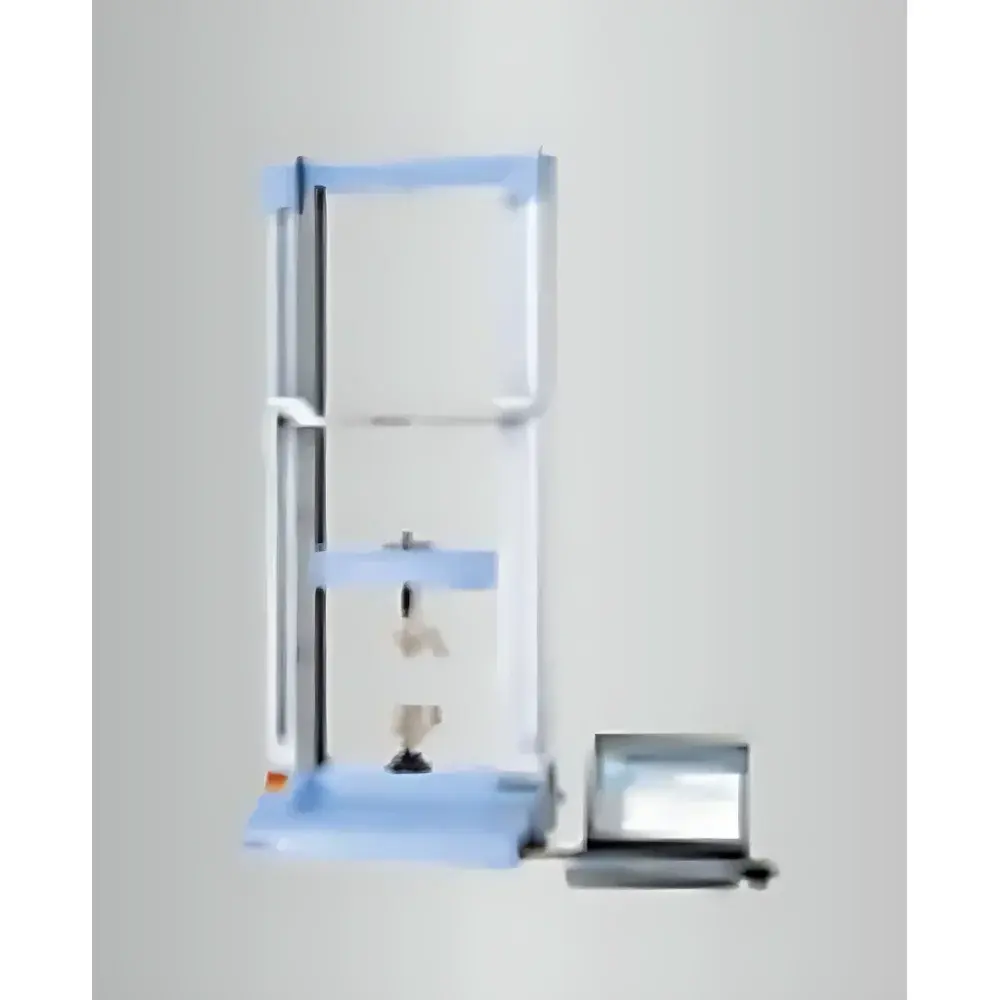
Shimadzu AGS-X Series Electromechanical Universal Testing Machine
| Brand | Shimadzu |
|---|---|
| Origin | Japan |
| Manufacturer Type | Authorized Distributor |
| Origin Category | Imported |
| Model | AGS-X Series |
| Pricing | Available Upon Request |
Overview
The Shimadzu AGS-X Series is a compact, integrated electromechanical universal testing machine engineered for precision mechanical property evaluation of small- to medium-sized specimens in R&D laboratories, quality control environments, and academic institutions. Utilizing a high-fidelity servo-controlled linear actuation system, the AGS-X operates on the principle of controlled displacement or load application under closed-loop feedback, enabling accurate measurement of tensile, compressive, flexural, peel, and shear responses in accordance with ISO 6892-1, ASTM E8/E9/E21, and JIS Z2241 standards. Its monolithic architecture—combining load frame, drive unit, controller, and display into a single low-footprint unit—eliminates external cabling and signal latency, ensuring high reproducibility and operational stability across repeated test cycles. Designed for compliance with CE marking requirements (EN ISO 12100, EN 61000-6-2/6-3), the system meets essential safety and electromagnetic compatibility criteria for deployment in regulated European and global laboratory settings.
Key Features
- Integrated all-in-one design: Load frame, AC servo motor, digital controller, and touchscreen interface housed within a single ultra-slim chassis (depth < 400 mm), optimized for benchtop installation in space-constrained labs.
- Servo-driven actuation: Brushless AC servo motor with regenerative braking ensures precise speed control, zero maintenance over extended service life, and consistent torque delivery across the full speed range.
- Multi-mode control capability: Supports load-controlled, displacement-controlled, and strain-controlled test profiles—including automatic load hold, stress relaxation, and creep testing—with real-time switching between modes during active tests.
- High-speed return function: Rapid return to initial position at up to 1500 mm/min reduces inter-test downtime and improves throughput in high-volume QC workflows.
- Extended-height frame option: Optional 500 mm vertical extension enables large-strain tensile testing of elastomers, foams, and thermoplastic polymers without compromising alignment integrity or column stability.
- Overload protection & specimen safeguard logic: Programmable upper/lower limits for force, displacement, and rate prevent hardware damage and premature specimen failure due to operator error or unexpected material behavior.
Sample Compatibility & Compliance
The AGS-X Series accommodates a broad spectrum of specimen geometries and mechanical behaviors through interchangeable fixtures—including wedge-action tensile grips, compression platens, three- and four-point bend fixtures, peel test jigs, and PCB-specific bending modules. It supports standardized test configurations for metallic foils (ISO 6892-1), polymer films (ASTM D882), rubber compounds (ISO 37), electronic solder joints (JEDEC JESD22-B117A), and flexible printed circuits (IPC-TM-650 2.4.1). All mechanical and electrical subsystems conform to IEC 61000-4 immunity standards and meet CE directive requirements for machinery safety (2006/42/EC) and electromagnetic compatibility (2014/30/EU). The system is compatible with GLP/GMP-aligned documentation practices and supports audit-ready data export for regulatory submissions.
Software & Data Management
Operation is managed via Shimadzu’s proprietary Trapezium X software—a Windows-based platform supporting real-time graphing, multi-curve overlay, customizable report templates (PDF/Excel), and automated pass/fail evaluation against user-defined acceptance criteria. Data acquisition occurs at 1 kHz sampling frequency with timestamped metadata (operator ID, test method, environmental conditions). Software features include built-in calibration traceability logs, electronic signature support per FDA 21 CFR Part 11 (when deployed with validated IT infrastructure), and export formats compliant with ASTM E1434 and ISO/IEC 17025 reporting requirements. Raw data files are stored in vendor-neutral CSV format with full parameter metadata embedded.
Applications
- Tensile testing of thin metal sheets, wires, and synthetic fibers (e.g., stainless steel foil, Kevlar® yarn, carbon filaments)
- Mechanical characterization of thermoplastics, elastomers, composites, and hydrogels under uniaxial tension/compression/bending
- Interfacial strength assessment: solder joint pull tests, adhesive bond peel tests (90°/180°), and wire bonding shear evaluation
- Fatigue and cyclic loading analysis of miniature springs and MEMS components
- Flexural rigidity and fracture toughness determination of printed circuit boards (PCBs) and flexible electronics substrates
- Quality assurance testing of medical device components (e.g., catheter shafts, suture materials) per ISO 10993-12 and USP
FAQ
What load capacities are available in the AGS-X Series?
The AGS-X offers eleven standard load cell options: 1 N, 2 N, 5 N, 10 N, 20 N, 50 N, 100 N, 500 N, 1 kN, 5 kN, and 10 kN—each factory-calibrated and certified to ISO/IEC 17025-accredited standards.
Is the system compliant with FDA 21 CFR Part 11 requirements?
Yes—when configured with Trapezium X software version 5.0 or later and deployed within a validated network environment with role-based access controls and electronic audit trails enabled.
Can the AGS-X perform constant strain rate tests per ISO 6892-1 Annex A?
Yes—the system supports both crosshead displacement control and extensometer-based strain control, meeting Annex A requirements for metallic materials testing up to strain rates of 0.00025 s⁻¹.
What is the positional resolution and accuracy specification?
Position detection resolution is 0.033 µm; position control accuracy is ±0.1% of set value across the full stroke range.
Are third-party夹具 (fixtures) supported?
Yes—Shimadzu provides ISO-standardized mounting interfaces (e.g., M6 threaded holes, T-slots), allowing integration of custom or vendor-agnostic fixtures with mechanical alignment verification tools.



