
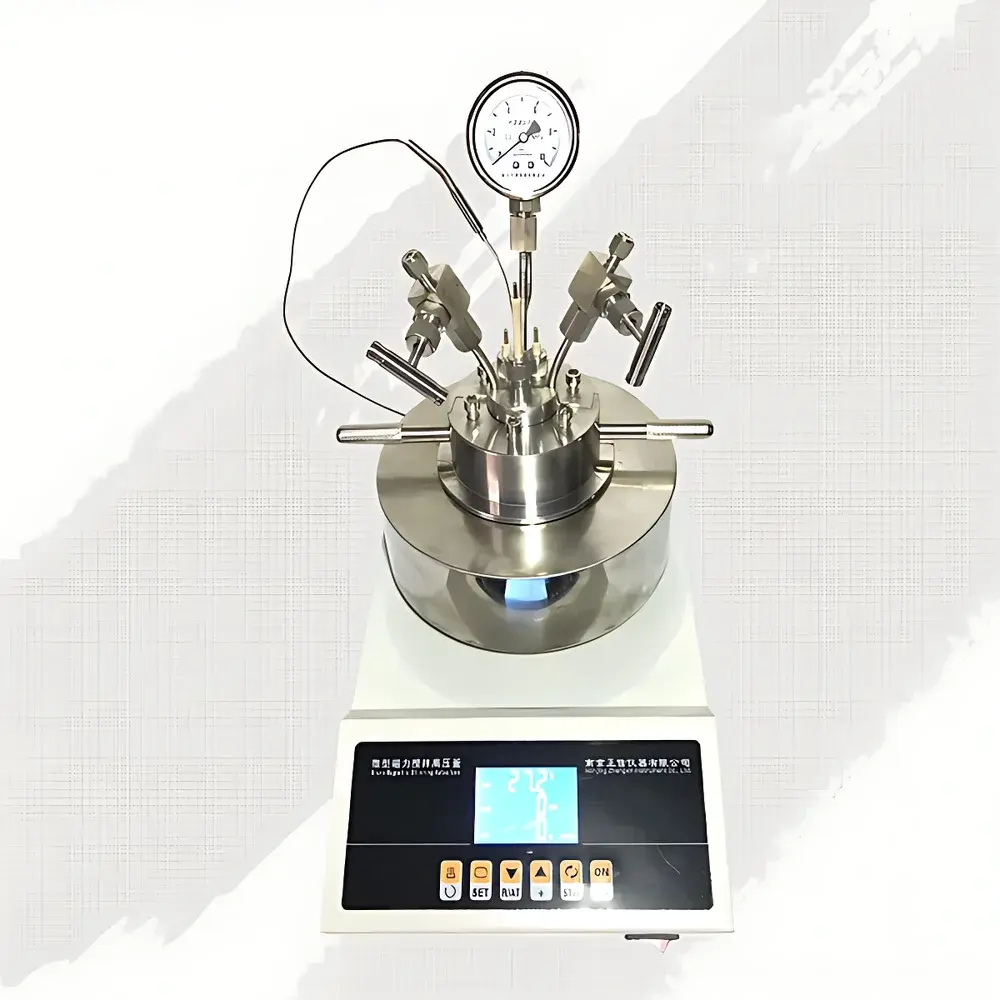
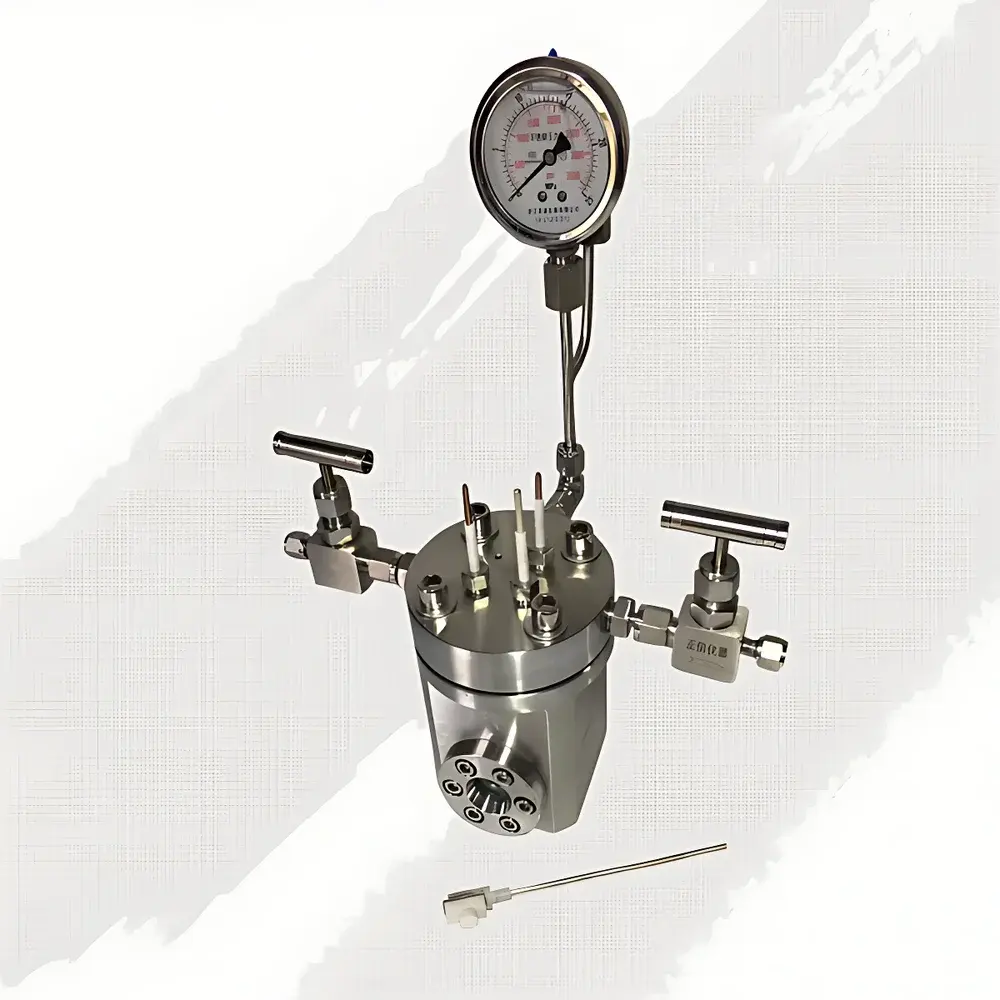
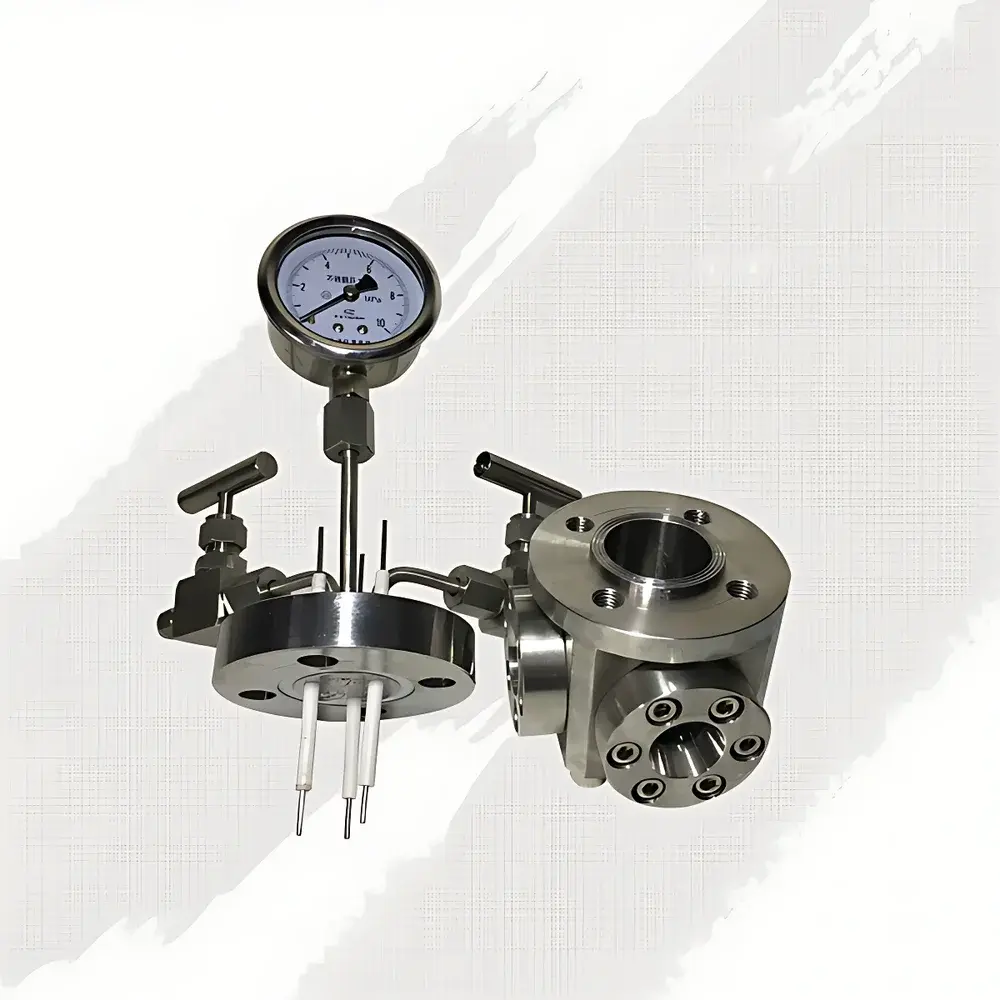
EYK Electrode-Integrated Stainless Steel High-Pressure Reaction Vessel
| Brand | Zhengxin Instrument Factory (ZXYIQI) |
|---|---|
| Origin | Jiangsu, China |
| Manufacturer Type | Authorized Distributor |
| Origin Category | Domestic |
| Model | EYK-100ML |
| Price | USD 5,900 (approx.) |
| Usable Volume | 100 mL |
| Vessel Material | 316L Stainless Steel |
| Operating Pressure Range | 0–10 MPa |
| Vacuum Capability | Up to –0.1 MPa (absolute) |
| Temperature Range | Ambient to 350 °C |
| Heating Method | Embedded Modular PID-Controlled Resistive Heating |
| Stirring | Magnetic Coupling Drive, 0–1000 rpm |
| Electrode Compatibility | Pt working electrode, Ag/AgCl reference electrode, glassy carbon disk, graphite |
| Viewport | Sapphire optical window (≥20 mm clear aperture) |
| Safety Systems | Dual-pressure relief (Hastelloy C-276 rupture disc + spring-loaded safety valve), overtemperature/time alarm with audible/visual alert, interlocked temperature–pressure monitoring |
Overview
The EYK Electrode-Integrated Stainless Steel High-Pressure Reaction Vessel is a purpose-engineered laboratory-scale reactor designed for electrochemical synthesis, catalytic hydrogenation, hydrothermal crystallization, and corrosion studies under controlled elevated pressure and temperature. It operates on the principle of sealed batch reaction with real-time electrochemical monitoring—enabling in situ voltammetry, impedance spectroscopy, or potentiostatic control during pressurized operation. The vessel integrates a fully isolated, chemically inert electrode feedthrough system compatible with standard three-electrode configurations, allowing direct coupling to potentiostats without compromising pressure integrity. Constructed from ASTM A240 316L stainless steel forged from solid bar stock, the monolithic body eliminates weld seams in critical pressure zones, ensuring structural reliability at up to 10 MPa (1450 psi) and temperatures up to 350 °C. Its dual-seal architecture—combining elastomeric (FKM/Viton) primary sealing with secondary metal-to-metal (316L-on-316L) backup—meets ISO 2852 and ASME B31.3 process equipment integrity benchmarks.
Key Features
- Optical-grade sapphire viewport (20 mm diameter, AR-coated optional) enabling real-time visual observation and in situ Raman/UV-Vis spectroscopic access under pressure
- Dual-path PID temperature control with K-type thermocouple (316L sheath, Φ2.0 mm) and independent pressure feedback loop—preventing thermal runaway via interlocked cut-off at preset thresholds
- Magnetic drive stirring system with SmCo permanent magnet coupling and brushless DC motor (0–1000 rpm, ±2 rpm repeatability), eliminating dynamic seal leakage pathways
- Modular heating assembly: removable 304 stainless steel jacket with embedded NiCr resistance elements, enabling rapid thermal cycling and cross-reactor compatibility
- Electrode feedthroughs rated for ≥10 MPa and 350 °C, featuring PTFE, quartz, or PPL insulating liners and gold-plated copper current collectors for low-noise signal transmission
- Fast-clamp flange design compliant with DIN 2501/DIN 2526 standards—achieving full seal integrity in <60 seconds without torque wrench dependency
Sample Compatibility & Compliance
The EYK-100ML accommodates heterogeneous, homogeneous, and electrochemically active reaction mixtures—including aqueous electrolytes, organic solvents (e.g., DMF, THF, acetonitrile), supercritical CO₂, and corrosive media (e.g., HCl, H₂SO₄ ≤ 20 wt%). All wetted surfaces are electropolished to Ra ≤ 0.4 µm and passivated per ASTM A967. Pressure containment complies with PED 2014/68/EU Category IV requirements; burst pressure rating exceeds 1.5× MAWP. Optional certifications include CE marking, ASME U-Stamp (upon request with third-party inspection), and GLP-aligned documentation packages supporting FDA 21 CFR Part 11 audit trails when integrated with validated data acquisition systems.
Software & Data Management
While the base unit operates via front-panel digital interface (LCD with tactile keypad), optional RS485/Modbus RTU or Ethernet TCP/IP connectivity enables integration into LabVIEW™, MATLAB®, or custom SCADA platforms. Temperature, pressure, stir speed, and elapsed time are logged at user-defined intervals (100 ms–60 s resolution). When paired with external potentiostats (e.g., BioLogic SP-300, Metrohm Autolab PGSTAT302N), synchronized timestamping ensures phase-aligned electrochemical and process parameter correlation—critical for kinetic modeling and Arrhenius analysis. Audit-ready CSV exports include operator ID, calibration timestamps, and system health flags.
Applications
- In situ electrochemical hydrogen evolution reaction (HER) and oxygen evolution reaction (OER) studies under industrially relevant pressure conditions
- Hydrothermal synthesis of MOFs, perovskites, and quantum dots with simultaneous cyclic voltammetry
- High-pressure CO₂ electroreduction in aqueous bicarbonate media
- Accelerated corrosion testing of alloys in chloride-rich environments with electrochemical noise monitoring
- Catalyst screening for Fischer–Tropsch or ammonia synthesis precursors under syngas-equivalent partial pressures
- Supercritical fluid-assisted electrodeposition of nanocomposite coatings
FAQ
What electrode configurations are supported out-of-the-box?
Standard configuration includes one Pt wire working electrode (1.0 mm Ø), one Ag/AgCl (3 M KCl) reference electrode, and one graphite counter electrode—all with PTFE-insulated, compression-sealed feedthroughs. Custom geometries (e.g., rotating disk, microband arrays) are available upon drawing submission.
Is the sapphire viewport suitable for UV transmission?
Yes—the single-crystal sapphire window transmits down to 155 nm; optional MgF₂ anti-reflective coating extends usable range to vacuum UV (120 nm) for synchrotron-compatible experiments.
Can the vessel be operated under vacuum prior to pressurization?
Yes—integrated vacuum-rated ball valves and a –0.1 MPa (absolute) rating allow degassing, solvent removal, or inert-gas purging sequences prior to repressurization.
What maintenance intervals are recommended for long-term reliability?
Annual verification of rupture disc integrity, thermocouple calibration traceable to NIST standards, and visual inspection of sapphire surface for microscratches or etching—documented per ISO/IEC 17025 internal audit protocol.
Does the system support GMP-compliant electronic records?
When connected to validated third-party data acquisition software with 21 CFR Part 11 modules (e.g., DeltaV™, LabArchives ELN), full electronic signature, audit trail, and role-based access control are achievable.



