
EZ Scientific Digital Stereotaxic Instrument Model 88110
| Brand | EZ Scientific |
|---|---|
| Origin | Beijing, China |
| Model | 88110 |
| Animal Compatibility | Mouse, Rat, Rabbit, Cat |
| X/Y/Z Travel Range | 0–80 mm |
| Adjustment Resolution | 10 µm |
| X-Axis Rotation | −90° to +90° |
| Z-Axis Rotation | −45° to +45° |
| Display | 5-inch HD LED touchscreen |
| Power Options | AA batteries (low-noise operation) or optional rechargeable Li-ion battery |
| Sensor Interface | Imported industrial-grade connectors |
| Compliance | Designed for GLP-compliant neuroscientific research environments |
Overview
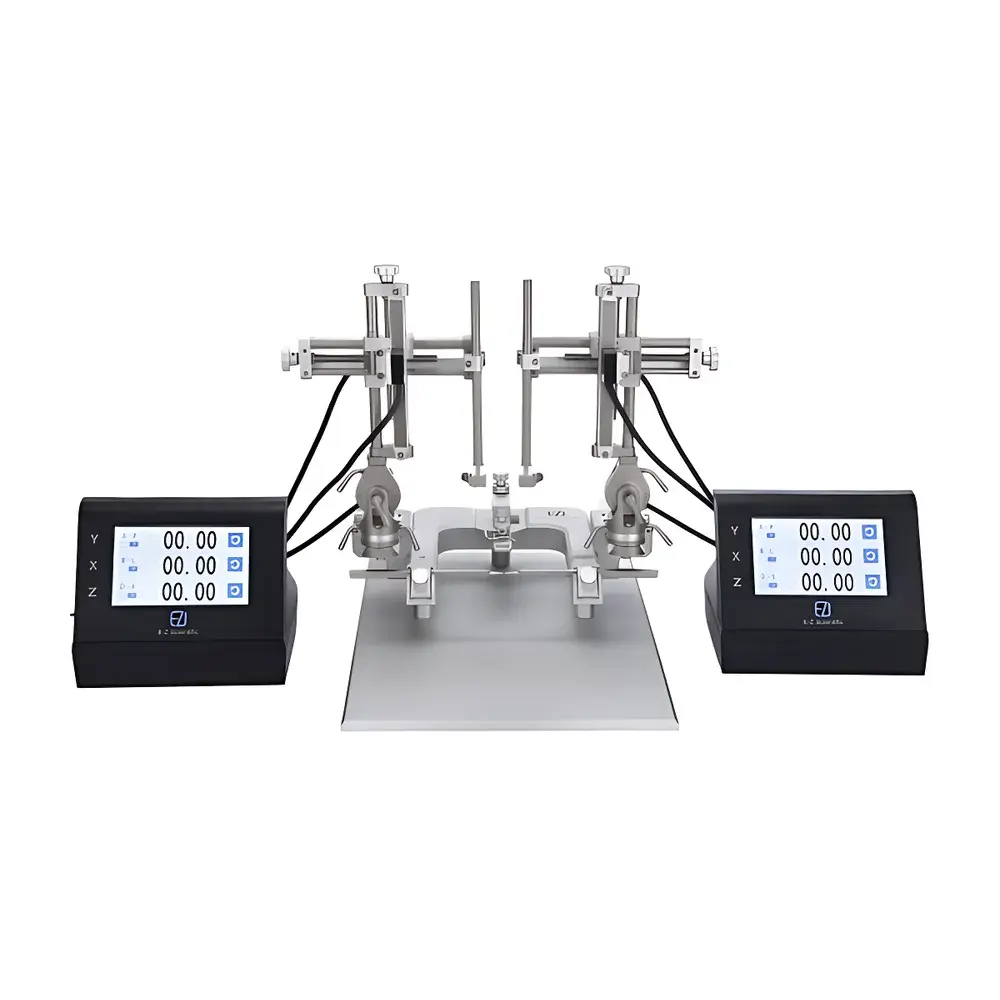
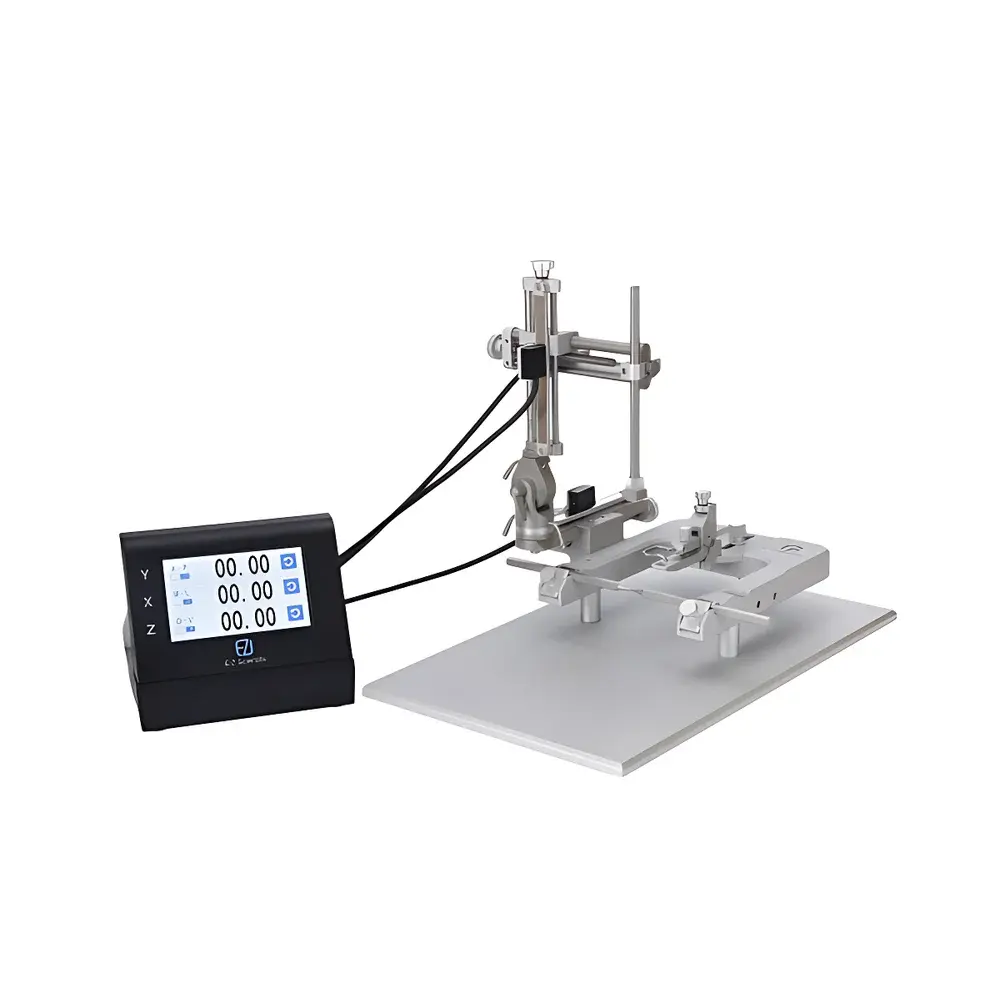
The EZ Scientific Digital Stereotaxic Instrument Model 88110 is an engineered precision platform for stereotactic neurosurgical procedures in small and medium-sized laboratory animals. Based on the standardized stereotactic coordinate system—defined by bregma and lambda landmarks—the instrument enables reproducible, three-dimensional targeting of subcortical brain structures without direct visual exposure. Its mechanical architecture adheres to established principles of orthogonal translation and controlled angular articulation, supporting intracranial electrode implantation, microinjection, optogenetic fiber placement, and localized lesioning with high spatial fidelity. The Model 88110 is purpose-built for electrophysiology, behavioral neuroscience, and translational disease modeling—including Parkinson’s disease, cerebral ischemia, glioma xenografts, and neural stem cell transplantation—where measurement integrity, mechanical stability, and electromagnetic compatibility are critical.
Key Features
- High-resolution digital positioning: Real-time X/Y/Z displacement readout on a 5-inch HD LED touchscreen with 10 µm resolution; eliminates parallax error and manual vernier interpolation.
- Zero-point flexibility: One-touch axis reset functionality allows independent zeroing at any position within the full 0–80 mm travel range per axis.
- Low-noise power architecture: Dual-power design supports standard AA batteries (ideal for noise-sensitive extracellular recordings) or an optional rechargeable Li-ion module—both isolated from analog signal paths.
- Robust sensor integration: Industrial-grade imported connectors ensure stable data transmission between linear position sensors and display unit; color-coded interfaces aid rapid assembly verification.
- Modular rotational capability: X-axis rotation (−90° to +90°) and Z-axis tilt (−45° to +45°) enable angled trajectories for deep-brain access while maintaining mechanical rigidity.
- Expandable configuration: Supports single-arm or dual-arm setups—each arm independently equipped with digital readout—for simultaneous stimulation and recording, or bilateral interventions.
- Animal-adapted mounting: Interchangeable ear bars, bite plates, and nose clamps accommodate mice, rats, rabbits, and cats; base plate options include flat, elevated, and rotating variants.
Sample Compatibility & Compliance
The Model 88110 is validated for use across common rodent and lagomorph models under institutional animal care protocols. Its non-magnetic stainless steel construction and low-EMI power design meet essential requirements for concurrent electrophysiological recording (e.g., patch-clamp, LFP, single-unit sorting). While not certified to ISO 13485 or FDA 21 CFR Part 11 as a medical device, its operational repeatability, traceable calibration methodology, and audit-ready documentation support adherence to GLP frameworks for preclinical neuroscience studies. All mechanical adjustments comply with ASTM F2697-22 guidelines for stereotactic instrument performance verification.
Software & Data Management
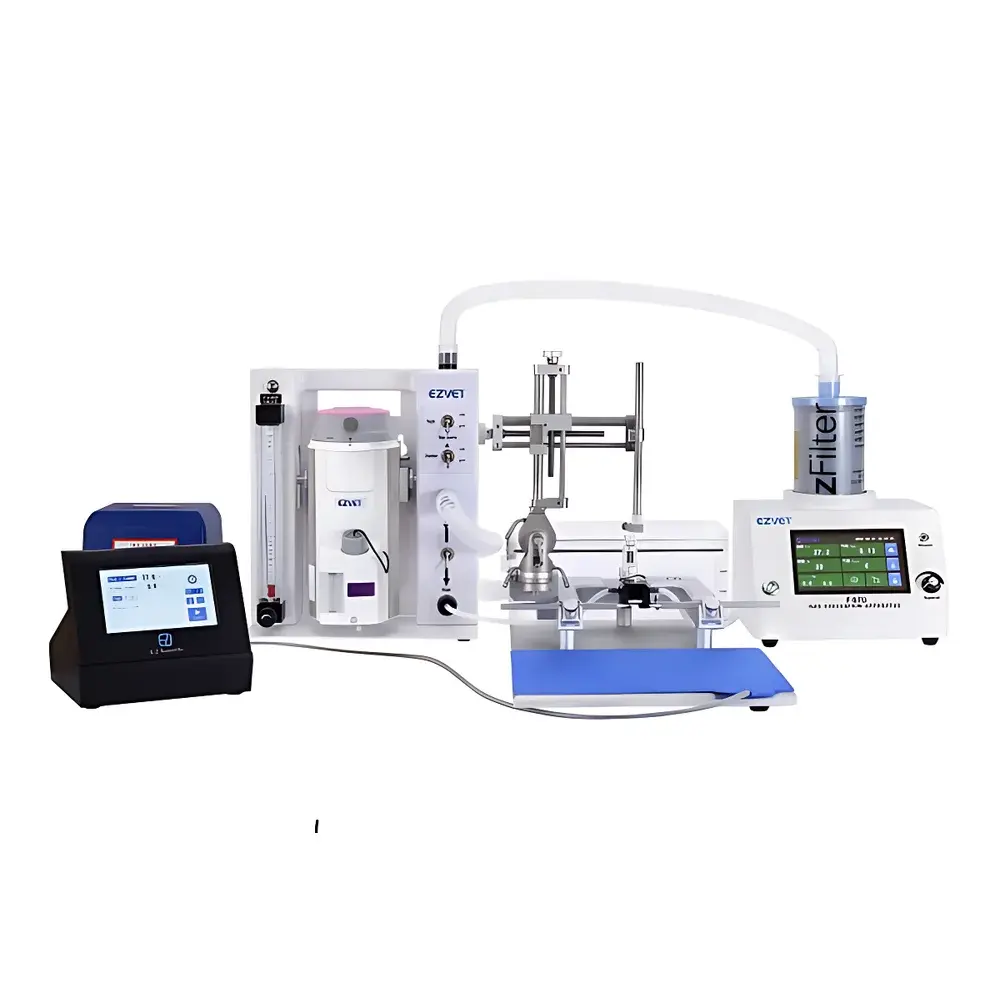
This instrument operates as a hardware-only platform—no proprietary software or PC interface is required. All positional data remain local to the embedded display and are not stored, transmitted, or networked, thereby eliminating cybersecurity risks and ensuring compliance with institutional data governance policies. For laboratories requiring documentation, users may manually log coordinates alongside procedural timestamps using standardized lab notebooks or LIMS-integrated templates. Optional third-party integration (e.g., via TTL-triggered camera capture or analog voltage output modules) is supported through configurable I/O ports upon request.
Applications
- Construction of neurodegenerative disease models (e.g., 6-OHDA lesions in rat substantia nigra pars compacta)
- Intracerebral tumor xenografting with precise volumetric control (e.g., GL261 glioma cell injection into mouse striatum)
- Chronic electrode array implantation for longitudinal in vivo electrophysiology
- Stereotactic delivery of AAV vectors for region-specific gene expression
- Microinfusion of pharmacological agents during behavioral assays (e.g., Morris water maze, fear conditioning)
- Bilateral cannula placement for dual-hemisphere microdialysis or optogenetic inhibition
- Validation of MRI-guided targeting workflows in translational imaging studies
FAQ
Is the Model 88110 compatible with electrophysiology rigs requiring ultra-low electrical noise?
Yes. The AA-battery-powered display mode provides galvanic isolation from mains power, minimizing 50/60 Hz interference and harmonic distortion commonly observed in AC-coupled systems.
Can the instrument be calibrated in-house?
Yes. Each axis includes a factory-traceable calibration certificate; users may perform routine verification using NIST-traceable gauge blocks and optical alignment tools per SOP-NS-07.
Does it support integration with digital microscope systems?
The base plate features standardized 1/4″-20 threaded mounting holes and M6 tapped inserts, enabling rigid coupling to motorized microscope stages and stereomicroscope adapter rings.
What maintenance is required for long-term accuracy?
Annual inspection of lead screw preload, sensor alignment, and connector integrity is recommended; no lubrication or firmware updates are necessary due to the absence of embedded processors or moving electronics.
Are replacement parts available for wear-prone components?
Yes. Replacement ear bars, nose clips, and linear motion assemblies are stocked globally and shipped with dimensional certification reports.
Related Products



