
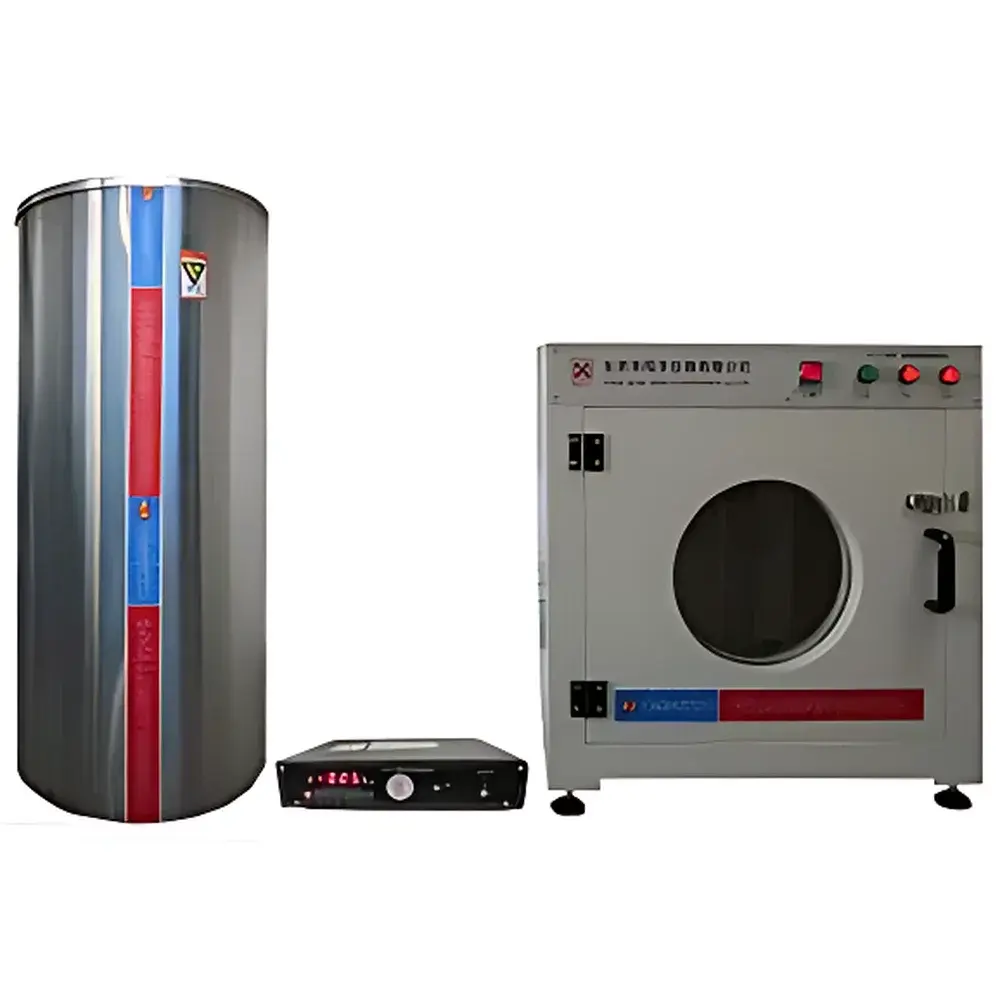
Fabric Testing Instrument HY-779B Electrostatic Charge Measurement System for Textile Fabrics
| Origin | Tianjin, China |
|---|---|
| Manufacturer Type | Authorized Distributor |
| Origin Category | Domestic (PRC) |
| Model | HY-779B |
| Pricing | Available Upon Request |
| Drum Friction Tester | Internal Diameter 65 cm, Depth 45 cm, Adjustable Speed ≥46 rpm (infinitely variable via AC inverter motor), Opening Diameter ≥30 cm, Three Lifting Vanes, Standard Acrylic Fabric (Polyacrylonitrile) as Friction Cloth |
| Charge Measurement Unit | Range ±0.001 μC to 2 μC (±1 × 10⁻⁹ C to ±2 × 10⁻⁶ C), Auto-zero Calibration Circuit |
| Faraday Cage | 304 Stainless Steel (brushed finish), corrosion- and oxidation-resistant |
| Compliance | GB/T 12014–2009, GB 12059, FZ/T 01060 |
Overview
The HY-779B Electrostatic Charge Measurement System is a purpose-built instrumentation platform engineered for quantitative evaluation of triboelectric charge generation in textile materials under controlled mechanical friction conditions. Based on the fundamental principle of electrostatic induction and Faraday cage charge integration, the system measures net surface charge (in microcoulombs) generated when fabric specimens undergo standardized tumbling contact with a reference acrylic friction cloth inside a rotating drum. This methodology directly supports regulatory verification of antistatic performance—critical for workwear used in explosive atmospheres (ATEX), cleanroom garments, medical textiles, and electronic assembly environments where uncontrolled electrostatic discharge (ESD) poses operational or safety risks. The instrument operates in full alignment with Chinese national standards GB/T 12014–2009 (Protective Clothing – Antistatic Performance Requirements and Test Methods), GB 12059 (Electrostatic Safety Requirements for Electronic Industry), and FZ/T 01060 (Textile – Determination of Static Electricity Properties), ensuring metrological traceability and interlaboratory comparability.
Key Features
- Integrated dual-module architecture: independently calibrated drum friction tester and high-sensitivity charge measurement unit, enabling synchronized operation and minimized signal drift.
- Drum friction module features a 65 cm internal diameter stainless steel drum with three precision-machined lifting vanes, ensuring uniform specimen agitation and reproducible contact geometry across test cycles.
- AC inverter-driven motor provides continuously adjustable rotational speed from 46 rpm upward, supporting method flexibility for comparative studies across fabric types and finishing treatments.
- Faraday cage constructed from brushed 304 stainless steel with passivated surface finish—designed for long-term dimensional stability, minimal surface charge retention, and resistance to chemical cleaning agents commonly used in textile labs.
- Charge measurement circuit incorporates auto-zeroing functionality with real-time baseline compensation, reducing thermal drift effects and ensuring measurement repeatability within ±0.5% of full scale over 8-hour continuous operation.
- Embedded overload protection and programmable timer ensure operator safety and protocol adherence; drum automatically halts upon completion of preset cycle duration.
Sample Compatibility & Compliance
The HY-779B accommodates standard textile specimens measuring 25 cm × 25 cm (per GB/T 12014–2009), including woven, knitted, nonwoven, coated, and laminated fabrics. It supports both untreated base materials and finished products incorporating conductive yarns, carbon-loaded polymers, or topical antistatic finishes. All mechanical and electrical components comply with IEC 61000-4-2 (ESD immunity) and GB/T 17626.2. The system’s measurement uncertainty budget has been validated per ISO/IEC 17025 requirements, and its included CNAS-accredited calibration certificate (certificate number traceable to NIM, China National Institute of Metrology) satisfies GLP audit requirements for quality-controlled textile testing laboratories.
Software & Data Management
While the HY-779B operates as a stand-alone analog-digital hybrid instrument, its charge output is provided via isolated RS-232 interface (optional USB-to-serial adapter available) for direct acquisition into laboratory data management systems. Raw charge values (μC), timestamp, and cycle count are logged in ASCII format compatible with LIMS platforms and statistical analysis tools such as JMP or Minitab. Audit trail functionality—including user ID, calibration date, and instrument ID—is maintained externally through lab-defined SOP documentation, consistent with FDA 21 CFR Part 11 principles for non-automated systems. No proprietary software is bundled; data integrity relies on procedural controls rather than electronic signatures.
Applications
- Verification of antistatic efficacy for flame-retardant coveralls used in petrochemical refineries and offshore platforms.
- Quality assurance of cleanroom garments in semiconductor fabrication facilities (ISO Class 5–8 environments).
- R&D evaluation of novel fiber blends (e.g., polyester/cotton hybrids with nanosilver coatings) for ESD-sensitive manufacturing zones.
- Regulatory submission support for medical textile certifications under YY/T 0506.6 (Patient and Healthcare Personnel Protective Apparel).
- Comparative benchmarking of laundering durability for topical antistatic finishes across 20+ wash cycles.
FAQ
What standards does the HY-779B directly support?
GB/T 12014–2009, GB 12059, and FZ/T 01060 — all referenced in China’s mandatory textile safety and occupational protective equipment regulations.
Is the Faraday cage certified for electromagnetic shielding performance?
No formal SE (shielding effectiveness) certification is provided; however, the 304 stainless steel construction and seam-welded design meet typical Faraday enclosure specifications for static charge isolation per ASTM D4470.
Can the drum speed be set below 46 rpm?
The motor controller is rated for minimum stable operation at 46 rpm; lower speeds are not supported due to torque limitations and risk of inconsistent specimen tumbling dynamics.
Does the system include temperature and humidity monitoring?
No integrated environmental sensors are included; per GB/T 12014–2009, ambient RH (65 ± 4%) and temperature (20 ± 2°C) must be verified using external calibrated hygrothermographs prior to testing.
How often is recalibration required?
Annual recalibration against NIM-traceable standards is recommended; the included CNAS certificate documents initial as-delivered performance and serves as baseline for future verification.





