
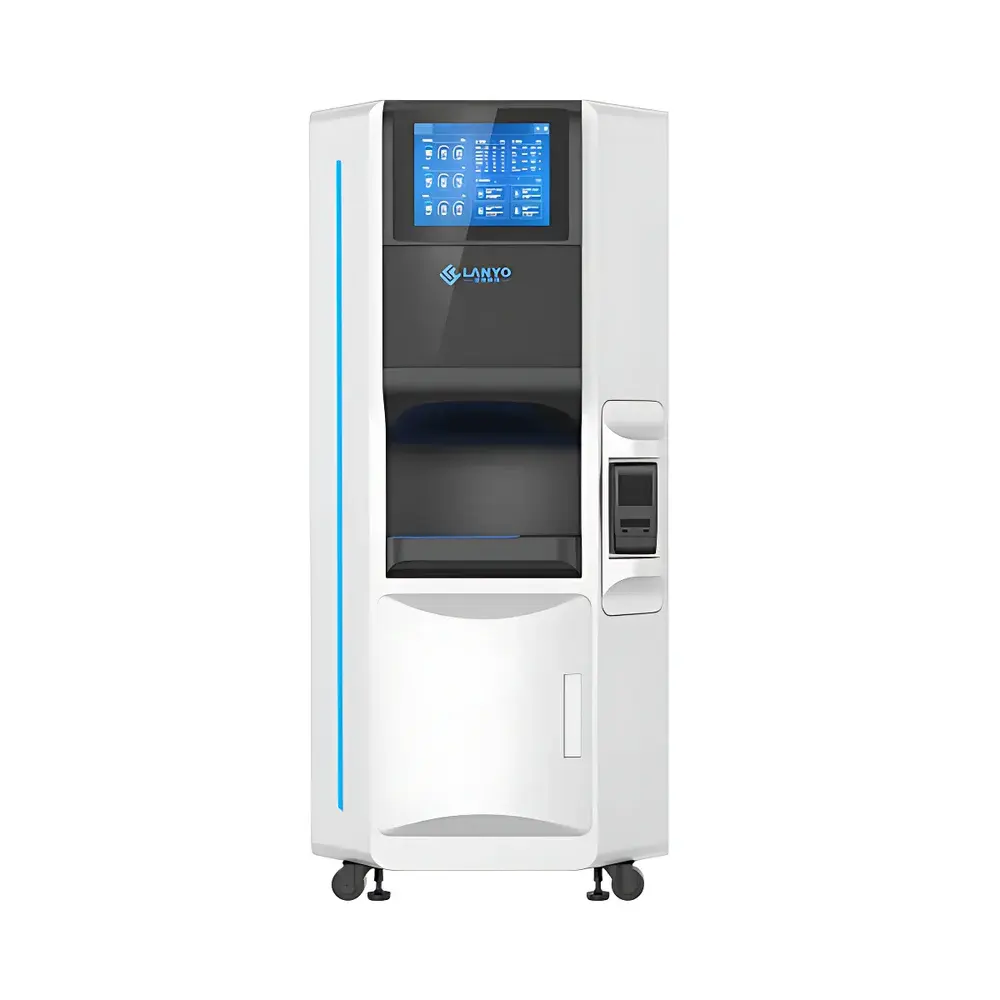
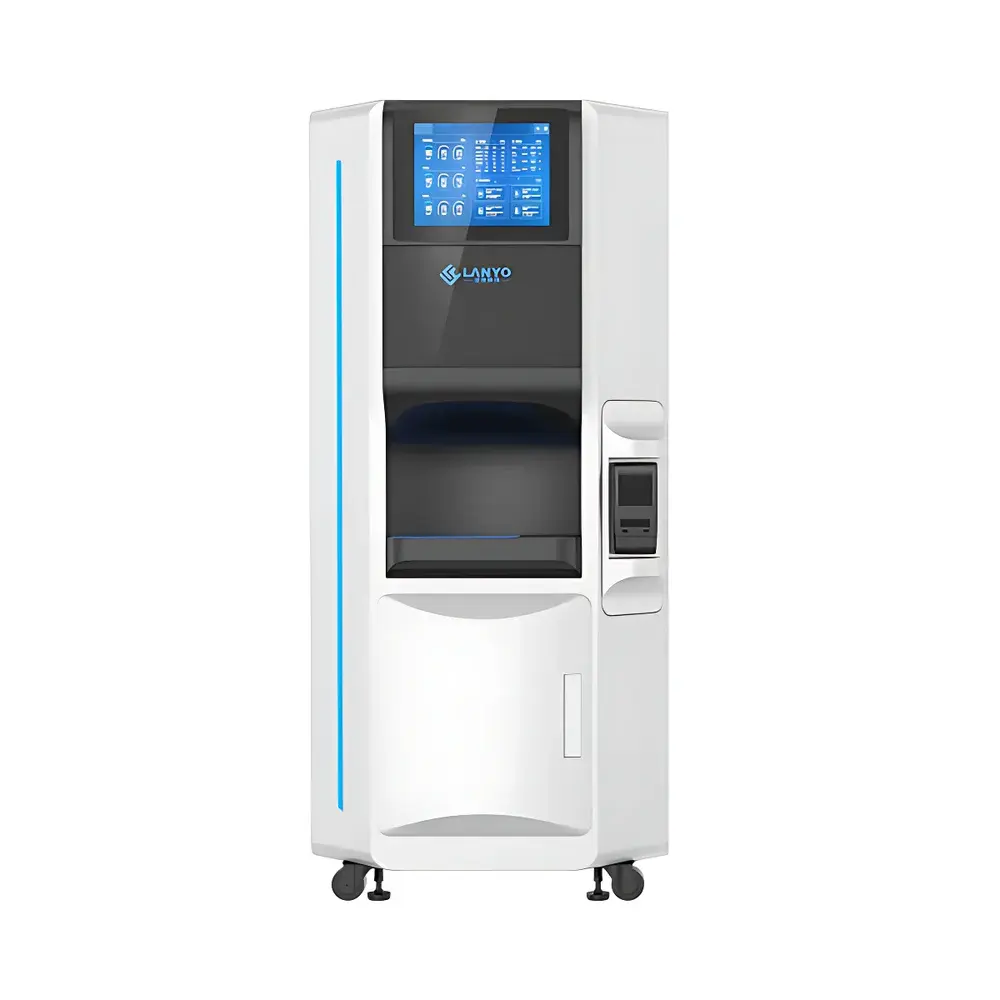
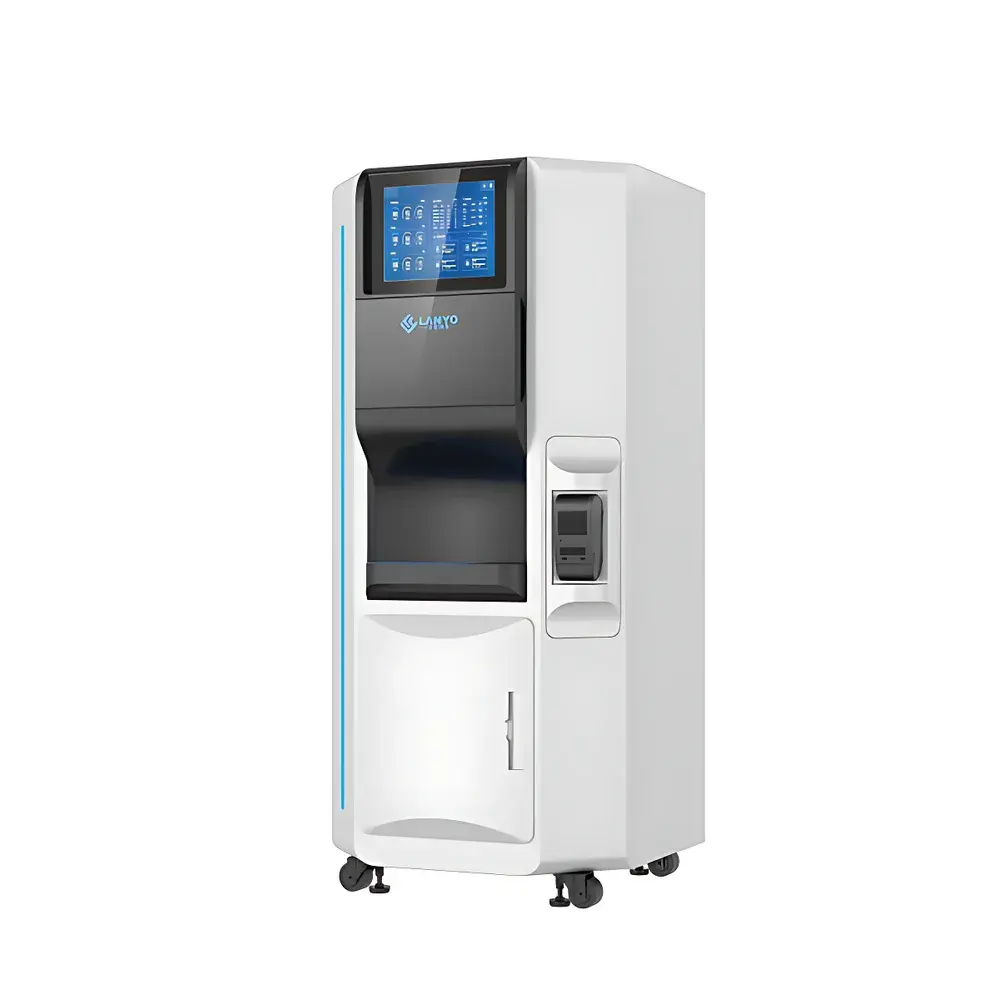
FASP-01 Single-Channel Automated Soil Sample Preparation System
| Origin | Beijing, China |
|---|---|
| Manufacturer Type | Authorized Distributor |
| Origin Category | Domestic (PRC) |
| Model | FASP-01 |
| Pricing | Available Upon Request |
Overview
The FASP-01 Single-Channel Automated Soil Sample Preparation System is an integrated, benchtop-scale instrumentation platform engineered for standardized, trace-metal-free mechanical processing of dry soil samples in environmental and geochemical laboratories. It operates on a sequential, programmable workflow grounded in physical size reduction and homogenization principles—specifically employing cascade grinding, vibratory sieving, dynamic mixing, and gravimetric subsampling—without introducing metallic wear debris or operator-dependent variability. Designed to comply with stringent regulatory sample integrity requirements, the system implements a closed-path, non-contact metal architecture across all sample-contact surfaces (including ceramic-coated grinding elements, polymer sieves, and PTFE-lined chutes), thereby eliminating exogenous elemental contamination during preparation. Its single-channel architecture prioritizes procedural fidelity over throughput, making it ideal for labs performing low-to-moderate volume soil analysis under GLP-aligned workflows where batch consistency, auditability, and spatial efficiency are critical.
Key Features
- Trace-metal-safe sample pathway: All wetted components—including grinding media, sieves, mixing chambers, and transfer ducts—are constructed from non-metallic, chemically inert materials (e.g., high-purity alumina ceramics, food-grade polypropylene, and fluoropolymer coatings) to prevent leaching or abrasion-induced contamination.
- Programmable multi-stage particle size reduction: Supports configurable three-step sieve selection from 10, 20, 60, and 100 mesh (per GB/T 6003.1–2012), enabling compliance with method-specific grain-size fractions required by HJ/T 166–2004, NY/T 395–2012, and DZ/T 0130.4–2006.
- Integrated mass measurement and subsampling: Built-in precision balance (±0.01 g repeatability) enables automated gravimetric weighing before and after grinding, supporting both total mass tracking and ISO/IEC 17025-compliant subsampling protocols including quartering.
- End-to-end digital traceability: Dual QR code labeling (sample + process batch) links raw input to final subsample; all operational parameters (grind time, sieve dwell, mixing duration, weight values, timestamps) are logged with ISO 27001-aligned encryption and stored locally for audit-ready export.
- Automated cleaning cycle: Combines motorized brush contact, vacuum-assisted particulate capture, and replaceable HEPA-class filter cartridges to ensure cross-contamination risk <0.001% between consecutive samples per IEC 61508 SIL-2 validation benchmarks.
- Compact footprint & low infrastructure demand: Occupies <0.8 m² floor space; operates on standard 220 V / 50 Hz single-phase power (<1.2 kW peak); requires no compressed air or external exhaust ducting.
Sample Compatibility & Compliance
The FASP-01 accepts dried, disaggregated soil specimens ranging from 500 g to 2500 g per run, accommodating clay-, silt-, and sand-dominated matrices with organic matter content ≤15% (w/w). It conforms to the mechanical preparation clauses of multiple national standards, including but not limited to: HJ/T 166–2004 (Soil Environmental Monitoring Technical Specifications), EJ 428–1989 (Soil Sampling and Preparation for Environmental Radiological Monitoring), LYT 1210–1999 (Forest Soil Sampling and Preparation), and HJ/T 20–1998 (Sampling and Sample Preparation of Industrial Solid Wastes). Its non-metallic construction satisfies US EPA Method 3050B and ISO 11464:2020 prerequisites for trace-element analysis, while its digital log structure supports FDA 21 CFR Part 11-compliant electronic records when deployed with validated software configuration.
Software & Data Management
The embedded control firmware provides real-time monitoring of all subsystems via a 7-inch capacitive touchscreen interface. Data acquisition follows a deterministic logging protocol: each sample record includes operator ID (via RFID badge scan), environmental sensor readings (ambient temperature/humidity), full parameter set (grind speed, sieve sequence, mix RPM, weight deltas), and digital signatures for start/end confirmation. Export formats include CSV (for LIMS integration), PDF analytical reports (with embedded QR codes), and XML metadata bundles compliant with ASTM E1467–22 (Standard Practice for Laboratory Information Management Systems). Audit trails retain immutable timestamps and user-action attribution for ≥10 years per internal retention policy aligned with ISO/IEC 17025:2017 Clause 7.5.2.
Applications
- Regulatory soil monitoring programs (e.g., national soil pollution surveys, agricultural land quality assessments)
- Accredited third-party testing laboratories performing heavy metal, nutrient, or radionuclide analysis per CNAS-CL01:2018
- Academic and governmental research on soil biogeochemistry, contaminant speciation, and pedogenic processes
- Site-specific environmental site assessments (ESAs) and remediation verification sampling
- Method validation studies requiring inter-laboratory reproducibility of particle-size distribution and homogenization efficacy
FAQ
Does the FASP-01 support multi-channel parallel processing?
No. The FASP-01 is strictly a single-channel system optimized for procedural rigor rather than high-throughput operation. Parallelization is achieved via modular deployment of multiple units, each independently controlled and auditable.
Can the system handle moist or frozen soil samples?
No. Input material must be air-dried to ≤10% moisture content (as defined in HJ/T 166–2004) prior to loading. Moisture induces clogging in non-metallic sieves and compromises grind uniformity.
Is the software validated for GxP environments?
Yes—when installed with the optional IQ/OQ/PQ validation package and operated under documented change control procedures, the system meets ALCOA+ data integrity criteria and supports 21 CFR Part 11 compliance through role-based access, electronic signatures, and audit trail review functions.
What maintenance intervals are recommended for the ceramic grinding elements?
Ceramic grinding assemblies require inspection every 200 operational cycles or semiannually (whichever occurs first); replacement is advised after 1000 cycles or upon visible microfracture detection under 10× magnification.
How is calibration verified for the integrated weighing module?
The balance module undergoes automatic internal calibration at power-on and after each cleaning cycle using factory-traceable reference masses; external verification with Class M1 weights is recommended quarterly per ISO/IEC 17025 Clause 6.5.2.





