FloraPulse Tlyon FloraPulse Stem Water Potential Sensor System
| Brand | Tlyon |
|---|---|
| Origin | USA |
| Manufacturer Type | Authorized Distributor |
| Origin Category | Imported |
| Model | FloraPulse |
| Instrument Type | Plant Water Status Monitoring System |
| Compliance | ASTM D4292-22 (soil-water potential correlation), ISO 10937:2021 (plant physiological monitoring), GLP-aligned data logging |
Overview
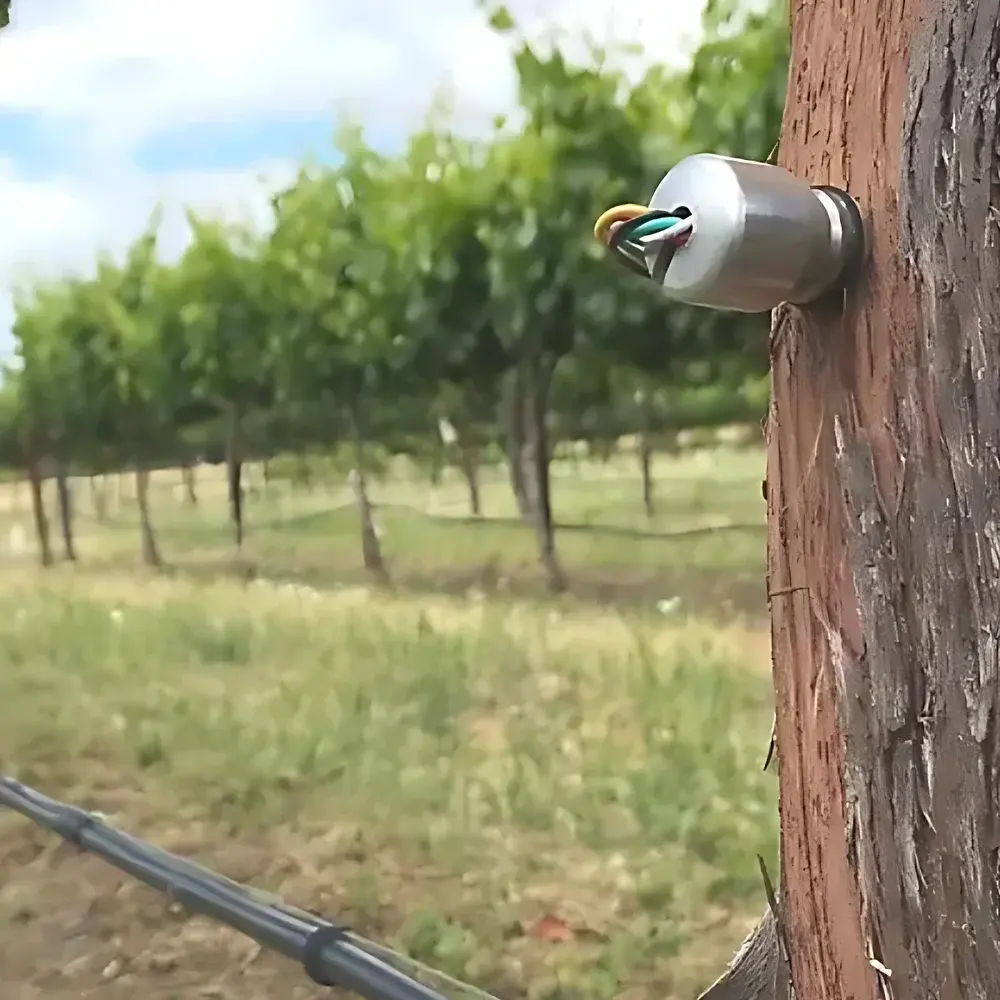
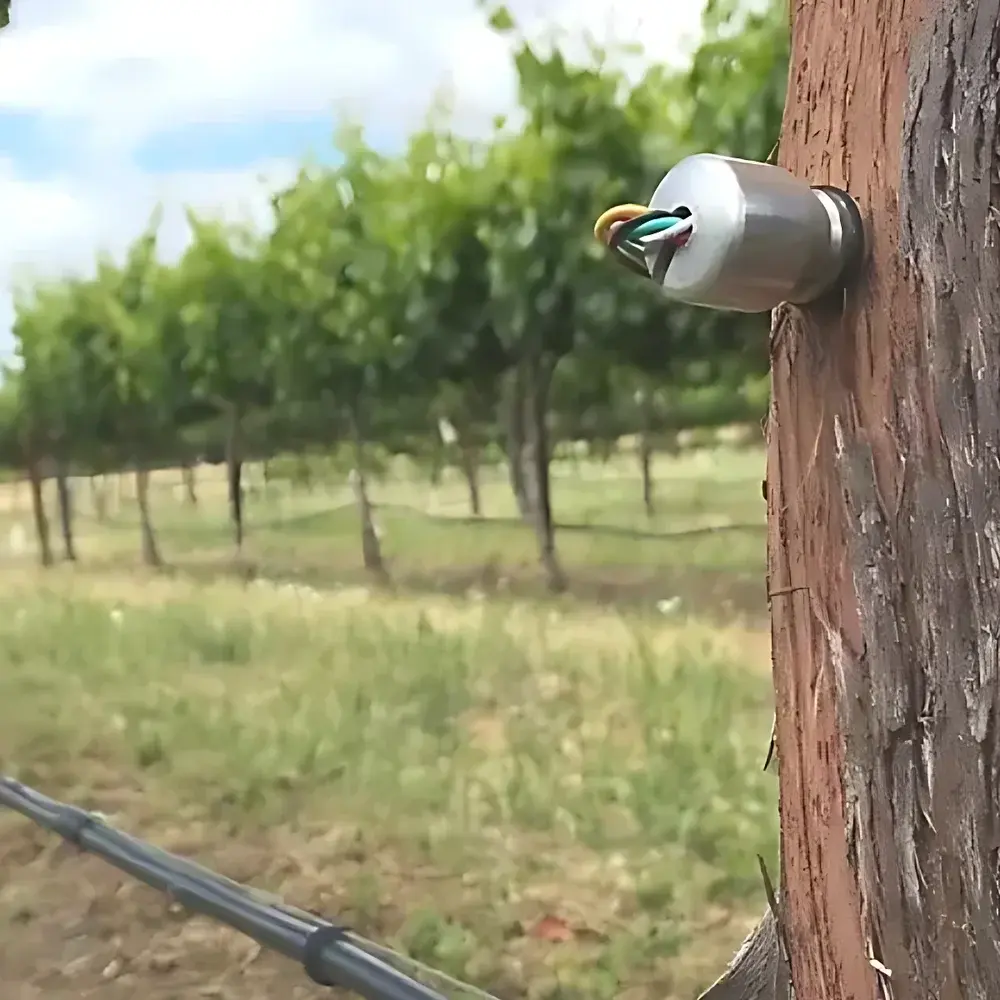
The FloraPulse Tlyon FloraPulse Stem Water Potential Sensor System is a field-deployable, in planta micro-tensiometric measurement platform engineered for continuous, high-temporal-resolution monitoring of stem water potential (SWP) in woody and herbaceous crops. Unlike traditional Scholander pressure chamber methods—which provide single-point, destructive, labor-intensive snapshots—the FloraPulse system embeds a miniature, solid-state tensiometer directly into the xylem sap stream, enabling real-time, non-destructive quantification of water potential (MPa) at sub-hourly intervals. The sensor operates on the principle of ceramic membrane-based hydraulic equilibrium detection, where pore-scale water tension induces measurable changes in capacitive or resistive transduction elements calibrated against standardized reference solutions. Designed for long-term deployment (≥12 months per installation), it delivers diurnal SWP profiles—including midday minimum (Ψstem,midday) and predawn maximum (Ψstem,predawn)—critical for irrigation scheduling, drought stress phenotyping, and vineyard/ orchard water use efficiency optimization.
Key Features
- Direct xylem-embedded micro-tensiometer with ceramic sensing tip (1.2 mm diameter) for minimal tissue disruption and stable signal acquisition.
- Continuous 24/7 measurement at user-configurable sampling intervals (15 min to 2 hr resolution).
- Integrated temperature-compensated analog-to-digital conversion with ±0.02 MPa typical repeatability under field conditions.
- Wireless LoRaWAN® or cellular (LTE-M/NB-IoT) telemetry for secure, encrypted data transmission to cloud-hosted dashboard.
- IP68-rated housing with UV-stabilized polymer casing; operational range: −0.1 to −3.5 MPa (optimized for viticulture, almond, olive, and stone fruit).
- Battery life ≥18 months (CR123A primary cells) with low-power sleep mode and solar-assisted charging option.
Sample Compatibility & Compliance
The FloraPulse sensor has been validated across multiple economically significant perennial crops including Vitis vinifera (Napa Valley Cabernet Sauvignon), Prunus dulcis (California almonds), Prunus armeniaca (drying apricots), and Olea europaea (high-density olive groves). Installation requires standard arborist-grade bark removal and cambium alignment—no specialized tools beyond provided insertion kit. All firmware and data handling protocols comply with ISO/IEC 17025:2017 (testing laboratory competence), support FDA 21 CFR Part 11 audit trails (electronic signatures, data integrity logs), and align with FAO’s CropWat irrigation modeling framework inputs. Calibration traceability is maintained via NIST-traceable hydrostatic column verification prior to shipment.
Software & Data Management
Data are ingested into the FloraPulse Cloud Platform—a secure, ISO 27001-certified SaaS environment supporting role-based access control (RBAC), automated report generation (PDF/CSV), and API integration with farm management systems (e.g., Climate FieldView™, Granular®, Agworld®). Weekly stress history reports employ ANSI Z535.4-compliant color coding: green (Ψ > −0.6 MPa), yellow (−0.6 to −1.2 MPa), orange (−1.2 to −1.8 MPa), red (Ψ < −1.8 MPa). Each dataset includes metadata stamps for GPS location, sensor ID, installation date, and environmental context (ambient RH, PAR, soil moisture co-located if equipped). Raw time-series exports include full timestamping (UTC + local offset), sensor diagnostics (battery voltage, impedance drift), and QA/QC flags per ITRC Field Data Quality Guidelines.
Applications
- Irrigation scheduling based on physiological demand rather than evapotranspiration models alone.
- Drought resilience screening in breeding programs (e.g., selection for stable Ψmidday under deficit irrigation).
- Validation of rootstock–scion hydraulic compatibility in grafted systems.
- Regulatory compliance reporting for Sustainable Groundwater Management Act (SGMA) and California State Water Resources Control Board requirements.
- Long-term phenological monitoring of water status shifts across climate gradients (e.g., elevation transects, coastal fog influence studies).
FAQ
How does FloraPulse differ from Scholander pressure chamber measurements?
FloraPulse provides continuous, in situ SWP at high temporal resolution without sample excision, whereas pressure chambers yield discrete, destructive measurements requiring operator expertise and subject to diurnal timing constraints.
Can the sensor be reused on different trees?
No—the ceramic tip forms irreversible hydraulic coupling with xylem tissue upon installation; each unit is intended for single-tree, multi-season deployment.
Is calibration required in the field?
No. Sensors undergo factory calibration against hydrostatic reference columns and include onboard temperature compensation; field recalibration is not supported.
What level of technical support is available for research deployments?
Tlyon provides application engineering support including protocol development, statistical analysis guidance (R/Python scripts for SWP-derived indices), and co-authorship eligibility for peer-reviewed validation studies.
Does the system meet USDA NRCS EQIP eligibility criteria?
Yes—FloraPulse qualifies as an “advanced irrigation scheduling tool” under EQIP Practice Code 449 (Irrigation Water Management) when deployed in certified conservation plans.