
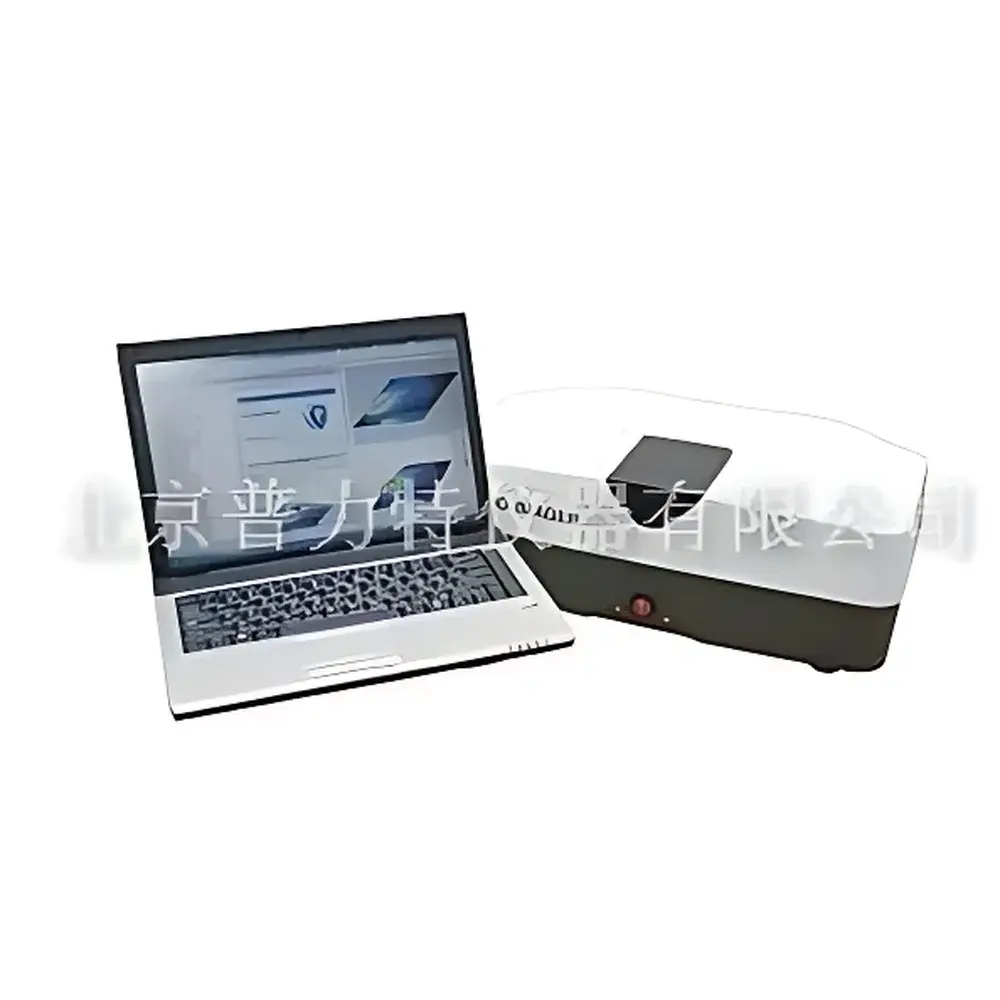
FLUO-IMAGER 3D Fluorescence Spectrometer
| Origin | Europe |
|---|---|
| Manufacturer Type | Authorized Distributor |
| Product Category | Imported Instrument |
| Model | FLUO-IMAGER |
| Pricing | Upon Request |
Overview
The FLUO-IMAGER 3D Fluorescence Spectrometer is an advanced analytical instrument engineered for rapid, reagent-free qualitative and quantitative characterization of organic compounds in liquid matrices—primarily aqueous environmental and industrial samples. It operates on the principle of Synchronous Fluorescence Spectroscopy (SFS), generating three-dimensional excitation–emission matrices (EEMs) by systematically scanning excitation wavelengths (λex: 200–660 nm) and emission wavelengths (λem: 200–750 nm) while recording fluorescence intensity at each coordinate. This EEM constitutes a unique “fluorescence spectral fingerprint” for each analyte, enabling compound-specific identification based on characteristic spectral topology—such as peak position, shape, and relative intensity distribution—without chemical derivatization or sample pre-concentration. The system integrates concurrent absorption spectroscopy (200–660 nm) to correct for inner-filter effects and enhance multivariate calibration robustness, particularly for complex, optically dense matrices such as wastewater or crude oil emulsions.
Key Features
- Simultaneous acquisition of corrected excitation–emission matrices (EEMs) and UV-Vis absorption spectra within a single 40-second measurement cycle
- Pulse-driven 10 W xenon lamp with high spectral stability and low thermal drift, ensuring reproducible intensity calibration across operational temperatures (10–40 °C)
- High-resolution monochromator-based optical path (1 nm spectral resolution) for both excitation and emission channels
- Photomultiplier tube (PMT) detector optimized for low-light sensitivity and wide dynamic range (detection limits down to 0.5 µg/L for PAHs, 1 µg/L for chlorophyll-a)
- Self-calibrating internal reference system that automatically compensates for lamp aging, temperature-induced wavelength shift, and detector gain variation
- Modular hardware design: laboratory configuration (15 × 40 × 24 cm, 17 kg) and field-deployable version (19 × 49 × 39 cm, ruggedized enclosure)
Sample Compatibility & Compliance
The FLUO-IMAGER accepts standard quartz cuvettes (12.5 × 12.5 × 45 mm, 3.3 mL volume) and supports direct analysis of unfiltered, unpreserved liquid samples—including natural waters (river, lake, seawater), drinking water, cooling/boiler water, industrial effluents, petroleum hydrocarbon emulsions, and process streams. Its reagent-free operation eliminates consumables, hazardous waste generation, and sample alteration—fully aligning with green analytical chemistry principles (IUPAC Guidelines, ISO 14040). Data integrity complies with GLP/GMP frameworks: audit trails, user access control (login/password), and electronic signature support are embedded in firmware. While not FDA 21 CFR Part 11–certified out-of-the-box, the software architecture permits configuration for regulated environments via third-party validation packages.
Software & Data Management
The instrument is controlled via Windows-compatible software (Windows 2000 or later) offering two interface tiers: Standard GUI for routine operation and Advanced GUI for method development and library curation. Core functionalities include automated self-diagnostic routines, customizable measurement protocols (scan range, step size, integration time), real-time background subtraction (e.g., FDOM correction using humic/fulvic acid reference spectra), and multivariate regression modeling (PLS, PCA). The SFS Library Manager enables users to import, annotate, normalize, and validate spectral libraries—including proprietary oil-type fingerprints (crude, diesel, lubricants) and biological markers (chlorophyll, phycobiliproteins, PAHs). All raw EEMs, absorption traces, and processed results export to ASCII (.TXT) or native binary (.NTD) formats for downstream analysis in MATLAB, R, or Chemometrics platforms.
Applications
The FLUO-IMAGER delivers validated performance across environmental monitoring, industrial process control, and research applications requiring rapid organic profiling. It is routinely deployed for: continuous online surveillance of intake water for oil spills or algal blooms; compliance screening of wastewater discharge (BOD/COD surrogates); detection of aromatic hydrocarbons (benzene, toluene, xylene, naphthalene) in groundwater; differentiation of petroleum product types (e.g., marine diesel vs. bunker fuel) in bilge water; quantification of dissolved organic matter (CDOM/FDOM) in estuarine systems; and tracking of biogenic fluorophores (e.g., vitamin B6, quinine sulfate) in pharmaceutical process streams. Its ability to resolve co-eluting fluorophores without chromatographic separation makes it especially valuable for time-critical field assessments where lab turnaround is prohibitive.
FAQ
What sample preparation is required prior to analysis?
None. The FLUO-IMAGER performs direct analysis of clarified or turbid liquids without filtration, centrifugation, extraction, or derivatization.
Can the instrument quantify total petroleum hydrocarbons (TPH) or chemical oxygen demand (COD)?
Yes—via multivariate calibration models built from reference standards and validated against ASTM D7066 (TPH) or ISO 6060 (COD); correlation coefficients typically exceed r² = 0.92 in homogeneous matrix conditions.
Is the SFS library expandable with user-generated spectra?
Yes. The software includes tools for spectral alignment, baseline correction, normalization, and statistical validation before library integration.
How does the system handle inner-filter effects in highly absorbing samples?
By acquiring concurrent absorption spectra at identical wavelength ranges, the software applies mathematical correction algorithms (e.g., linear interpolation of absorbance-weighted intensity attenuation) prior to EEM construction.
What maintenance is required for long-term operational stability?
Annual PM includes PMT gain verification, xenon lamp intensity profiling, and monochromator wavelength calibration using NIST-traceable holmium oxide filters.



