FluorTron UV-MCF Biological Fluorescence Hyperspectral Imaging System
| Origin | Beijing, China |
|---|---|
| Manufacturer Type | Authorized Distributor |
| Origin Category | Domestic (China) |
| Model | UV-MCF |
| Pricing | Upon Request |
Overview
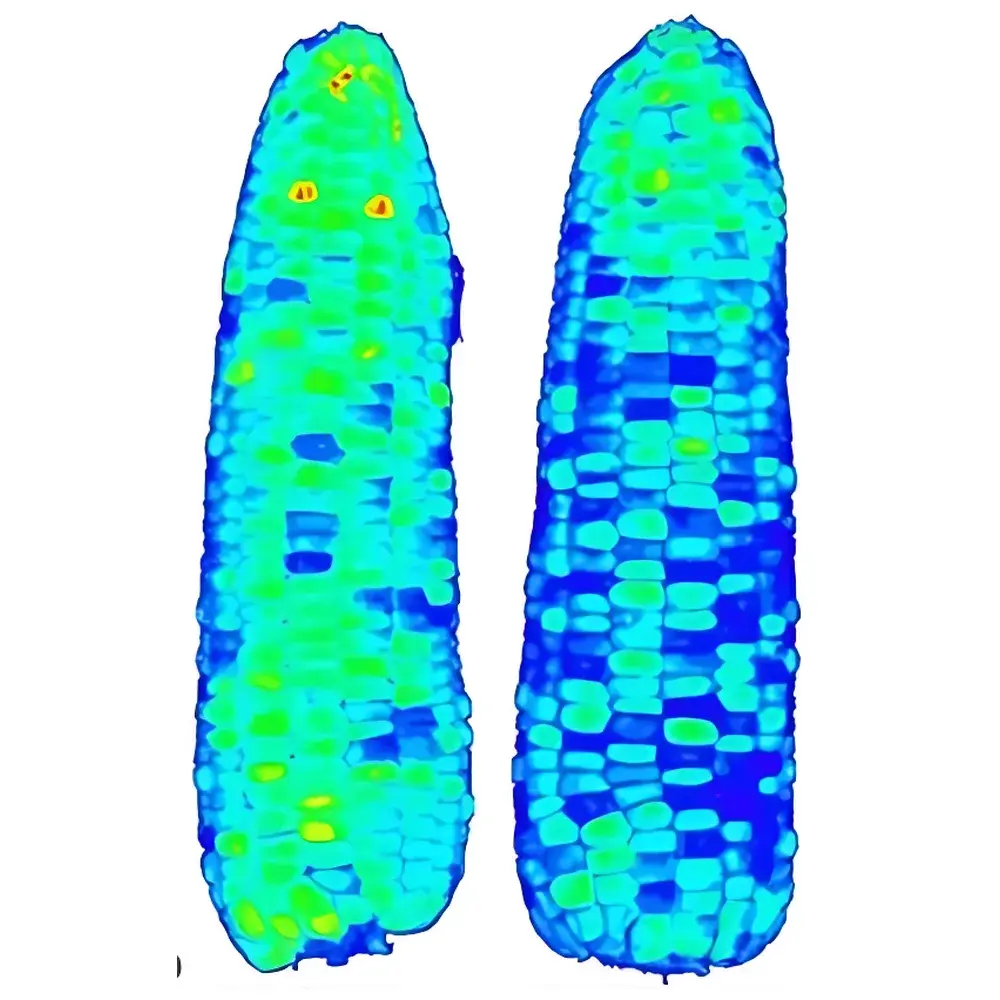
The FluorTron UV-MCF Biological Fluorescence Hyperspectral Imaging System is an advanced, research-grade instrumentation platform engineered for quantitative, spatially resolved analysis of multi-color fluorescence (MCF) emission from biological samples under ultraviolet excitation. It operates on the principle of UV-induced autofluorescence spectroscopy combined with push-broom or snapshot hyperspectral imaging, enabling simultaneous acquisition of spectral data across hundreds of contiguous narrowband channels (typically 3–10 nm FWHM) in the 400–900 nm range. Unlike conventional filter-based multi-spectral fluorescence imagers (e.g., FluorCam series), the UV-MCF system captures full spectral cubes—(x, y, λ)—allowing not only two-dimensional fluorescence mapping but also pixel-wise spectral deconvolution, fingerprint identification, and derivative index computation. Its core excitation source is a stabilized long-wave UV LED array (320–400 nm), optimized to elicit four diagnostically distinct fluorescence peaks: F440 (blue), F520 (green), F690 (red), and F740 (far-red), collectively termed Multi-Color Fluorescence (MCF). These emissions originate from distinct biochemical pools: blue-green fluorescence (BGF) arises primarily from cell wall phenolics, lignin, and flavonoids; while red/far-red components reflect chlorophyll a re-emission and energy dissipation states within photosystem II. This dual-origin spectral signature provides orthogonal physiological information—structural integrity, secondary metabolism, and photosynthetic efficiency—making UV-MCF uniquely suited for non-invasive, label-free phenotyping.
Key Features
- Hyperspectral fluorescence imaging capability: Acquires full spectral cubes (up to 256+ bands) with spectral resolution ≤5 nm, enabling spectral unmixing and high-fidelity fluorescence fingerprinting.
- UV-specific excitation (320–400 nm) with uniform irradiance distribution (>95% homogeneity over 20 × 20 cm FOV) and integrated optical safety interlock compliant with IEC 62471.
- Simultaneous acquisition of both fluorescence emission and reflectance spectra from the same field of view—enabling concurrent calculation of fluorescence ratios and vegetation indices.
- Modular excitation architecture: Base configuration includes UV excitation; optional green (530 ± 10 nm) and red (630 ± 10 nm) LED modules enable targeted excitation of GFP, anthocyanins, and chlorophyll b, supporting multi-excitation spectral profiling.
- High-sensitivity scientific CMOS detector with thermoelectric cooling (−10 °C), quantum efficiency >65% at 500–750 nm, and dynamic range >16-bit (65,536 levels).
- Motorized sample stage with XYZ translation and tilt adjustment (±5°), compatible with leaf clips, petri dishes, root trays, and whole-plant chambers (up to 50 cm height).
Sample Compatibility & Compliance
The system supports diverse biological specimens including intact leaves, detached organs, seedlings, roots, fruits, seeds, dried herbal materials (e.g., tea, medicinal herbs), and tissue sections. It accommodates both live and desiccated samples without requiring staining or genetic modification. All optical components meet ISO 10110 surface quality standards; mechanical housing conforms to IP52 dust/moisture protection. Data acquisition workflows are compatible with GLP-compliant environments: metadata embedding (timestamp, exposure, gain, lamp intensity, calibration reference) follows FAIR principles; raw data export formats include ENVI .hdr/.dat, HDF5, and TIFF stacks with embedded EXIF tags. The system supports audit-trail-enabled operation when integrated with validated LIMS or ELN platforms.
Software & Data Management
FluorVision™ v4.x is a dedicated, Windows-based analytical suite designed for hyperspectral fluorescence processing. It provides: (i) radiometric and spectral calibration using NIST-traceable standards; (ii) automated ROI definition via Otsu thresholding or deep-learning-assisted segmentation (U-Net plugin); (iii) pixel-level spectral analysis including peak detection (F440, F520, F690, F740), full-width-at-half-maximum (FWHM), and centroid wavelength calculation; (iv) preconfigured index libraries—BGF/Chl-F ratios (Fb/Fr, F735/F700), photochemical indices (PRI, NPQI), structural indices (SIPI, ARI), and water status indicators (WBIR); (v) batch processing with scriptable Python API (PyFluorVision SDK); and (vi) export to CSV, MATLAB .mat, or MIAF-compliant HDF5 for cross-platform reproducibility.
Applications
The UV-MCF system serves as a primary tool in plant phenomics, stress physiology, and phytochemical screening. Key use cases include: early drought detection via F735/F700 decline prior to visible wilting; discrimination of nitrogen-deficient vs. sufficient genotypes using Fb/Fr and NBI; quantification of anthocyanin accumulation under UV-B or cold stress via log(Ffr_R/Ffr_UV); monitoring post-harvest senescence in brassicas using PSRI and VOG1; authentication of herbal species based on BGF spectral shape; and assessment of herbicide mode-of-action (e.g., diuron-induced PSII inhibition visualized by F690 quenching). It is routinely deployed in academic labs (e.g., Max Planck Institute, Wageningen UR), national crop institutes (e.g., CAAS, INRAE), and biotech breeding programs adhering to OECD TG 510 or ASTM E2998 protocols.
FAQ
What is the minimum detectable fluorescence intensity change?
The system achieves a signal-to-noise ratio (SNR) ≥500:1 at 1 s integration time, enabling detection of ≤3% relative change in F690 intensity under standardized illumination.
Can it be used for GFP-expressing transgenic plants?
Yes—when equipped with the optional green excitation module (530 nm), the system resolves GFP emission (509 nm peak) with minimal chlorophyll bleed-through due to spectral deconvolution algorithms.
Is spectral calibration traceable to national standards?
Yes—factory calibration uses NIST SRM 2035 (fluorescence standard) and SRM 2036 (reflectance standard); users may perform routine validation with included calibration tiles.
Does FluorVision support FDA 21 CFR Part 11 compliance?
The software supports electronic signatures, audit trails, and role-based access control when deployed on validated Windows Server environments with domain authentication.
What sample throughput can be expected in high-throughput phenotyping mode?
With automated stage control and batch scripting, up to 48 leaf samples (10 × 10 cm) can be imaged and processed per hour, including calibration and ratio mapping.