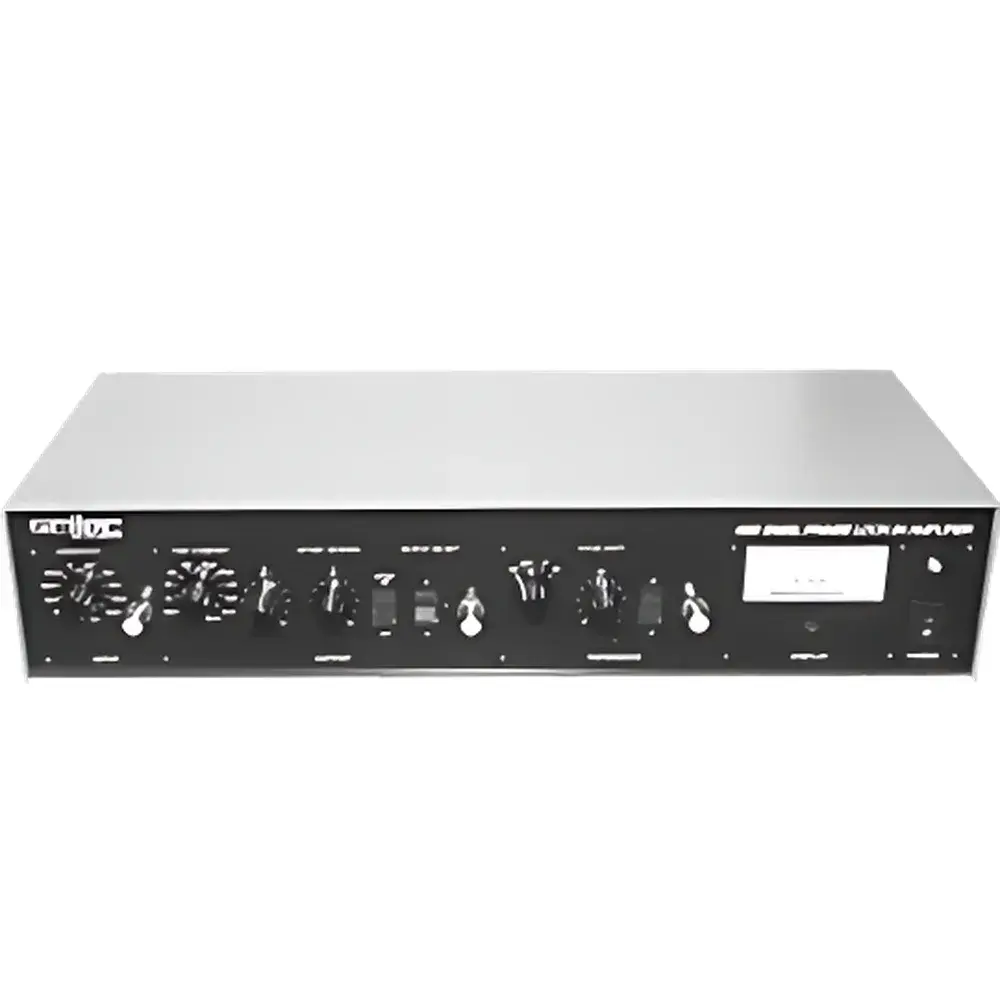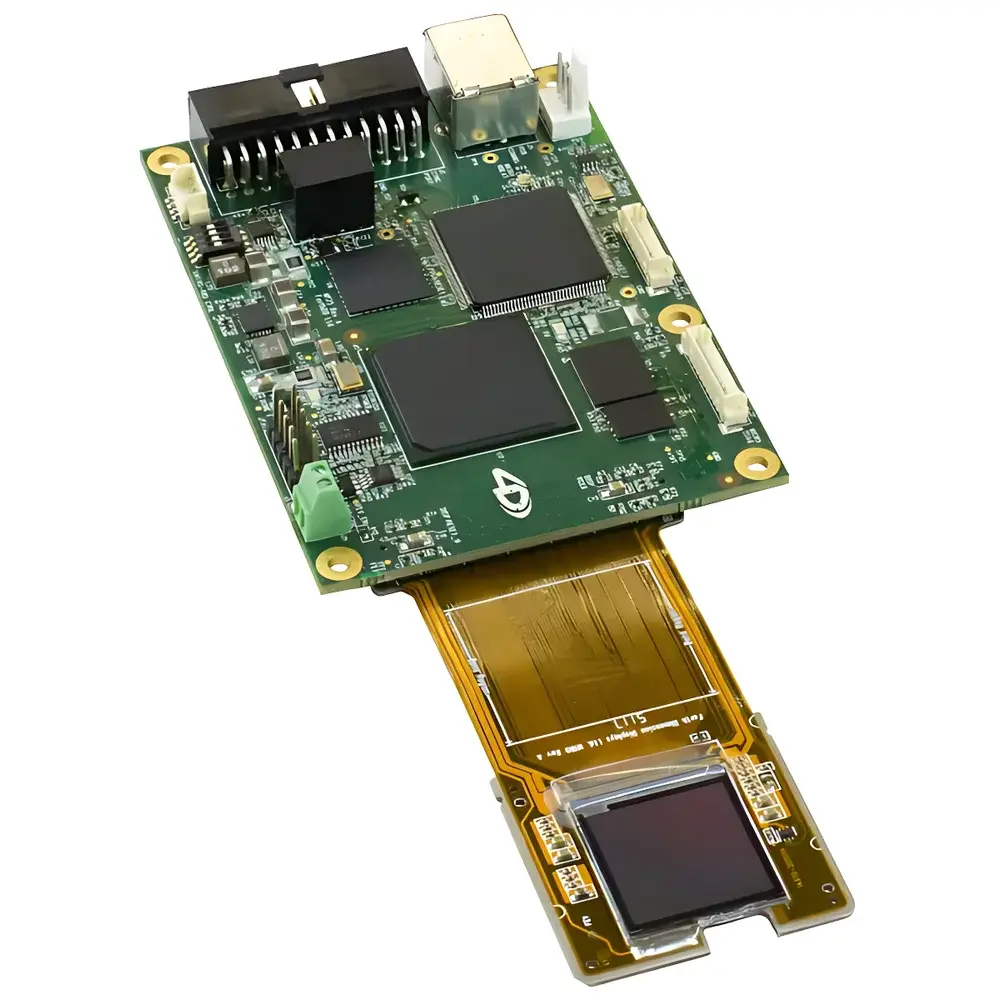
ForthDD 2048×2048 Pure-Amplitude Ferroelectric Liquid Crystal Spatial Light Modulator (FLCOS SLM)
| Origin | UK |
|---|---|
| Manufacturer Type | Authorized Distributor |
| Origin Category | Imported |
| Model | 2048×2048 Pure-Amplitude SLM |
| Response Rate | 3.6 kHz |
| Fill Factor | >94% |
| Native Resolution | 2048 × 2048 pixels |
| Modulation Type | Binary amplitude or discrete-phase (ferroelectric mode) |
| Drive Interface | LVDS or HDMI (configurable) |
| Operating Wavelength Range | 400–1100 nm (standard broadband coating) |
| Pixel Pitch | 7.6 µm |
| Contrast Ratio (on/off) | >500:1 (typical, with optimized polarization optics) |
Overview
The ForthDD 2048×2048 Pure-Amplitude Ferroelectric Liquid Crystal Spatial Light Modulator (FLCOS SLM) is a high-performance optical modulation platform engineered for precision wavefront control in demanding scientific and industrial applications. Unlike conventional nematic liquid crystal SLMs, this device leverages ferroelectric liquid crystal (FLC) technology to achieve microsecond-scale switching—enabling binary amplitude modulation at frame rates up to 3.6 kHz. Its native 2048×2048 pixel array, combined with a fill factor exceeding 94%, ensures minimal diffraction artifacts and high optical throughput across the visible to near-infrared spectrum (400–1100 nm). The device operates on a bistable FLC principle, eliminating the need for continuous voltage holding and reducing thermal drift and power consumption—critical attributes for long-duration microscopy experiments and embedded optical systems.
Key Features
- Native resolution of 2048 × 2048 pixels with 7.6 µm pitch, optimized for high-fidelity spatial encoding
- Ferroelectric architecture enabling binary amplitude modulation with <5 µs rise/fall times and stable state retention
- Optical fill factor >94%, minimizing zero-order leakage and improving diffraction efficiency in Fourier-plane applications
- Broadband anti-reflection coating supporting operation from 400 nm to 1100 nm without reconfiguration
- LVDS or HDMI digital interface options for seamless integration with FPGA-based controllers or PC-based acquisition systems
- Low intrinsic birefringence drift and minimal hysteresis—engineered for repeatable, calibration-stable performance over extended runtime
- Compact, air-cooled design compliant with standard optical breadboard mounting (M4 and Ø6 mm kinematic holes)
Sample Compatibility & Compliance
This SLM is compatible with standard collimated free-space optical paths using linearly polarized input light aligned to the device’s designated transmission axis. It requires no external bias voltage for state retention and is compatible with both continuous-wave and pulsed laser sources (including ultrafast Ti:Sapphire and fiber lasers), provided average power density remains below 1 W/cm² at the active aperture. The device conforms to CE marking requirements for electromagnetic compatibility (EMC Directive 2014/30/EU) and low-voltage safety (LVD Directive 2014/35/EU). While not classified as medical equipment, its stability and repeatability support GLP-aligned experimental protocols in optical metrology and life sciences instrumentation. Device firmware supports traceable configuration logging, facilitating audit readiness for ISO/IEC 17025-compliant laboratories.
Software & Data Management
ForthDD provides a cross-platform SDK (Windows/Linux/macOS) with C/C++, Python, and MATLAB APIs for low-latency pattern streaming and real-time modulation sequencing. The included PatternStudio application enables GUI-driven generation of structured illumination masks, DMD-style binary sequences, and calibrated intensity ramps—including built-in gamma correction and pixel uniformity compensation tables. All pattern uploads are timestamped and checksum-verified; configuration metadata (e.g., exposure duration, modulation depth, polarization orientation) is embedded in exported HDF5 or TIFF files per NIH ImageJ/Fiji interoperability standards. Audit trail functionality logs user actions, firmware version, and hardware temperature readings—supporting 21 CFR Part 11–aligned electronic record integrity where required.
Applications
- Structured Illumination Microscopy (SIM): Enables rapid generation of high-contrast, multi-phase sinusoidal patterns for optical sectioning and lateral resolution enhancement beyond the diffraction limit
- Light-Sheet Fluorescence Microscopy (LSFM): Used as a dynamic line generator or scanned Bessel beam shaper for optically sectioned volumetric imaging with minimal phototoxicity
- 3D Automated Optical Inspection (AOI) & Solder Paste Inspection (SPI): Projects calibrated fringe patterns onto PCB surfaces for sub-pixel height reconstruction via phase-shifting profilometry
- Near-Eye Display (NED) & AR/VR Waveguide Coupling: Functions as a compact, high-frame-rate pupil expander or holographic combiner driver in monocular and binocular optical engines
- Head-Up Display (HUD) Calibration & Testing: Simulates virtual image content with precise angular fidelity for automotive HUD verification under variable ambient conditions
- Adaptive Optics Precompensation: Serves as a programmable amplitude mask in closed-loop systems correcting for static aberrations prior to deformable mirror engagement
FAQ
Is this device capable of analog phase modulation?
No—this is a pure-amplitude FLCOS SLM optimized for binary or multi-level amplitude control. For analog phase modulation, ForthDD offers separate nematic or reflective LCoS variants.
What is the maximum safe average optical power density?
The recommended maximum is 1 W/cm² at the active aperture for continuous-wave illumination. Pulsed operation must respect both peak fluence (<10 mJ/cm² @ 10 ns) and thermal accumulation limits.
Does the device require polarization rotation or external quarter-wave plates?
Yes—optimal amplitude contrast requires alignment of linear input polarization to the SLM’s principal axis, and a downstream analyzer. Phase-only use cases may require additional waveplate configurations.
Can multiple units be synchronized for stereo or multi-angle projection?
Yes—via external TTL trigger input (BNC) with sub-microsecond jitter, supporting master-slave timing for correlated illumination schemes.
Is factory recalibration available after extended field deployment?
Yes—ForthDD offers certified recalibration services including pixel response mapping, contrast verification, and spectral throughput characterization at its UK facility.