
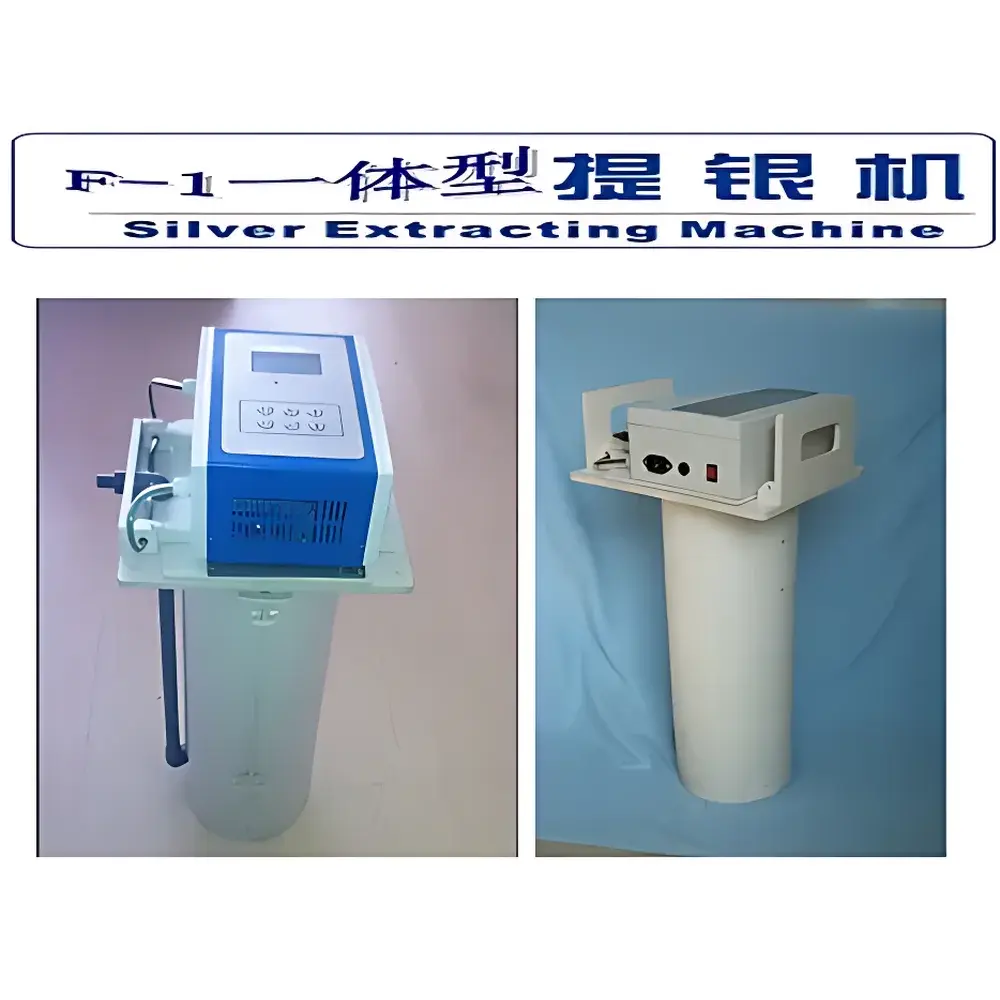
FSTAR F-1 Compact Electrolytic Silver Recovery System
| Brand | FSTAR |
|---|---|
| Origin | Liaoning, China |
| Model | F-1 |
| Sample Type | Spent photographic fixer, bleach-fix (blix), and silver plating effluents |
| Recovery Rate | ≥99.5% silver removal efficiency |
| Recovered Silver Purity | ≥99.8% (flakes) |
| Average Recovery Capacity | 110 g/h |
| Residual Silver Concentration | <0.010 g/L |
| Power Consumption | <40 W |
| Control Interface | PC-based automated control system with real-time monitoring, calendar function, and cathode thickness alarm |
| Compliance | Designed for GLP-aligned laboratory operation |
Overview
The FSTAR F-1 Compact Electrolytic Silver Recovery System is an industrial-grade, benchtop electrolytic unit engineered for high-efficiency recovery of metallic silver from spent process liquors generated in photographic, medical imaging, printed circuit board (PCB), and electroplating operations. It operates on the principle of controlled direct-current (DC) electrolysis: silver ions (Ag⁺) dissolved in acidic or neutral waste streams—such as exhausted fixer solutions (ammonium or sodium thiosulfate-based), bleach-fix (blix) mixtures containing high concentrations of oxidizing agents, and dilute silver nitrate or cyanide-based plating rinsates—are selectively reduced at a cathodic surface (typically stainless steel or titanium mesh), forming adherent, high-purity silver flakes. Unlike chemical precipitation methods—which risk incomplete recovery, secondary sludge generation, and hazardous reagent handling—the F-1 achieves deep silver depletion (>99.5% removal) without consumables, catalysts, or pH-adjusting additives. Its architecture integrates patented electrode configuration, adaptive current regulation, and corrosion-resistant wetted materials (PP, PVDF, and 316L SS), enabling stable long-term operation in aggressive halide- and sulfur-containing environments.
Key Features
- Adaptive intelligent power module: Dynamically modulates DC current density based on real-time conductivity and Ag⁺ concentration feedback, ensuring consistent cathodic deposition quality across variable feed compositions—including challenging blix solutions with high peroxide or ferricyanide content.
- Full PC-based automation: Integrated microcontroller with USB/RS-485 interface enables remote parameter setting, runtime logging, calendar-scheduled operation, and cathode accumulation threshold alerts—supporting audit-ready operational records aligned with GLP documentation requirements.
- No consumables or chemical promoters: Eliminates dependency on sodium borohydride, formaldehyde, or dithionite reagents—reducing both operating cost and hazardous waste classification under EPA 40 CFR Part 261.
- Ultra-low energy footprint: Rated at <40 W continuous draw—equivalent to a standard LED lamp—making it suitable for unattended overnight operation in shared lab environments.
- Corrosion-immune fluid path: All wetted components constructed from polypropylene (PP), polyvinylidene fluoride (PVDF), and passivated 316L stainless steel; gasketed cell housing prevents leakage and ensures >10-year service life under daily cycling.
- High-purity silver recovery: Deposited silver flakes exhibit ≥99.8% purity (verified by XRF and fire assay), meeting ASTM B427–21 specifications for recovered silver metal, and are mechanically removable without solvent washing or melting.
Sample Compatibility & Compliance
The F-1 is validated for continuous treatment of complex, multi-component effluents including: ammonium thiosulfate-based fixers (e.g., Kodak Rapid Fixer), sodium thiosulfate fixers with hardener additives, mixed bleach-fix solutions (e.g., Kodak Flexicolor Blix), low-concentration silver nitrate rinse waters (<500 mg/L Ag), and spent silver cyanide plating baths (post-neutralization). It complies with ISO 14001 environmental performance benchmarks for resource recovery systems and supports compliance with local discharge limits (e.g., China’s GB 8978–1996, EU Directive 2008/105/EC) by reducing residual silver to <10 mg/L—well below typical regulatory thresholds of 100 mg/L. While not certified to FDA 21 CFR Part 11, its data logging architecture permits manual export of CSV-formatted operation logs for internal QA review and third-party audit traceability.
Software & Data Management
The embedded control firmware provides a Windows-compatible GUI application for configuration, monitoring, and reporting. Key functions include: adjustable current setpoint (0.1–5.0 A), runtime counter with auto-reset, cumulative silver mass estimator (calibrated against known Ag⁺ feed concentration), cathode thickness warning (triggered at ~1.2 mm deposit depth), and timestamped event log export. All parameters are stored in non-volatile memory with battery-backed real-time clock (RTC), supporting chronological reconstruction of operational history—a critical requirement for laboratories maintaining ISO/IEC 17025-compliant quality records. No cloud connectivity or external server dependency is required; data resides locally and remains fully exportable for internal archiving.
Applications
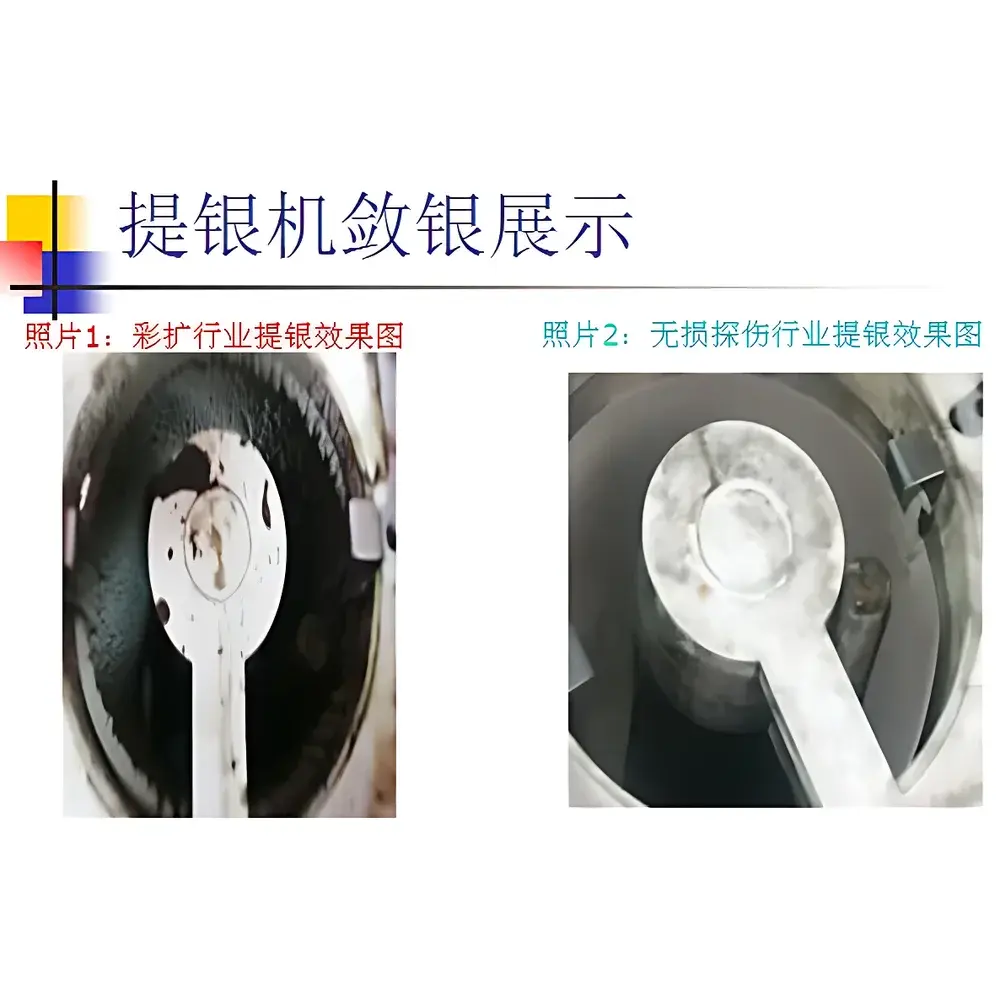
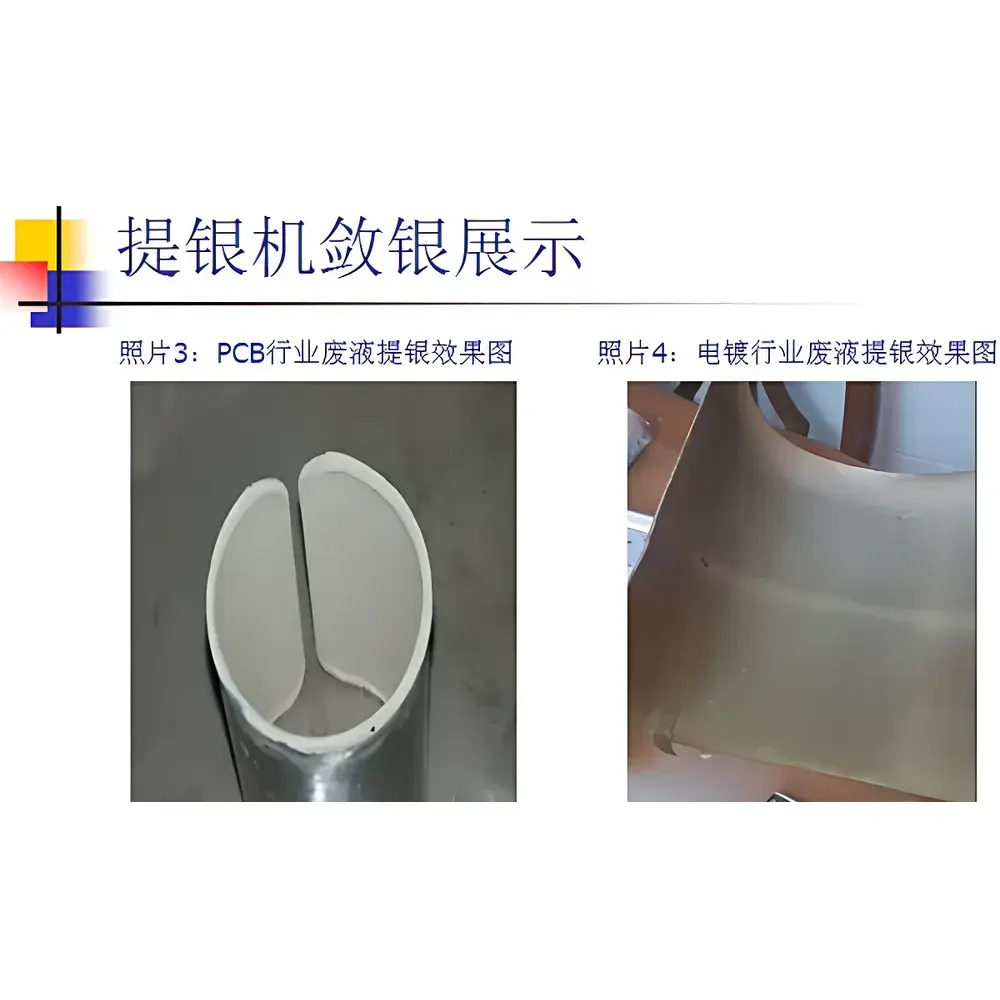
Primary deployment sectors include: film-based photofinishing labs (color and black-and-white), hospital radiology departments processing X-ray and CT film, PCB fabrication facilities using silver-based photoresist developers, industrial non-destructive testing (NDT) centers employing radiographic film, textile screen-printing operations with silver-halide emulsions, and precious metals refineries receiving mixed photographic and electroplating waste streams. Secondary applications encompass research laboratories evaluating silver speciation in wastewater matrices and academic institutions teaching principles of electrochemical recovery and circular economy engineering. The system is not intended for high-volume municipal wastewater or ore leachates; its design envelope targets batch-to-semi-continuous flows of 5–50 L per cycle, with optimal performance observed at feed silver concentrations between 1–50 g/L.
FAQ
What types of silver-bearing waste streams is the F-1 specifically validated for?
It is validated for ammonium/sodium thiosulfate fixers, bleach-fix (blix) solutions, silver nitrate rinse waters, and post-neutralized silver cyanide plating baths—not for chloride-rich leachates or high-sulfide industrial effluents.
Does the system require acidification or pH adjustment prior to treatment?
No. The F-1 operates effectively across pH 2–7 without pre-treatment; its electrode kinetics accommodate both acidic and near-neutral feed conditions.
How frequently must the cathode be harvested, and what is the recommended cleaning procedure?
Harvesting frequency depends on feed concentration and duty cycle; at 15 g/L and continuous operation, cathodes typically require removal every 48–72 hours. Flakes are mechanically scraped and air-dried—no solvent washing or thermal refining is needed for ≥99.8% purity.
Is operator training required for safe and compliant use?
Basic safety orientation (electrical isolation, PPE for handling silver flakes, spill containment) is sufficient; no specialized electrochemistry certification is necessary due to fully enclosed, low-voltage (<24 V DC) design.
Can the F-1 be integrated into an existing lab LIMS or environmental monitoring platform?
Yes—via RS-485 Modbus RTU protocol, allowing integration with SCADA or custom middleware for centralized data aggregation and KPI tracking (e.g., kg-Ag recovered/month, kWh/kg-Ag).



