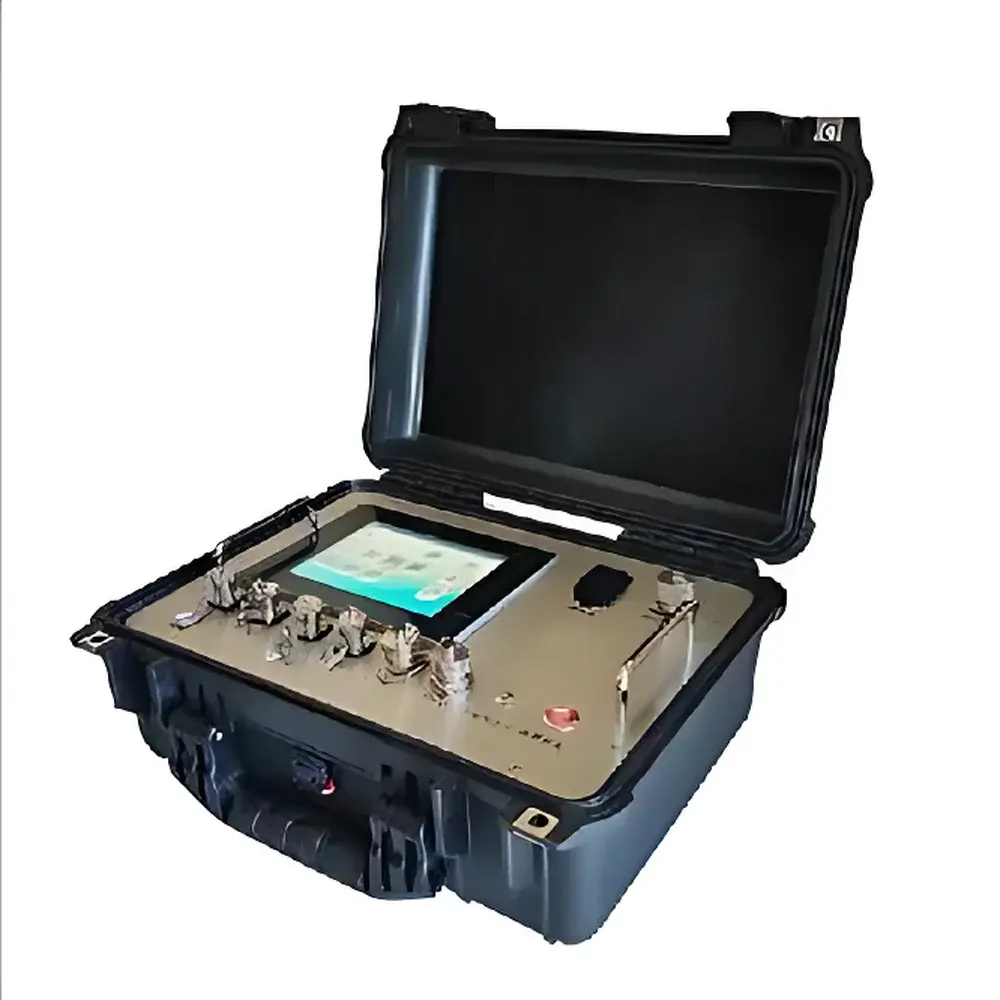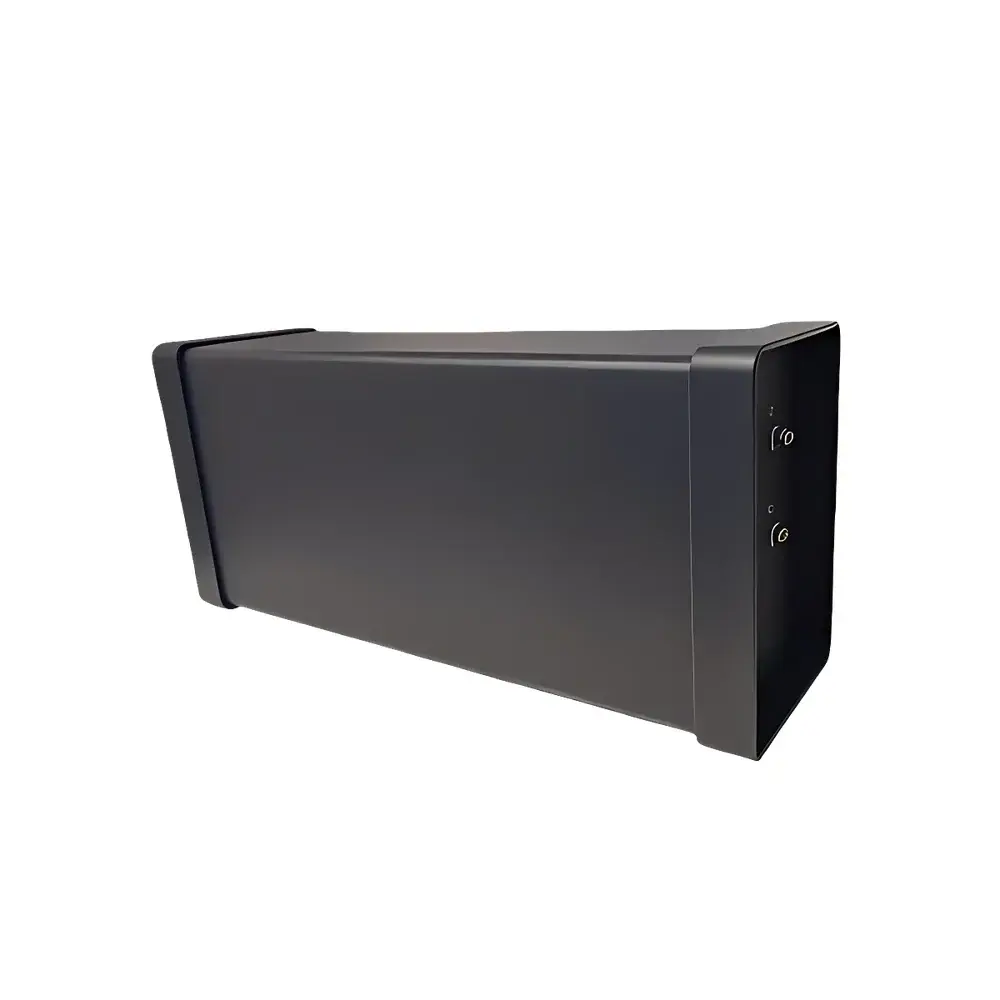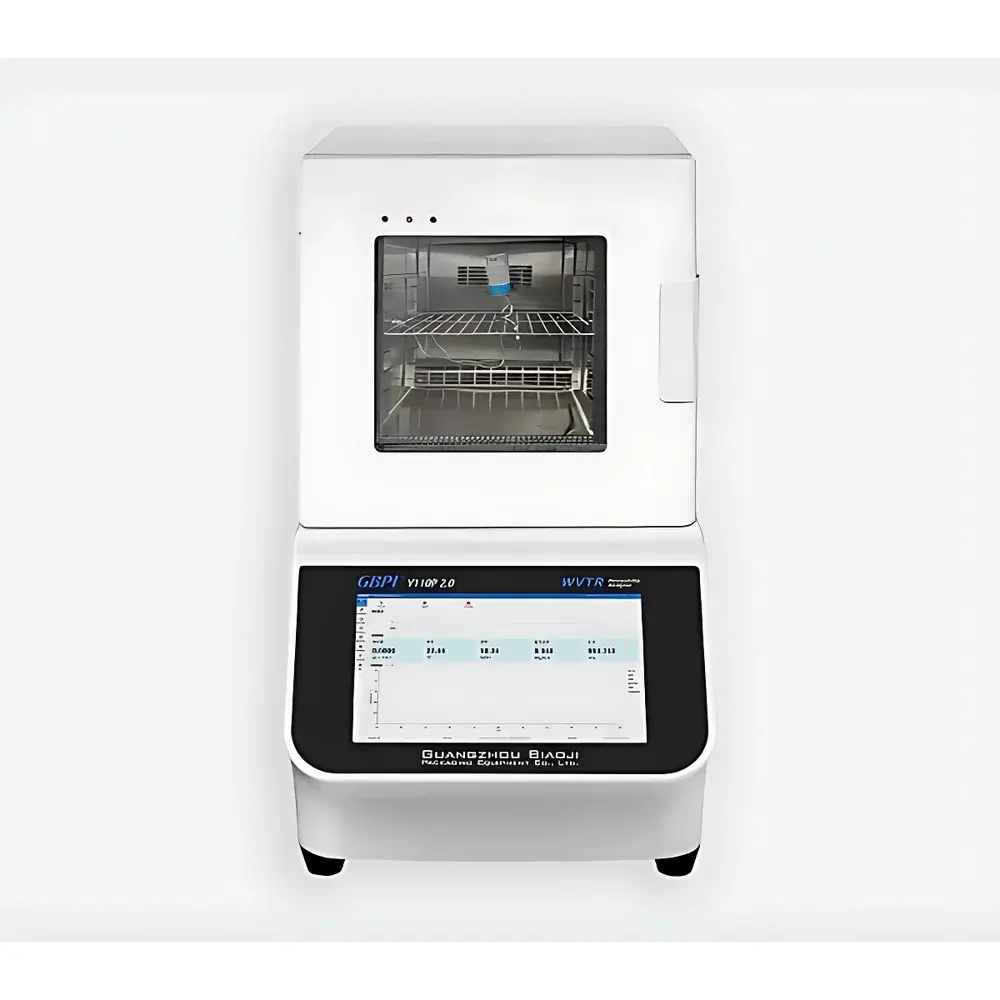
GBPI Y110P 2.0L Package Oxygen Transmission Rate (OTR) Tester
| Brand | GBPI |
|---|---|
| Origin | Guangdong, China |
| Manufacturer Type | Direct Manufacturer |
| Origin Category | Domestic |
| Model | Y110P 2.0L |
| Price Range | USD 40,000 – 54,000 |
| Test Principle | Coulometric Oxygen Sensor (ASTM D3985-compliant) |
| Standards | GB/T 31354-2014, GB/T 19789-2005, ASTM D3985, ASTM F2622, ASTM F1307, ASTM F1927, ISO 15105-2, JIS K-7126-B, DIN 53380-3 |
| Package OTR Range | 0.00025–1 cm³/pkg·day |
| Film OTR Range | 0.01–1000 cm³/(m²·24h·0.1 MPa) |
| Resolution (Package) | 0.0001 cm³/pkg·day |
| Resolution (Film) | 0.0001 cm³/(m²·24h·0.1 MPa) |
| Temperature Control Range | 15–45 °C |
| Temp. Accuracy | ±0.5 °C |
| Humidity Control Range | 20–95 %RH |
| RH Accuracy | ±2 %RH |
| Sample Capacity | 1 package per test cycle |
| Carrier Gas Pressure | 0.1–0.2 MPa |
| Gas Interface | 1/8″ stainless steel tubing |
Overview
The GBPI Y110P 2.0L Package Oxygen Transmission Rate (OTR) Tester is a precision-engineered instrument designed for quantitative determination of oxygen permeation through rigid and semi-rigid packaging systems—including bottles, BFS (blow-fill-seal) containers, laminated tubes, pouches, coffee capsules, and lidding foils—as well as flat film specimens. It operates on the coulometric oxygen sensor principle defined in ASTM D3985, where oxygen molecules diffusing across the sample wall are carried by ultra-high-purity nitrogen gas into a galvanic oxygen sensor. The resulting electrochemical current is directly proportional to the molar flow rate of oxygen, enabling trace-level quantification with high linearity and long-term stability. Unlike gravimetric or manometric methods, this coulometric approach delivers real-time, absolute measurement without calibration drift, making it suitable for regulatory-grade barrier validation under GLP and GMP environments.
Key Features
- Modular, field-replaceable package test chamber with quick-release mounting bracket—enables tool-free installation and removal of diverse container geometries (e.g., vials, syringes, stand-up pouches, aerosol cans).
- Customizable fixture library: GBPI offers application-specific fixtures (e.g., crimp-cap adapters, neck-sealing gaskets, dome-shaped clamps) validated for mechanical integrity at test pressures up to 0.2 MPa.
- Dual-mode temperature control: Peltier-based thermoelectric modules provide bidirectional heating/cooling with ±0.5 °C uniformity across the test zone; chamber thermal mass optimized for <15-minute stabilization at setpoints between 15–45 °C.
- Active humidity regulation via saturated salt solution vapor generation and feedback-controlled micro-dosing—ensures ±2 %RH accuracy over 20–95 %RH range, critical for evaluating moisture-sensitive barrier structures (e.g., EVOH-coated films, metallized PET).
- Integrated 2.5-L water reservoir supports uninterrupted testing for >120 hours under continuous 40 °C / 75 %RH conditions—eliminating manual refills during accelerated shelf-life studies.
- Full audit trail compliance: Role-based user accounts, electronic signatures (21 CFR Part 11 compliant), timestamped parameter logs, and immutable raw data storage meet FDA and EU Annex 11 requirements.
Sample Compatibility & Compliance
The Y110P accommodates intact commercial packaging units up to 2.0 L volume with maximum outer dimensions of Ø150 mm × H300 mm. It supports both sealed-package mode (internal N₂ purge + external O₂ challenge) and film-mount mode (flat specimen clamped between dual gasketed chambers). All test configurations comply with ISO/IEC 17025-aligned uncertainty budgets, and measurement traceability is maintained via certified reference materials supplied by GBPI’s National Standard Substance Production Unit (CNAS-accredited). Routine verification uses NIST-traceable OTR standard films with certified values of 0.5, 50, and 500 cm³/(m²·24h·0.1 MPa) at 23 °C / 0 %RH.
Software & Data Management
GBPI OTR Studio v4.2 is a Windows 10 (64-bit) native application supporting multi-language UI, customizable test protocols, and dynamic curve visualization (real-time OTR trend, cumulative transmission, and sensor current response). Raw data files (.gbp) include embedded metadata (operator ID, environmental logs, gas purity certificates, calibration history) and export natively to CSV, PDF, and XML formats. Integrated LIMS-ready API enables direct upload to enterprise laboratory informatics platforms. USB 3.0 port allows encrypted backup to external drives; optional cloud sync module provides remote diagnostics and firmware update capability via TLS 1.2-secured connection.
Applications
- Pharmaceutical primary packaging: OTR validation of blister cavities, cold-form foil, polymer-coated aluminum tubes, and prefilled syringe barrels per USP & Ph. Eur. chapter <671>.
- Food & beverage shelf-life modeling: Correlation of package OTR with lipid oxidation kinetics (peroxides, hexanal) in coffee, nuts, and ready-to-eat meals.
- Medical device sterile barrier systems: ISO 11607-1 qualification of Tyvek®-polyethylene pouches and thermoformed trays under accelerated aging conditions.
- Flexible packaging R&D: Comparative evaluation of nanocomposite films, plasma-deposited SiOx coatings, and bio-based barrier laminates under variable T/RH profiles.
- Regulatory submission support: Generation of full validation reports including system suitability, intermediate precision, robustness (±1 °C, ±5 %RH), and method transfer documentation.
FAQ
What gas purity specifications are required for carrier and challenge gases?
Ultra-high-purity nitrogen (≥99.999% N₂, hydrocarbon-free) and oxygen (≥99.999% O₂, CO₂/H₂O < 0.1 ppm) are mandatory. Both must be delivered via stainless steel lines with calibrated pressure regulators (0–0.4 MPa output range).
Can the instrument test packages containing headspace gas other than nitrogen?
Yes—custom carrier gas mixtures (e.g., CO₂/N₂ blends for carbonated beverage containers) may be configured; sensor cross-sensitivity to CO₂ is negligible below 5% concentration.
Is third-party IQ/OQ/PQ protocol support available?
GBPI provides vendor-qualified IQ/OQ templates aligned with ASTM E2500 and ISPE GAMP5; PQ execution requires site-specific performance qualification using client-supplied reference standards.
How often does the coulometric sensor require replacement?
Typical service life exceeds 18 months under continuous operation; GBPI recommends annual sensor verification using certified OTR standards and replacement only upon confirmed signal decay >5% of initial sensitivity.
Does the system support unattended overnight testing?
Yes—auto-shutdown triggers upon completion or error detection; all data, curves, and event logs are saved locally and mirrored to USB if enabled. Power-fail recovery resumes from last valid timepoint.