
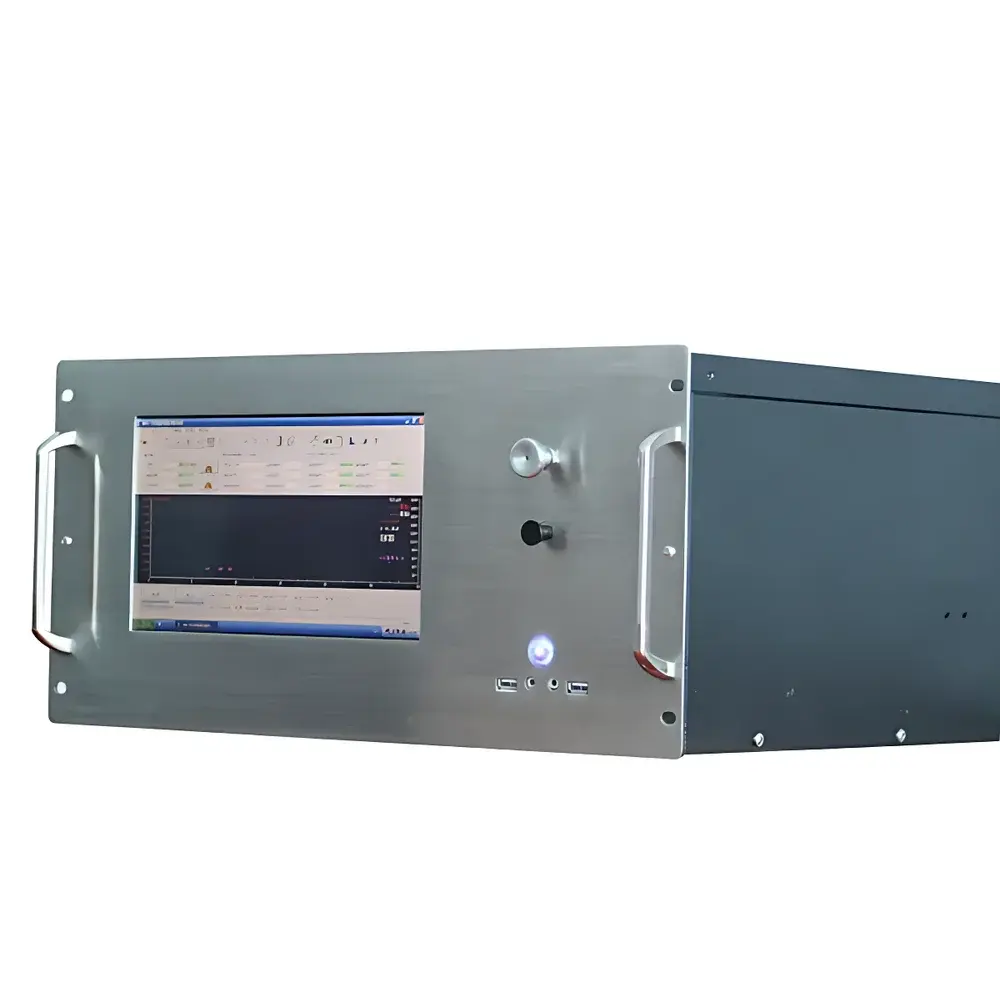
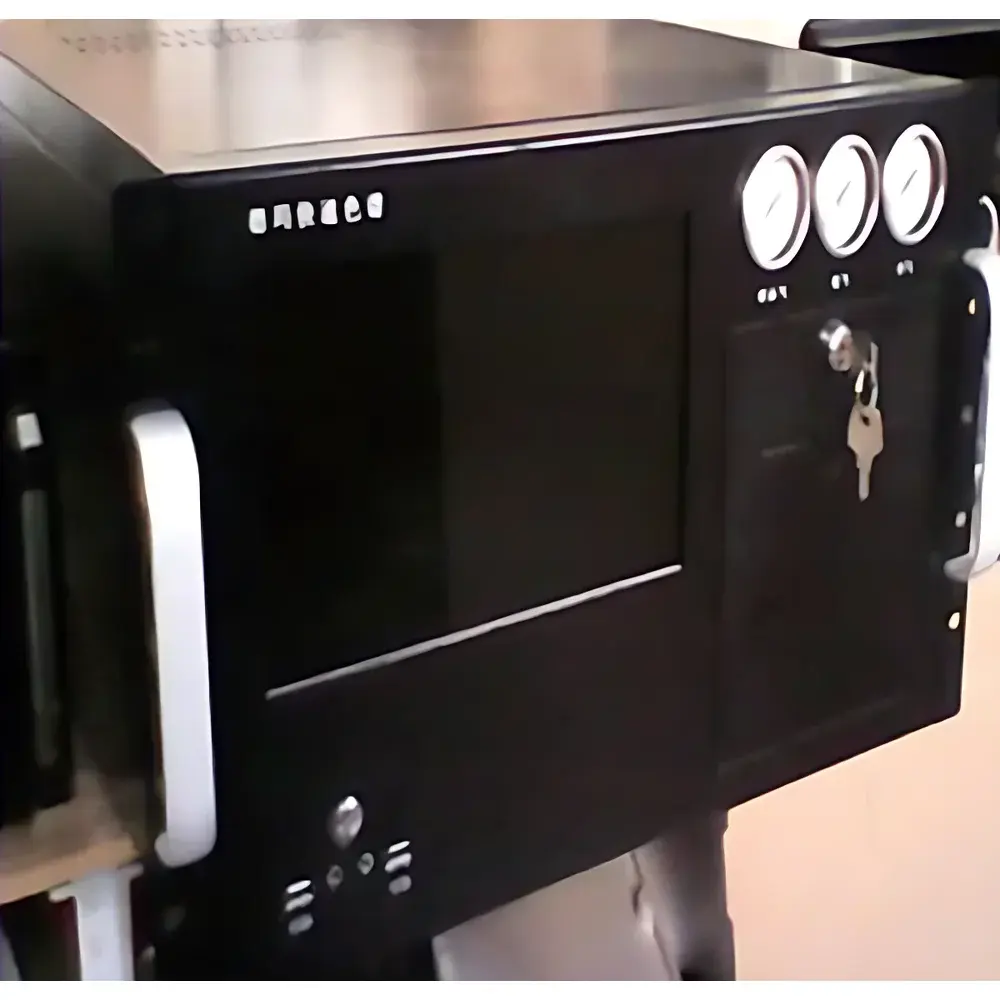
GC-7900 Rapid Gas Chromatograph
| Brand | ZHONGKEHUIFEN |
|---|---|
| Origin | Beijing, China |
| Model | GC-7900 |
| Carrier Gas Pressure Control | EPC (Electronic Pressure Control) |
| Column Oven Temperature Range | 80–120 °C |
| Analysis Cycle Time | 30 s (C₁–C₅ hydrocarbons) |
| Retention Time (C₁) | 5.5 s |
| Resolution (k) | ≥0.9 |
| Hydrogen Pressure | 0.3 MPa |
| Air Pressure | 0.25 MPa |
| Column Head Pressure | 0.19 MPa |
| Sample Gas Pressure | 0.04 MPa |
| Sample Gas Flow Rate | >600 mL/min |
| Polarization Voltage | 180 V DC |
| Quantitation Loop Volume | 0.5 mL |
| Amplification Factor | 10⁶ |
Overview
The GC-7900 Rapid Gas Chromatograph is a purpose-built, fully automated gas chromatographic system engineered for real-time hydrocarbon analysis in petroleum logging applications—including coalbed methane, shale gas, and conventional oilfield exploration. Designed around a robust packed-column or micro-packed column configuration with flame ionization detection (FID), the instrument implements a fixed-temperature oven strategy optimized for rapid separation of light hydrocarbons (C₁–C₅) under field-deployable conditions. Unlike conventional programmable GC systems, the GC-7900 operates with a constant-temperature column compartment (80–120 °C), enabling sub-minute cycle times without thermal ramping delays. Its core architecture integrates electronic pressure control (EPC) for carrier and detector gases, ensuring long-term retention time stability (<±0.1 s over 24 h) and reproducible peak area response—critical for quantitative total hydrocarbon (THC) and component-level interpretation during continuous mud-gas logging.
Key Features
- Integrated EPC module for precise, digital regulation of hydrogen (0.3 MPa), air (0.25 MPa), and column head pressure (0.19 MPa), eliminating mechanical flow controllers and reducing drift.
- Embedded touch-screen industrial computer running proprietary chromatography acquisition software—no external PC required; local data storage and real-time visualization of oven temperature, FID parameters, and gas pressures.
- Fixed-temperature column oven (80–120 °C range) with high thermal mass and active air circulation, delivering <±0.2 °C stability—optimized for rapid C₁–C₅ elution within 30 s cycles.
- Automated operational sequence: auto-ignition of FID, zero-point calibration using internal reference gas, and self-diagnostic routines for pressure faults, flame-out, or signal saturation.
- Modular hardware layout with tool-less access to injection valve, detector chamber, and quantitation loop (0.5 mL stainless steel loop); designed for maintenance by field technicians with minimal training.
- Fast backflush capability triggered at end-of-run to purge heavy ends (>C₅) without column contamination—preserving resolution and extending column lifetime in high-particulate drilling fluid headspace samples.
Sample Compatibility & Compliance
The GC-7900 accepts gaseous samples directly from degassed drilling mud via standardized 1/8″ stainless steel sample lines, compatible with common mud-gas separators (MGS) meeting API RP 13I specifications. It supports direct connection to third-party data acquisition units (e.g., LWD/MWD telemetry interfaces) via RS-232/485 and analog 4–20 mA outputs. While not certified for Class I Division 1 hazardous areas, the system complies with CE electromagnetic compatibility (EMC) directives and meets IEC 61000-4 series immunity standards. Its analytical protocol aligns with industry practices referenced in API RP 13D (mud logging) and ASTM D1945 (analysis of natural gas by gas chromatography), supporting traceability for wellsite QA/QC reporting. Data integrity safeguards include time-stamped raw chromatograms and audit-trail-enabled method logs—consistent with GLP-aligned documentation requirements for exploration logging services.
Software & Data Management
The embedded acquisition software provides real-time chromatogram display, automatic peak detection (using derivative threshold + retention window logic), and configurable integration algorithms for C₁–C₅ quantification. Calibration curves are stored per sensor channel (THC and individual components) with polynomial or linear fit options. All acquired data—including pressure logs, temperature traces, and detector baselines—are saved in vendor-neutral CSV format with UTC timestamps. Remote firmware updates and method deployment are supported via USB or Ethernet. The system generates daily summary reports compliant with standard mud-log templates (e.g., LAS v2.0 export), including retention time validation flags and resolution metrics (k ≥ 0.9 confirmed per run). No proprietary binary formats or locked databases are used—ensuring interoperability with upstream reservoir evaluation platforms.
Applications
- Continuous real-time total hydrocarbon (THC) monitoring during rotary and directional drilling operations.
- Discrimination of gas shows by C₁/C₂–C₅ ratios for preliminary facies and maturity assessment.
- Support of geo-steering decisions through rapid feedback on hydrocarbon composition changes across thin reservoir intervals.
- Integration into automated logging-while-drilling (LWD) and measurement-while-drilling (MWD) data streams for centralized interpretation.
- On-site verification of gas chromatographic data against laboratory GC-MS results during coring or wireline sampling campaigns.
FAQ
What is the minimum detectable concentration for methane (C₁) under standard operating conditions?
The GC-7900 achieves a practical detection limit of ≤10 ppm (v/v) for C₁ when using the 0.5 mL quantitative loop and FID with 10⁶ amplification, assuming optimal sample gas pressure (0.04 MPa) and flow (>600 mL/min).
Can the GC-7900 operate unattended for extended logging intervals?
Yes—the system supports 72+ hours of continuous operation with automated zero calibration every 4 hours and scheduled backflush cycles; onboard non-volatile memory retains all chromatograms and fault logs during power interruption.
Is method transfer possible from laboratory GC systems to the GC-7900?
Retention time alignment is achievable via column dimension matching and pressure/flow recalibration; however, due to its fixed-temperature design, gradient-based lab methods cannot be replicated—only isothermal equivalents optimized for C₁–C₅ are applicable.
Does the instrument support compliance with FDA 21 CFR Part 11?
While the GC-7900 does not implement electronic signatures or role-based access control, its audit-trail-capable data log and immutable timestamped files meet foundational ALCOA+ principles for field-based analytical instrumentation used in exploration—not clinical or pharmaceutical contexts.
What maintenance intervals are recommended for field deployment?
FID nozzle cleaning and detector alignment every 30 days; EPC solenoid verification and leak check every 90 days; column bake-out or replacement every 6 months under continuous operation—documented in the included Maintenance Logbook (EN/ISO 9001 aligned).





