
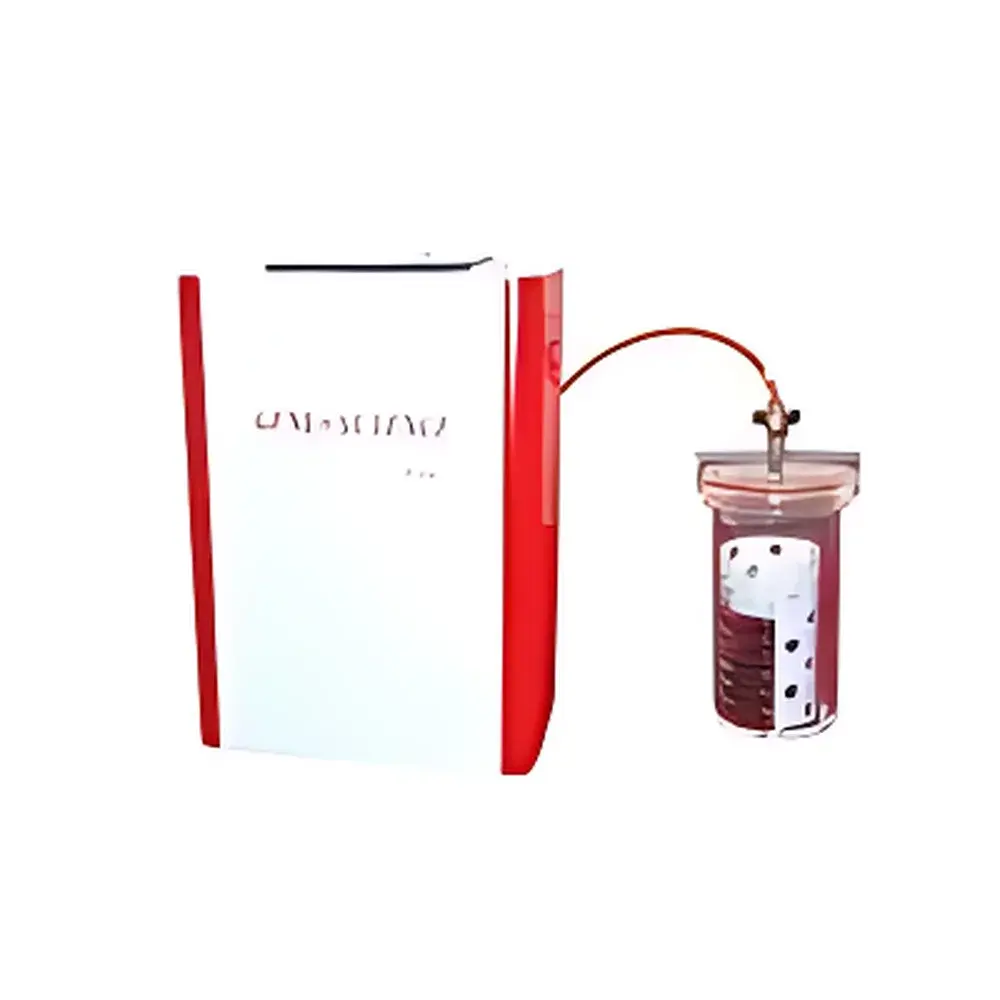
GeneScience A20 Anaerobic Workstation
| Brand | GeneScience |
|---|---|
| Origin | USA |
| Manufacturer Type | Authorized Distributor |
| Product Category | Imported Instrument |
| Model | A20 |
| Temperature Control Range | Ambient to 45 °C (optional temperature module) |
| Humidity Control Range | Ambient to 45 °C (optional temperature module) |
| Final Chamber Pressure | <50 mbar |
| Max Gas Input Pressure | 1 bar |
| Gas Flow Rate | 0.9 m³/h |
| Available Culture Volumes | 2.5 L, 3.5 L, 20 L, or 30 L (user-selectable) |
Overview
The GeneScience A20 Anaerobic Workstation is a compact, benchtop-controlled atmosphere system engineered for precise, reproducible cultivation of obligate anaerobes and microaerophiles in research and clinical microbiology laboratories. Unlike conventional gas-pak systems or standalone anaerobic jars, the A20 employs active gas exchange and catalytic deoxygenation within a sealed, transparent polycarbonate culture chamber—enabling dynamic control of O₂ concentration down to <0.1% (v/v) with full environmental traceability. Its integrated vacuum pump, programmable microprocessor controller, and rapid gas-flush architecture allow transition from ambient air to stable anaerobic conditions in under three minutes—a critical advantage for time-sensitive isolation workflows such as Clostridioides difficile recovery or oral microbiome profiling. Designed for GLP-compliant environments, the system operates without consumable catalyst cartridges or external gas cylinders, minimizing operational overhead while maintaining ISO 13485-aligned engineering integrity.
Key Features
- Three-minute anaerobic environment establishment via sequential vacuum–gas flush cycles with catalytic O₂ scavenging
- Quick-connect bayonet interface between chamber and main unit ensures leak-tight sealing with single-step mechanical coupling
- Optically clear, impact-resistant polyetherimide (PEI) chamber housing—rated for thermal stability up to 45 °C and compatible with standard Petri dish stacking protocols
- Embedded high-efficiency vacuum pump (oil-free diaphragm design) and dual-stage gas regulation system for consistent pressure management (<50 mbar final chamber pressure)
- Six-tier process validation protocol embedded in firmware—including pre-cycle leak test, catalyst activation verification, O₂ sensor calibration, gas purge verification, chamber equilibration monitoring, and post-cycle stability confirmation
- User-definable microaerobic setpoints (e.g., 2–10% O₂) alongside strict anaerobic modes (≤0.1% O₂), configurable via intuitive touchscreen interface
- Optional temperature control module enables active incubation at 30–45 °C with ±0.3 °C stability over 24 h (calibrated per ASTM E2876-22)
- Low gas consumption architecture (0.9 m³/h max flow) reduces nitrogen or mixed-gas dependency by >60% versus traditional glove-box systems
Sample Compatibility & Compliance
The A20 supports standard microbiological formats including 100-mm Petri dishes, multiwell plates (6–96-well), slant tubes, and broth vials—without requiring adapter hardware. Chamber volume options (2.5 L, 3.5 L, 20 L, 30 L) accommodate both small-scale isolate screening and batch processing of clinical specimens. All internal surfaces are autoclavable (121 °C, 15 min), and the catalytic deoxygenation agent (palladium-doped alumina) meets USP residual metal limits. The system complies with ISO 14644-1 Class 5 cleanroom particulate requirements during operation and supports FDA 21 CFR Part 11 audit trails when paired with optional data logging software. It is validated for use in CLIA-certified labs performing anaerobe identification per CLSI M100 and EUCAST guidelines.
Software & Data Management
Firmware version 3.2+ includes timestamped event logging (start/stop cycles, O₂ drift, pressure anomalies, door-open duration), exportable via USB-C to CSV or PDF. Optional PC-based GeneLink™ Manager software provides remote monitoring, user-access-level configuration (admin/operator/viewer), electronic signature support, and automated report generation aligned with ISO/IEC 17025 documentation standards. All parameter changes trigger immutable log entries with operator ID, timestamp, and checksum verification—ensuring full traceability for regulatory audits.
Applications
- Routine isolation and subculture of obligate anaerobes (e.g., Bacteroides, Fusobacterium, Prevotella)
- Microaerophilic cultivation of Campylobacter jejuni and Helicobacter pylori under controlled 5–10% O₂
- Antibiotic susceptibility testing (AST) under physiologically relevant low-O₂ conditions
- Fecal microbiota transplantation (FMT) sample preparation under strict O₂ exclusion
- Development and validation of novel anaerobic culture media formulations
- Teaching laboratory demonstrations of redox-sensitive microbial physiology
FAQ
Does the A20 require external gas cylinders or compressed air sources?
No—the system operates autonomously using ambient air as the input gas stream; internal catalytic deoxygenation eliminates dependence on external N₂ or CO₂/N₂/H₂ blends.
Can the A20 be validated for GMP manufacturing environments?
Yes—when equipped with the optional IQ/OQ documentation package and temperature module, it supports installation qualification (IQ), operational qualification (OQ), and routine performance verification per Annex 15 of the EU GMP Guide.
What maintenance intervals are recommended?
The catalytic deoxygenation agent requires replacement every 12 months under continuous-use conditions; vacuum pump service is specified at 10,000 operating hours; no routine calibration is required for O₂ sensors due to self-diagnostic firmware routines.
Is remote firmware update supported?
Yes—firmware updates are delivered via encrypted USB drive with SHA-256 hash verification and rollback capability to prior stable versions.
How is chamber sterility maintained between runs?
The chamber may be sterilized via vaporized hydrogen peroxide (VHP) exposure (validated cycle: 300 ppm, 60 min) or autoclaving; UV-C irradiation (254 nm, 30 W) is available as an accessory module for surface decontamination.






