
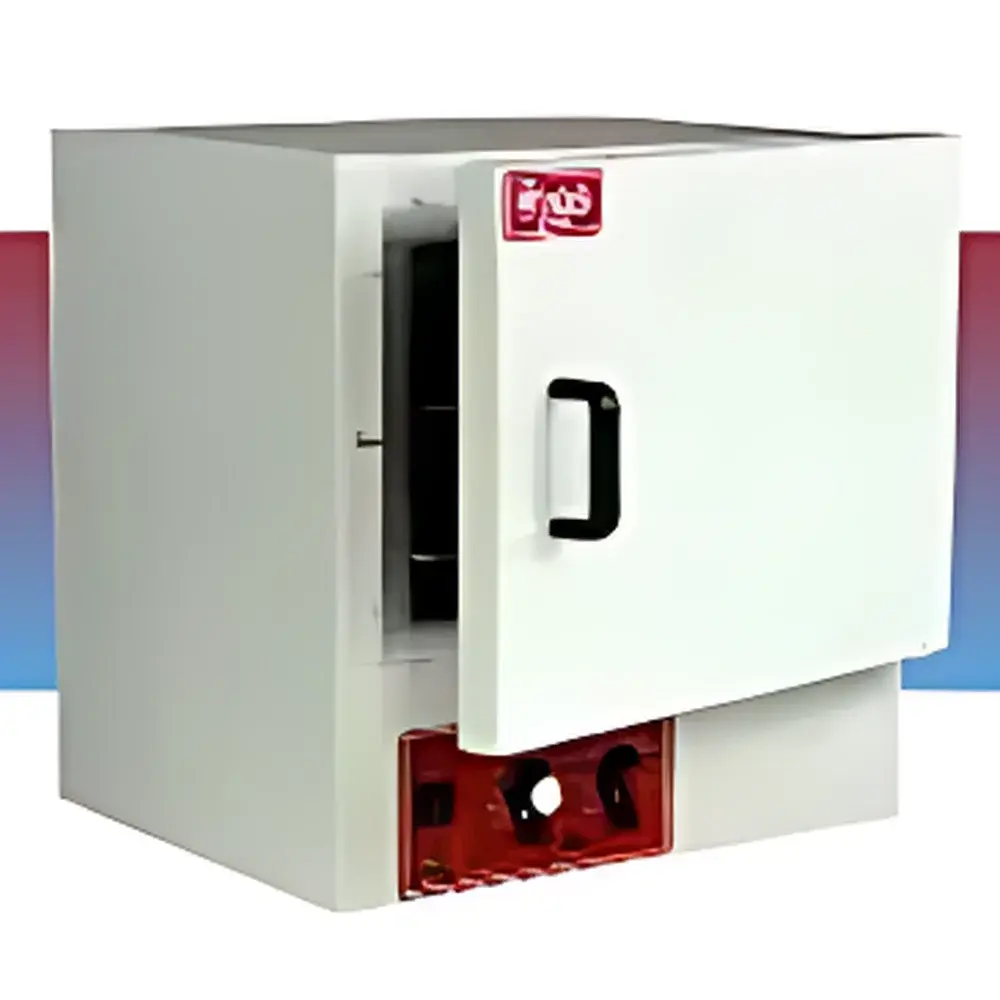
Genlab ME/250 Rapid Dehydration Oven
| Brand | Genlab |
|---|---|
| Origin | United Kingdom |
| Model | ME/250 |
| Instrument Type | Forced-Air Drying Oven |
| Temperature Range | 40–250 °C |
| Temperature Uniformity | ±0.75 °C |
| Temperature Stability | ±0.5 °C |
| Chamber Dimensions (W×D×H) | 450 × 490 × 460 mm |
| External Dimensions (W×D×H) | 570 × 850 × 590 mm |
| Chamber Material | Stainless Steel (AISI 304) |
| Heating Method | Horizontal Forced-Air Convection with Dual-Side & Rear Mounted NiCr Sheathed Elements |
| Control System | PID Microprocessor-Based Digital Controller with Dual LED Display (Setpoint & Actual Temperature), Tamper-Proof Calibration Lock, Independent Over-Temperature Cut-Out (Mechanical Backup) |
Overview
The Genlab ME/250 Rapid Dehydration Oven is a precision-engineered forced-air drying system designed for reproducible thermal processing in regulated laboratory environments. Operating on the principle of horizontal air circulation—driven by a rear- and side-mounted centrifugal fan—it ensures uniform heat distribution across the stainless steel chamber (AISI 304), minimizing thermal gradients and accelerating moisture removal from samples without compromising structural integrity. Unlike natural convection ovens, the ME/250’s mechanically assisted airflow enables faster equilibration times and tighter temperature control—critical for applications demanding consistent drying kinetics, such as pharmaceutical residual solvent analysis, polymer moisture content validation, or pre-weighing sample stabilization per ASTM E1231 and ISO 554 standards. Its operational envelope (40–250 °C) supports both low-temperature desiccation and high-temperature conditioning, while the ±0.5 °C stability and ±0.75 °C uniformity meet GLP-compliant thermal validation requirements for routine QC workflows.
Key Features
- Stainless steel (AISI 304) interior chamber—resistant to corrosion, non-reactive with organic solvents, and compliant with USP surface hygiene expectations;
- Dual-zone heating architecture: NiCr sheathed elements mounted on rear and side walls ensure laminar airflow and eliminate cold spots;
- PID microprocessor controller with dual LED display—simultaneously shows setpoint and real-time chamber temperature, with user-accessible calibration lock to prevent unauthorized parameter changes;
- Independent mechanical over-temperature safety cut-out (non-resettable until manual intervention), certified to EN 61000-6-2 and IEC 61000-6-4 electromagnetic compatibility standards;
- Ergonomic sliding shelf system: fixed base rack + two adjustable chrome-plated wire shelves (load capacity: 15 kg per shelf), optimized for volumetric loading without airflow obstruction;
- Electrostatically coated mild steel exterior—chemical-resistant finish facilitating decontamination between batches in multi-user labs;
- Front-access service panel for heater and fan maintenance—reducing downtime during preventive servicing per ISO/IEC 17025 Clause 6.4.10.
Sample Compatibility & Compliance
The ME/250 accommodates diverse sample formats—including Petri dishes, weighing boats, glass vials, aluminum pans, and porous ceramic crucibles—without requiring custom fixtures. Its chamber geometry (450 × 490 × 460 mm) allows stacking of standard ISO 9001-certified drying trays while preserving ≥85% cross-sectional airflow velocity. The oven is validated for use in GMP-regulated environments: temperature mapping reports (per IQ/OQ protocols) confirm compliance with FDA 21 CFR Part 11 data integrity requirements when paired with Genlab’s optional RS-232/USB data logger (Model DL-250). It meets essential safety directives under the EU Machinery Directive 2006/42/EC and carries CE marking for laboratory equipment.
Software & Data Management
While the ME/250 operates as a standalone instrument, its digital controller supports external data capture via ASCII protocol over RS-232. When integrated with Genlab’s optional DL-250 datalogger and TraceLink™ software suite, users achieve full audit-trail capability—including timestamped temperature logs, operator ID tagging, and electronic signature support aligned with Annex 11 and ALCOA+ principles. All calibration events are stored locally with version-controlled firmware (v3.2.1+), and calibration certificates include NIST-traceable references per ISO/IEC 17025 Clause 6.6. No cloud dependency is required; raw CSV exports enable direct import into LIMS platforms (e.g., LabWare, Thermo Fisher SampleManager).
Applications
- Moisture content determination in APIs and excipients (USP , Ph. Eur. 2.2.32);
- Pre-drying of filter membranes prior to gravimetric particulate analysis (EPA Method 160.1);
- Thermal conditioning of reference standards before FTIR or XRD characterization;
- Accelerated stability testing of packaging materials (ASTM F1980);
- Drying of chromatography sample vials and HPLC autosampler trays to prevent carryover;
- Post-cleaning validation of glassware in cleanroom environments (ISO 14644-1 Class 7/8).
FAQ
Is the ME/250 suitable for vacuum drying applications?
No—the ME/250 is a forced-air convection oven and lacks vacuum sealing, pressure regulation, or gas purge ports. For vacuum dehydration, consider Genlab’s VT series ovens.
Can the chamber temperature be logged continuously without external hardware?
The base unit displays real-time temperature but does not store historical data internally. Continuous logging requires the DL-250 datalogger add-on.
What is the recommended recalibration interval for GLP compliance?
Genlab recommends annual thermocouple verification using a NIST-traceable dry-block calibrator (e.g., Fluke 9143), documented per SOP-TR-017 in your lab’s quality manual.
Does the stainless steel chamber support autoclaving or steam sterilization?
No—while AISI 304 resists chemical corrosion, it is not rated for repeated exposure to saturated steam at 121 °C. Autoclaving voids the chamber warranty.
How is airflow uniformity verified during installation qualification?
Genlab provides a 9-point thermal mapping template (per ISO 14644-3 Annex B) and recommends using calibrated PT100 sensors positioned at defined grid coordinates for IQ documentation.



