
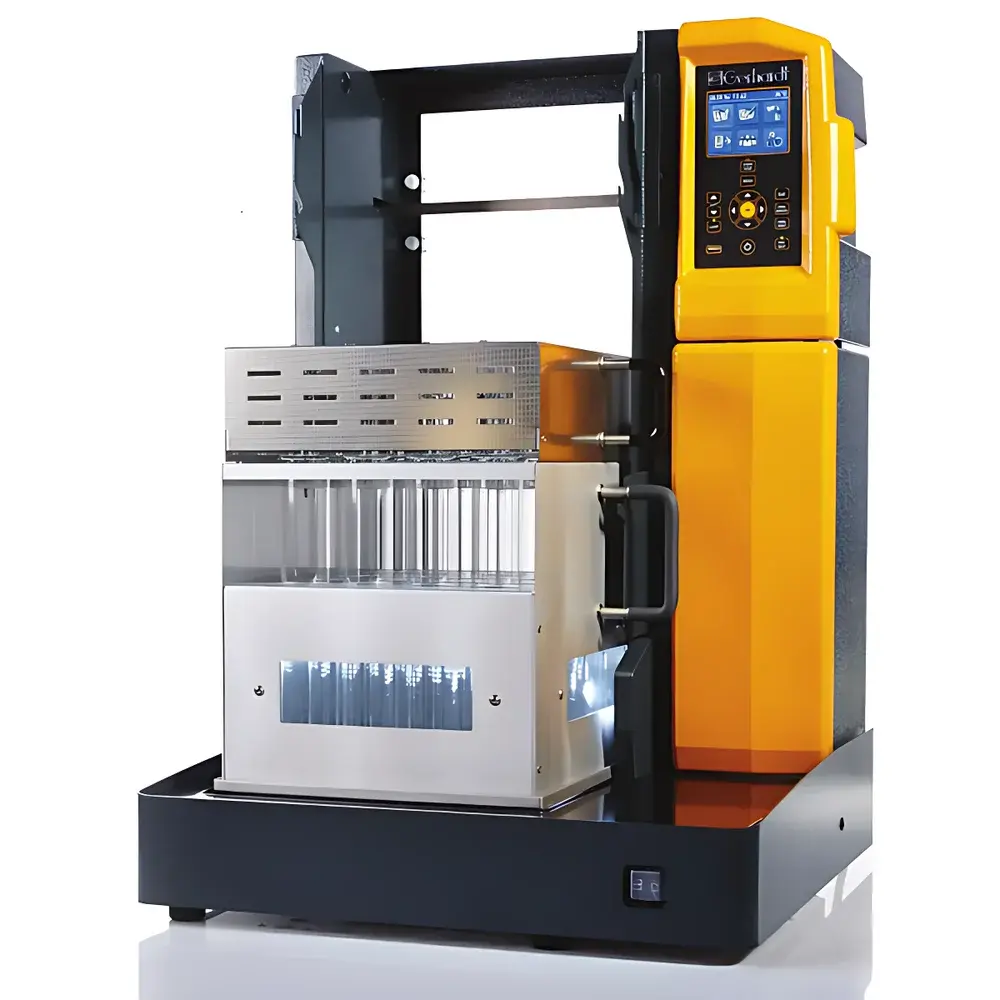
C. Gerhardt KT-L 20s Automated Elevating Kjeldahl Digestion System
| Brand | C. Gerhardt |
|---|---|
| Origin | Germany |
| Manufacturer | Yes |
| Import Status | Imported |
| Model | KT-L 20s |
| Instrument Type | Electric Heating Digestion System |
| Automation Level | Fully Automatic |
| Digestion Positions | 20 |
| Max. Heating Temperature | 430 °C |
| Temperature Control Accuracy | ±0.1 °C |
| Heating Principle | Electric Flat-Plate Heater |
| Reagent Channels | 20 |
Overview
The C. Gerhardt KT-L 20s is a fully automated, elevating Kjeldahl digestion system engineered for high-throughput, reproducible sample preparation in nitrogen determination workflows. Based on the proven KJELDATHERM platform, it employs precise electric flat-plate heating to deliver uniform thermal energy across all 20 digestion positions—eliminating hot-spot variability inherent in conventional open-flame or infrared systems. Its core design follows the well-established “well-type” modular digestion principle: digestion tubes are vertically inserted into precisely machined aluminum heating blocks, ensuring optimal heat transfer and containment of corrosive fumes. The integrated automatic lift mechanism—driven by a dedicated motorized dual-layer rack—safely lowers tubes into the heated block at the start of digestion and raises them for cooling and downstream transfer, minimizing operator exposure to high temperatures and aggressive reagents (e.g., concentrated H₂SO₄, catalyst mixtures). This architecture conforms to ISO 8585, AOAC 984.27, and DIN EN ISO 5983-1 for Kjeldahl nitrogen analysis, supporting GLP-compliant laboratory operations.
Key Features
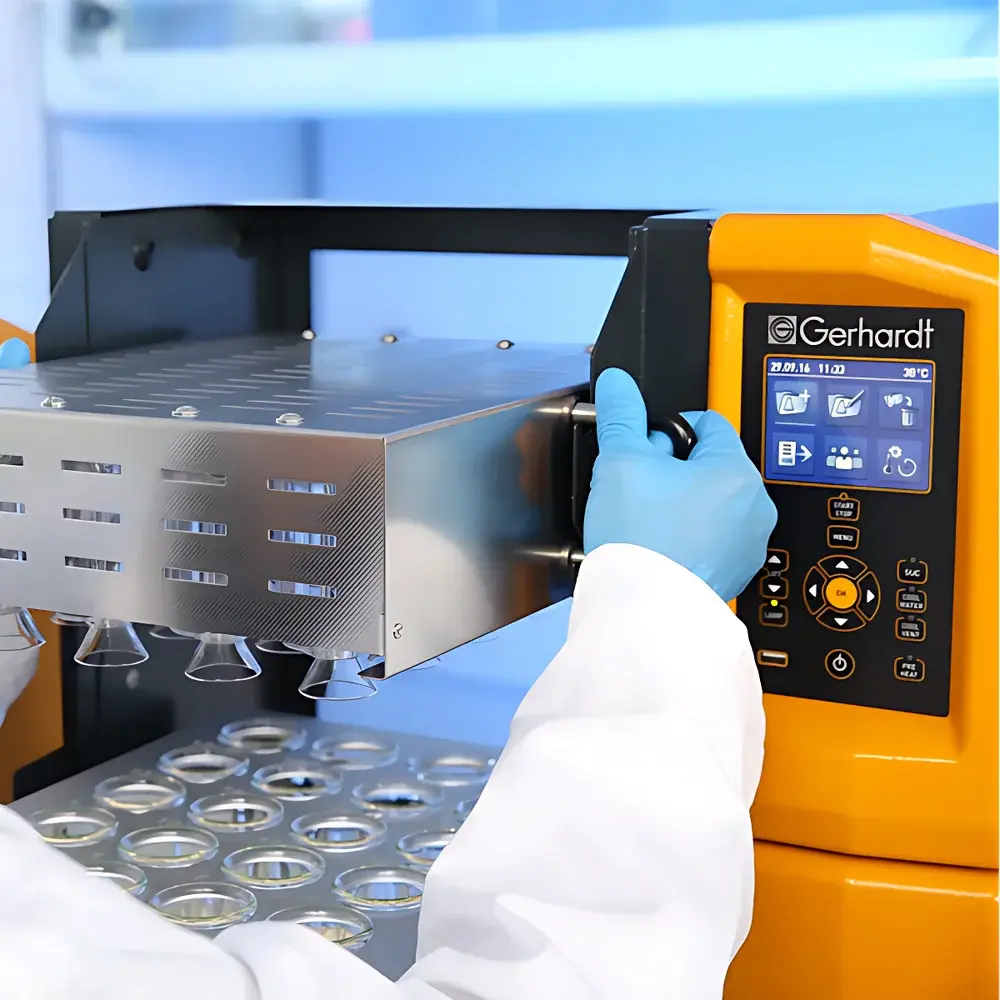
- Fully automated lift-and-digest operation: Motor-driven dual-layer rack ensures precise, repeatable tube insertion and extraction synchronized with digestion protocol timing.
- High-stability temperature control: Digital PID controller maintains ±0.1 °C accuracy across the full 30–430 °C range; calibrated traceable to national standards.
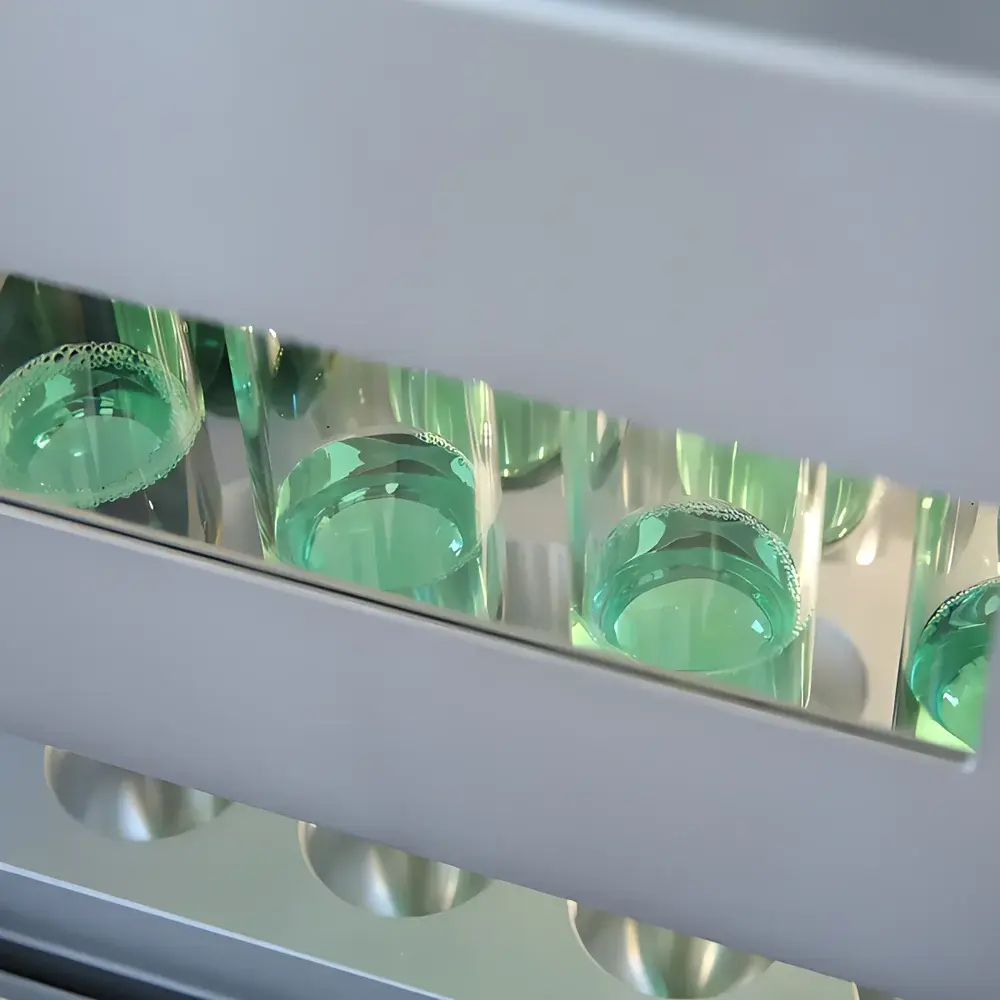
- 20-position aluminum digestion block: CNC-machined, anodized aluminum with optimized thermal mass and insulation—ensures uniform heating and rapid thermal recovery between cycles.
- Dedicated reagent delivery: 20 independent reagent channels enable sequential or parallel addition of catalysts, oxidizing agents, or digest enhancers without cross-contamination.
- Integrated safety architecture: Dual thermal cutoffs (overheat protection + overcurrent disconnection), insulated lifting handles, polycarbonate observation window, and fail-safe lift interlock prevent unintended movement during active heating.
- Modular exhaust interface: Compatible with standard acid gas scrubbers (e.g., NaOH-based absorption units) and water aspirators; exhaust ducting ports comply with EN 14175-3 fume hood integration requirements.
Sample Compatibility & Compliance
The KT-L 20s accommodates standard Kjeldahl digestion tubes—KMT (100 mL), KTG (250 mL), and BS (400 mL)—with secure positioning via precision-machined bore diameters. Its design supports both classical macro-Kjeldahl (for feed, soil, wastewater) and semi-micro applications (e.g., pharmaceutical excipients per USP ). All electrical components meet CE marking requirements under Directive 2014/30/EU (EMC) and 2014/35/EU (LVD), with construction adhering to DIN VDE 0700-1 and IEC 61010-1 for laboratory equipment safety. The system’s temperature logging capability—when paired with optional TZ controller—supports audit-ready records compliant with FDA 21 CFR Part 11 (when used with validated software), ISO/IEC 17025 clause 7.7, and GMP Annex 11 data integrity expectations.
Software & Data Management
The KT-L 20s operates via the TZ electronic temperature controller—a standalone, front-panel interface with non-volatile memory storing up to nine multi-step programs (each with nine segments). Each program logs timestamped temperature setpoints, actual readings, lift actuation events, and alarm triggers (e.g., temperature deviation >±2 °C, lift timeout). Optional RS-485 or Ethernet connectivity enables integration into LIMS or ELN platforms via Modbus RTU/TCP. Raw log files export as CSV for traceability; no proprietary format lock-in. Controller firmware is field-upgradable and validated per ICH Q9 principles. Audit trail functionality includes user ID tagging, change history, and electronic signature support when deployed with compliant authentication infrastructure.
Applications
This system is routinely deployed in accredited food testing labs (AOAC Official Methods 981.10, 992.15), environmental monitoring facilities (EPA Method 351.2, ISO 14852), agricultural research centers (determination of crude protein in cereals and forages), and contract QC laboratories serving nutraceutical and animal feed manufacturers. Its consistent thermal profile ensures high recovery rates (>98.5%) for nitrogenous compounds—including amides, purines, and heterocyclic amines—without charring or volatile loss. The 20-position capacity enables batch processing aligned with ISO 5725-2 repeatability studies, while the lift function reduces manual handling errors common in high-volume routine analysis.
FAQ
Does the KT-L 20s require external ventilation or can it operate standalone?
It must be connected to a certified fume extraction system—either a central lab hood or a dedicated acid-gas scrubber—per EN 14175-3 and local occupational exposure limits (e.g., OSHA PEL for SO₂ and NOₓ).
Is the TZ controller included as standard or optional?
The TZ controller is supplied as standard equipment with all KT-L 20s units; no additional configuration is required for basic operation.
Can digestion tubes from other manufacturers be used?
Yes—provided they conform dimensionally to DIN 12791 (KMT/KTG/BS specifications) and are rated for continuous exposure to 430 °C and concentrated sulfuric acid.
What maintenance intervals are recommended for the lift mechanism?
Gerhardt specifies lubrication of the linear guide rails every 12 months or 500 operational cycles, using Klüberplex BEM 41-132 grease; calibration verification of temperature sensors is advised annually.
Is remote monitoring supported out-of-the-box?
Basic remote status monitoring (temperature, lift position, error codes) is available via analog 4–20 mA output; full remote control requires optional communication module installation and third-party SCADA integration.



