
Gill HS-50 Research-Grade 3D Ultrasonic Anemometer
| Brand | Gill |
|---|---|
| Origin | United Kingdom |
| Model | HS-50 |
| Instrument Type | Ultrasonic Anemometer |
| Resolution | 0.01 m/s |
| Measurement Range | 0–45 m/s |
| Accuracy | ±1% of reading |
| Operating Temperature | −40 °C to +60 °C |
| Operating Humidity | 0–100% RH |
| Output Rate | 50 Hz |
| Wind Direction Range | 0–360° |
| Output Format | U, V, W vector components |
| Construction | Stainless steel |
Overview
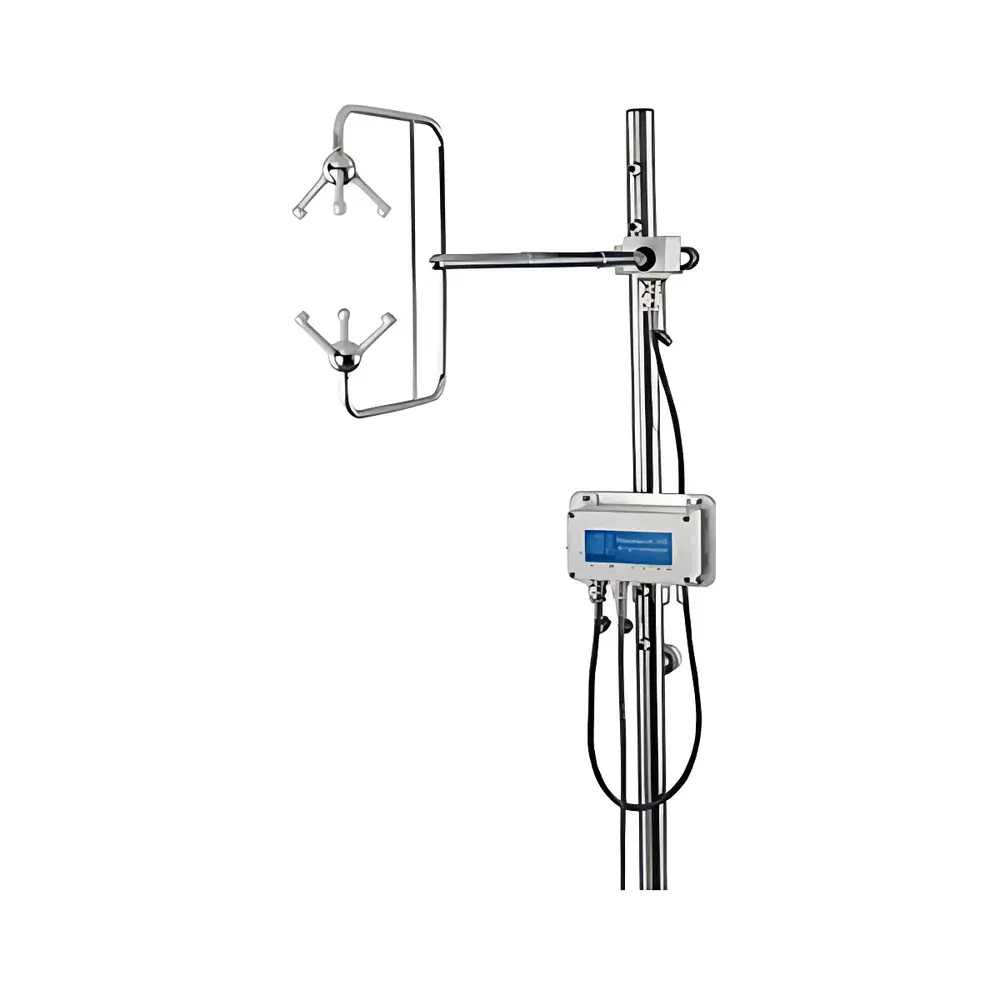
The Gill HS-50 Research-Grade 3D Ultrasonic Anemometer is an engineered solution for high-fidelity atmospheric turbulence characterization in demanding scientific environments. Based on time-of-flight ultrasonic transit-time differential measurement principles, the HS-50 captures instantaneous three-component (U, V, W) wind velocity vectors and true wind direction (0–360°) without moving parts. Its horizontally oriented transducer head minimizes flow distortion by reducing vertical projection and shadowing effects—critical for accurate near-surface, canopy-level, or marine boundary layer profiling. Designed for long-term unattended deployment, the HS-50 delivers continuous 50 Hz sampling synchronized to internal precision timing, enabling spectral analysis of turbulent kinetic energy (TKE), Reynolds stress estimation, and eddy covariance applications when paired with compatible gas analyzers or thermistors.
Key Features
- Three-axis ultrasonic wind sensing with 0.01 m/s resolution and ±1% accuracy across the full 0–45 m/s dynamic range
- Horizontally aligned transducer geometry optimized to reduce flow interference and improve vertical (W-component) fidelity—particularly essential for surface-layer flux studies
- Integrated dual-axis tilt sensor enabling real-time mechanical alignment verification and post-processing correction of mounting misalignment
- Stainless-steel construction rated for corrosion resistance in coastal, agricultural, and industrial exposure conditions
- Distributed architecture: compact sensor head mounted remotely, connected via shielded cable to a separate electronics unit housing signal conditioning, temperature compensation (via integrated Pt100 RTD), and six configurable analog inputs for auxiliary sensors (e.g., temperature, humidity, CO₂)
- Robust environmental rating: operational from −40 °C to +60 °C ambient and 0–100% relative humidity, including condensing conditions
Sample Compatibility & Compliance
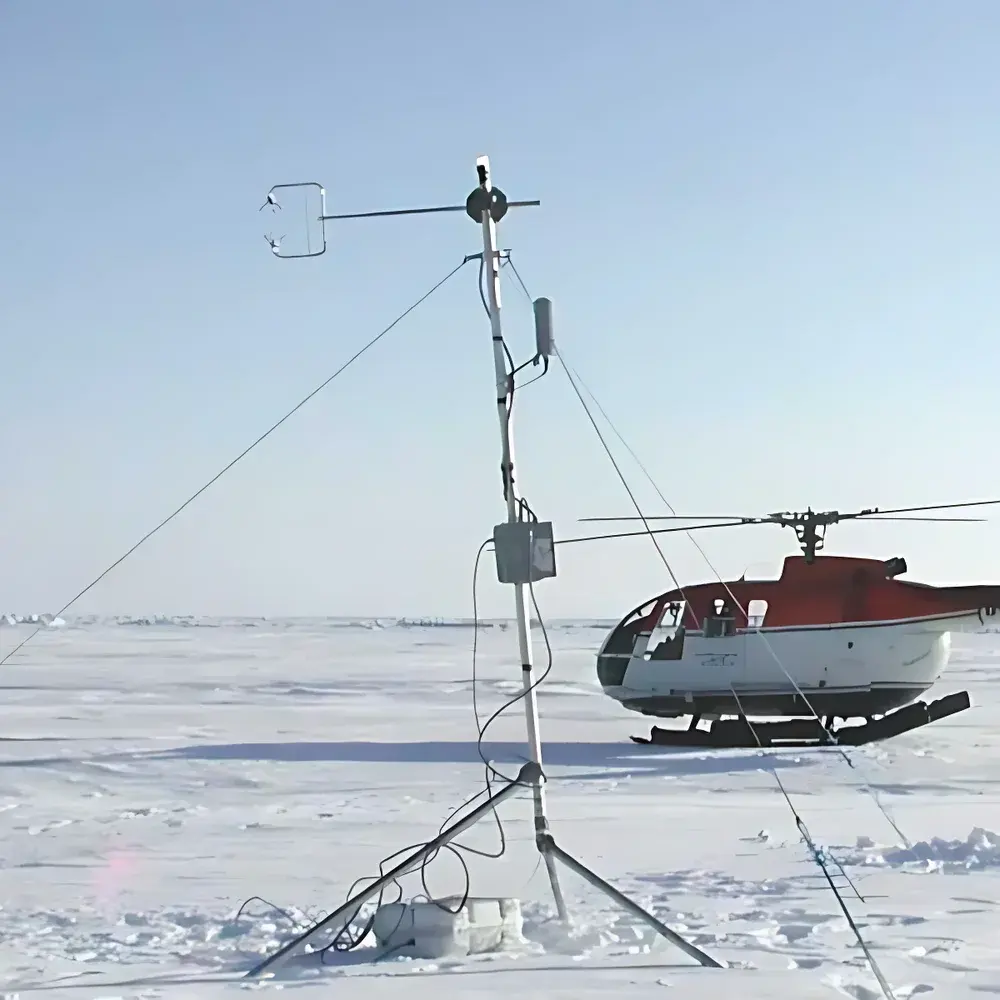
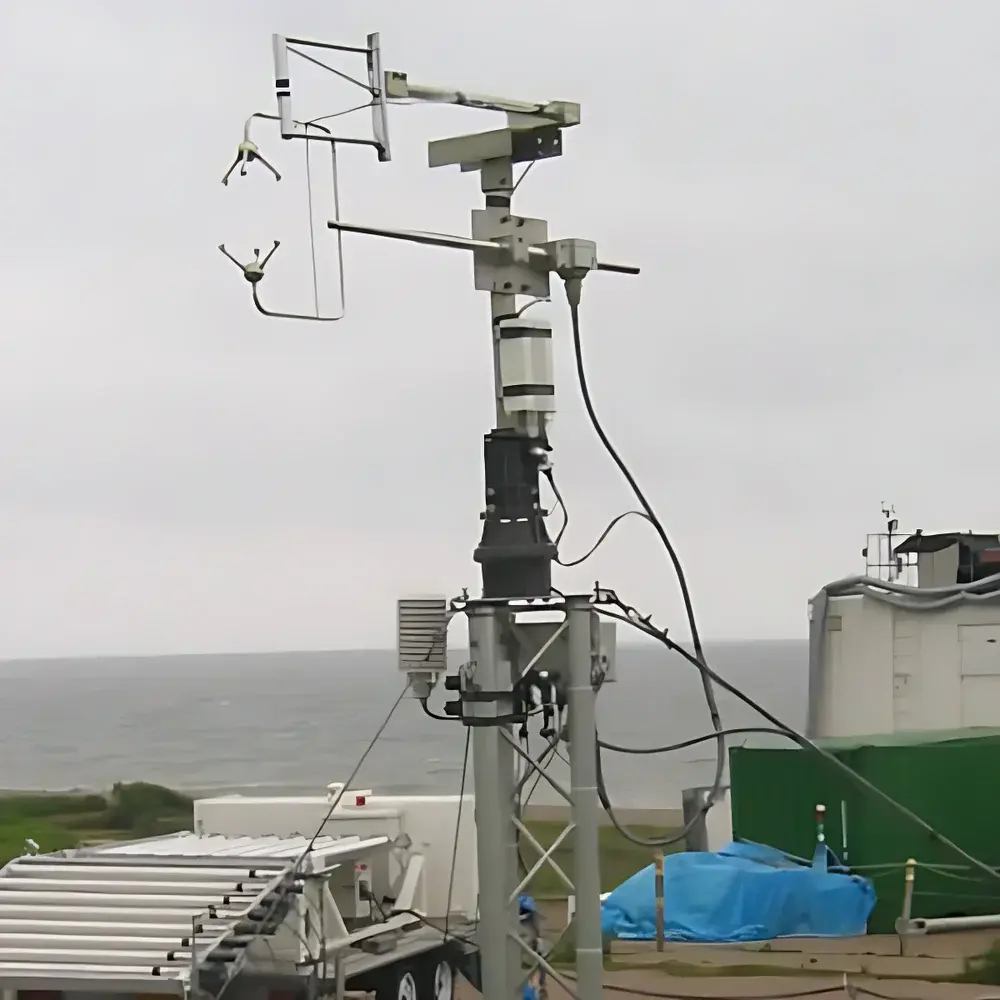
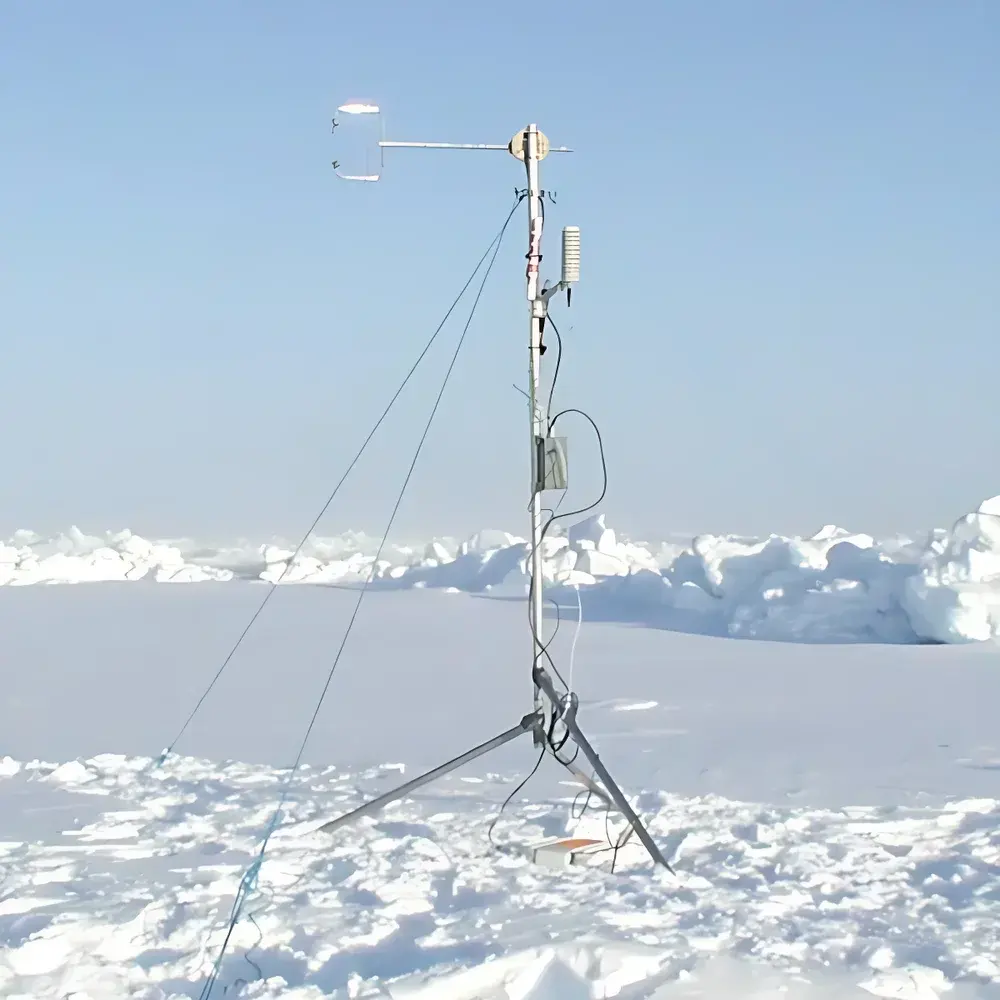
The HS-50 is deployed globally in micrometeorological flux towers, offshore platforms, agro-meteorological networks, and urban boundary layer observatories. Its measurement methodology complies with foundational standards for turbulent flux instrumentation, including ISO 7726 (Ergonomics of the thermal environment), ASTM D5096 (Standard Practice for Calibration of Anemometers), and guidance referenced in EC FP7 and Horizon 2020 atmospheric research frameworks. While not certified to IEC 61000-6-2/4 for EMC immunity by default, its design incorporates galvanic isolation, filtered analog inputs, and transient-suppressed power interfaces—facilitating integration into GLP-compliant environmental monitoring systems where auditability and traceable calibration records are required.
Software & Data Management
The HS-50 outputs ASCII or binary serial data (RS-232/RS-485) with user-selectable packet formats including raw transit times, compensated U/V/W vectors, wind speed/direction, tilt angles, and internal temperature. It is fully compatible with Campbell Scientific CR series dataloggers, LI-COR EddyPro®, and open-source tools such as PyFlux and EddyU. Firmware supports configurable averaging intervals (1–3600 s), burst-mode sampling, and diagnostic logging. All calibration coefficients—including transducer path-length corrections and temperature-dependent sound-speed offsets—are stored non-volatilely and can be exported for third-party validation. The system supports time-stamping via GPS pulse-per-second (PPS) input, ensuring sub-millisecond synchronization across multi-sensor eddy covariance arrays.
Applications
- Surface-layer turbulence quantification in eddy covariance flux measurements (CO₂, H₂O, CH₄, N₂O)
- Wind resource assessment at turbine hub height and below, including wake characterization and shear profiling
- Forest and crop canopy aerodynamics—resolving momentum and scalar transport within complex roughness elements
- Offshore meteorological monitoring on buoys, lighthouses, and fixed platforms under high-humidity and salt-laden conditions
- Urban airflow modeling and dispersion studies requiring high temporal resolution and directional fidelity
- Validation of numerical weather prediction (NWP) models and large-eddy simulation (LES) boundary conditions
FAQ
Does the HS-50 require routine recalibration?
Calibration is traceable to UKAS-accredited facilities; field recalibration is not required under normal operation. Annual verification against reference standards is recommended for GLP/GMP-aligned deployments.
Can the HS-50 operate submerged or in heavy rain?
It is IP66-rated for dust and powerful water jets but not submersible. Continuous operation in persistent heavy rain is supported; however, ice accumulation on transducers must be mitigated via heating accessories or site-specific siting.
Is the tilt sensor output used for real-time vector correction?
Yes—the embedded tilt sensor provides pitch and roll data at 50 Hz, allowing on-device or post-processing rotation of U/V/W into Earth-referenced coordinates.
What power supply options are supported?
The electronics unit accepts 9–30 VDC with reverse polarity and surge protection; typical consumption is 1.2 W (standby) to 2.8 W (active sampling).
How is data integrity ensured during transmission?
All serial frames include CRC-16 checksums; optional SD-card logging on the electronics unit provides local redundancy independent of host datalogger uptime.







