
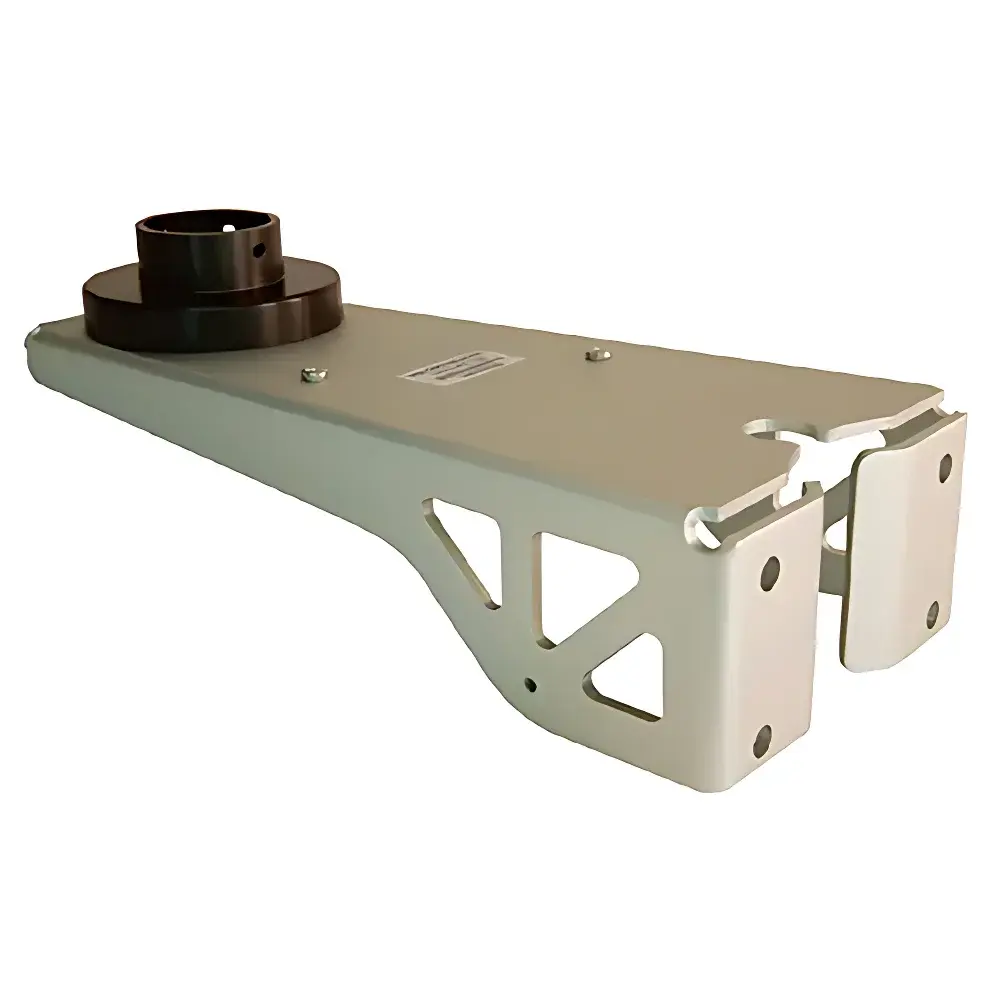
GILL MaxiMet Cross-Arm Mounting Bracket
| Brand | GILL |
|---|---|
| Origin | United Kingdom |
| Manufacturer Type | Authorized Distributor |
| Product Category | Imported Instrument |
| Model | MaxiMet |
| Instrument Type | Integrated Weather Sensor Platform |
| Maximum Wind Load Capacity | 90–95 m/s |
| Vibration Compliance | IEC 60945 |
| Salt Mist Resistance | BS EN 60068-2-52 |
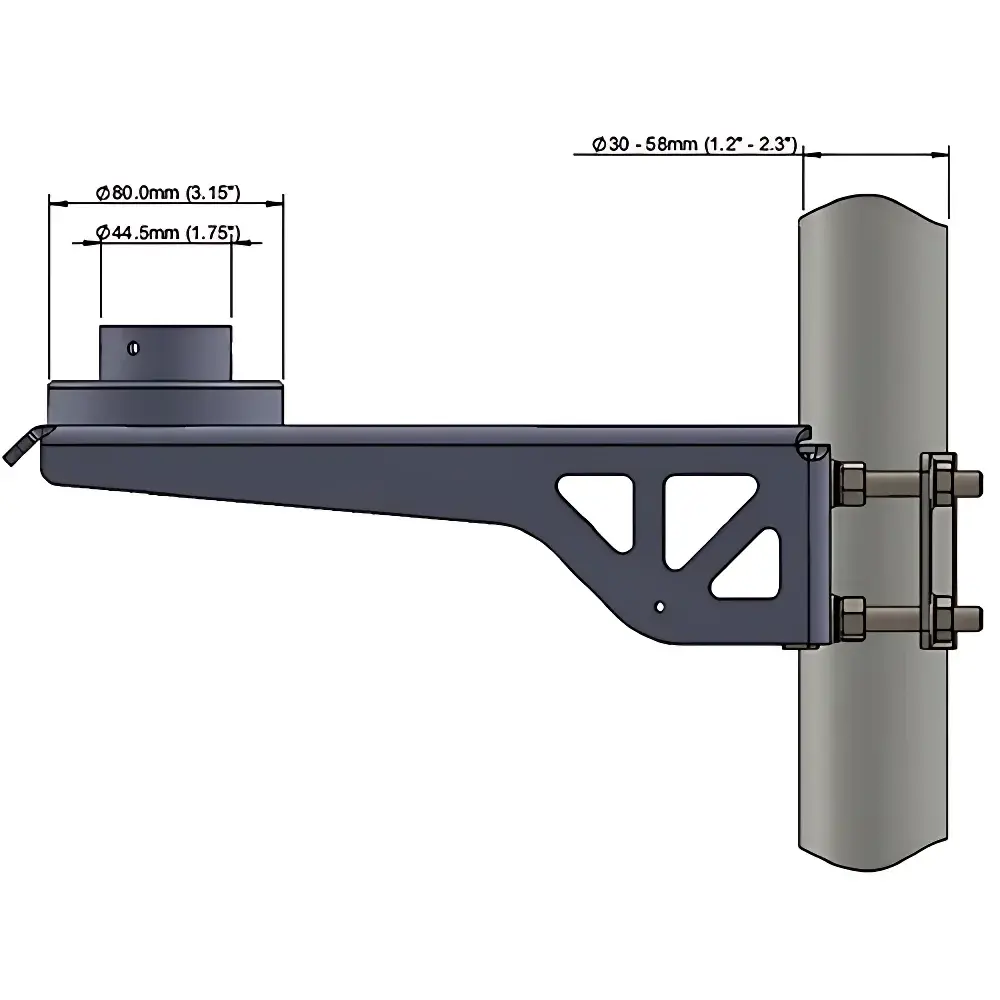
| Pole Diameter Compatibility | 30–58 mm |
| Material | Anodized Aluminum Alloy & Marine-Grade Stainless Steel |
| Mounting Options | Wall-Mount or Pole-Mount |
Overview
The GILL MaxiMet Cross-Arm Mounting Bracket is an engineered mechanical interface designed exclusively for secure, stable, and long-term deployment of GILL’s MaxiMet integrated weather sensor platform and compatible WindSonic ultrasonic anemometers. Unlike generic mounting solutions, this bracket integrates structural integrity with environmental resilience—ensuring precise sensor alignment and minimal aerodynamic interference under extreme meteorological conditions. Its design adheres to the mechanical interface specifications defined in GILL’s MaxiMet product documentation, preserving factory-calibrated measurement geometry critical for wind vector accuracy, temperature/humidity boundary layer fidelity, and solar radiation cosine response. The bracket functions as a passive but mission-critical subsystem within automated weather observation networks (AWONs), coastal monitoring stations, aviation meteorological terminals, and research-grade mesonets where mechanical stability directly impacts data continuity and traceability.
Key Features
- Optimized structural geometry for MaxiMet sensor head orientation—maintains prescribed horizontal level tolerance (±0.5°) and vertical clearance above surface (per WMO Guide to Meteorological Instruments and Methods of Observation, Chapter 12)
- Corrosion-resistant construction using aerospace-grade 6063-T6 anodized aluminum alloy for the cross-arm and A4 (316) marine-grade stainless steel for fasteners and pivot hardware
- Adjustable pole-clamp mechanism accommodating round support structures from 30 mm to 58 mm outer diameter—compatible with standard galvanized steel, aluminum, or fiberglass meteorological masts
- IEC 60945-certified vibration damping performance validated across 10–100 Hz frequency range, ensuring sensor signal integrity during high-wind events and mechanical resonance scenarios
- BS EN 60068-2-52 salt mist test compliance (test severity level: SWA 24 h, pH 6.5–7.2)—validated for continuous operation in offshore, harbor, and estuarine environments
- Pre-drilled, ISO-standard M6 threaded mounting points aligned to MaxiMet’s OEM sensor footprint—enabling tool-free, repeatable sensor installation without torque deviation
Sample Compatibility & Compliance
This mounting bracket is mechanically and electrically validated for use with GILL MaxiMet Gen3 (MM3) and Gen4 (MM4) integrated weather sensors, including variants equipped with optional UV-A/B, PAR, and pyranometer modules. It is also fully interoperable with GILL WindSonic series ultrasonic anemometers when deployed in co-located configurations per WMO-recommended separation distances. The bracket itself carries no CE marking as it is classified as a mechanical accessory—not an active measuring instrument—however its material certifications (EN AW-6063, EN 10088-3) and test reports (IEC 60945, BS EN 60068-2-52) are supplied with each unit. Installation complies with IEC 61400-12-1 Annex D for meteorological mast instrumentation and supports adherence to ISO/IEC 17025 requirements for environmental monitoring laboratories performing uncertainty budgeting of wind speed and direction measurements.
Software & Data Management
As a passive mounting solution, the MaxiMet Cross-Arm Bracket does not incorporate firmware, embedded logic, or data interfaces. However, its mechanical stability directly influences data quality metrics monitored through GILL’s proprietary MetLink software suite (v4.2+), particularly in terms of reduced zero-offset drift in wind direction channels and improved temporal coherence between temperature and humidity sampling intervals. When deployed in systems configured for GLP/GMP-aligned environmental monitoring, the bracket’s serial-numbered identification plate supports asset traceability within LIMS workflows. Documentation includes a calibration maintenance log template aligned with ASTM E74 and ISO/IEC 17025 clause 7.7—recommending annual visual inspection for fastener integrity and coating degradation, with photographic evidence retention for audit readiness.
Applications
- Permanent installation on airport perimeter masts for METAR/SPECI reporting in accordance with ICAO Annex 3 and WMO No. 8
- Offshore oil & gas platform meteorological monitoring where salt-laden winds exceed 40 m/s sustained velocity
- Urban air quality monitoring networks requiring simultaneous wind profiling and particulate dispersion modeling input
- National hydrometeorological services deploying standardized sensor packages across regional climate stations (e.g., UK Met Office CLASS network)
- Academic field campaigns involving eddy covariance flux towers where sensor arm rigidity minimizes motion-induced turbulence artifacts
FAQ
Is this bracket compatible with non-GILL sensors?
No. Mechanical tolerances, mounting hole patterns, and center-of-gravity alignment are specific to GILL MaxiMet and WindSonic product families. Use with third-party sensors voids structural warranty and compromises measurement traceability.
Does the bracket include leveling hardware?
Yes—integrated bubble level vial and adjustable leveling feet are included to achieve ≤0.5° pitch/yaw alignment per WMO guidance.
Can it be installed on square or rectangular poles?
No. The clamp mechanism is engineered exclusively for round-section masts with diameters between 30 mm and 58 mm.
What torque specification applies to the pole-clamp bolts?
12 N·m maximum—supplied with calibrated torque wrench and DIN 912 M6 screws pre-lubricated with anti-galling compound.
Is corrosion testing documentation provided?
Yes—full BS EN 60068-2-52 test report (certified by SGS UK) and material mill certificates are included in the shipping package.
Related Products







