
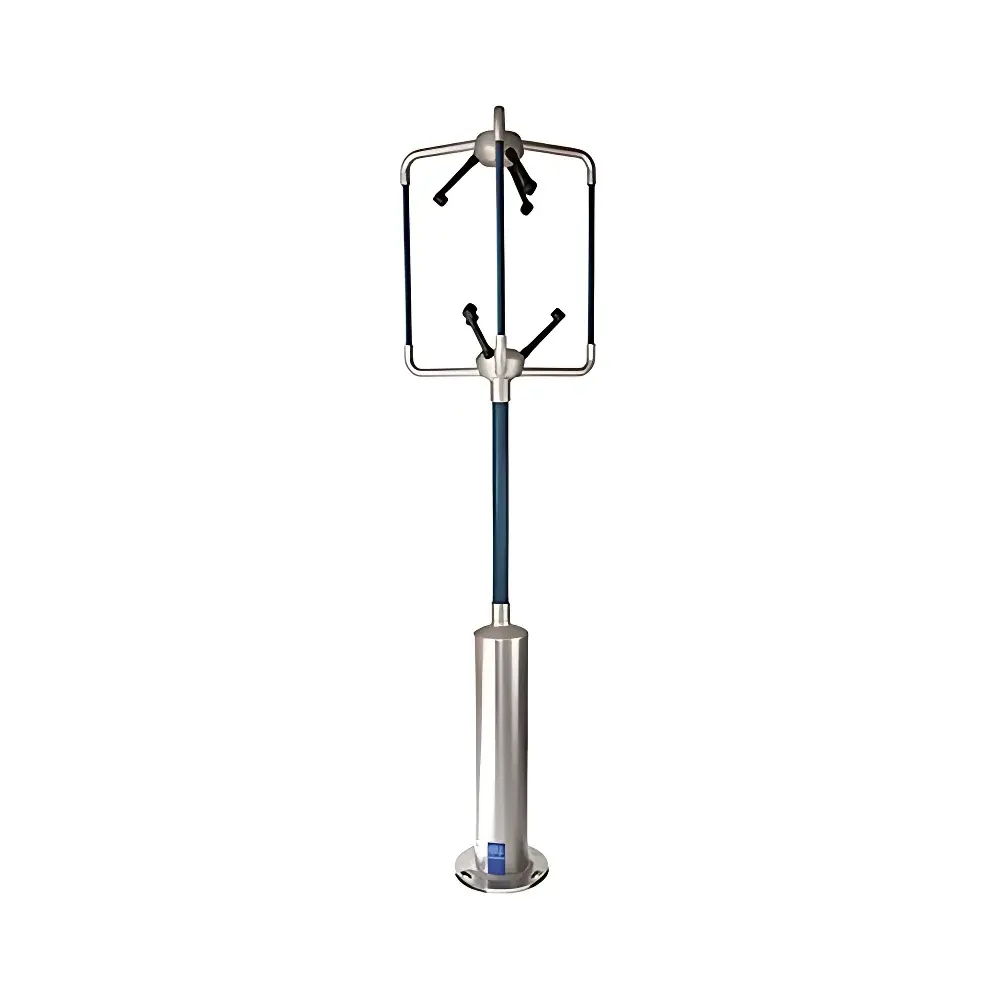
Gill R3-50 Research-Grade 3D Ultrasonic Anemometer
| Brand | Gill |
|---|---|
| Origin | United Kingdom |
| Model | R3-50 |
| Instrument Type | Ultrasonic Anemometer |
| Resolution | 0.01 m/s |
| Measurement Range | 0–45 m/s |
| Accuracy | ±1% of reading |
| Operating Temperature | −40 °C to +60 °C |
| Operating Humidity | 0–100% RH |
| Output Rate | 50 Hz |
| Output Parameters | U, V, W, Sonic Temperature (SOS) |
Overview
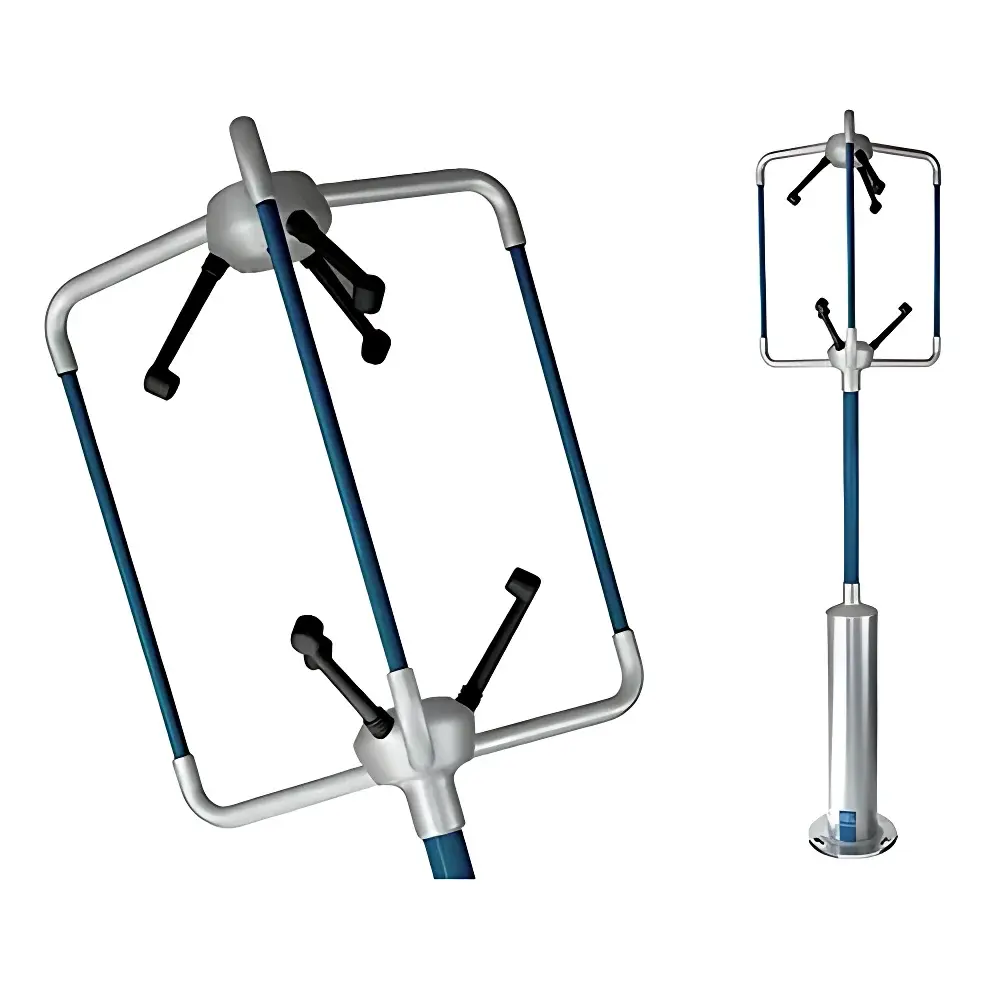
The Gill R3-50 is a research-grade, three-dimensional ultrasonic anemometer engineered for high-fidelity atmospheric turbulence measurement in eddy covariance (EC) systems and micrometeorological studies. It operates on the principle of time-of-flight ultrasonic transit measurement: four transducers arranged in a tetrahedral geometry emit and receive acoustic pulses across orthogonal paths, enabling direct computation of the three orthogonal wind velocity components (U, V, W) and sonic temperature (SOS) without moving parts. This solid-state architecture eliminates mechanical inertia and bearing wear—critical for resolving rapid turbulent fluctuations at frequencies up to 50 Hz. Designed for deployment in unattended field stations, flux towers, boundary-layer observatories, and airborne platforms, the R3-50 delivers continuous, phase-synchronized digital output with minimal latency and thermal drift compensation calibrated across its full operating range (−40 °C to +60 °C). Its measurement uncertainty conforms to the performance criteria specified in ISO 16622:2021 (Wind measurement — Requirements for ultrasonic anemometers used in eddy covariance applications) and supports traceable calibration protocols aligned with NPL (UK) and NIST-traceable reference standards.
Key Features
- True 3D wind vector resolution at 50 Hz native sampling rate—optimized for eddy covariance flux calculations requiring high temporal fidelity
- Integrated sonic temperature (SOS) output derived from mean acoustic speed, enabling simultaneous calculation of virtual heat flux without auxiliary thermistors
- Ruggedized hybrid housing combining aerospace-grade aluminum alloy structural frame with carbon fiber support arms—minimizing thermal mass and aerodynamic shadowing
- Low-power consumption design compatible with solar-battery remote deployments; configurable sleep/wake modes via RS-232 or SDI-12 interface
- Factory-calibrated sensitivity matrix with individual transducer pair corrections stored in non-volatile memory; optional on-site recalibration using Gill’s certified reference wind tunnel
- IP66-rated enclosure with hydrophobic transducer face coatings to mitigate rain-induced signal attenuation and ice adhesion under freezing fog conditions
Sample Compatibility & Compliance
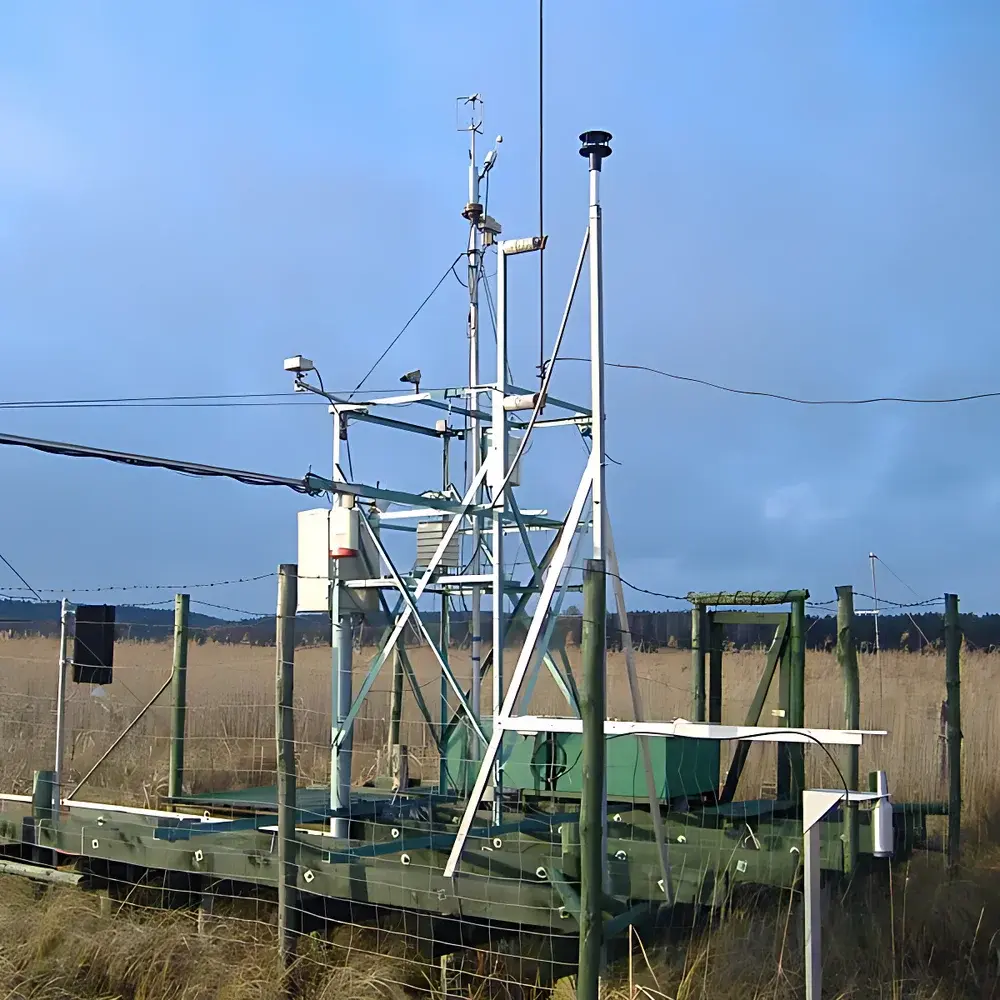
The R3-50 is validated for continuous operation across diverse environmental regimes—from Arctic tundra (−40 °C, high humidity, snow accumulation) to desert boundary layers (+60 °C, low relative humidity, dust loading). Its transducer geometry and signal processing algorithms comply with the geometric and spectral requirements of FLUXNET, AmeriFlux, and ICOS network protocols. The instrument meets IEC 61326-1:2013 (EMC for measurement equipment) and EN 60950-1:2006 (safety), and its data integrity architecture supports audit-ready logging per GLP/GMP-aligned field data management workflows. While not intrinsically rated for hazardous areas, it may be deployed in Zone 2 environments when installed with appropriate conduit and grounding per ATEX/IECEx guidelines.
Software & Data Management
Data acquisition and configuration are managed via Gill WindCom™ software (Windows/macOS), which provides real-time visualization of U/V/W/SOS streams, spectral analysis tools (FFT-based turbulence spectra), and automated QC flagging based on signal-to-noise ratio (SNR), cross-wind coherence, and transducer fault detection. Raw binary output (via RS-232, RS-485, or Ethernet TCP/IP) is fully compatible with Campbell Scientific CR-series dataloggers, LI-COR EddyPro®, and open-source platforms including PyFlux and EddyU. All firmware updates and calibration coefficient uploads are digitally signed and version-logged. Audit trails—including timestamped configuration changes, calibration events, and diagnostic logs—are exportable in CSV/NetCDF formats compliant with FAIR (Findable, Accessible, Interoperable, Reusable) data principles.
Applications
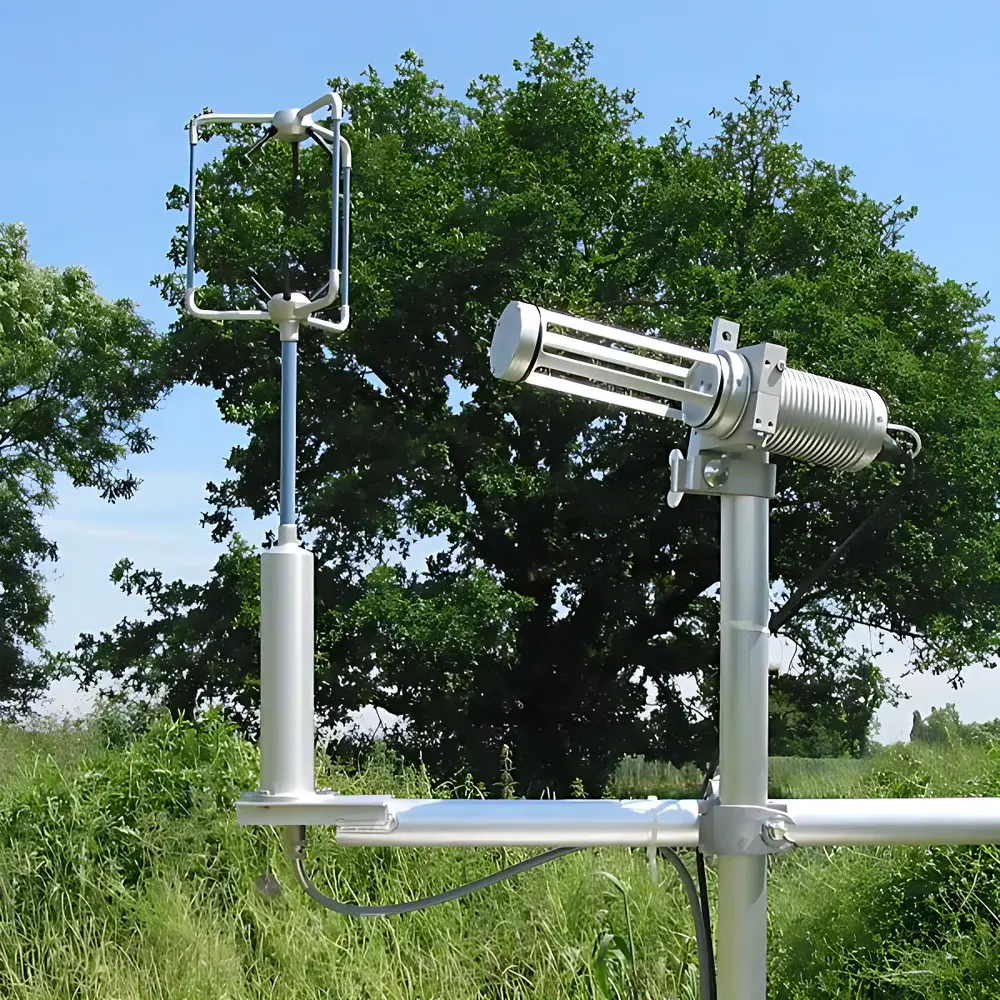
- Eddy covariance measurements of CO₂, H₂O, CH₄, and energy fluxes in ecosystem-scale carbon cycle research
- Boundary-layer profiling and turbulence kinetic energy (TKE) quantification in urban meteorology and wind resource assessment
- Validation of large-eddy simulation (LES) and numerical weather prediction (NWP) model outputs
- Wind turbine wake characterization and array optimization studies
- Volcanic plume dispersion modeling and industrial stack emission monitoring
- High-speed UAV-mounted turbulence sensing for atmospheric boundary layer mapping
FAQ
What is the recommended mounting orientation for optimal turbulence resolution?
Mount the R3-50 with its central axis vertically aligned and transducers oriented to minimize upstream obstruction; use Gill’s precision leveling base and azimuth alignment jig to ensure <±0.5° pitch/roll error.
Does the R3-50 require periodic recalibration in the field?
Annual factory recalibration is recommended for research-grade EC applications; field verification using zero-wind and known-velocity bench checks can be performed with Gill’s portable calibration kit (part no. CAL-R3-KIT).
Can the R3-50 operate submerged or in heavy rainfall?
No—it is IP66-rated for rain and dust resistance but not submersible; prolonged immersion or high-velocity water impact will compromise transducer coupling and acoustic path integrity.
Is sonic temperature output traceable to ITS-90?
Yes—SOS is converted to virtual temperature using the standard dry-air approximation and referenced to NPL-certified acoustic velocity standards; full uncertainty budget documentation is supplied with each unit.
How is data synchronization handled in multi-sensor EC systems?
The R3-50 supports PPS (pulse-per-second) input for hardware-level time alignment with co-located gas analyzers and dataloggers, ensuring sub-millisecond timestamp coherence across all flux variables.







