
Gill WindMaster 3D Ultrasonic Anemometer
| Brand | Gill |
|---|---|
| Origin | United Kingdom |
| Model | WindMaster |
| Instrument Type | Ultrasonic Anemometer |
| Resolution | 0.01 m/s |
| Measurement Range | 0–50 m/s |
| Accuracy | ±1.5% of reading |
| Operating Temperature | −40 °C to +70 °C |
| Operating Humidity | 5–100% RH |
| Output Frequency | 20 Hz (32 Hz optional) |
| Outputs | U, V, W velocity components, sonic temperature, speed of sound |
| Construction | Aluminum alloy and carbon fiber housing |
| Calibration | Optional traceable wind tunnel calibration per unit |
Overview
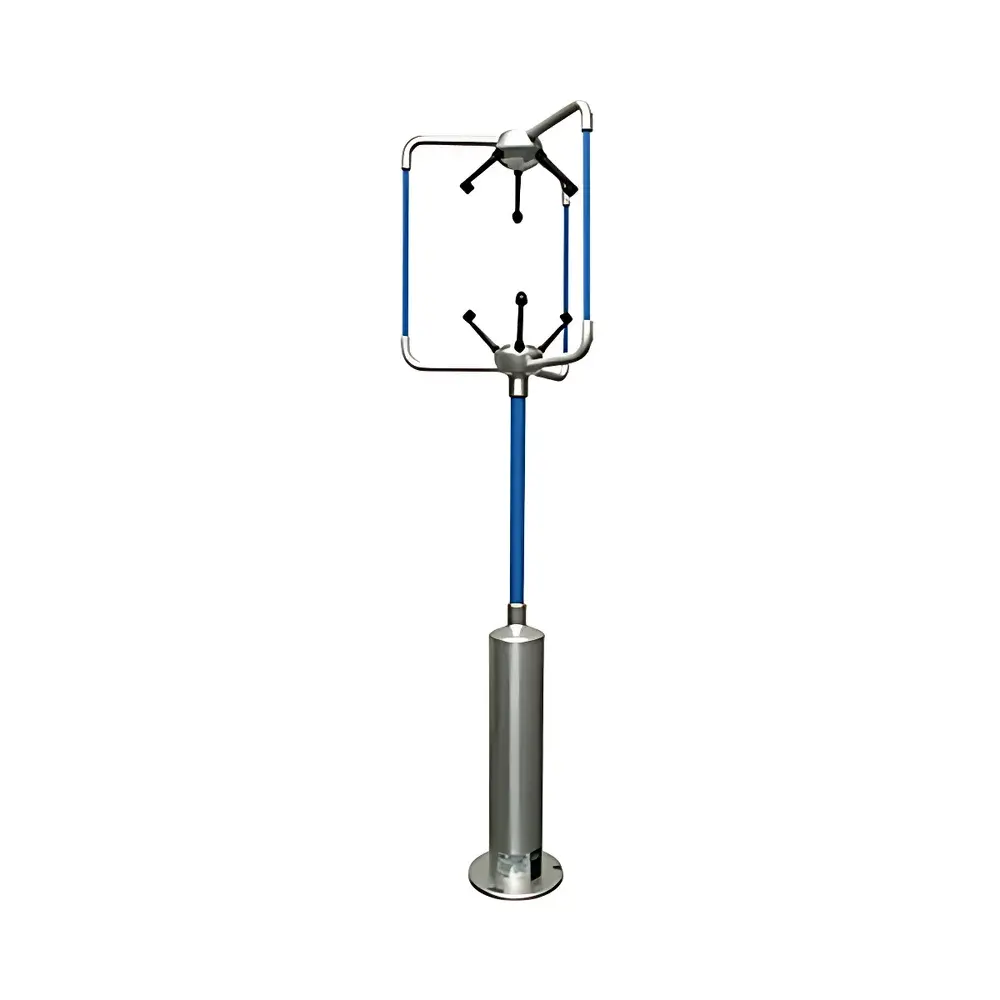
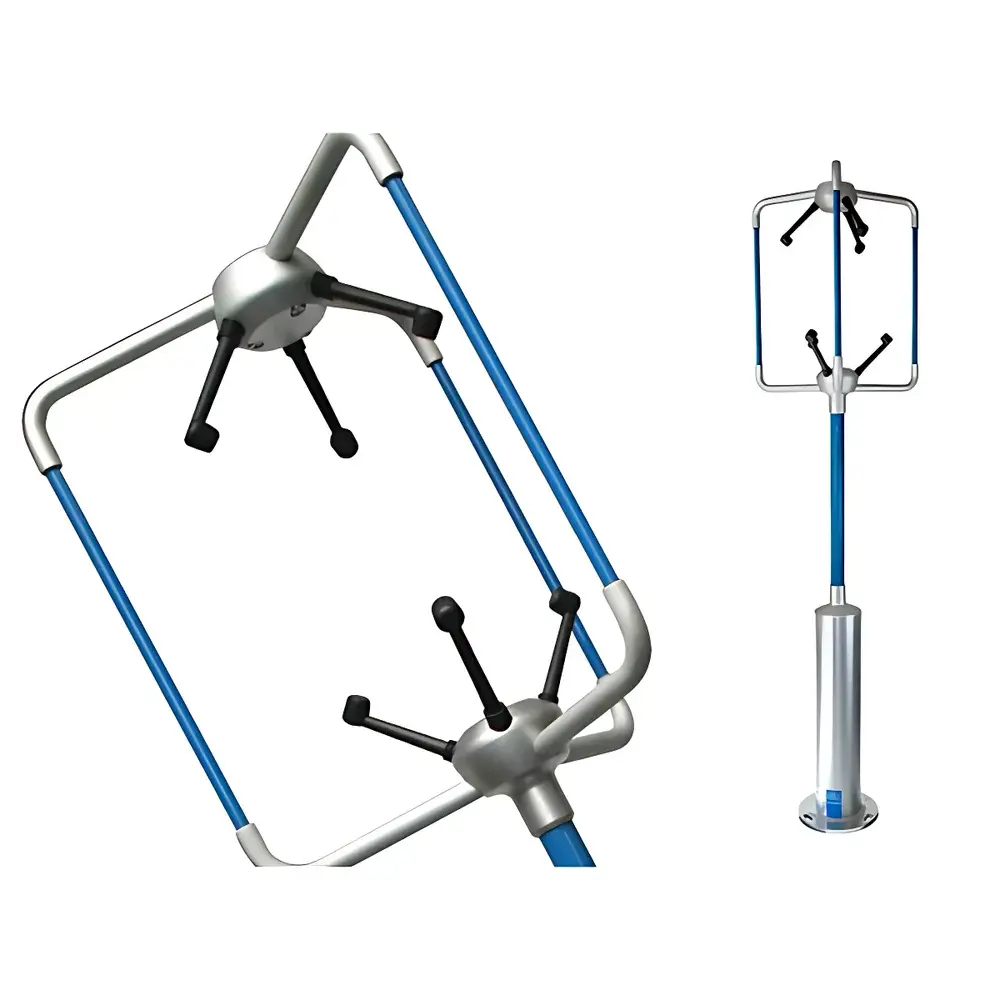
The Gill WindMaster is a research-grade 3D ultrasonic anemometer engineered for high-fidelity atmospheric turbulence measurement and eddy covariance flux analysis. It operates on the principle of time-of-flight ultrasonic velocimetry: four transducers arranged in a tetrahedral configuration emit and receive ultrasonic pulses across three orthogonal acoustic paths. By precisely measuring the transit time differences between opposing transducer pairs—both with and against the wind—the instrument calculates the three orthogonal wind velocity components (U, V, W) and sonic temperature simultaneously. This physics-based measurement eliminates moving parts, ensures zero mechanical wear, and delivers continuous, drift-free data essential for long-term environmental monitoring and boundary-layer meteorology.
Key Features
- Three-axis wind vector measurement at 20 Hz standard sampling rate (32 Hz available upon request), enabling resolution of turbulent kinetic energy spectra up to ~10 Hz under typical atmospheric conditions
- Integrated sonic temperature output derived from the mean speed of sound across all acoustic paths—calibrated independently of ambient pressure and humidity for improved thermodynamic consistency
- Robust mechanical architecture combining aerospace-grade aluminum alloy structural elements with carbon fiber support arms, minimizing thermal inertia and aerodynamic shadowing effects
- Factory-calibrated with NIST-traceable reference standards; optional individual unit calibration via Gill’s ISO/IEC 17025-accredited wind tunnel facility, providing documented uncertainty budgets per IEC 61000-4-30 and WMO Guide to Meteorological Instruments and Methods of Observation (CIMO Guide)
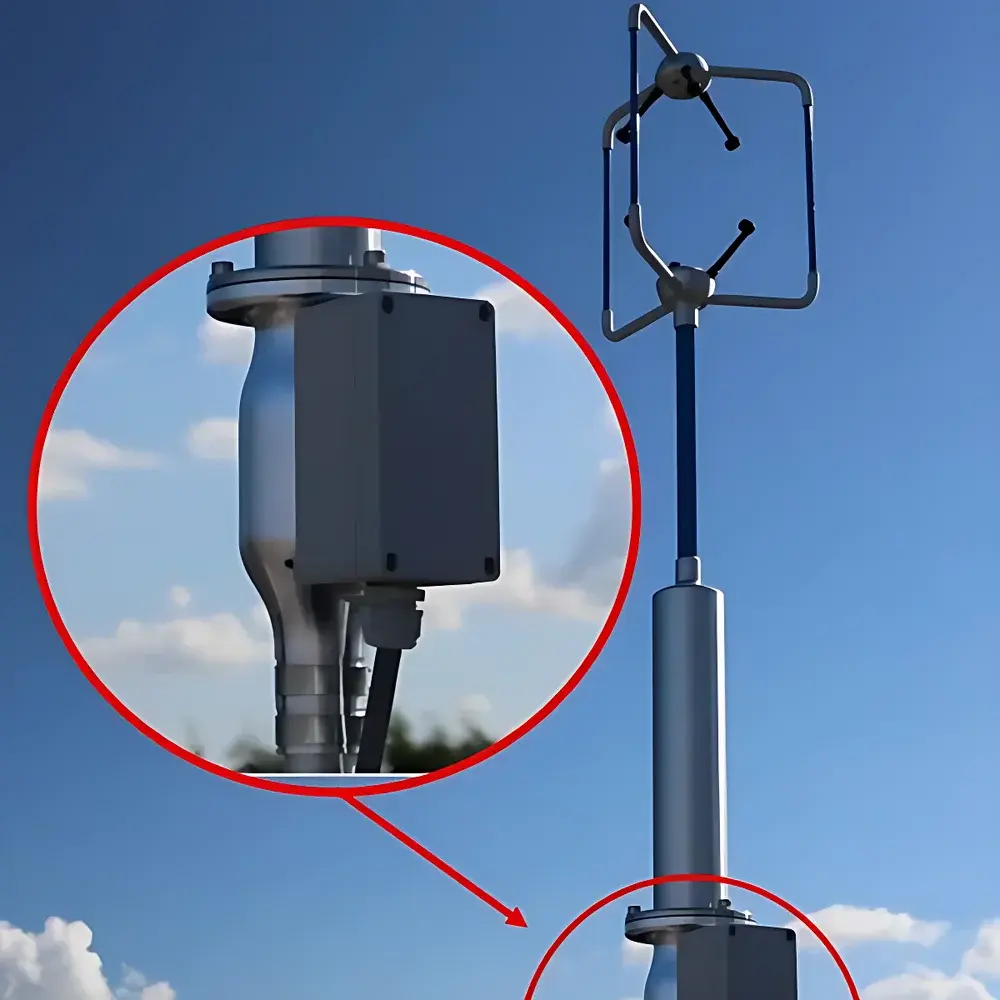
- Low-power consumption design suitable for solar-battery remote deployments; IP66-rated enclosure ensures operational integrity under rain, snow, dust, and coastal salt exposure
- Digital RS-232/RS-485 and analog voltage outputs (0–5 V or 0–10 V) support seamless integration with Campbell Scientific CR-series dataloggers, Delta-T DL2e, and other SCADA-compatible environmental acquisition systems
Sample Compatibility & Compliance
The WindMaster is designed for open-air deployment across diverse geophysical and anthropogenic environments—including urban canopies, forest edges, agricultural fields, offshore platforms, and industrial perimeters. Its non-rotating sensing geometry avoids flow distortion common in cup-and-vane instruments and enables accurate measurements within complex terrain where flow separation and vortex shedding occur. The device complies with key international standards for micrometeorological instrumentation: it meets the geometric and dynamic response requirements outlined in ISO 16452:2014 (Wind measurement—Ultrasonic anemometers—Performance requirements and test methods) and supports data quality protocols aligned with FLUXNET, AmeriFlux, and ICOS network specifications. All firmware and hardware configurations are compatible with QA/QC workflows required under EPA Method TO-11A and EC Regulation No. 852/2004 for environmental monitoring infrastructure.
Software & Data Management
Gill provides the WindCom software suite for real-time visualization, configuration, and diagnostic logging via USB or serial interface. Raw binary data streams are structured according to the Gill Binary Protocol (GBP), supporting direct ingestion into MATLAB, Python (via gillwind package), R, and LabVIEW environments. For regulatory compliance applications, the WindMaster integrates with third-party data acquisition platforms that implement audit-trail logging, electronic signatures, and 21 CFR Part 11-compliant user access control—ensuring traceability and data integrity throughout the measurement lifecycle. Metadata embedding (e.g., sensor serial number, calibration date, GPS timestamp) is supported in both ASCII and NetCDF-4 formats to facilitate FAIR (Findable, Accessible, Interoperable, Reusable) data practices.
Applications
- Eddy covariance flux towers for CO₂, H₂O, CH₄, and N₂O exchange studies in terrestrial and aquatic ecosystems
- Structural health monitoring of long-span bridges and high-rise buildings under wind loading, including vortex-induced vibration analysis
- Site assessment and performance validation for utility-scale wind farms and distributed turbine arrays
- Boundary layer profiling in urban meteorology and air quality modeling (e.g., dispersion of PM₂.₅ and NOₓ)
- Real-time ventilation control in intelligent building management systems (BMS), particularly in cleanrooms, laboratories, and pharmaceutical manufacturing facilities
- Aviation weather stations and runway wind shear detection networks compliant with ICAO Annex 3 and FAA Advisory Circular 150/5220-22B
FAQ
Does the WindMaster require routine recalibration?
While the solid-state ultrasonic design exhibits exceptional long-term stability, Gill recommends annual verification against a calibrated reference anemometer or periodic wind tunnel revalidation—especially when used in high-accuracy flux applications governed by FLUXNET Level 3 processing standards.
Can the WindMaster operate in icing conditions?
The instrument is rated for operation down to −40 °C and features hydrophobic transducer surfaces; however, active anti-icing heaters are not integrated. For persistent freezing fog or rime ice environments, external heated mounting solutions or periodic manual de-icing protocols must be implemented.
What is the minimum detectable wind speed and how is zero-wind behavior handled?
The resolution of 0.01 m/s applies across the full 0–50 m/s range. At near-zero wind speeds (<0.1 m/s), the instrument maintains stable vector output with noise-equivalent threshold below 0.03 m/s RMS, validated per WMO Class 1 anemometer criteria.
Is the sonic temperature output compensated for humidity effects?
Yes—the embedded algorithm applies first-principles correction using measured relative humidity and ambient pressure (when connected to a co-located barometer), yielding virtual temperature with an expanded uncertainty of ±0.15 K (k=2) over the full operating range.
Related Products







