
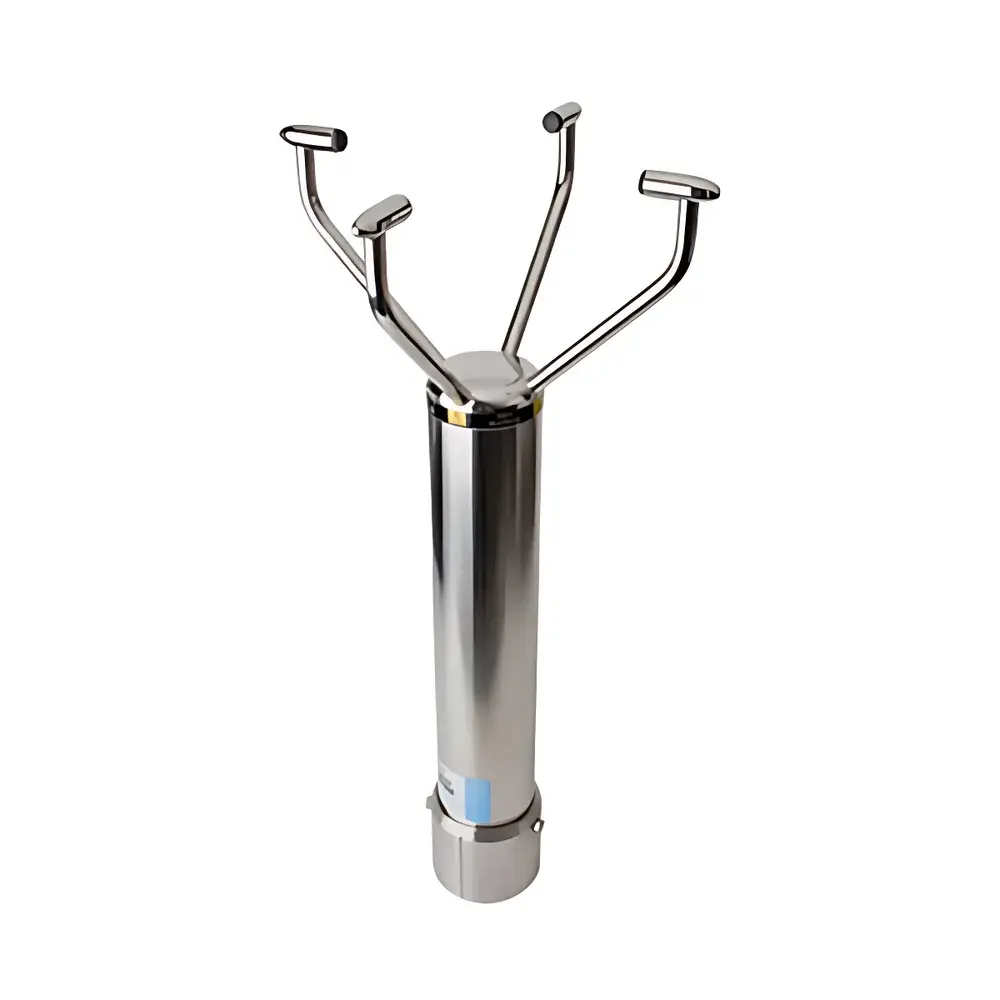
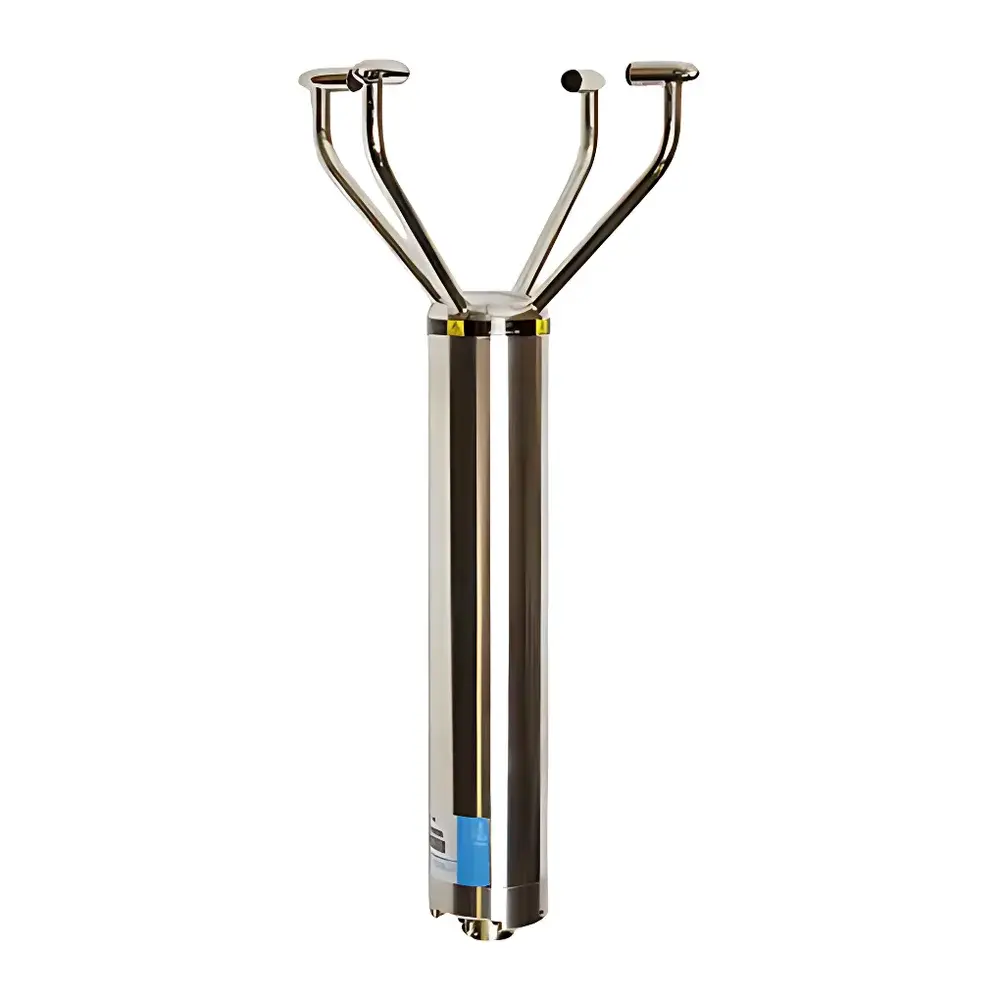
GILL WindObserver 75 Ultrasonic Anemometer
| Brand | GILL |
|---|---|
| Origin | United Kingdom |
| Model | WindObserver 75 |
| Instrument Type | Ultrasonic Anemometer |
| Resolution | 0.01 m/s |
| Measurement Range | 0–75 m/s |
| Accuracy | ±2% of reading |
| Operating Temperature | −55 °C to +70 °C |
| Operating Humidity | 0–100% RH |
| IP Rating | IP66 |
| Heating Power | 150 W (7 A @ 24 VAC/DC, ~1 W/cm²) |
| Output Interface | RS422/RS485 (half-duplex, multi-drop capable) |
| Wind Direction Range | 0–359° (continuous, no dead zone) |
| Calibration | NIST-traceable |
| Compliance | WMO Guide to Meteorological Instruments and Methods of Observation (WMO-No. 8, 7th Ed., 2008) |
Overview
The GILL WindObserver 75 Ultrasonic Anemometer is an industrial-grade, heated ultrasonic wind sensor engineered for high-fidelity measurement of wind speed and direction under extreme environmental conditions. Utilizing time-of-flight ultrasonic transit-time differential measurement across three orthogonal acoustic paths, the instrument calculates true 3D wind vectors without mechanical moving parts—eliminating wear, inertia lag, and ice-induced bias. Its 0–75 m/s wind speed range (0–168 mph) and continuous 0–359° azimuth resolution make it suitable for applications demanding robust performance at the upper operational limits of meteorological sensing—including offshore wind farms, polar research stations, aviation safety systems, and dynamic positioning on marine vessels. The integrated 150 W resistive heater ensures reliable operation in sub-zero environments down to −55 °C, preventing frost accumulation on transducer faces and maintaining acoustic coupling integrity.
Key Features
- Heated ultrasonic transducer array with 150 W thermal management (7 A @ 24 VAC/DC), delivering uniform surface heating (~1 W/cm²) to prevent icing and condensation
- Full-range wind speed measurement from 0 to 75 m/s with 0.01 m/s resolution and ±2% accuracy over the entire operating temperature span
- Continuous wind direction output (0–359°) with no mechanical dead zones or azimuthal ambiguity
- RS422/RS485 serial interface supporting multi-drop network topologies—enabling daisy-chained deployment of up to 32 sensors on a single bus with configurable addressing
- Real-time status codes embedded in data stream (e.g., heater active, signal quality index, transducer fault flags) for diagnostic traceability and data validity assurance
- Stainless steel (AISI 316) housing rated IP66 for ingress protection against dust and high-pressure water jets
- NIST-traceable factory calibration with documented uncertainty budget and certificate of conformance
- Configurable averaging modes: vector-based sliding average (user-defined interval) and 3-second gust detection aligned with WMO-No. 8 (7th Edition, 2008)
Sample Compatibility & Compliance
The WindObserver 75 is designed for direct exposure to unfiltered ambient air across diverse operational domains—from cryogenic Antarctic observatories to humid tropical ports. Its non-rotating, solid-state architecture eliminates sensitivity to particulate loading, salt spray, or turbulent flow distortion common in cup-and-vane anemometers. The device complies with the observational requirements defined in the World Meteorological Organization’s Guide to Meteorological Instruments and Methods of Observation (WMO-No. 8, 7th Ed., ISBN 978-92-63-10008-5), specifically meeting criteria for “Class 1” wind sensors used in aviation, renewable energy, and climate monitoring networks. While not intrinsically certified for hazardous locations, its stainless steel construction and sealed electronics support deployment in oil & gas offshore platforms per IEC 60079-0 general requirements. No regulatory certification for FDA, ISO 13485, or GLP/GMP is applicable, as the instrument serves environmental data acquisition—not clinical or pharmaceutical process control.
Software & Data Management
Data output follows ASCII-based NMEA-0183-compatible protocol over RS422/RS485, enabling seamless integration with SCADA systems, PLCs, and third-party meteorological software (e.g., Campbell Scientific LoggerNet, DTN MetView, or custom Python/C++ DAQ applications). Each data frame includes timestamped wind speed (m/s), wind direction (°), heater status, signal-to-noise ratio (SNR), and diagnostic flags—facilitating automated QA/QC filtering. Firmware supports configurable baud rates (up to 115.2 kbps), parity, and message intervals (1–10 Hz default). Though GILL does not provide proprietary cloud-hosted software, the open communication protocol permits full audit trail implementation in validated environments compliant with 21 CFR Part 11 when paired with appropriate data acquisition infrastructure (e.g., secure OPC UA servers with electronic signature and change logging).
Applications
- Airport wind shear and microburst detection systems for Category III precision approach support
- Offshore wind turbine yaw control and power curve validation under high-wind, icing-prone conditions
- Structural health monitoring of tall buildings, bridges, and cable-stayed towers during extreme wind events
- Dynamic positioning (DP) reference sensors on survey vessels and FPSOs operating in high-latitude seas
- Long-term climatological monitoring in polar regions (e.g., NSF-funded Antarctic field camps)
- Traffic management in road/rail tunnels where piston-effect winds require real-time velocity feedback
- Port authority meteorological networks supporting vessel berthing and crane operation safety protocols
FAQ
Does the WindObserver 75 meet WMO Class 1 specifications for wind measurement?
Yes—the sensor satisfies the performance thresholds for Class 1 anemometers as defined in WMO-No. 8 (7th Ed.), including response time, directional accuracy, and low-wind threshold behavior.
Can multiple WindObserver 75 units be connected to a single data logger?
Yes—its RS485 interface supports multi-drop configurations with up to 32 devices on one bus using Modbus RTU or custom ASCII framing.
Is the heater power consumption adjustable?
No—the 150 W heater operates automatically based on internal temperature and humidity thresholds; manual override is not supported.
What is the expected service life under continuous operation in Arctic conditions?
Field deployments exceeding 10 years have been reported in Greenland and Antarctica, provided routine visual inspection and cleaning of transducer faces are performed annually.
Is firmware update capability available in-field?
Yes—firmware upgrades can be performed via RS485 using GILL-provided utilities and a Windows-based configuration tool; no hardware modification is required.







