
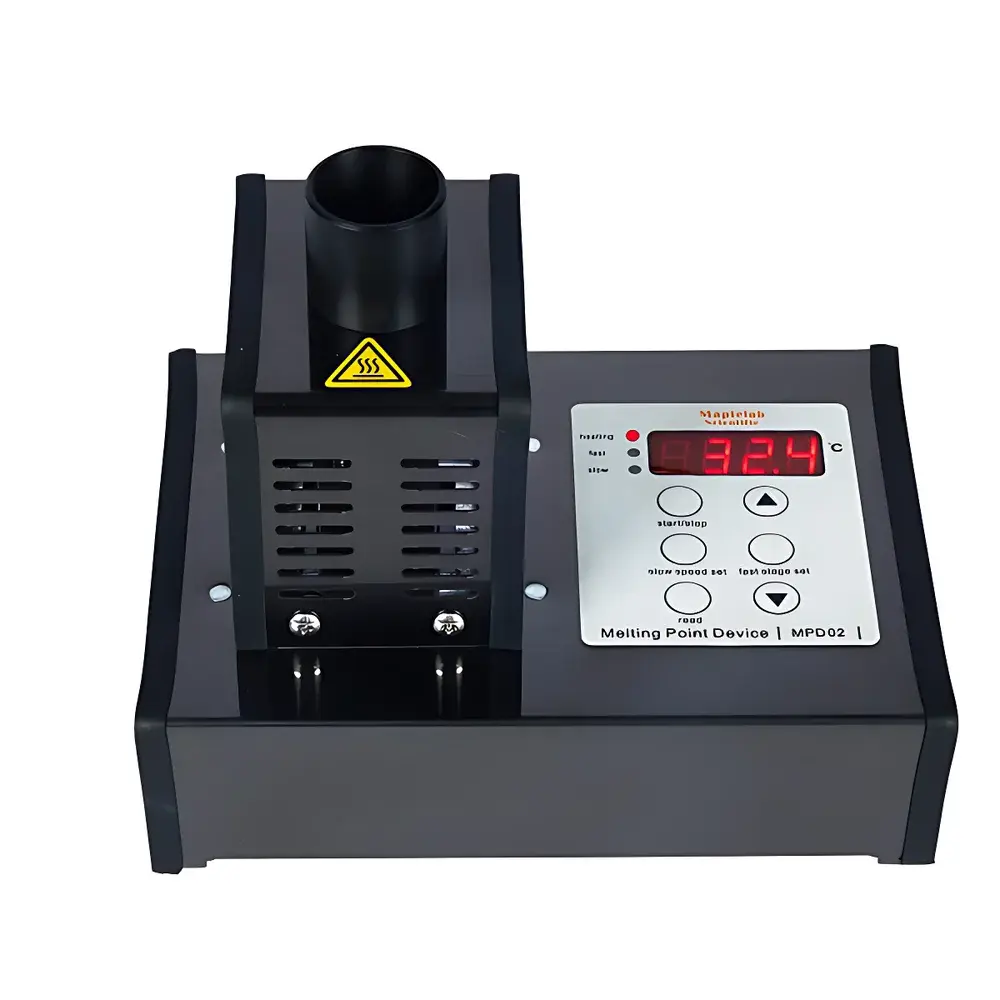
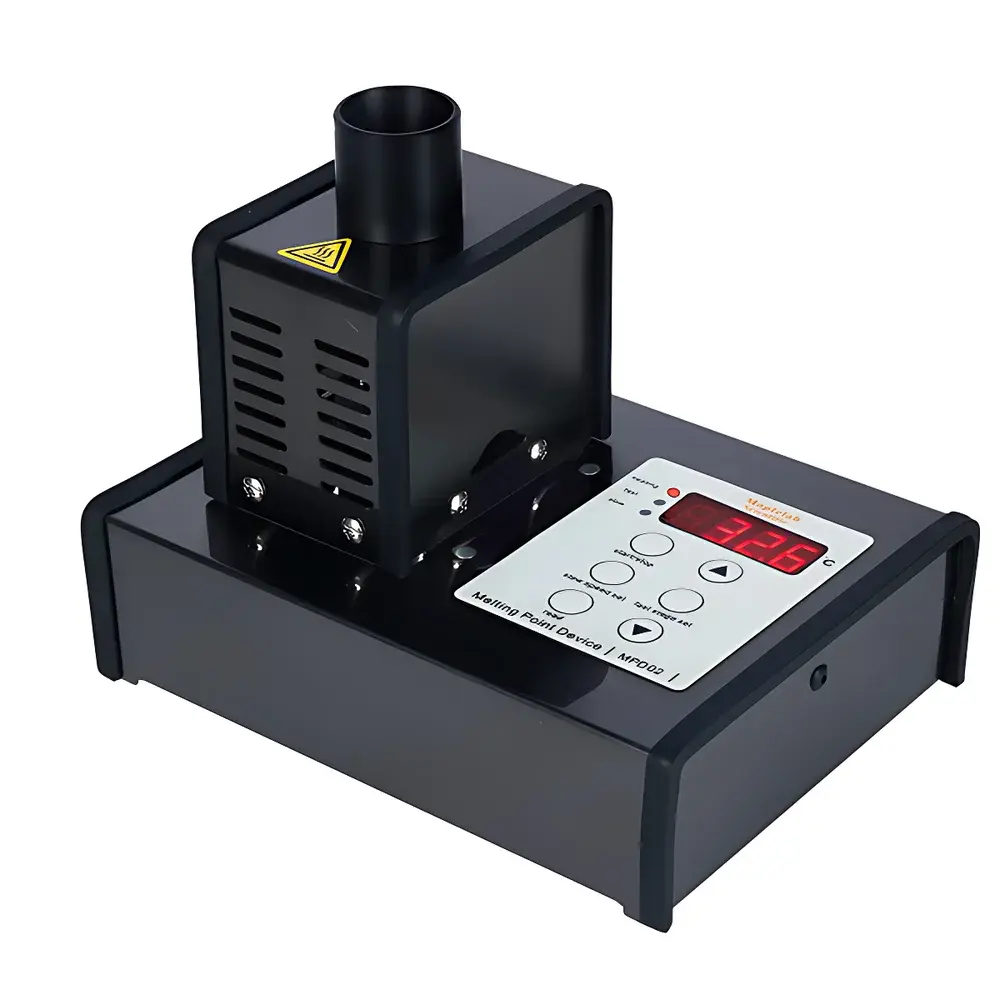
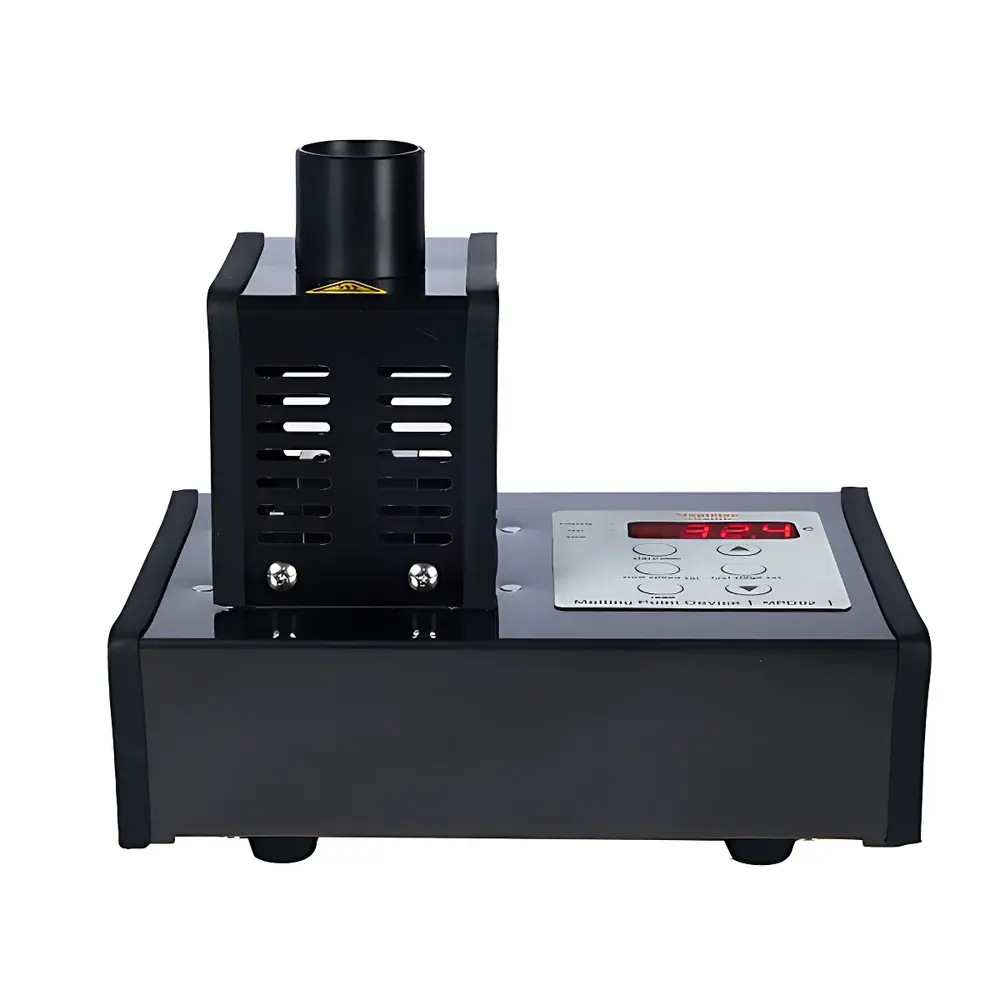
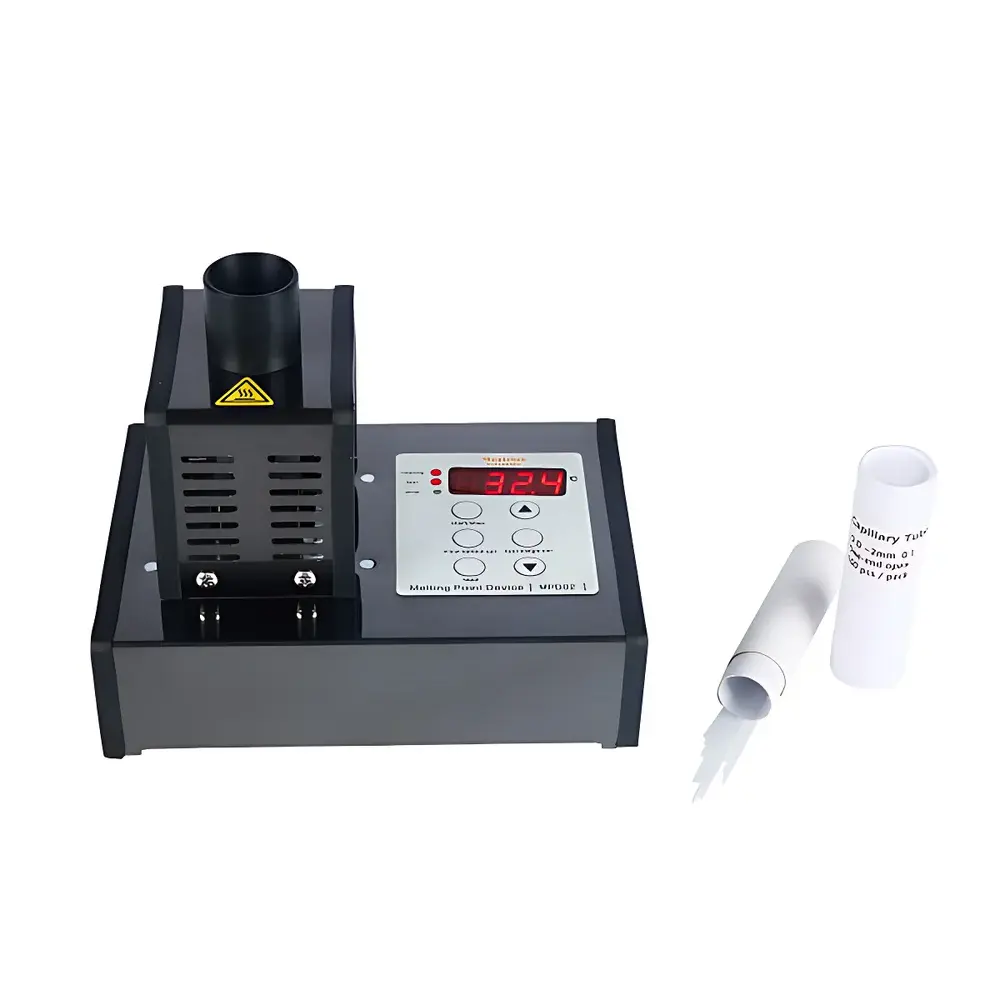
GLTlab MPD03-SS Digital Capillary Melting Point Apparatus
| Brand | GLTlab |
|---|---|
| Origin | Guangdong, China |
| Manufacturer Type | Manufacturer |
| Model | MPD03-SS |
| Temperature Range | Ambient to 400 °C |
| Heating Rate | 20 °C/min |
| Temperature Repeatability | ±0.5 °C |
| Temperature Accuracy | ±0.1 °C |
| Capillary Diameter | 2 mm |
| Sample Capacity | 3 samples |
| Temperature Resolution | 0.1 °C |
| Display | 4-digit LED |
| Calibration Function | Yes |
| Data Logging | No |
| Dimensions (W×D×H) | 160 × 220 × 170 mm |
| Net Weight | 2 kg |
| Power Supply | 120/230 V, 50 Hz, 75 W |
Overview
The GLTlab MPD03-SS is a precision-engineered digital capillary melting point apparatus designed for reliable, reproducible determination of solid-phase transition temperatures in organic and inorganic compounds. Based on the standardized capillary tube method (ASTM D1519, ISO 6383-1, USP & Ph. Eur. general chapter 2.2.14), the instrument heats a sealed capillary containing a finely packed crystalline sample at a controlled linear rate while optically monitoring the onset and completion of melting via an integrated high-contrast viewing system. Unlike analog or semi-automatic units, the MPD03-SS employs microprocessor-controlled PID temperature regulation to maintain thermal stability across its full operating range (ambient to 400 °C), enabling consistent detection of both sharp and broad melting intervals with minimal operator intervention.
Key Features
- Triple-sample simultaneous measurement capability — improves throughput without compromising thermal uniformity between positions
- PID-regulated heating system with programmable ramp rate up to 20 °C/min, ensuring compliance with standard test protocols requiring specific heating profiles
- High-accuracy temperature control: ±0.1 °C absolute accuracy and ±0.5 °C repeatability under routine laboratory conditions
- 0.1 °C temperature resolution displayed on a clear 4-digit LED screen, supporting precise manual endpoint identification
- Dedicated calibration mode with traceable reference standards (e.g., pure caffeine, indium, or tin) to support internal quality assurance procedures
- Compact benchtop footprint (160 × 220 × 170 mm) and low power consumption (75 W) suitable for shared analytical labs and QC environments
- Optimized optical path for direct visual observation through built-in magnifying lens — no external microscope required for routine analysis
Sample Compatibility & Compliance
The MPD03-SS accommodates standard 1–2 mm outer-diameter glass capillaries (typically 100 mm length, 1 mm inner diameter), compatible with widely adopted sample preparation practices per pharmacopoeial guidelines. It supports crystalline solids including APIs, polymers, metal salts, and small-molecule organics. While the unit does not include automated image capture or digital video recording, its thermal performance meets the essential metrological requirements for GLP-compliant documentation when used within validated SOPs. The instrument conforms to IEC 61010-1 safety standards for electrical equipment used in laboratory environments and supports traceable calibration against NIST-traceable reference materials.
Software & Data Management
The MPD03-SS operates as a standalone hardware platform with no embedded software stack or network connectivity. All operational parameters—including setpoint temperature, ramp rate, and hold time—are configured manually via front-panel controls. Temperature readings are displayed in real time but are not stored internally nor exportable via USB, RS-232, or Ethernet interfaces. Users intending to meet FDA 21 CFR Part 11 or EU Annex 11 data integrity requirements must implement external documentation workflows, such as manual entry into LIMS or electronic lab notebooks, supported by contemporaneous handwritten records and calibration logs.
Applications
- Pharmaceutical quality control: identity verification and purity assessment of active pharmaceutical ingredients (APIs) and excipients
- Chemical manufacturing: batch release testing of intermediates and final products per internal specifications
- Academic research: characterization of novel synthetic compounds, polymorph screening, and thermal stability profiling
- Materials science: evaluation of polymer crystallinity, eutectic behavior in alloy precursors, and phase diagram validation
- Regulatory submissions: generation of melting point data aligned with ICH Q5C, USP & EP monograph requirements
FAQ
Does the MPD03-SS support automatic endpoint detection?
No. Melting point determination relies on visual observation through the integrated optical viewer; no image analysis or algorithmic endpoint recognition is implemented.
Can the instrument be calibrated using certified reference standards?
Yes. The built-in calibration function allows user-initiated adjustment using traceable standards such as indium (156.6 °C), tin (231.9 °C), or bismuth (271.4 °C).
Is the heating block design optimized for uniform temperature distribution across all three sample positions?
Yes. The aluminum heating block features symmetric geometry and dual-sensor feedback to minimize inter-channel thermal deviation (<0.3 °C at 200 °C).
What capillary types are recommended for optimal results?
Standard wall-thickness borosilicate capillaries (1.0 mm ID, 2.0 mm OD, 100 mm length) filled to 3–5 mm height with densely packed, dry sample powder.
Does the unit comply with GMP documentation requirements?
It provides the necessary thermal performance and calibration traceability but requires supplementary procedural controls (e.g., written SOPs, audit trails, and manual record retention) to fulfill full GMP compliance.



