
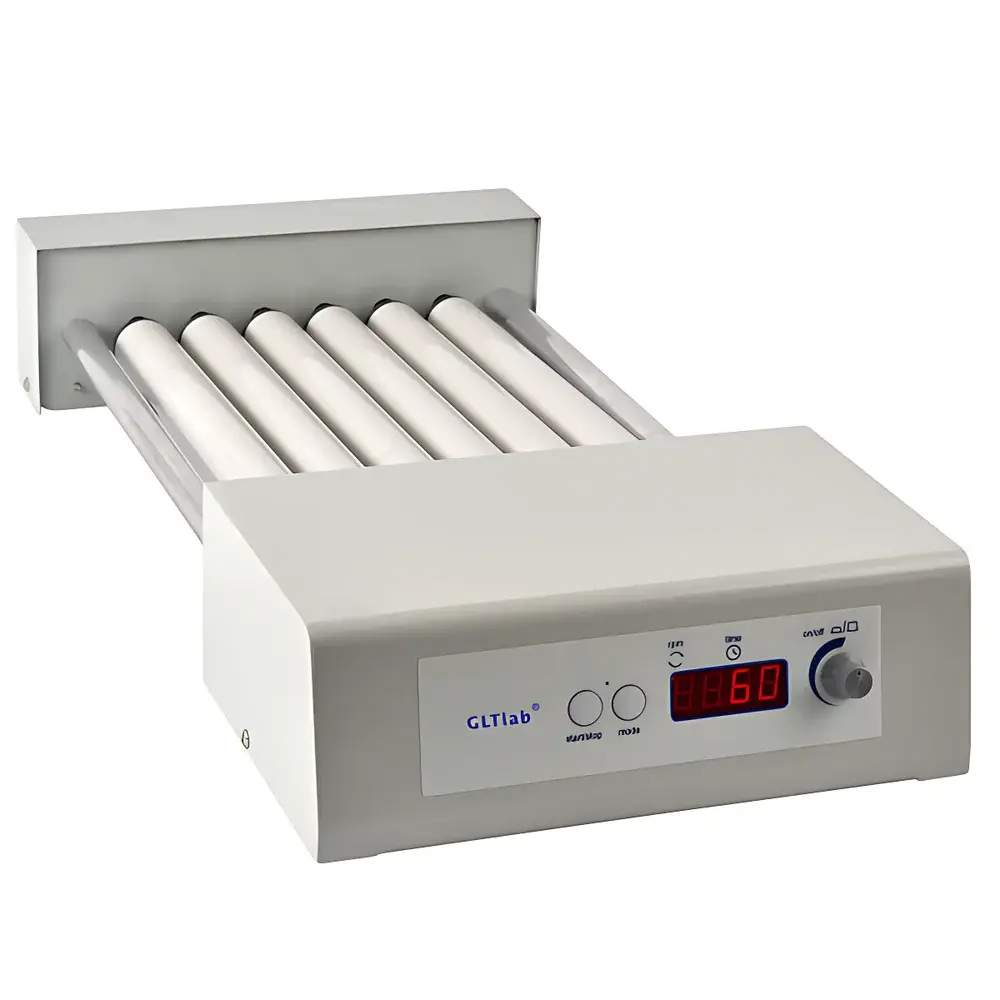
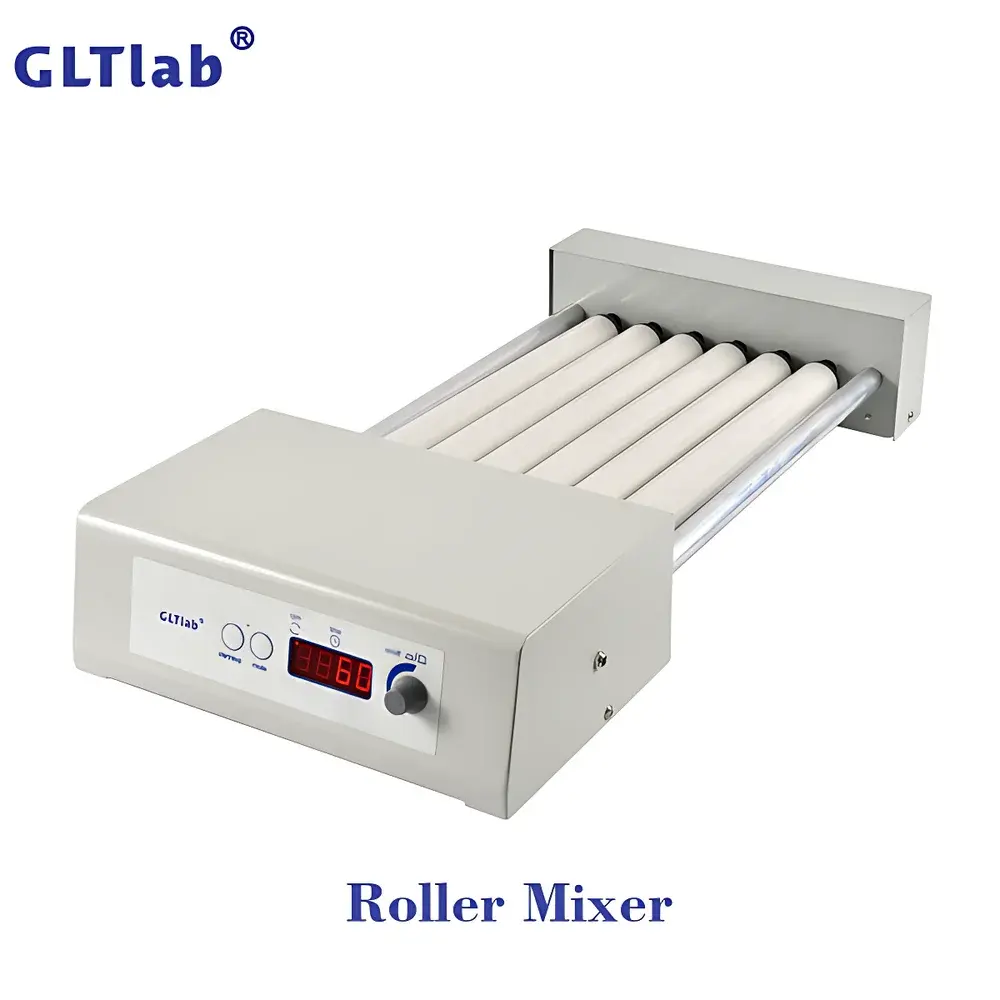
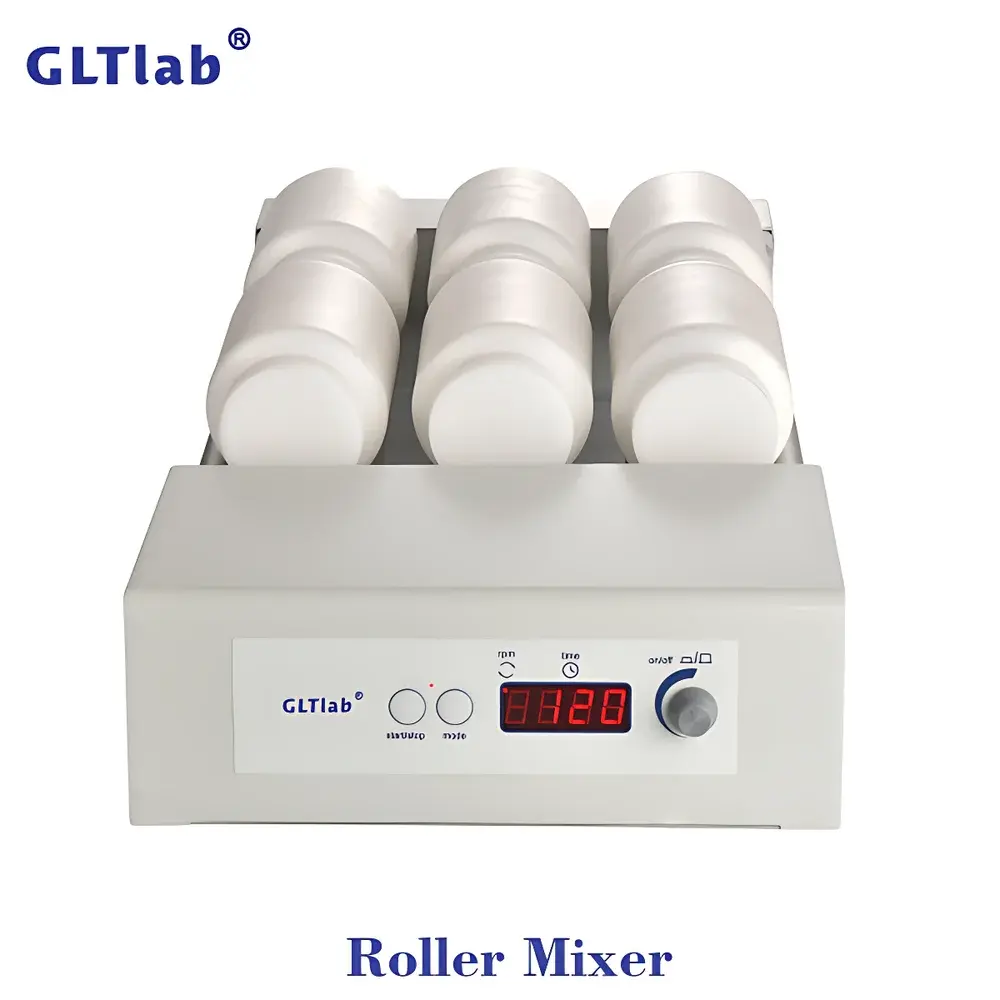
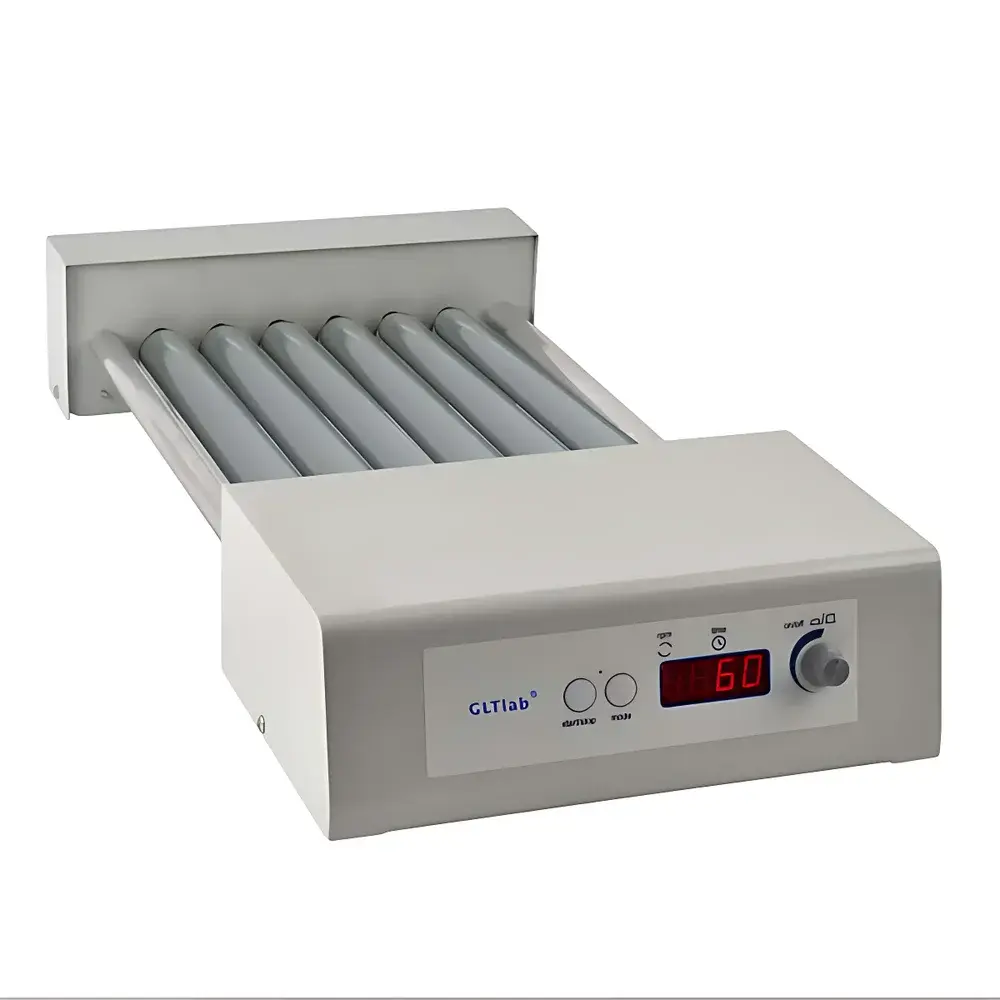
GLTLab MTR2D 6-Axis Programmable Roller Mixer
| Brand | GLTLab |
|---|---|
| Origin | Guangdong, China |
| Manufacturer Type | Direct Manufacturer |
| Model | MTR2D |
| Drive Motor | Brushless DC |
| Control System | Microprocessor-Based Digital Controller |
| Display | LED Digital Interface |
| Speed Range | 5–300 rpm |
| Direction Control | Forward/Reverse & Alternating Rotation |
| Timer Function | Up to 99 hours |
| Axis Configuration | 6 fixed-position rollers |
| Load Capacity | 10 kg (max) |
| Construction Material | Optional 304 stainless steel frame and rollers |
| Compliance | Designed for GLP-compliant labs |
Overview
The GLTLab MTR2D is a precision-engineered 6-axis programmable roller mixer designed for reproducible, low-shear homogenization of viscous pastes, slurries, and heterogeneous suspensions in battery R&D, fuel cell development, and advanced materials laboratories. Operating on the principle of continuous 360° orbital rolling—where sample containers are mounted across six synchronized rotating shafts—the MTR2D induces gentle yet effective tumbling motion without vortexing, sedimentation, or mechanical shearing. This kinematic profile ensures uniform dispersion of solid particles (e.g., LiFePO₄, graphite, Pt/C catalysts) within polymeric binders (e.g., PVDF, CMC/SBR) and solvent systems (e.g., NMP, water), preserving particle integrity while maximizing interfacial contact. Unlike orbital shakers or vortex mixers, the MTR2D eliminates localized high-shear zones and avoids air entrapment—critical for electrode slurry stability and coating consistency in lithium-ion battery manufacturing.
Key Features
- Microprocessor-controlled brushless DC drive system ensuring stable speed regulation across the full 5–300 rpm range with <±1 rpm repeatability
- Six rigidly mounted, parallel rollers with adjustable angular offset (0° pure rolling or ±3° oscillatory mode) to accommodate both low-viscosity solutions and high-viscosity battery slurries (up to ~10,000 mPa·s)
- LED digital interface with real-time display of setpoint speed, elapsed time, remaining timer duration, and rotation direction status
- Programmable bidirectional sequencing: users may define forward-only, reverse-only, or alternating intervals (e.g., 10 min forward → 5 min reverse) within a single 99-hour cycle
- Structural frame and roller shafts available in electropolished 304 stainless steel—resistant to NMP, DMF, acidic electrolyte precursors, and alkaline aqueous dispersions
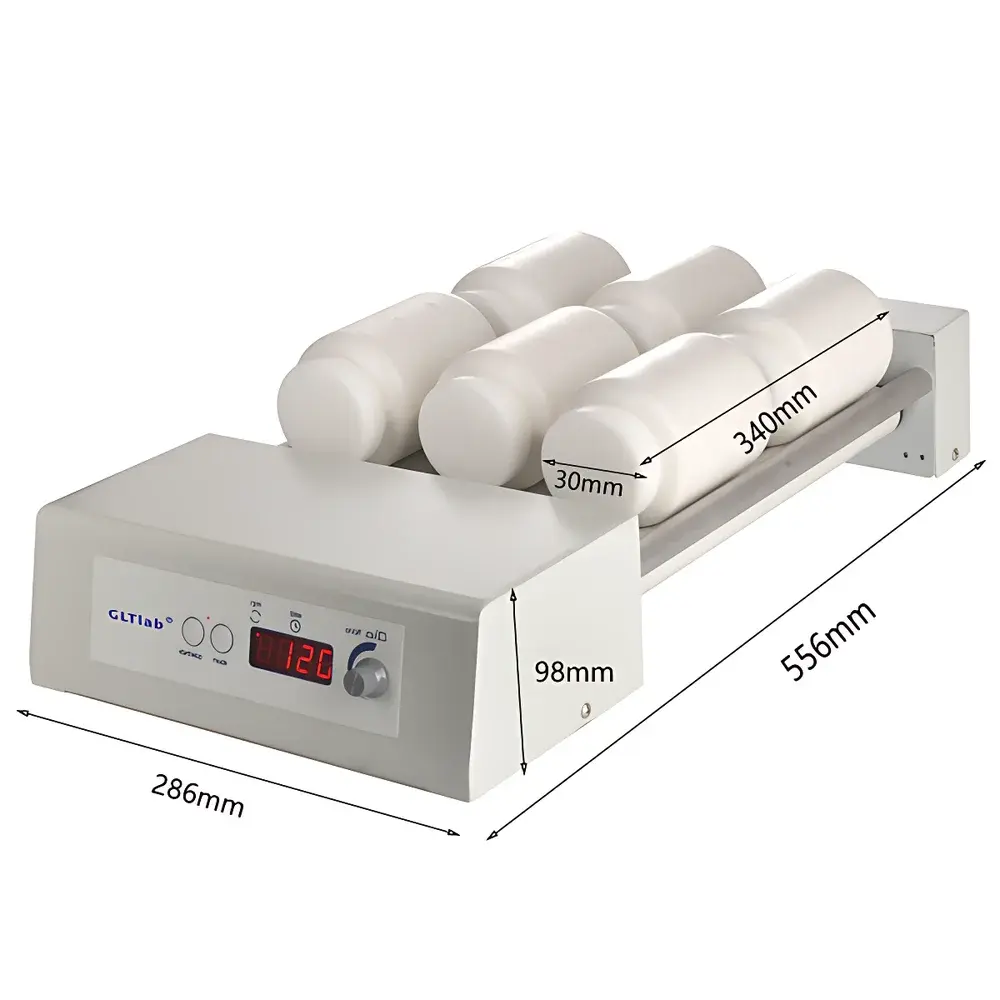
- Compact footprint (W × D × H ≈ 420 × 380 × 220 mm) optimized for fume hood integration or benchtop deployment in space-constrained cleanrooms
- No external adapters required: roller spacing accommodates standard cylindrical vessels (15–100 mL vials, 50–500 mL jars, and custom-sized pouches up to Ø80 mm × 180 mm)
Sample Compatibility & Compliance
The MTR2D supports mixing of sealed and vented containers including borosilicate glass vials, PTFE-lined screw-cap jars, aluminum-laminated pouches, and disposable polypropylene tubes. Its non-contact, gravity-driven mixing mechanism prevents cross-contamination and eliminates risk of seal failure under prolonged operation. The device complies with general laboratory safety standards (IEC 61010-1) and is engineered for use in environments adhering to ISO/IEC 17025 quality management requirements. While not certified for FDA 21 CFR Part 11 out-of-the-box, its deterministic control logic, non-volatile parameter storage, and absence of cloud connectivity enable straightforward validation for GMP-aligned pilot-scale battery slurry preparation workflows.
Software & Data Management
The MTR2D operates via embedded firmware with no PC dependency. All operational parameters—including speed, direction sequence, dwell times, and total runtime—are stored in non-volatile memory and retained after power cycling. For traceability, users may manually log batch-specific settings in lab notebooks or LIMS-integrated electronic records. Optional RS-232 serial output (available upon request) permits external data capture for audit trails, supporting GLP documentation protocols where timestamped mixing logs are required for electrode slurry qualification.
Applications
- Lithium-ion battery electrode slurry formulation: homogenizing cathode (NMC, LFP) or anode (graphite, silicon composite) powders with polymeric binders and conductive additives in NMP or aqueous media
- Fuel cell membrane-electrode assembly (MEA) prep: dispersing Pt/C or Fe-N-C catalysts into perfluorosulfonic acid (PFSA) solutions without agglomeration or carbon support degradation
- Pre-mixing of solid-state battery precursors: blending sulfide-based electrolytes (e.g., Li₆PS₅Cl) with active materials under inert atmosphere-compatible vessel configurations
- Cryogenic sample conditioning: gentle thawing and resuspension of frozen battery slurry aliquots prior to rheological or particle size analysis
- Pharmaceutical suspension reconstitution: low-shear redispersion of lyophilized biocatalysts or nanoparticle drug carriers in controlled-temperature environments
FAQ
What container types are compatible with the MTR2D?
Standard cylindrical containers with diameters between 15 mm and 80 mm and heights up to 180 mm—including glass vials, PP/PC tubes, stainless steel jars, and laminated pouches—are fully supported without adapters.
Can the MTR2D operate under inert gas or vacuum conditions?
Yes—when used with appropriately rated sealed vessels (e.g., crimp-top vials with butyl rubber septa or welded aluminum pouches), the unit maintains process integrity during glovebox or vacuum-desiccator integration.
Is speed calibration traceable to national standards?
While the device does not include factory-issued NIST-traceable calibration certificates, its brushless motor controller and optical encoder feedback loop allow user-performed verification using handheld tachometers compliant with ISO 27888.
Does the MTR2D support variable-angle roller positioning?
The standard MTR2D configuration features fixed-axis geometry optimized for pure rolling; angular offset functionality (±3° oscillation) is available as a configurable option at time of order.
How is maintenance performed on the roller drive system?
The brushless DC motor and planetary gearhead require no routine lubrication; only periodic visual inspection of roller surface finish and cleaning of debris from shaft grooves using lint-free wipes and IPA is recommended.



