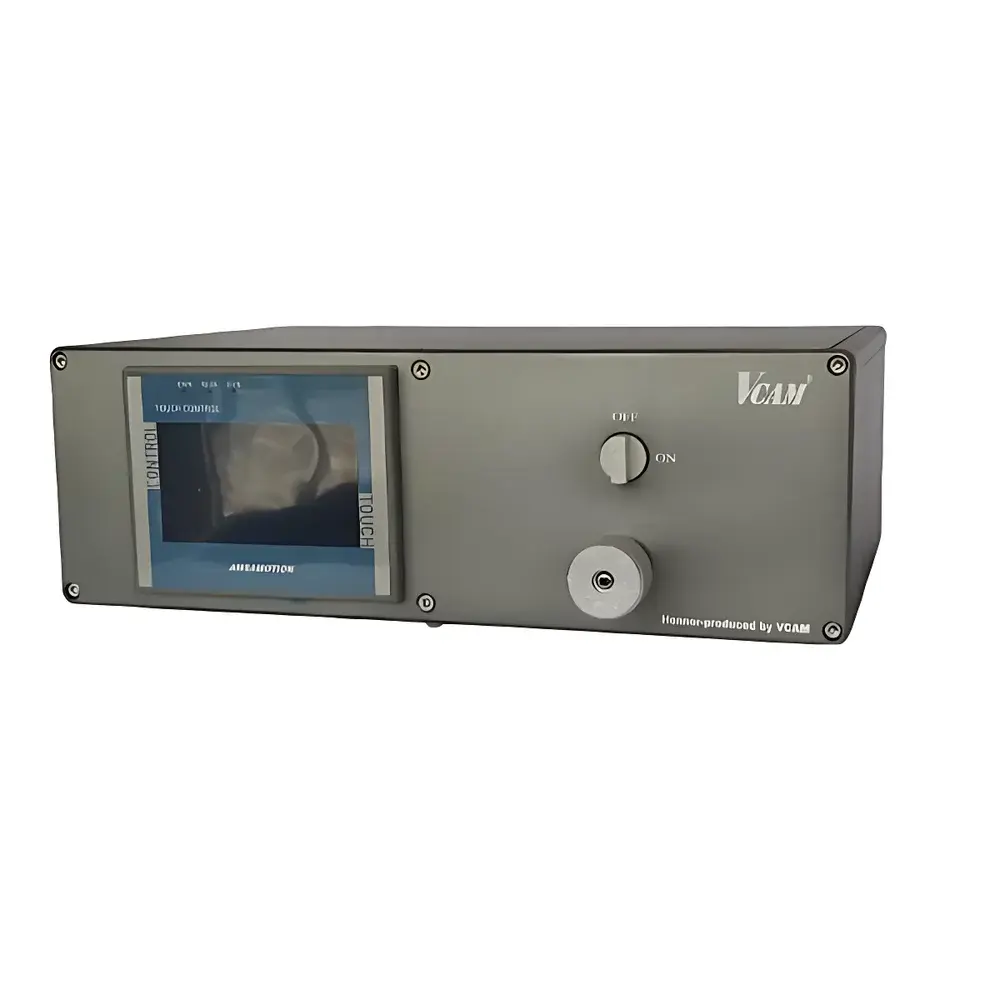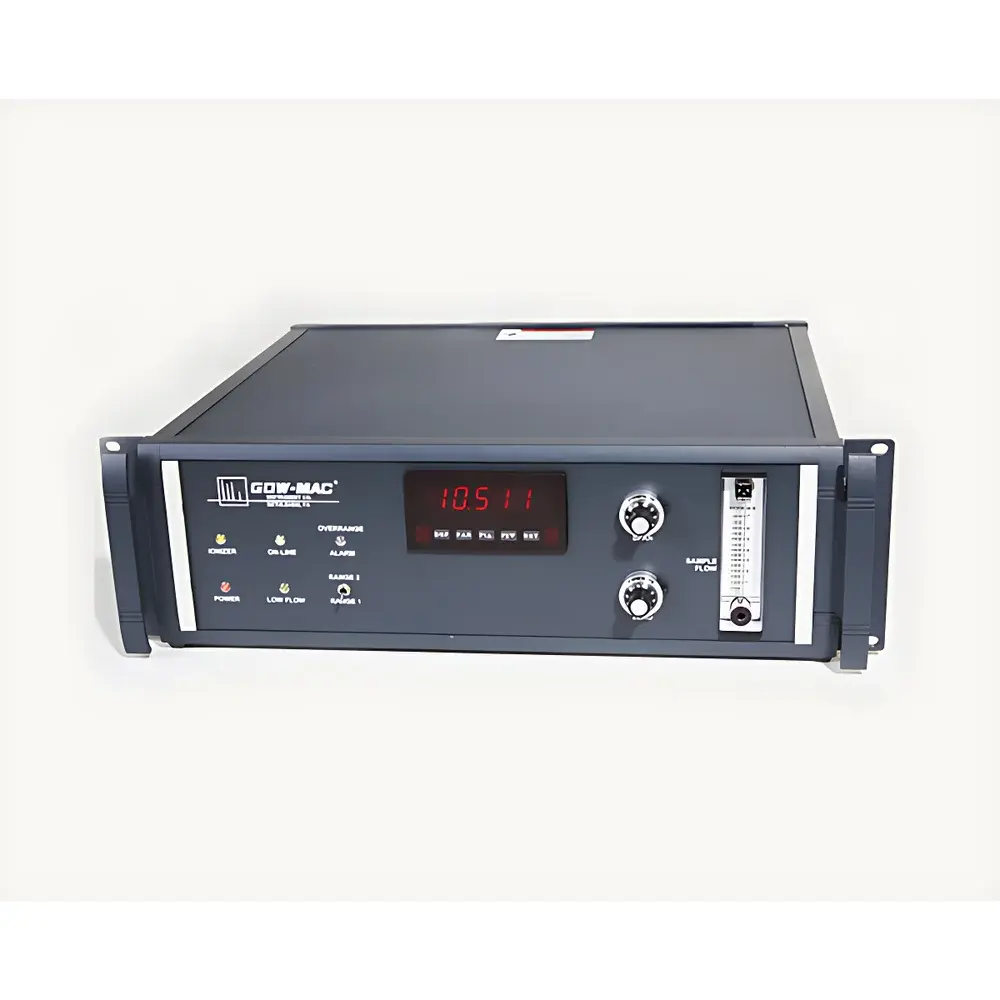
GOW-MAC 1400 Trace Moisture Analyzer for Argon
| Brand | GOW-MAC |
|---|---|
| Origin | USA |
| Model | 1400 |
| Measurement Range | 0–2 ppm / 0–20 ppm / 0–200 ppm H₂O in Ar |
| Accuracy | ±0.02 ppm (0–2 ppm), ±0.25 ppm (0–20 ppm), ±2.50 ppm (0–200 ppm) |
| Response Time (t₉₀) | ≤10 s |
| Sample Flow Rate | 2 scfh (0.88 slpm) |
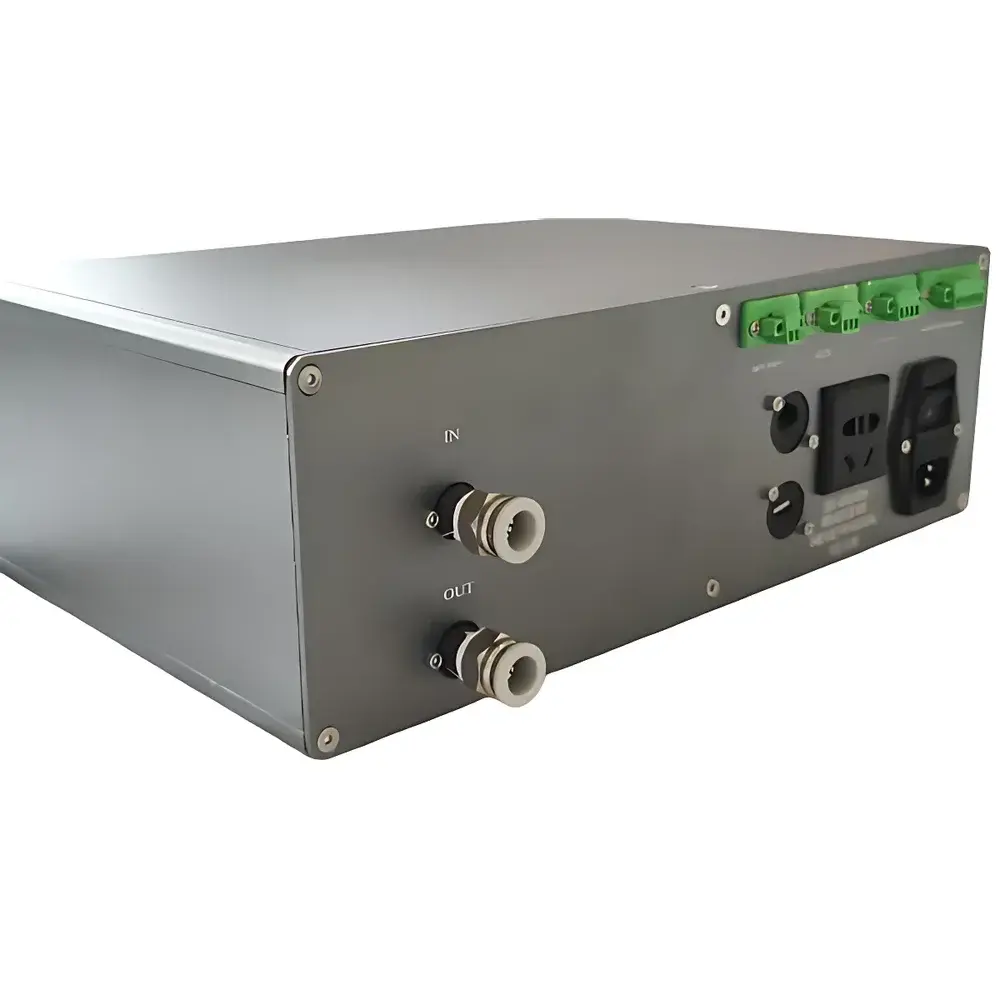
| Inlet/Outlet Fittings | 1/4" VCR inlet, 1/4" Swagelok outlet |
| Operating Temperature | 16–35 °C |
| Max Inlet Pressure | 10 psig |
| Detector Type | Microwave-Induced Plasma Emission Spectroscopy (MIP-ES) |
| Sensitivity | ±0.01 ppm (Model 1400-A/1402-A), ±0.10 ppm (Model 1400-B/1402-B) |
| Output | 4–20 mA analog + dry contact alarms |
| Power | 100 W, 115/230 VAC, 50/60 Hz |
| Dimensions | 13.34 × 42.23 × 37.15 cm |
| Weight | 11.3 kg |
Overview
The GOW-MAC 1400 Trace Moisture Analyzer is a high-stability, laboratory-validated online gas chromatographic system engineered for continuous, real-time quantification of water vapor at sub-part-per-trillion (ppt) to low-part-per-million (ppm) levels in ultra-high-purity argon streams. Unlike conventional electrochemical or chilled-mirror hygrometers, the 1400 employs microwave-induced plasma emission spectroscopy (MIP-ES) — a selective, non-consumptive detection principle that excites trace H₂O molecules into electronically excited states, generating characteristic atomic hydrogen and hydroxyl radical emission lines at 656.3 nm (Hα) and 309 nm (OH). This optical detection method eliminates sensor drift, cross-sensitivity to CO₂, O₂, or hydrocarbons, and calibration degradation over time — critical advantages for semiconductor-grade argon monitoring, cryogenic process validation, and inert atmosphere qualification in pharmaceutical lyophilization or metallurgical annealing.
Key Features
- Triple-range measurement capability (0–2 ppm, 0–20 ppm, 0–200 ppm) with automatic range switching and independent accuracy specifications per span
- MIP-ES detector with ±0.01 ppm LOD (1400-A variant), enabling reliable detection below 10 ppb in high-purity argon (99.9999% purity)
- Optimized thermal management: temperature-controlled measurement cell and sample path maintain stable baseline under ambient fluctuations (16–35 °C)
- Low-flow, low-pressure design: operates at 8–10 psig inlet pressure and only 0.88 slpm flow, minimizing purge gas consumption and integration complexity
- Robust mechanical architecture: stainless-steel fluidic path, VCR inlet for helium-leak-tight integrity, Swagelok outlet for flexible downstream connection
- Integrated 4–20 mA analog output with programmable alarm thresholds and dry-contact relay outputs for out-of-spec event triggering and PLC interfacing
Sample Compatibility & Compliance
The GOW-MAC 1400 is validated for use with argon gas meeting ASTM D7550-22 (Standard Practice for Determination of Trace Moisture in High-Purity Gases by Optical Emission Spectroscopy) and ISO 8573-8:2018 (Compressed air — Part 8: Test methods for solid particle content). It complies with SEMI F57-0220 (Specification for Bulk Argon Gas for Semiconductor Applications), where moisture limits are typically ≤1 ppm for front-end lithography tools. The analyzer’s non-reactive plasma chamber and inert wetted materials (316L SS, Kalrez® seals) ensure compatibility with Grade 5.0–5.7 argon without catalytic decomposition or memory effects. No carrier gas or consumables are required — operation is self-contained and suitable for Class 100 cleanroom environments.
Software & Data Management
While the 1400 operates as a stand-alone instrument with LED digital display and local push-button range selection, it supports full integration into centralized process control systems via its isolated 4–20 mA output. When paired with optional GOW-MAC Data Logger Module (DLM-1400), the unit provides timestamped data logging at user-defined intervals (1 s to 60 min), CSV export, and audit trail functionality compliant with FDA 21 CFR Part 11 requirements — including electronic signatures, change history, and user-access-level permissions. All calibration records, alarm logs, and system diagnostics are retained onboard for GLP/GMP traceability during regulatory inspections.
Applications
- Semiconductor fabrication: monitoring argon purge lines for etch, CVD, and PVD tools where moisture-induced oxide growth compromises film stoichiometry
- Pharmaceutical manufacturing: validating inert headspace integrity in vial stoppering and lyophilizer chamber backfilling
- High-performance lighting: ensuring moisture-free argon fill gas in halogen lamp production to prevent tungsten halide cycle disruption
- Calibration gas laboratories: certifying reference standards for moisture-in-argon SRMs (e.g., NIST SRM 2626a)
- Research cryogenics: verifying dew-point suppression in liquid argon storage and transfer systems
FAQ
What detection principle does the GOW-MAC 1400 use, and why is it preferred over tunable diode laser absorption (TDLAS)?
The 1400 uses microwave-induced plasma emission spectroscopy (MIP-ES), which offers superior selectivity for H₂O in argon matrices with no interference from CO, CO₂, CH₄, or N₂ — unlike TDLAS, which requires complex spectral deconvolution in multi-component gases.
Can the 1400 be used for gases other than argon?
It is factory-calibrated and validated exclusively for argon; use with nitrogen, helium, or hydrogen requires revalidation per ISO/IEC 17025 and may affect accuracy due to plasma coupling efficiency differences.
Is routine calibration required, and what is the recommended interval?
Annual calibration against NIST-traceable moisture standards (e.g., Conostan 1000-ppb H₂O-in-Ar) is recommended; drift verification using zero-gas (electropolished argon) should be performed daily in critical applications.
Does the analyzer support remote diagnostics or Ethernet connectivity?
The base model does not include Ethernet or Modbus; however, the optional DLM-1400 module adds RS-485 Modbus RTU and USB-C data export for field service and predictive maintenance logging.