
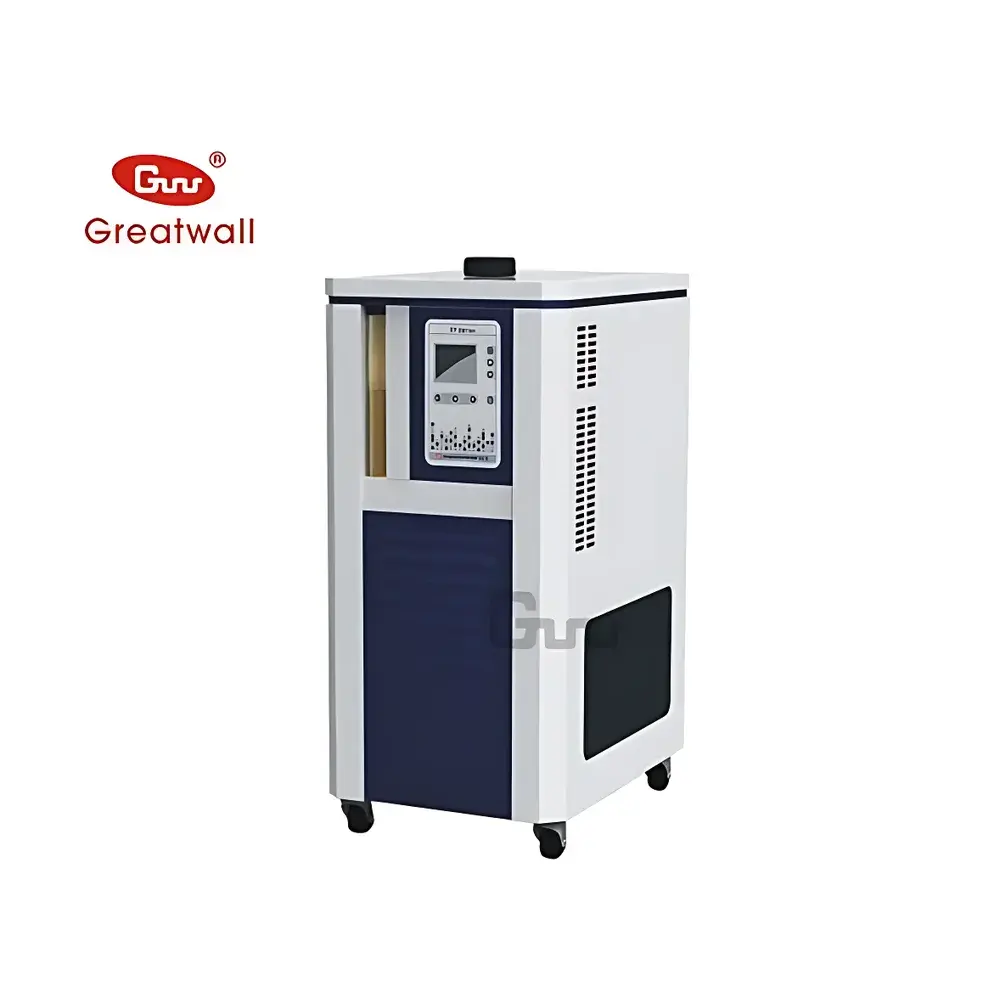
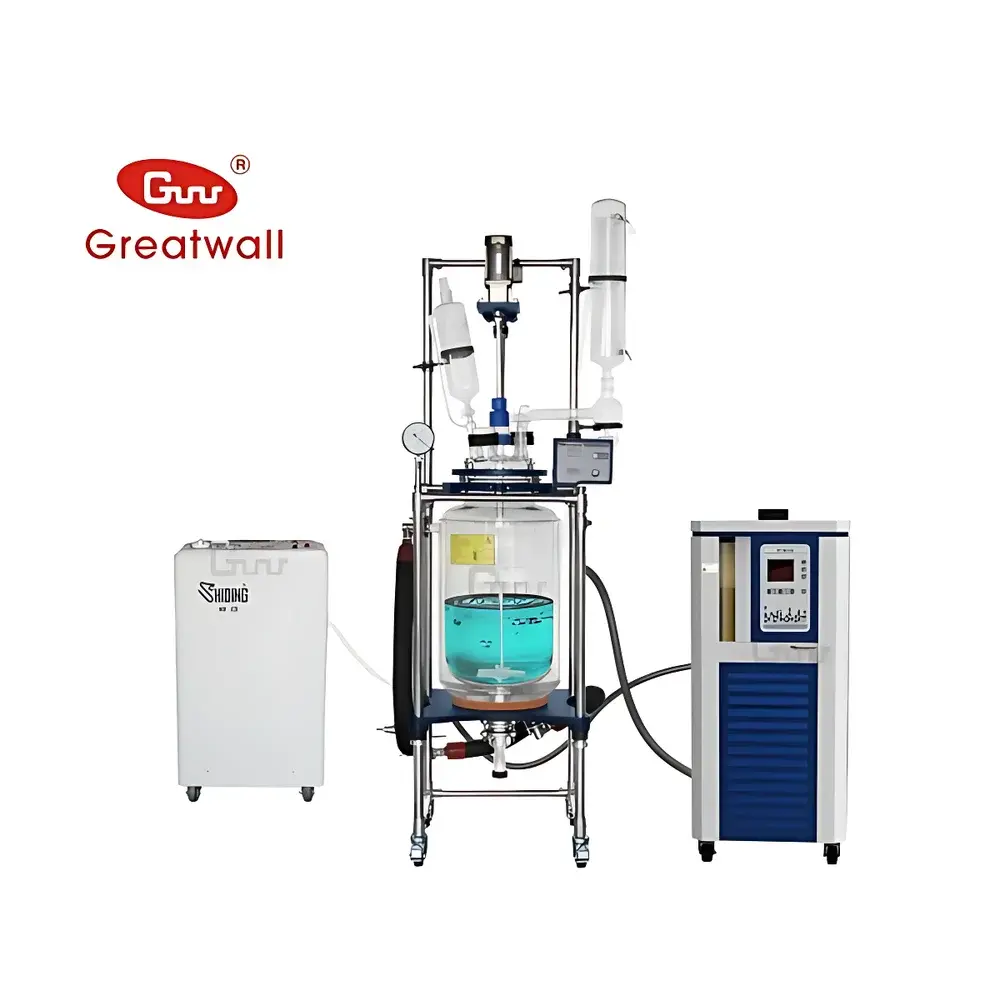
The Great Wall SY-20-160 Closed-Loop High-Temperature Circulator
| Brand | The Great Wall |
|---|---|
| Origin | Henan, China |
| Manufacturer Type | Direct Manufacturer |
| Product Category | Domestic |
| Model | SY-20-160 |
| Instrument Type | Constant-Temperature Bath Circulator |
| Circulation Mode | External Circulation |
| Temperature Control | Heating-Only |
| Bath Volume | 20 L |
| Temperature Range | Ambient +5 °C to 160 °C |
| Temperature Stability | ±1 °C |
| Control Method | PID |
| Display | LCD Panel |
| Safety Features | Over-Temperature Alarm, Overload Protection, Over-Current Protection |
| Construction | Stainless Steel Fluid Path |
| Cooling Interface | Dedicated Inlet/Outlet for External Cooling Water |
| System Design | Fully Sealed Closed-Loop Circulation |
Overview
The Great Wall SY-20-160 Closed-Loop High-Temperature Circulator is an engineered thermal management system designed to deliver precise, stable, and continuous heating to external process equipment via forced convection of thermally stable heat-transfer fluids. Operating on the principle of closed-loop liquid circulation, it integrates a high-efficiency electric immersion heater, a corrosion-resistant stainless steel fluid path, and a robust external circulation pump to supply heated fluid—typically silicone oil, glycol-water mixtures, or specialized synthetic heat-transfer media—to jacketed reactors, glass vessels, or other temperature-sensitive apparatus. Unlike open-bath systems, its fully sealed architecture minimizes fluid oxidation, evaporation, and contamination, thereby extending service life and maintaining consistent thermal performance over extended operational cycles. It is specifically calibrated for applications requiring sustained temperatures up to 160 °C with minimal thermal drift—making it suitable for controlled exothermic reaction initiation, catalyst activation, distillation preheating, and polymerization support in regulated laboratory and pilot-scale environments.
Key Features
- Fully sealed closed-loop circulation system prevents fluid degradation and reduces maintenance frequency
- 20-liter stainless steel reservoir with electropolished internal surfaces for enhanced corrosion resistance and cleanability
- PID-based digital temperature controller with LCD interface offering intuitive setpoint entry and real-time display (±1 °C stability at setpoint)
- Dual-stage safety architecture: independent over-temperature cutoff, electronic overload protection, and current-limiting circuitry
- Integrated air-bleed valve for safe, controlled replenishment of heat-transfer fluid without system depressurization
- Dedicated cooling water inlet/outlet ports enabling rapid thermal quenching via external chiller or tap-water loop
- Externally mounted circulation pump rated for continuous duty at elevated viscosities and temperatures up to 160 °C
- Heater assembly designed for long service life under thermal cycling conditions; replaceable without draining the entire system
Sample Compatibility & Compliance
The SY-20-160 circulator is compatible with a broad range of heat-transfer fluids—including Dowtherm™ J, Therminol™ VP-1, and USP-grade silicone oils—provided they remain thermally stable within the operating range. Its stainless steel wetted parts meet ASTM A240 Type 316 requirements for general corrosion resistance. While not certified to UL/CSA or CE for standalone use in hazardous locations, the unit complies with basic electrical safety principles outlined in IEC 61010-1 for laboratory equipment. When integrated into GMP-compliant processes, its analog temperature control and manual reset safety functions require documented operational qualification (OQ) per ISO/IEC 17025 guidelines. For FDA-regulated pharmaceutical synthesis workflows, users must validate temperature uniformity, ramp rate consistency, and alarm response time as part of their equipment qualification protocol.
Software & Data Management
The SY-20-160 operates via embedded firmware with no onboard data logging or network connectivity. Temperature setpoints, actual bath readings, and alarm status are displayed locally on the backlit LCD panel. For integration into automated laboratories, optional analog 0–10 V or 4–20 mA output signals (available upon request) enable connection to PLCs or SCADA systems for remote monitoring. To satisfy 21 CFR Part 11 requirements, third-party data acquisition hardware (e.g., National Instruments CompactDAQ with calibrated thermocouple inputs) must be deployed externally to capture time-stamped temperature traces, operator actions, and event logs—including alarm triggers and manual resets—with full audit trail capability.
Applications
- Heating jacketed glass reactors and stainless steel pilot reactors in API synthesis and fine chemical manufacturing
- Thermal conditioning of chromatography columns and sample introduction modules in HPLC and GC systems
- Preheating feed streams prior to catalytic hydrogenation or transesterification in biodiesel R&D
- Temperature stabilization of optical components during laser spectroscopy calibration procedures
- Controlled drying and solvent removal in rotary evaporator condenser loops
- Supporting accelerated stability testing protocols (ICH Q1A) requiring prolonged exposure to 40–60 °C under inert atmosphere
FAQ
What types of heat-transfer fluids are compatible with the SY-20-160?
Commonly used fluids include silicone oils (e.g., DC200 series), polyalkylene glycols, and aromatic hydrocarbon blends—provided their flash point exceeds 180 °C and thermal decomposition onset remains above 165 °C.
Can this unit be used for cooling as well as heating?
No—it is a heating-only circulator. However, its dedicated cooling water ports allow passive or active thermal quenching when connected to an external chilled water source.
Is the circulation flow rate adjustable?
The pump delivers a fixed nominal flow rate optimized for 20-L capacity and typical reactor jacket impedance; no variable-speed drive is included in the base configuration.
Does the unit support RS-485 or Ethernet communication?
Not natively. Communication requires optional analog signal modules or external DAQ hardware interfaced via third-party software platforms.
What maintenance intervals are recommended?
Fluid level and condition should be inspected weekly; full fluid replacement is advised every 6–12 months depending on operating temperature profile and fluid type. Heater element resistance testing is recommended annually.



