
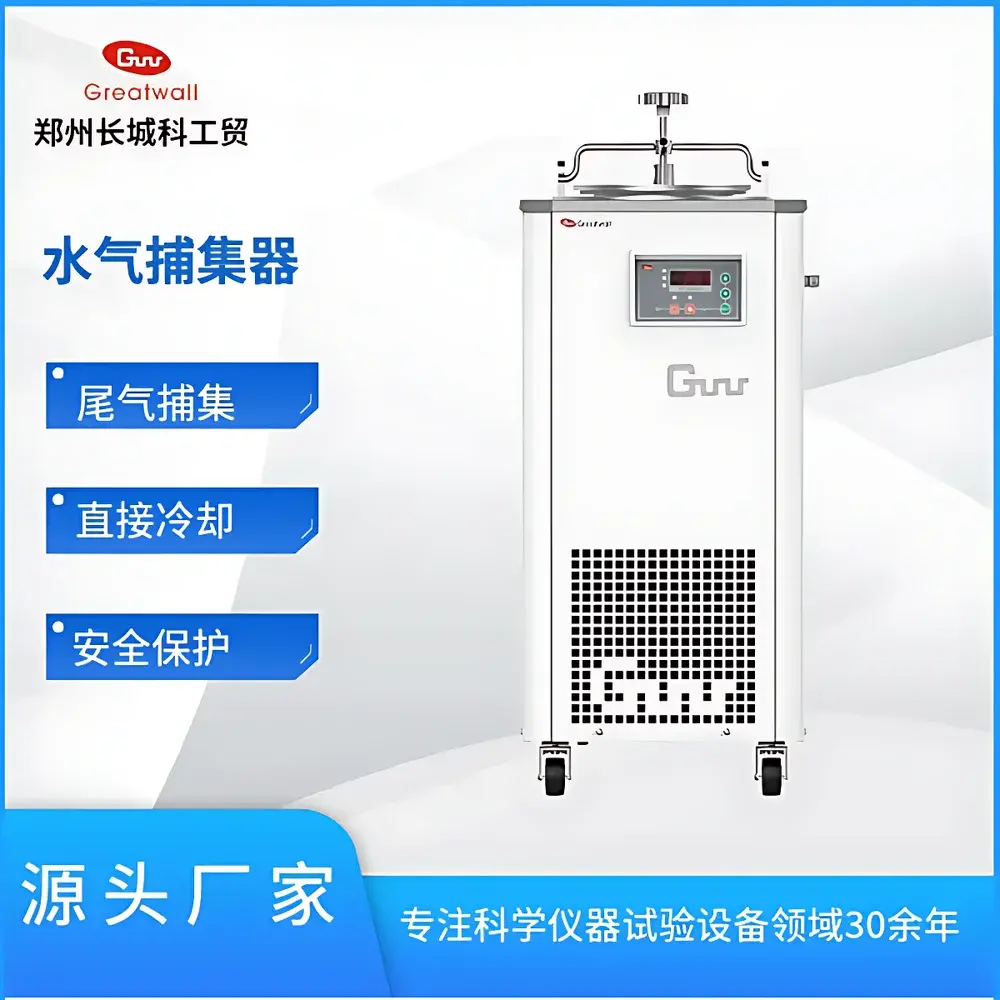
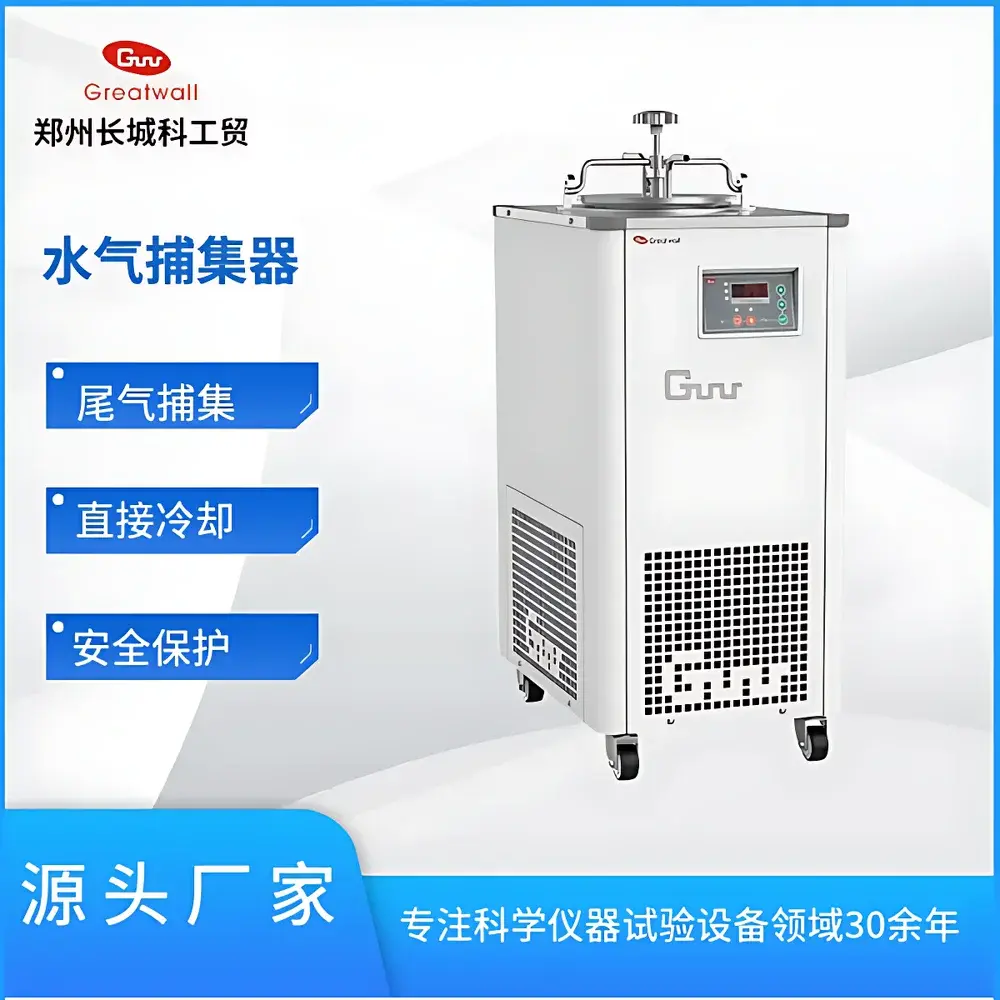
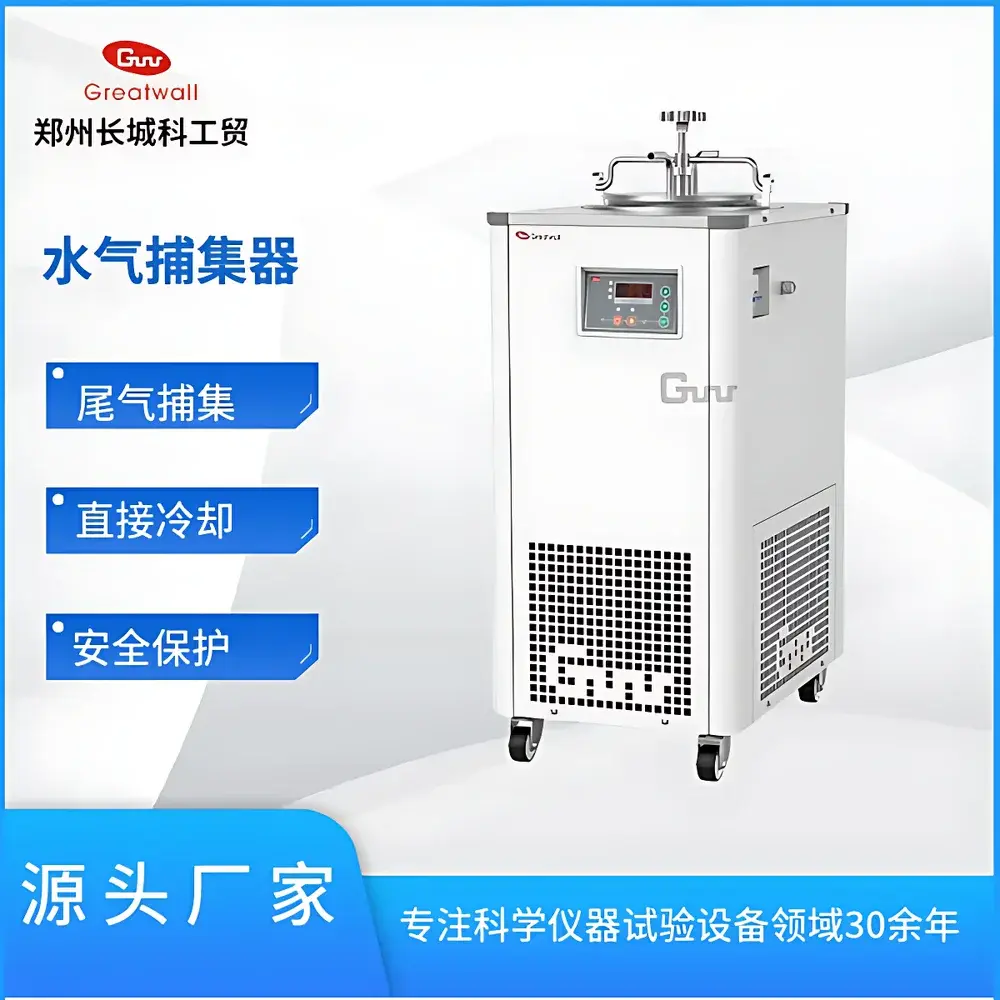
The Great Wall VT-2000H Water Vapor Trap
| Brand | The Great Wall |
|---|---|
| Origin | Henan, China |
| Manufacturer Type | Manufacturer |
| Country of Origin | China |
| Model | VT-2000H |
| Cooling Capacity | 640 W at −10°C, 400 W at −20°C, 200 W at −30°C, 20 W at −40°C |
| Minimum No-Load Temperature | −40°C |
| Cooling Method | Direct refrigeration |
| Temperature Display | Digital, Pt100 sensor |
| Temperature Setting Range | Adjustable within operational range |
| Safety Protections | Delay start, overcurrent protection, overtemperature protection |
| Moisture Removal Capacity | Max. 1 kg (water-based systems) |
| Refrigerant | R404A |
| Trap Chamber Dimensions | Ø160 × 240 mm |
| Chamber Material | 06Cr19Ni10 (AISI 304 stainless steel) |
| Vacuum Port | Flexible hose connector, OD Ø12 mm |
| Ambient Operating Conditions | 5–35°C, ≤70% RH |
| Power Supply | 220–240 V~, 50 Hz |
| Total Power Consumption | 819 W |
| Input Current | 3.7 A |
| Overall Dimensions (W×D×H) | 360 × 590 × 889 mm |
| Net Weight | 60 kg |
Overview
The Great Wall VT-2000H Water Vapor Trap is a purpose-engineered cryogenic condensation unit designed to intercept and immobilize water vapor and volatile condensables generated during vacuum drying, lyophilization, rotary evaporation, and low-pressure concentration processes. Operating on the principle of direct refrigeration using a cascade-capable R404A refrigeration circuit, the VT-2000H achieves a no-load minimum temperature of −40°C — sufficient to condense water, ethanol, acetone, ethyl acetate, and other common solvents encountered in pharmaceutical, battery electrode, and materials science workflows. Unlike passive cold traps relying on dry ice or liquid nitrogen, the VT-2000H delivers stable, repeatable, and operator-independent cooling performance without consumables or manual replenishment. Its integration upstream of primary vacuum pumps significantly reduces backstreaming contamination, extends pump oil life, lowers maintenance frequency, and minimizes emissions of volatile organic compounds (VOCs) and acidic vapors into laboratory exhaust systems — supporting compliance with ISO 14001 environmental management frameworks and local occupational exposure limits (OELs).
Key Features
- Direct-contact cryogenic trapping: Stainless steel trap chamber (06Cr19Ni10 / AISI 304) enables robust, corrosion-resistant operation with aqueous, alcoholic, and mildly acidic solvent systems; optional borosilicate glass condenser flask available for aggressive acid or halogenated solvent applications.
- Dual-mode configuration flexibility: Supports both integrated chamber-based trapping and external glass cold finger configurations — accommodating diverse vacuum line architectures and process scalability requirements.
- Precision thermal control: Digital Pt100 temperature sensing with real-time display and user-defined setpoint adjustment across the full operational range (−40°C to ambient), enabling synchronized activation of vacuum acquisition based on condensate stability thresholds.
- Engineered safety architecture: Integrated delay-start logic, overcurrent cutoff, and independent overtemperature monitoring prevent thermal runaway and ensure continuous system integrity under variable load conditions.
- Optimized thermal efficiency: High-coefficient-of-performance (COP) refrigeration design delivers 640 W cooling capacity at −10°C, tapering predictably to 20 W at −40°C — matching typical solvent dew point profiles encountered in freeze-drying and solvent removal protocols.
Sample Compatibility & Compliance
The VT-2000H is validated for use with moisture-laden air streams, aqueous solutions, ethanol/water mixtures, NMP, DMF, and common battery electrolyte solvents (e.g., EC/DEC blends). Its 304 stainless steel chamber meets ASTM A240 and EN 10088-1 material specifications for corrosion resistance in neutral-to-moderately acidic environments. When paired with a certified glass condenser, compatibility extends to HCl, HF (dilute), and acetic acid vapors. The unit complies with IEC 61000-6-3 (EMC emission standards) and IEC 61000-6-2 (immunity), and its electrical design conforms to UL 61010-1 / EN 61010-1 safety requirements for laboratory equipment. For GMP-regulated environments, optional audit-trail-enabled temperature logging modules support 21 CFR Part 11-compliant data integrity when integrated with validated SCADA platforms.
Software & Data Management
While the VT-2000H operates as a standalone analog-controlled unit, its digital temperature interface supports RS-485 Modbus RTU output (optional accessory) for integration into centralized lab automation networks. Logged temperature data — including setpoint, actual chamber temperature, and runtime status — can be streamed to LIMS or ELN systems via standard industrial protocols. All firmware revisions undergo traceable validation per ISO/IEC 17025 calibration documentation requirements, and factory calibration certificates (traceable to NIST standards) are provided with each unit shipment.
Applications
- Vacuum drying of lithium-ion battery cathode/anode coatings and separator films
- Cryogenic trapping in pilot-scale lyophilizers for biopharmaceutical intermediate processing
- Condensate capture during solvent recovery from rotary evaporators handling heat-sensitive natural extracts
- Pre-freezing and low-temperature hold stages in controlled-atmosphere glovebox drying stations
- Protection of turbomolecular and scroll vacuum pumps in semiconductor thin-film deposition tooling
FAQ
Can the VT-2000H be used continuously under full condensation load?
Yes — the unit is rated for continuous duty at ambient temperatures ≤35°C and relative humidity ≤70%. Sustained operation near maximum moisture removal capacity (1 kg water) requires periodic manual defrosting or scheduled auto-defrost cycles (available via firmware upgrade).
Is the stainless steel chamber suitable for hydrofluoric acid (HF) vapor?
No — 304 stainless steel is not resistant to HF. For HF-containing processes, only the optional borosilicate glass condenser configuration is recommended, with appropriate secondary containment and ventilation.
Does the VT-2000H meet FDA requirements for pharmaceutical manufacturing?
As a Class I auxiliary device, it complies with general GMP infrastructure expectations. Full qualification (IQ/OQ/PQ) must be performed by the end user per their internal validation protocol; documentation templates and material certifications are supplied to support this process.



