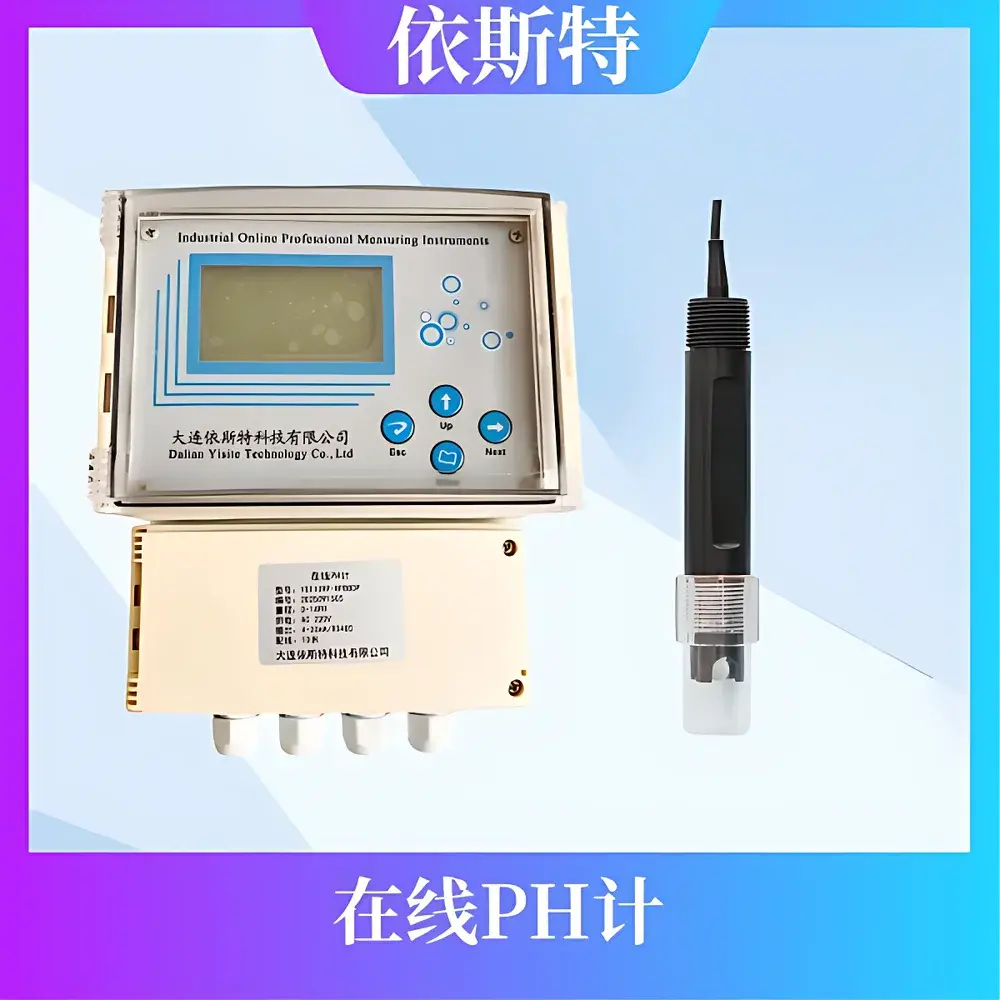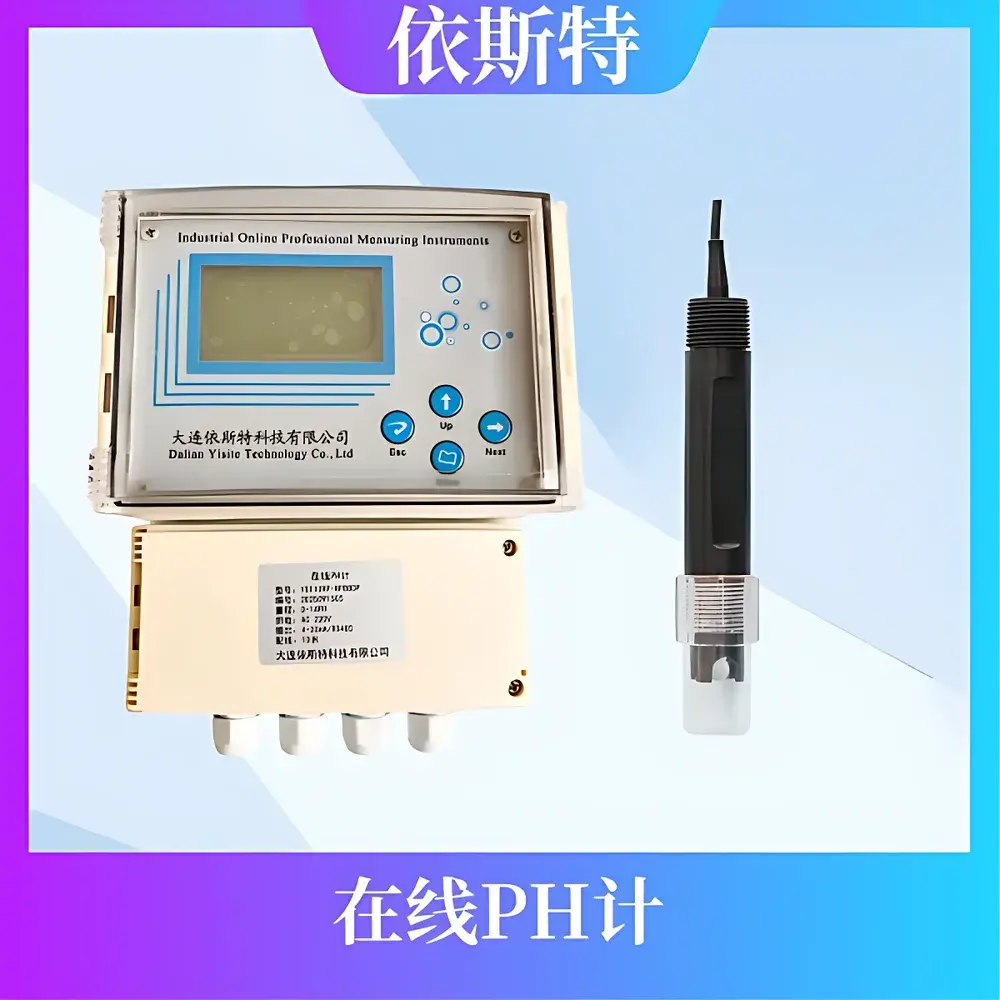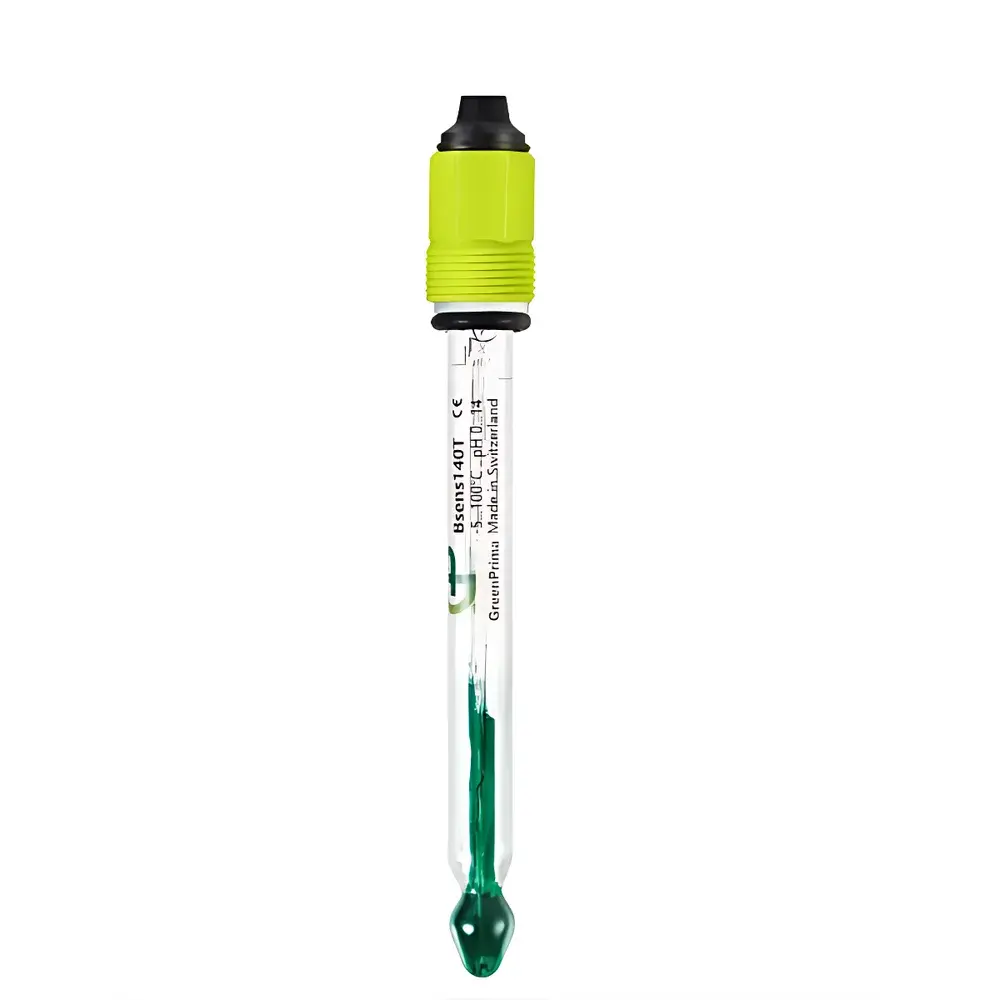
GreenPrima Bsens140T Ultra-Pure Water pH Electrode
| Brand | GreenPrima |
|---|---|
| Origin | Switzerland |
| Manufacturer Type | Original Equipment Manufacturer (OEM) |
| Product Category | Imported Industrial pH Sensor |
| Model | Bsens140T |
| Measuring Range | 0–14 pH |
| Operating Temperature | −5 to 100 °C |
| Reference Electrode | Ag/AgCl Cartridge System |
| Integrated Temperature Sensor | PT1000 |
| Max. Process Pressure | 6 bar |
| Electrode Body Material | Chemically Resistant Glass |
| Electrolyte | Polymer-Gel Electrolyte (Low-Flow, Maintenance-Free) |
| Junction | Triple Ceramic Porous Junction |
| pH-Sensing Membrane | S-Type High-Resistance Glass |
| Minimum Immersion Depth | 20 mm |
| Asymmetry Potential (Zero Point) | ±20 mV |
| Sensitivity | 57–59 mV/pH at 25 °C |
| Minimum Sample Conductivity | 0.1 µS/cm |
| Response Time (pH 4 → 7) | <30 s |
| Process Connection | PG13.5 Metric Thread |
| Cable Length | 5 m |
Overview
The GreenPrima Bsens140T is a high-stability, low-drift pH electrode engineered specifically for continuous online monitoring of ultra-low-conductivity aqueous media—including ultrapure water (UPW), deionized water (DIW), reverse osmosis (RO) permeate, and pharmaceutical-grade water (PW/WFI). Unlike conventional pH electrodes optimized for buffered or conductive samples, the Bsens140T employs an S-type glass membrane with elevated electrical resistance and a triple-ceramic junction architecture to minimize liquid junction potential drift and electrolyte leaching—two primary sources of measurement instability in sub-1 µS/cm environments. Its integrated PT1000 temperature sensor enables automatic temperature compensation (ATC) compliant with NIST-traceable calibration protocols, while the polymer-gel electrolyte eliminates refilling requirements and ensures consistent ionic activity across extended deployment cycles.
Key Features
- S-type high-resistance pH glass membrane optimized for low-ionic-strength applications (conductivity ≥0.1 µS/cm)
- Triple ceramic junction design to stabilize liquid junction potential and reduce clogging in particle-free water streams
- Ag/AgCl reference system with replaceable cartridge configuration for field-maintainable long-term stability
- Integrated PT1000 platinum resistance thermometer (±0.1 °C accuracy) supporting two-point ATC per ISO 7027 and ASTM D1293
- Robust borosilicate glass body rated for continuous operation up to 6 bar pressure and −5 to 100 °C process temperature
- Polymer-gel electrolyte formulation eliminating leakage, evaporation, and refilling—ideal for unattended 24/7 monitoring
- PG13.5 metric process thread (DIN 40430) compatible with standard sanitary and industrial pH housings
- 5-meter shielded, low-noise coaxial cable with IP68-rated connector and optional M12 termination
Sample Compatibility & Compliance
The Bsens140T meets critical performance criteria for regulated water systems in semiconductor, biopharmaceutical, and power generation industries. It is validated for use in USP Chapter (Water for Injection), EP 2.2.3 (Pure Water), and ASTM D5117 (Standard Guide for Monitoring Ultrapure Water). The electrode’s asymmetry potential (±20 mV) and sensitivity (57–59 mV/pH at 25 °C) fall within IUPAC-recommended tolerances for Class I pH sensors. Its construction complies with RoHS 2011/65/EU and REACH Annex XVII; no mercury, lead, or cadmium is used in the reference system or glass matrix. For GMP environments, the sensor supports full audit trail logging when paired with GreenPrima’s GLP-compliant transmitter platforms (e.g., pHTrans-3000 series), satisfying FDA 21 CFR Part 11 requirements for electronic records and signatures.
Software & Data Management
When connected to GreenPrima’s pHTrans-3000 or third-party 4–20 mA/HART/Modbus RTU transmitters, the Bsens140T delivers real-time diagnostics including junction resistance monitoring, glass impedance trending, and temperature-compensated slope validation. Calibration history—including date, buffer values, offset, and slope—is stored locally and exportable via USB or Ethernet. Firmware-upgradable transmitters support automated calibration scheduling, drift alerts (<0.02 pH/h), and configurable alarm thresholds aligned with ISO 9001:2015 clause 8.5.1 (Control of Production). All data exports conform to CSV and .xlsx formats compatible with LIMS (e.g., LabWare, Thermo Fisher SampleManager) and MES integration frameworks.
Applications
- Real-time pH monitoring in UPW distribution loops for semiconductor fab fabs (SEMI F57-0218 compliance)
- In-line verification of PW/WFI quality during pharmaceutical final rinse and clean-in-place (CIP) validation
- RO and EDI system performance tracking in power plant boiler feedwater treatment
- Continuous pH control in laboratory-grade water purification systems (e.g., ELGA PURELAB, Milli-Q IQ 7000)
- Environmental monitoring of low-TDS surface waters and groundwater recharge basins
- Research applications requiring trace-level pH stability in electrochemical cell effluents and nanoparticle synthesis reactors
FAQ
What distinguishes the Bsens140T from general-purpose pH electrodes?
The Bsens140T uses S-glass and triple-ceramic junctions to suppress diffusion potentials inherent in low-conductivity water—standard electrodes exhibit rapid drift and calibration failure below 10 µS/cm.
Can it be used in pressurized RO skids?
Yes—rated for continuous operation at 6 bar and temperatures up to 100 °C; mounting requires proper torque control on PG13.5 threads to prevent glass fracture.
Is recalibration required after sterilization?
Autoclaving is not recommended; however, SIP (steam-in-place) at ≤121 °C for ≤30 min is validated—post-SIP zero-point and slope verification is advised per EU GMP Annex 15.
Does the gel electrolyte require periodic replacement?
No—the polymer-gel matrix is sealed and stable for ≥24 months under continuous operation; cartridge replacement is only needed if reference potential exceeds ±35 mV.
How is temperature compensation implemented?
The integrated PT1000 provides direct resistance measurement; transmitter firmware applies Callendar-Van Dusen coefficients per IEC 60751, ensuring ±0.05 °C thermal uncertainty over the full operating range.