
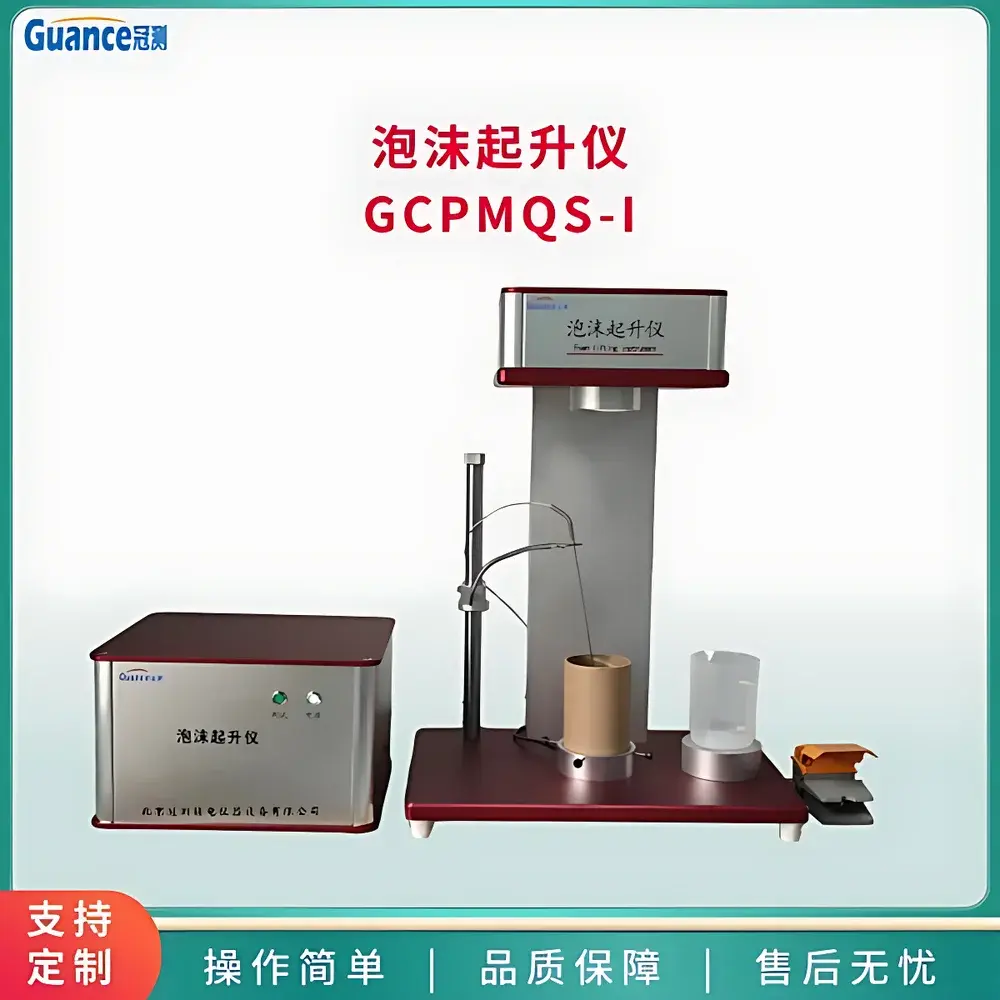
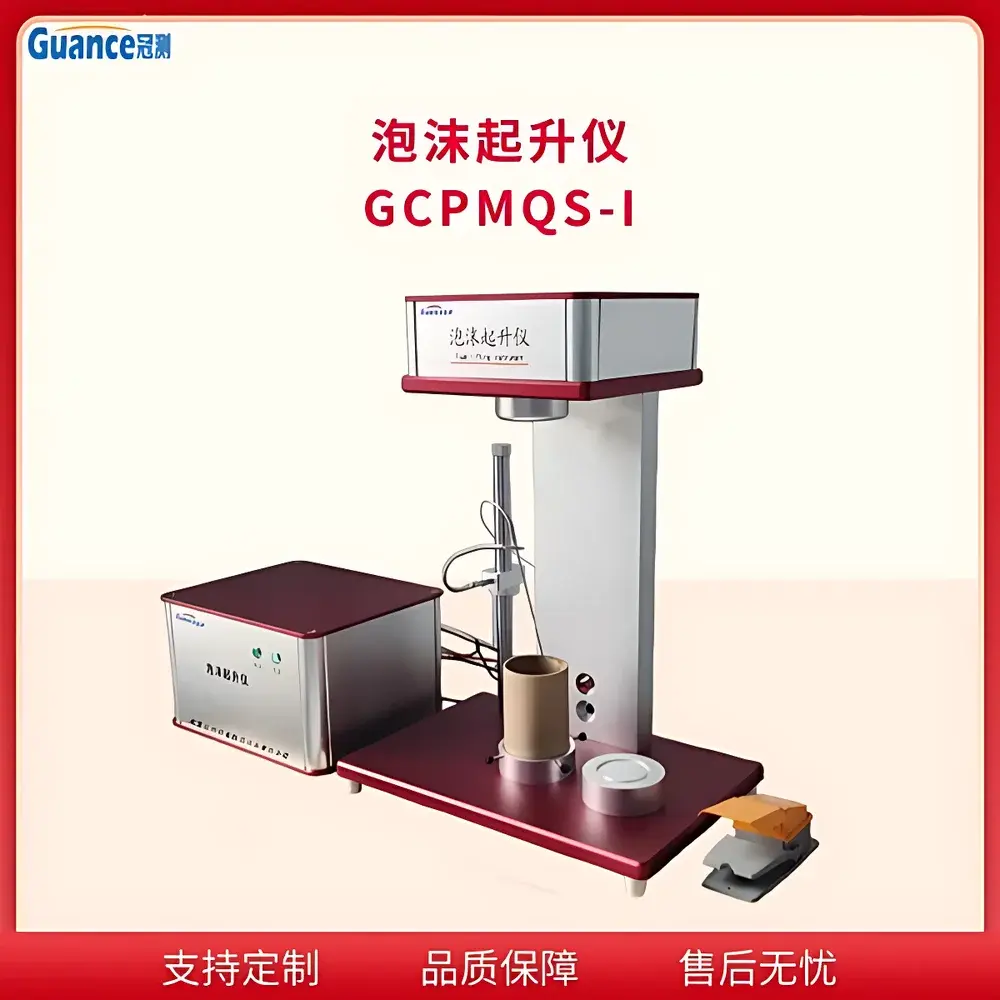
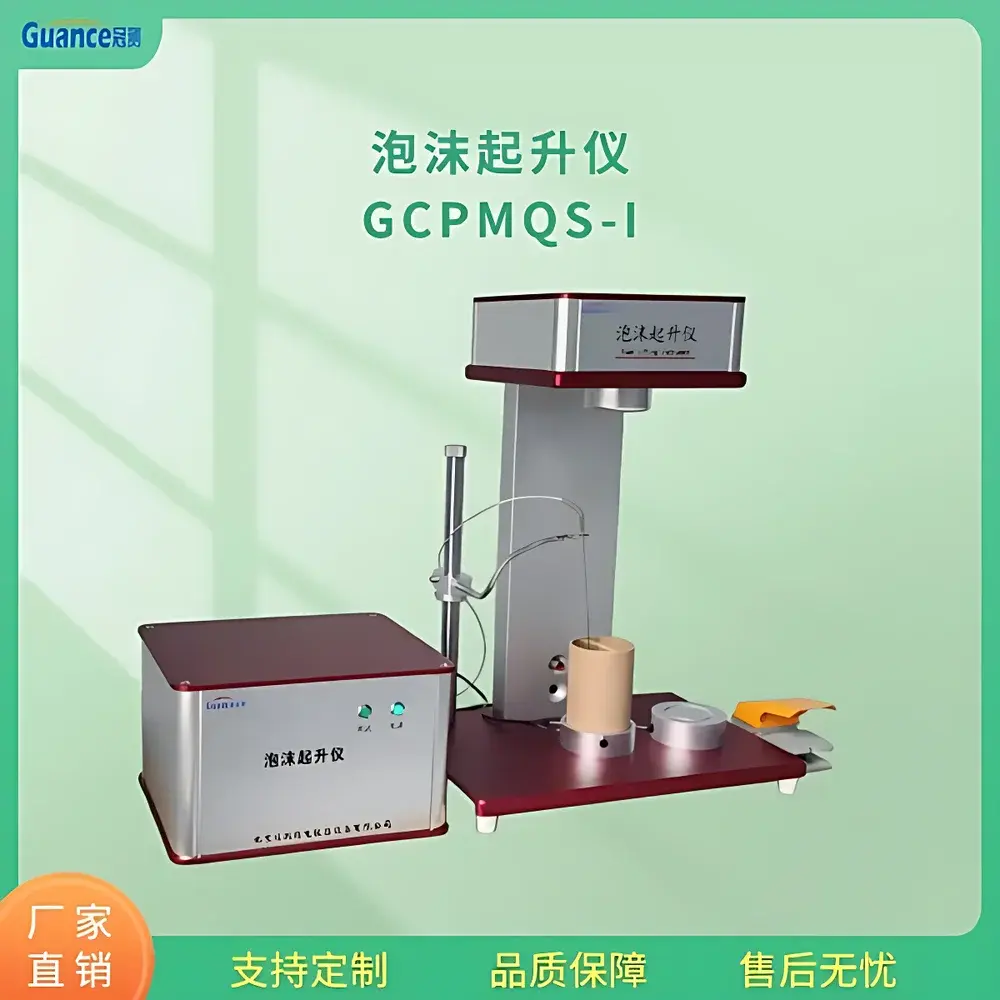
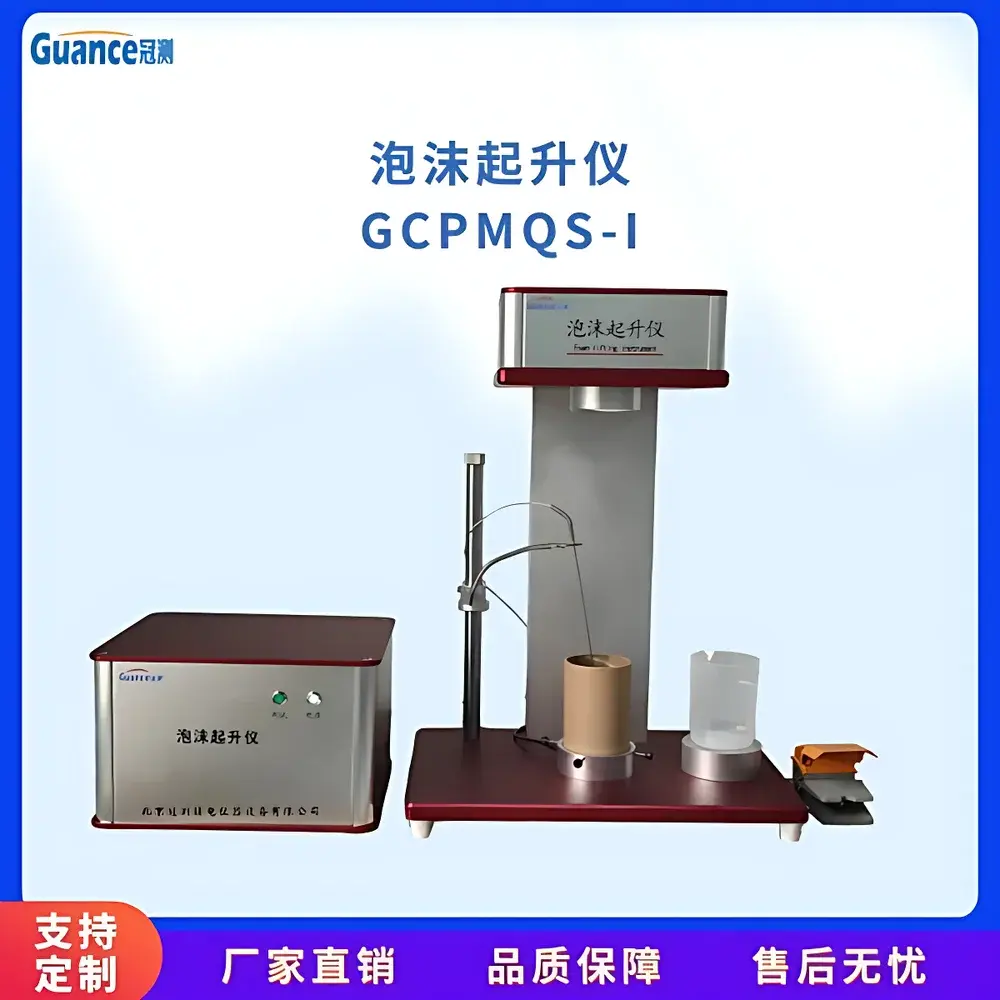
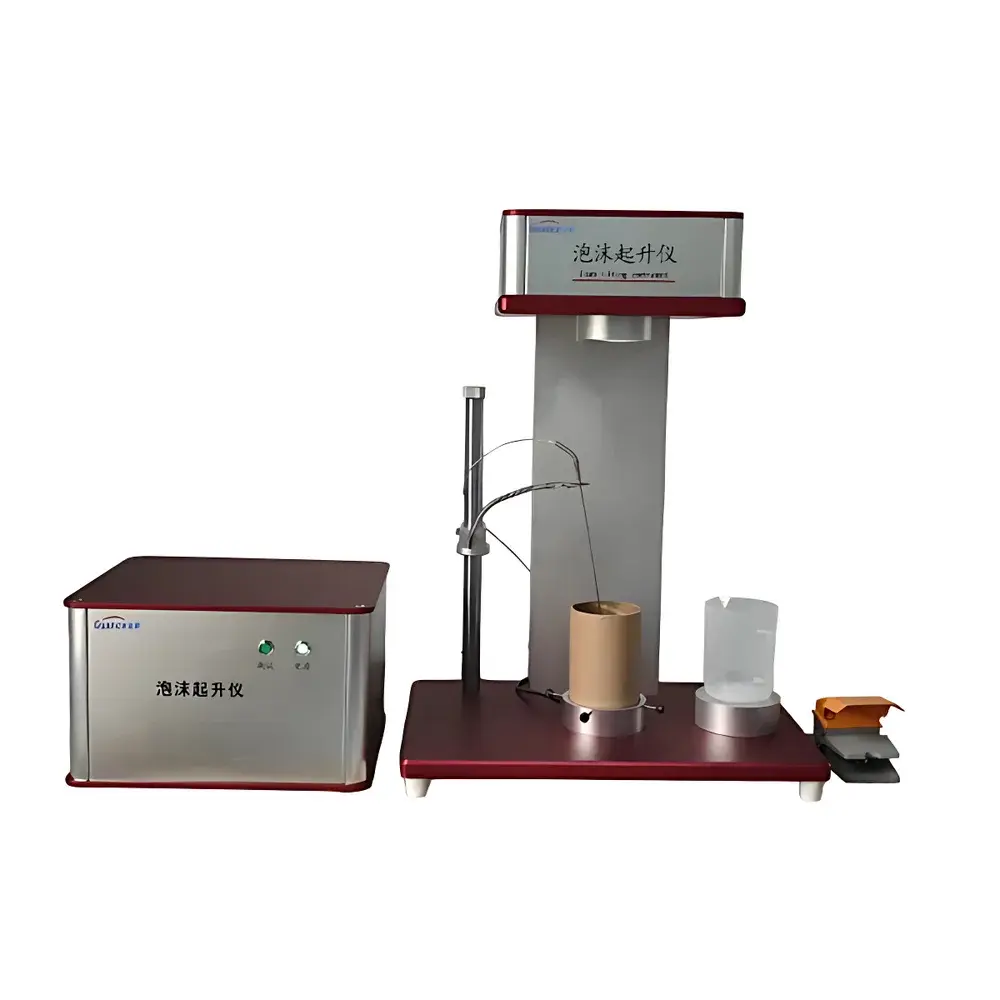
GuanCe GCPMQS-I Foam Analyzer
| Brand | GuanCe Instruments |
|---|---|
| Origin | Beijing, China |
| Manufacturer Type | General Distributor |
| Region of Origin | Domestic (China) |
| Model | GCPMQS-I |
| Price | USD 1,280 (FOB Beijing) |
| Power Supply | 220 V / 50 Hz |
| Vertical Travel Range | 0–800 mm |
| Optical Sensor Accuracy | ±1 mm |
| Optical Sensor Range | 10–1000 mm |
| Temperature Probe Range | 0–500 °C, Accuracy: ±0.5% FS |
| Pressure Sensor Capacity | 500 N (optional) |
| Sample Cup ID | 100 mm |
| Sample Cup Height | 200 mm |
| Polarization Module | Optional |
| High-Speed Imaging Module | Optional |
Overview
The GuanCe GCPMQS-I Foam Analyzer is a dedicated benchtop instrument engineered for quantitative, time-resolved characterization of foam generation and collapse dynamics in liquid-phase systems. It operates on the principle of real-time optical profiling combined with synchronized multi-parameter monitoring—including height displacement, thermal evolution, and optional mechanical pressure response—enabling rigorous analysis of foamability, stability, drainage kinetics, and coalescence behavior. Designed for R&D laboratories and quality control environments in surfactant formulation, food science, personal care, and polymer processing industries, the system delivers traceable, repeatable metrics aligned with standardized foam evaluation methodologies such as ISO 697 and ASTM D1173. Its modular architecture supports both fundamental research into interfacial rheology and applied testing under controlled environmental conditions.
Key Features
- High-resolution optical height tracking via calibrated linear photoelectric sensor array (range: 10–1000 mm; accuracy: ±1 mm), enabling precise detection of foam front advancement and collapse onset.
- Integrated temperature monitoring with Pt100-class probe (0–500 °C, ±0.5% full-scale accuracy) to correlate thermal effects with foam nucleation and drainage kinetics.
- Programmable vertical actuation stage with 0–800 mm travel range, supporting reproducible sample introduction and dynamic interface positioning.
- Automated data acquisition engine capturing height-vs.-time profiles at user-defined sampling intervals (default: 0.1 s resolution), with timestamped metadata logging.
- Comprehensive parameter derivation: peak foam height, maximum rise velocity, mean rise rate, drainage half-life, collapse onset time, and % collapse at user-specified time points.
- Automatic baseline compensation for initial liquid level variation, eliminating operator-induced height offset errors.
- Optional add-ons include high-speed imaging (up to 120 fps) for bubble morphology analysis, load cell-based pressure transduction (0–500 N), and electrochemical polarization modules for charged surfactant systems.
Sample Compatibility & Compliance
The GCPMQS-I accommodates standard cylindrical sample containers (100 mm inner diameter × 200 mm height), compatible with common disposable paper cups or reusable borosilicate glass vessels. It supports aqueous, non-aqueous, and emulsified systems across pH 2–12 and viscosity ranges up to 10,000 mPa·s. All firmware and data handling protocols comply with GLP documentation requirements, including audit-trail-enabled user authentication, electronic signature support, and immutable raw-data archiving. While not certified to IEC 61000-4 electromagnetic immunity standards out-of-the-box, the system meets CE marking essential requirements for laboratory equipment when operated within specified ambient conditions (15–30 °C, <80% RH, non-condensing).
Software & Data Management
The analyzer is operated via dedicated Windows-based software (v3.2+) installed on the included laptop. The interface provides real-time visualization of height, temperature, and optional pressure traces; overlay-capable curve comparison; and batch-mode statistical reporting. Raw datasets are saved in .csv and .xlsx formats with embedded metadata (operator ID, test date/time, calibration stamp, sensor serial numbers). Exported reports include annotated graphs, tabulated key parameters, and pass/fail flags against user-defined specification limits. Software supports 21 CFR Part 11-compliant configuration via optional validation package, enabling electronic records retention for regulated pharmaceutical or cosmetic QC workflows.
Applications
- Surfactant screening: Comparative assessment of foaming efficiency and foam half-life across anionic, cationic, nonionic, and zwitterionic families.
- Formulation optimization: Quantifying impact of polymer thickeners, electrolytes, or cosolvents on foam drainage resistance and structural resilience.
- Food product development: Monitoring foam stability in dairy foams (e.g., whipped cream), plant-based alternatives, and carbonated beverage head retention.
- Personal care QA: Batch-to-batch consistency testing of shampoos, shaving foams, and cleansing gels per internal SOPs or ISO 16212.
- Academic research: Correlating interfacial tension measurements (via pendant drop) with macroscopic foam kinetics to validate theoretical drainage models.
FAQ
What sample volume is required for a standard test?
A minimum of 150 mL is recommended to ensure stable meniscus formation and avoid edge effects during optical profiling.
Can the system be integrated with third-party rheometers or tensiometers?
Yes—via RS-232 or USB virtual COM port, allowing synchronized triggering and time-aligned data fusion with external instruments.
Is calibration traceable to national standards?
Optical and temperature sensors ship with factory calibration certificates; users may perform field verification using NIST-traceable gauge blocks and reference thermocouples.
Does the software support automated report generation in multiple languages?
English and Chinese UI and report templates are included; additional language packs require custom configuration and validation.
What maintenance is required for long-term reliability?
Biannual inspection of optical path cleanliness, sensor alignment verification, and firmware updates via GuanCe’s secure customer portal.
Related Products



