
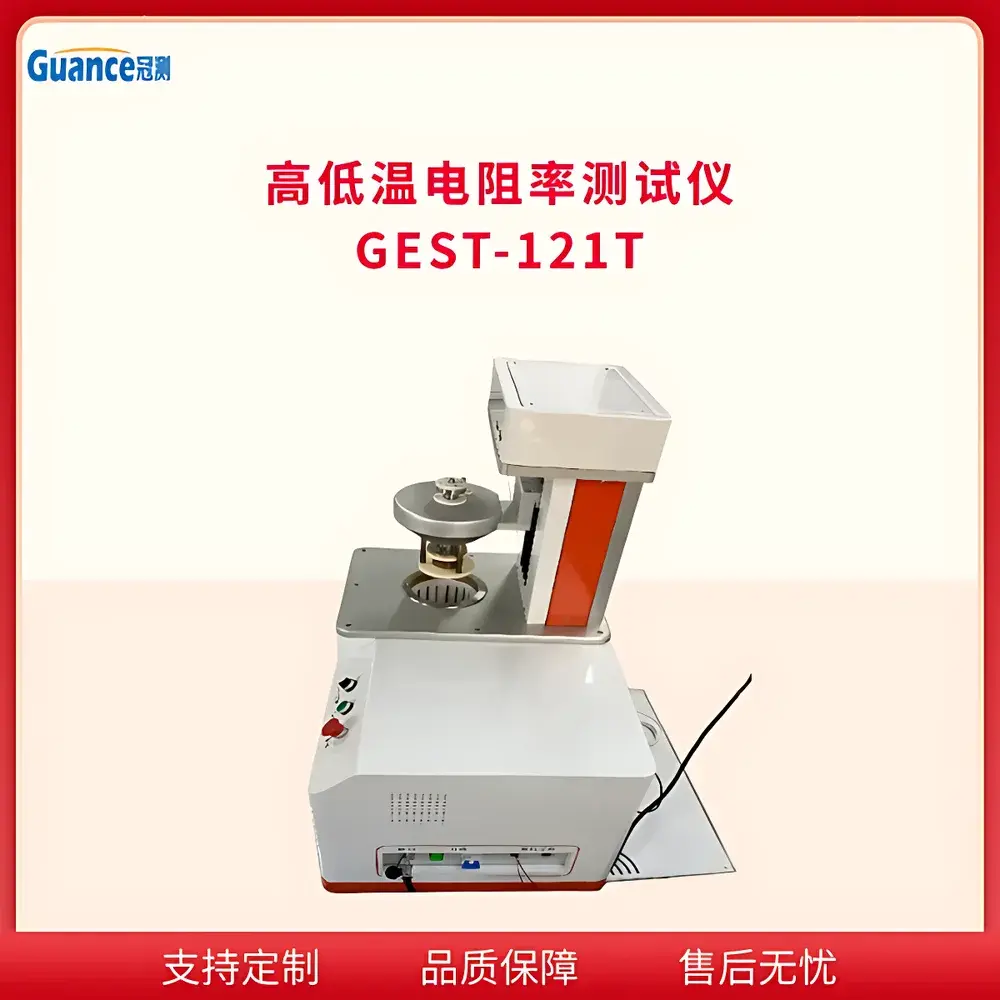
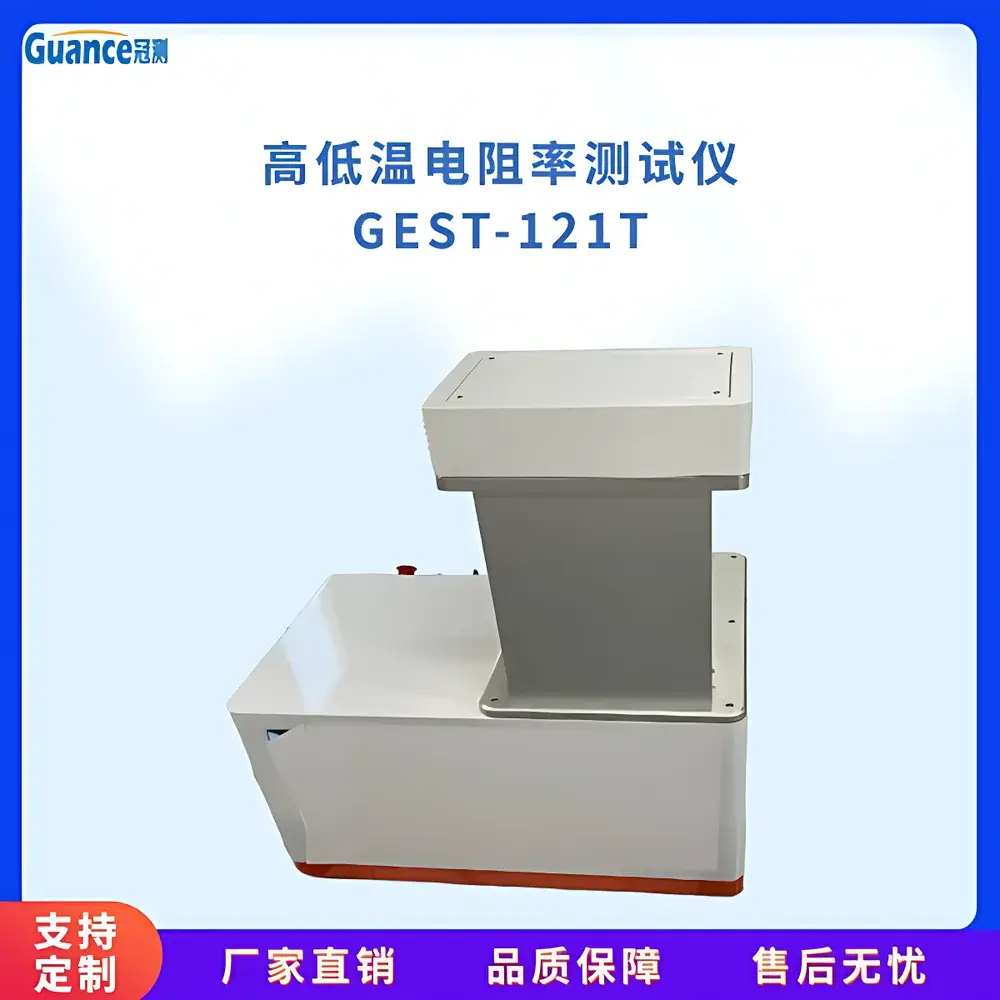
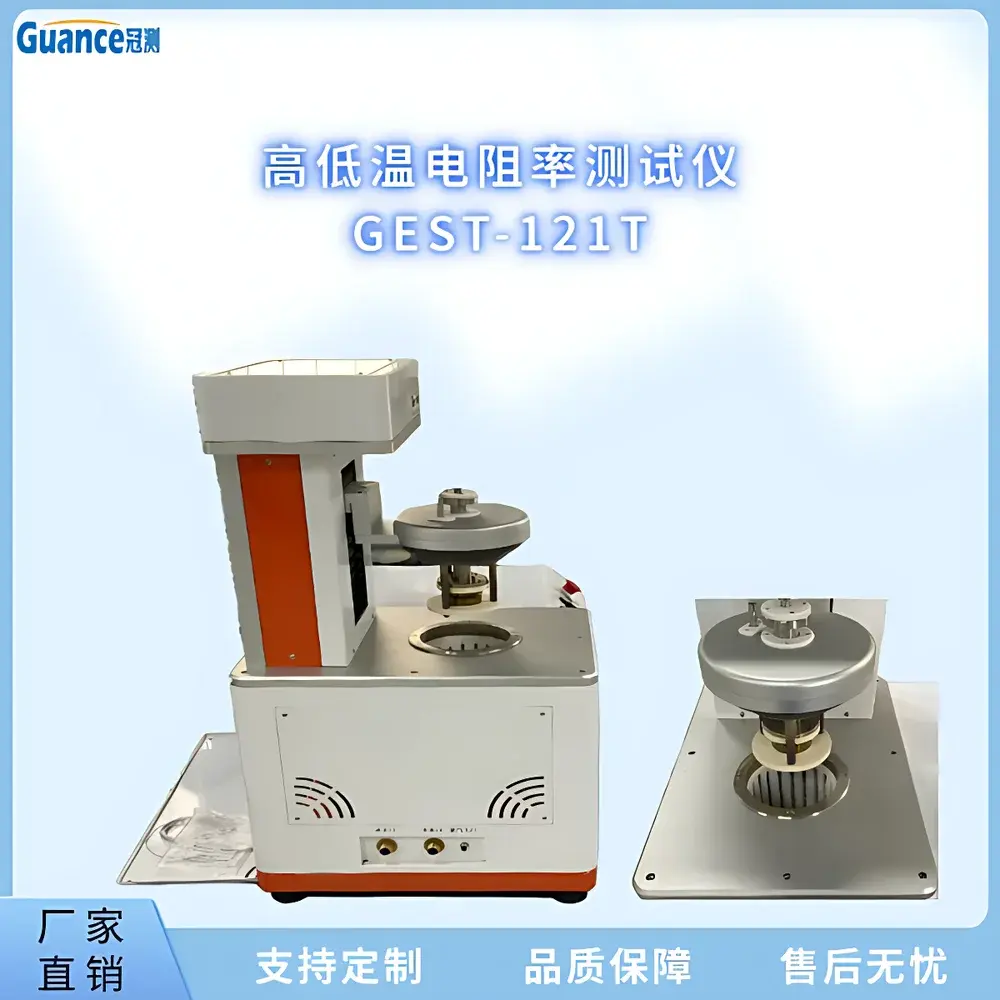
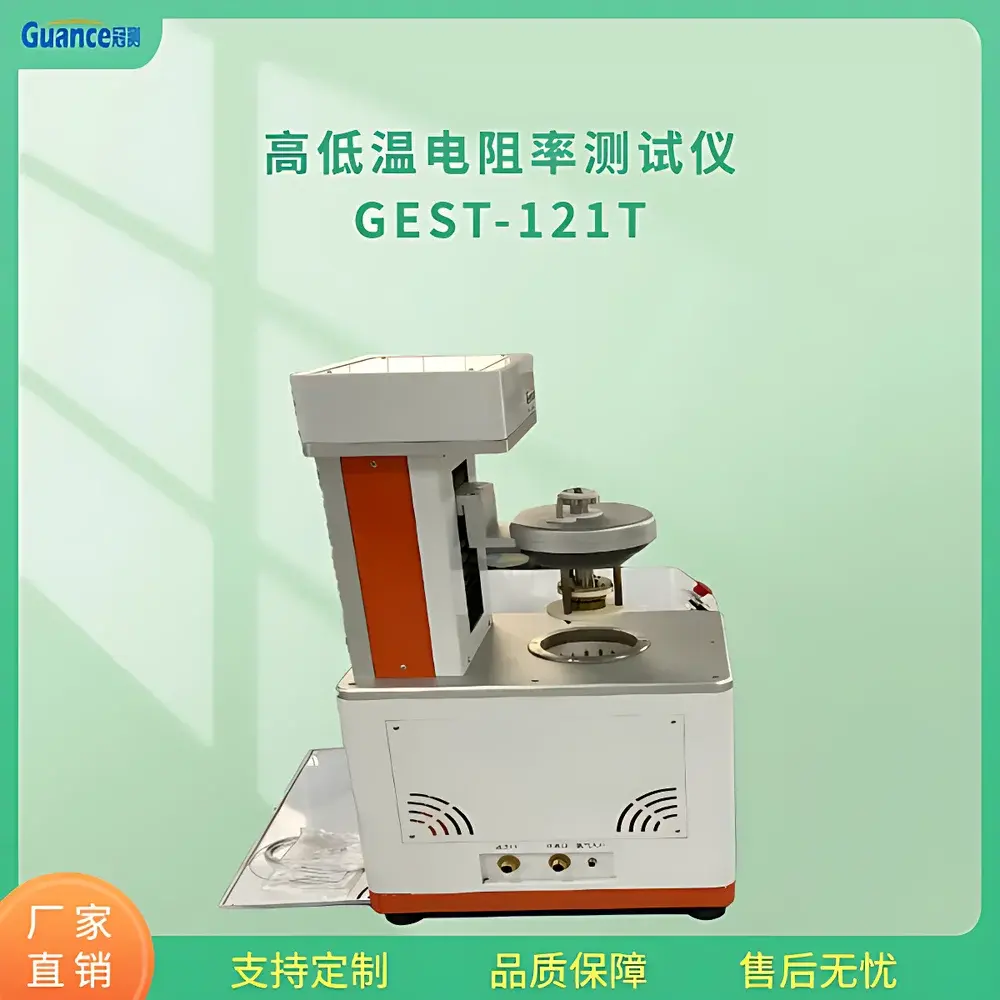
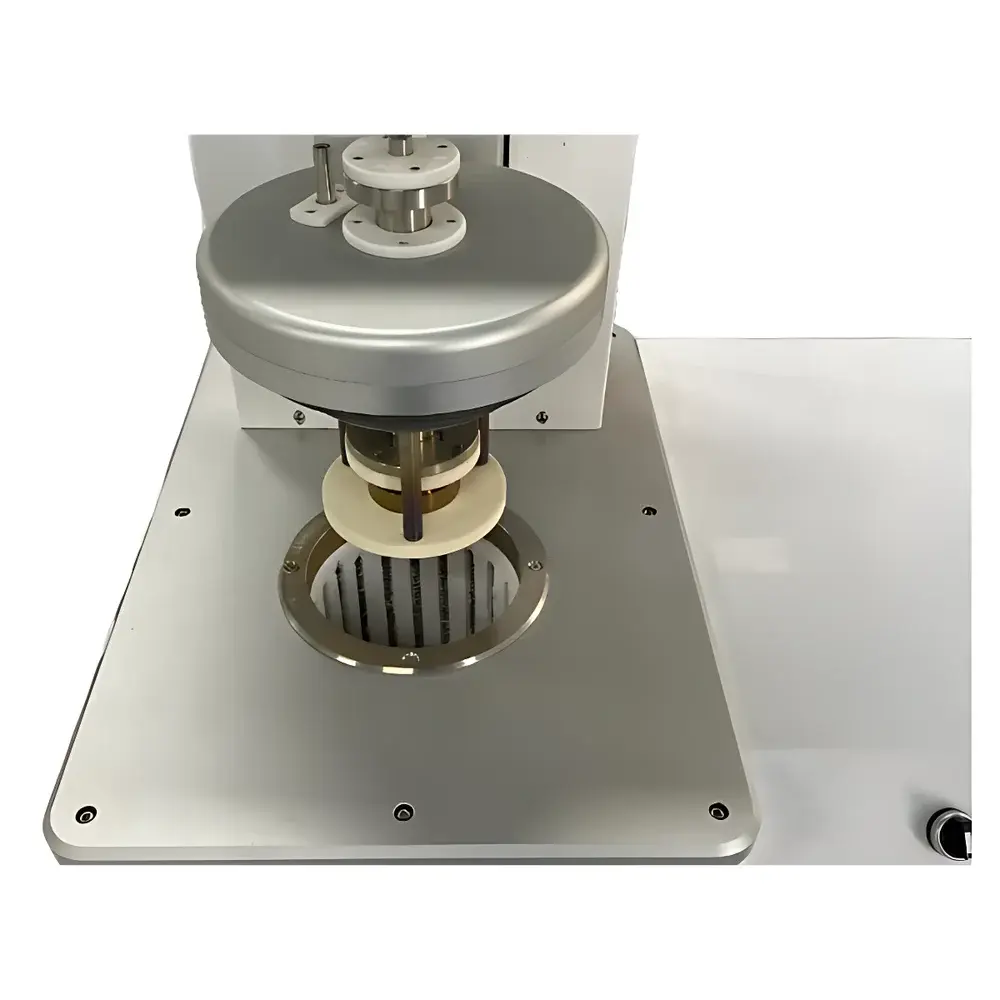
Guance GEST-121T.2 High-Low Temperature Insulation Resistivity Tester
| Brand | Guance |
|---|---|
| Model | GEST-121T.2 |
| Temperature Range | -40 °C to +250 °C (with GDW-250 environmental chamber) |
| Resistance Measurement Range | 1×10⁴ Ω to 1×10¹⁸ Ω |
| Test Voltage | 10 V, 50 V, 100 V, 250 V, 500 V, 1000 V DC |
| Current Measurement Range | 2×10⁻⁴ A to 1×10⁻¹⁶ A |
| Accuracy | ±1% for R ≤ 1×10¹⁰ Ω |
| Display | Integrated capacitive touchscreen interface |
| Power Supply | 220 V AC / 50 Hz |
| Dimensions (L×W×H) | 300 mm × 300 mm × 150 mm |
| Weight | ~30 kg |
| Compliance | Designed for ASTM D257, IEC 60093, GB/T 1410, ISO 3915 test protocols |
Overview
The Guance GEST-121T.2 High-Low Temperature Insulation Resistivity Tester is a fully integrated, modular measurement system engineered for precise determination of volume and surface resistivity of insulating materials under controlled thermal conditions. It combines a programmable temperature-controlled environmental chamber (GDW-250) with an ultra-high-impedance electrometer-based measurement unit (GEST-121A), enabling standardized resistivity evaluation across a broad thermal range—from –40 °C to +250 °C—under ambient, vacuum, or controlled-atmosphere environments. The system operates on the principle of applying a stable DC bias voltage across a defined electrode geometry and measuring the resulting leakage current through the specimen, from which volume resistivity (ρ, in Ω·m) and surface resistivity (σₛ, in Ω/sq) are calculated per ASTM D257 and IEC 60093. Its architecture supports both guarded and unguarded configurations, minimizing stray current paths and ensuring high reproducibility in low-conductivity measurements.
Key Features
- Modular dual-unit design: Separable GDW-250 environmental chamber and GEST-121A high-resistance meter allow independent operation or synchronized control via unified software.
- Ultra-wide resistance range: 1×10⁴ Ω to 1×10¹⁸ Ω enables characterization of polymers, ceramics, elastomers, composites, and powder compacts without range switching artifacts.
- Multi-voltage DC sourcing: Six selectable test voltages (10 V to 1000 V) support material-specific polarization protocols and compliance with voltage-dependent standards such as GB/T 1410 and ISO 3915.
- Guarded tri-electrode configuration: Standardized electrode fixtures—including concentric ring, two-terminal, and three-terminal geometries—ensure accurate separation of bulk and interfacial conduction pathways.
- Real-time thermal coupling: Integrated PT100 sensors embedded in the chamber base plate and sample stage provide synchronized, traceable temperature acquisition with ±0.5 °C stability over full operating range.
- Touchscreen HMI with embedded firmware: Local operation without PC dependency; supports parameter logging, pass/fail thresholds, and automatic dwell-time sequencing per test step.
Sample Compatibility & Compliance
The GEST-121T.2 accommodates solid, semi-solid, and powdered dielectrics—including sheets, rods, blocks, films, pellets, pastes, and slurries—via interchangeable electrode assemblies. Sample thickness ranges from 0.1 mm to 25 mm; lateral dimensions up to 100 mm × 100 mm are supported. The system meets essential requirements for GLP-compliant laboratories: audit-trail-enabled data storage, user-access-level management, and timestamped measurement records. It is validated for use in accordance with ASTM D257 (Standard Test Methods for DC Resistance or Conductance of Insulating Materials), IEC 60093 (Methods of Test for Volume Resistivity and Surface Resistivity of Solid Electrical Insulating Materials), and Chinese national standard GB/T 1410. Optional vacuum and inert-gas purge ports facilitate testing under non-oxidizing or low-humidity conditions, critical for hygroscopic or thermally unstable polymers.
Software & Data Management
The optional PC-based ResistivityTest Suite v3.2 provides advanced automation, including multi-step temperature ramping with concurrent resistivity sampling, real-time Arrhenius plotting, and batch report generation in PDF/XLSX formats. All raw data—including voltage, current, temperature, time stamp, and electrode geometry parameters—are stored in encrypted SQLite databases compliant with FDA 21 CFR Part 11 requirements when configured with electronic signatures and role-based access controls. Exported datasets include metadata headers conforming to MIAME/ISA-TAB conventions for integration into LIMS platforms. Firmware updates are delivered via secure HTTPS channel and require digital signature verification prior to installation.
Applications
- Quality assurance of high-k polymer films in flexible electronics manufacturing.
- Thermal aging studies of cable insulation materials (e.g., XLPE, EPR) per IEEE 930 and IEC 60502.
- R&D of solid-state electrolytes for lithium-ion batteries, evaluating ionic vs. electronic conduction contributions.
- Characterization of aerospace-grade composites under simulated flight thermal cycles.
- Validation of anti-static packaging materials per ANSI/ESD S20.20.
- Reference measurements in metrology labs supporting national calibration hierarchies for resistivity standards.
FAQ
What temperature uniformity can be achieved inside the GDW-250 chamber during resistivity testing?
The GDW-250 maintains ±1.0 °C spatial uniformity across a 60 mm × 60 mm active zone at steady state, verified by NIST-traceable micro-thermocouples placed at sample location.
Is the system capable of performing guarded volume resistivity measurements per ASTM D257 Section 11?
Yes—the GEST-121A module includes a dedicated guard terminal with <1 pA leakage specification, and the supplied tri-electrode fixture satisfies all geometric and shielding requirements outlined in ASTM D257 Annex A3.
Can the instrument log temperature and resistance synchronously at user-defined intervals?
Yes—data acquisition supports simultaneous sampling at configurable rates from 0.1 Hz to 10 Hz, with internal clock synchronization between chamber controller and electrometer modules.
Does the system support automated calculation of activation energy using the Arrhenius model?
Yes—ResistivityTest Suite v3.2 includes built-in linear regression tools for ln(ρ) vs. 1/T plots, with uncertainty propagation based on measurement repeatability and thermal sensor calibration certificates.
Are calibration certificates provided for the electrometer and temperature sensors?
Each unit ships with factory calibration reports traceable to CNAS-accredited laboratories (certification numbers included); optional annual recalibration services are available under ISO/IEC 17025 scope.



