
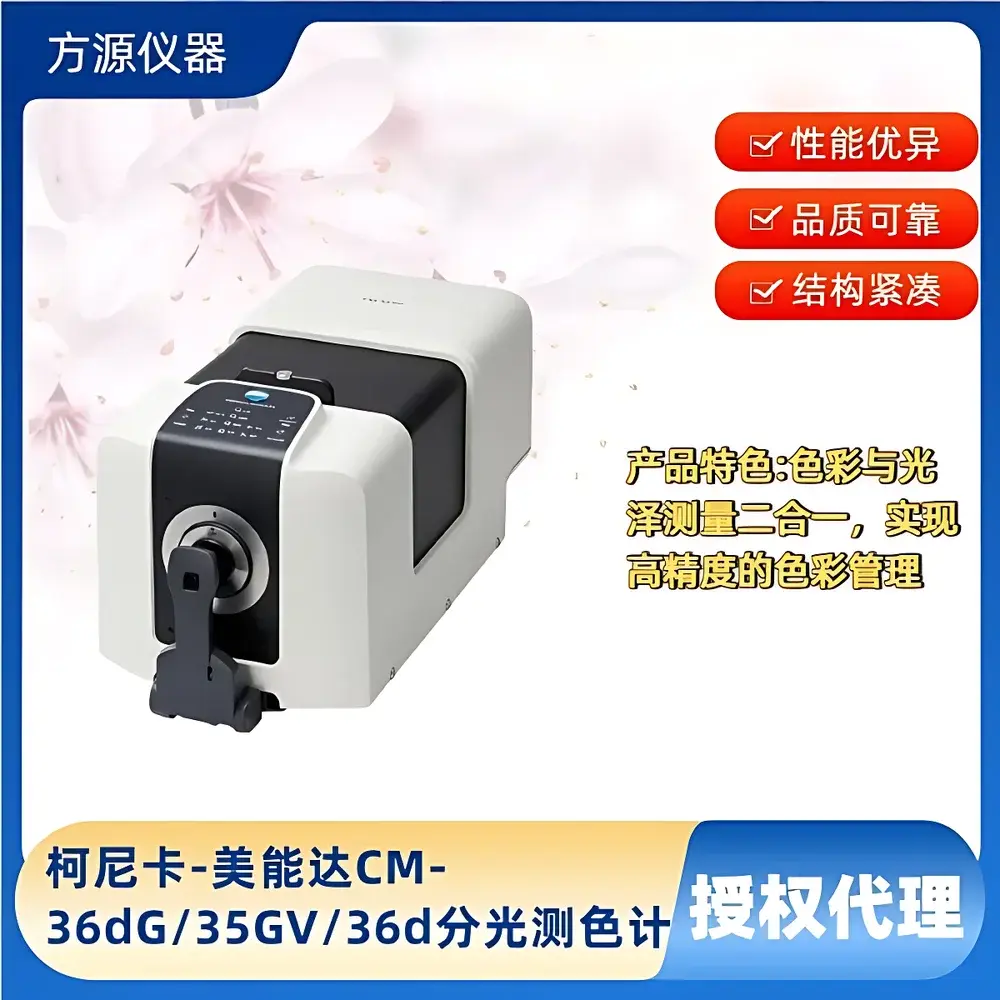
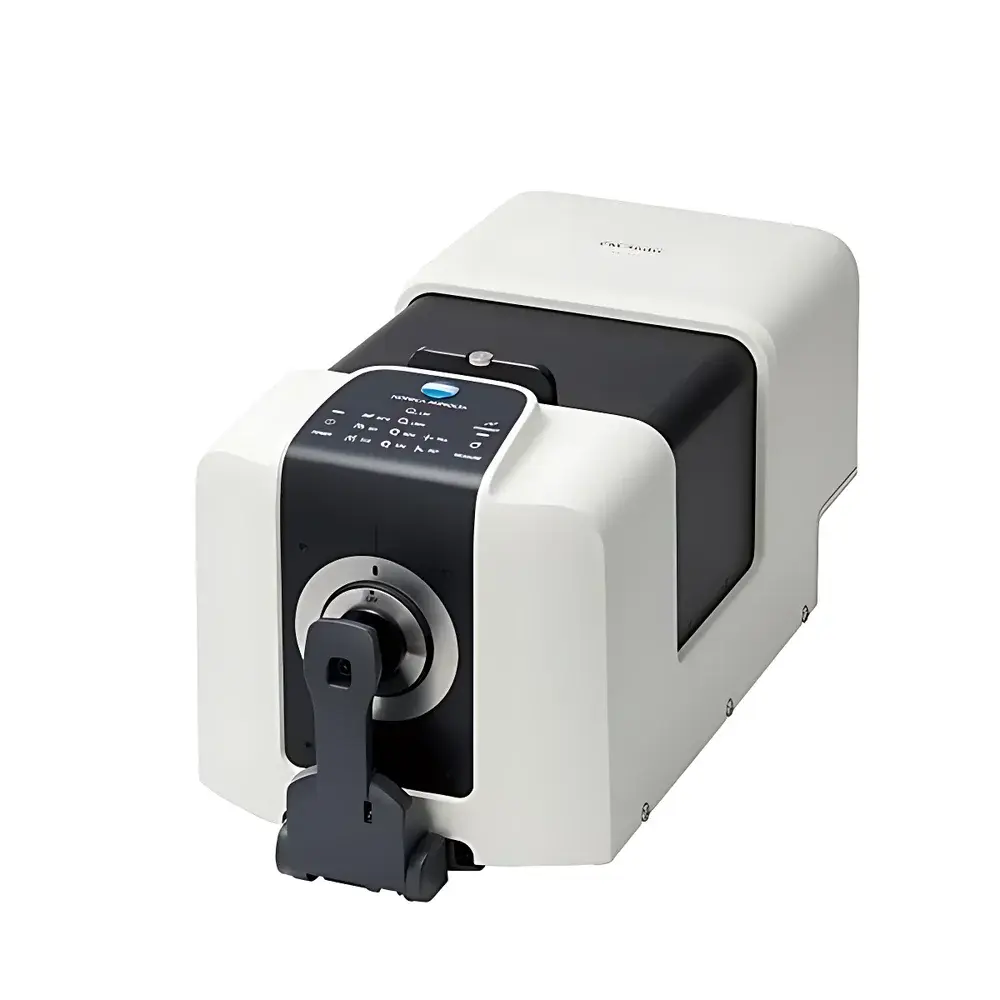
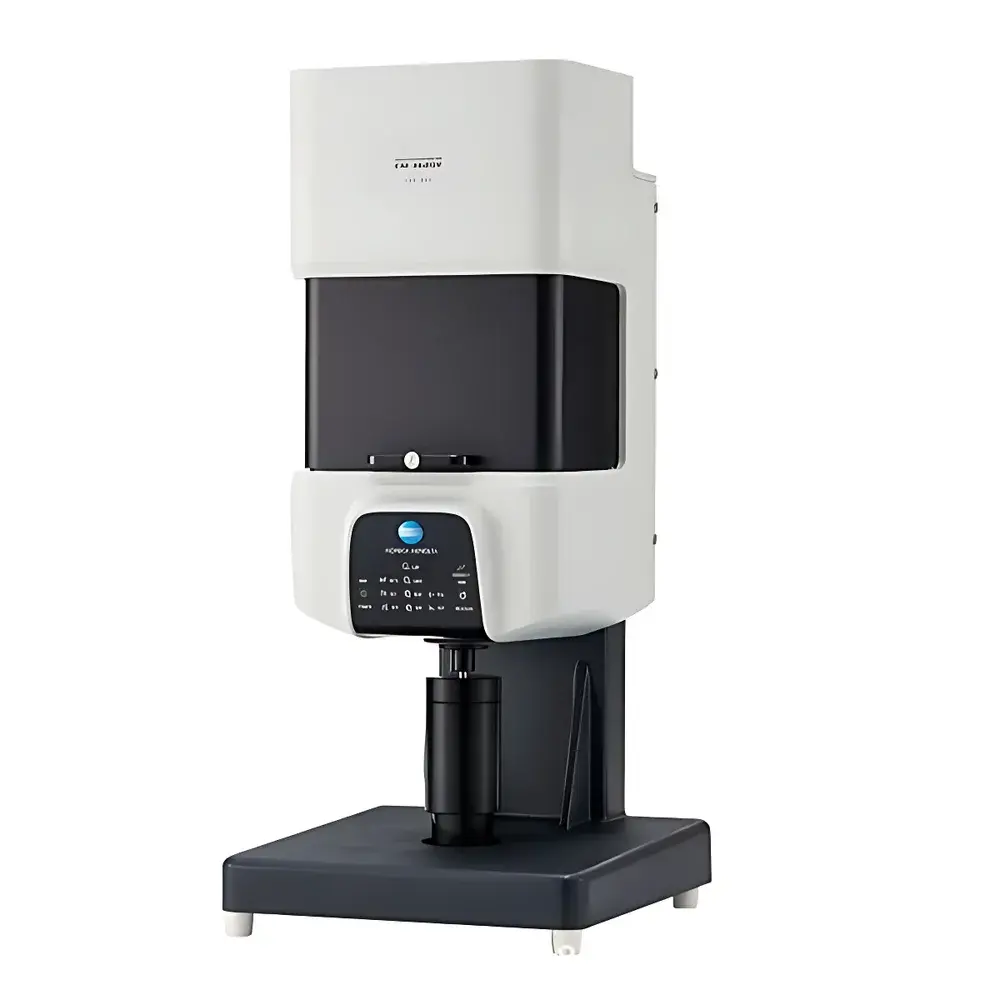
Konica Minolta CM-36dG Spectrophotometer with Integrated 60° Gloss Measurement
| Brand | Konica Minolta |
|---|---|
| Origin | Japan |
| Model | CM-36dG |
| Type | Benchtop Spectrophotometer |
| Optical Geometry | di:8°/de:8° (Diffuse Illumination / 8° Viewing, SCI/SCE Switchable) & di:0°/de:0° (Diffuse Illumination / 0° Viewing for Transmission) |
| Integrating Sphere Diameter | Ø152 mm |
| Spectral Separation | Diffraction Grating |
| Wavelength Range | 360–740 nm |
| Wavelength Interval | 10 nm |
| FWHM | ~10 nm |
| Reflectance Range | 0–200% (0.01% resolution) |
| Illuminant | Triple Pulsed Xenon Lamps (2 with UV-cut filters) + 1 Pulsed Xenon Lamp |
| Aperture Options | LAV (Ø30 mm/Ø25.4 mm), LMAV (Ø20 mm/Ø16 mm), MAV (Ø11 mm/Ø8 mm), SAV (Ø7 mm/Ø4 mm), Transmittance LAV/MAV/SAV |
| Repeatability | ΔE*ab ≤ 0.02 (SCI), ΔE*ab ≤ 0.03 (SCE) |
| Inter-instrument Agreement | ΔE*ab ≤ 0.12 (LAV/SCI, BCRA Series II avg.) |
| UV Control | Digital UV Adjustment (0–100%, no mechanical filter movement), 400 nm & 420 nm UV-cut filters |
| Gloss Measurement | 60° geometry, White LED source, Silicon Photodiode sensor, Range: 0–200 GU (0.01 GU resolution), MAV spot: 10×8 mm elliptical, SAV spot: Ø3 mm |
| Gloss Repeatability | ±0.1 GU (0–10 GU), ±0.2 GU (10–100 GU), ±0.2% (100–200 GU) |
| Gloss Inter-instrument Agreement | ±0.2 GU (0–10 GU), ±0.5 GU (10–100 GU, MAV) |
| Compliance | CIE No.15:2004, ISO 7724-1, ASTM E1164, DIN 5033-7, JIS Z 8722 (Condition C/G), JIS Z 8741, ISO 2813, ISO 7668, ASTM D523-08, ASTM D2457-13, DIN 67530 |
| Measurement Time | ~2.5 s (SCI or SCE), ~3.5 s (SCI+SCE), ~4.0 s (SCI+SCE+Gloss), ~2.5 s (Transmission) |
| Wavelength Analysis & Adjustment (WAA) | Optional licensed feature |
| Interface | USB 2.0 |
| Auto Aperture Detection | Yes |
| Operating Environment | 13–33°C, ≤80% RH (non-condensing) |
| Dimensions (W×H×D) | 248×250×498 mm |
| Weight | ~8.4 kg |
| Standard Accessories | White Cal. Tile, Aperture Masks (LAV/LMAV/MAV/SAV), Gloss Cal. Tile, Zero Cal. Box, USB Cable (2 m), AC Adapter, Dust Cover, Accessory Case, Cleaning Cloth |
Overview
The Konica Minolta CM-36dG is a high-precision benchtop spectrophotometer engineered for comprehensive color and gloss characterization in quality control laboratories, R&D facilities, and production environments where metrological traceability and multi-parameter consistency are critical. Unlike conventional colorimeters, the CM-36dG employs dual-mode spectral measurement—simultaneously capturing reflectance (di:8°/de:8°, SCI/SCE switchable) and transmission (di:0°/de:0°) data using a 152 mm integrating sphere and diffraction grating optics. Its optical architecture conforms rigorously to CIE No.15:2004 and multiple international standards including ISO 7724-1, ASTM E1164, and JIS Z 8722 Condition C (reflectance) and G (transmission). A unique integrated 60° gloss sensor—based on white LED illumination and silicon photodiode detection—enables concurrent gloss evaluation without requiring separate instrumentation or sample repositioning. This co-located spectral and gloss measurement capability eliminates inter-device calibration drift and supports robust correlation analysis between surface appearance attributes, making the CM-36dG particularly suited for industries governed by strict visual specification protocols, such as automotive coatings, packaging films, and high-end plastics.
Key Features
- Dual-function optical design: Simultaneous spectral reflectance/transmission and 60° gloss measurement within a single instrument footprint.
- Triple-pulsed xenon lamp system with two UV-cut filters and one unfiltered lamp, enabling precise UV component control via digital adjustment—no mechanical filter movement required.
- High-fidelity spectral engine: 40-element dual-row silicon photodiode array with 10 nm wavelength intervals (360–740 nm), full-width half-maximum ~10 nm, and reflectance resolution of 0.01% across 0–200% range.
- Multi-aperture support: Four interchangeable measurement areas (LAV, LMAV, MAV, SAV) for both reflectance and transmission, with corresponding gloss measurement spots (10×8 mm elliptical for MAV, Ø3 mm for SAV).
- Exceptional repeatability: ΔE*ab ≤ 0.02 under SCI mode and ≤ 0.03 under SCE mode; spectral reflectance standard deviation ≤ 0.1% over 30 consecutive measurements at 10-second intervals.
- Tight inter-instrument agreement: ΔE*ab ≤ 0.12 (LAV/SCI, BCRA Series II average), verified against Konica Minolta’s master reference unit under controlled metrological conditions.
- Wavelength Analysis & Adjustment (WAA) technology: Optional licensed feature enabling spectral curve fine-tuning for specialized applications such as metamerism assessment or substrate-specific correction.
Sample Compatibility & Compliance
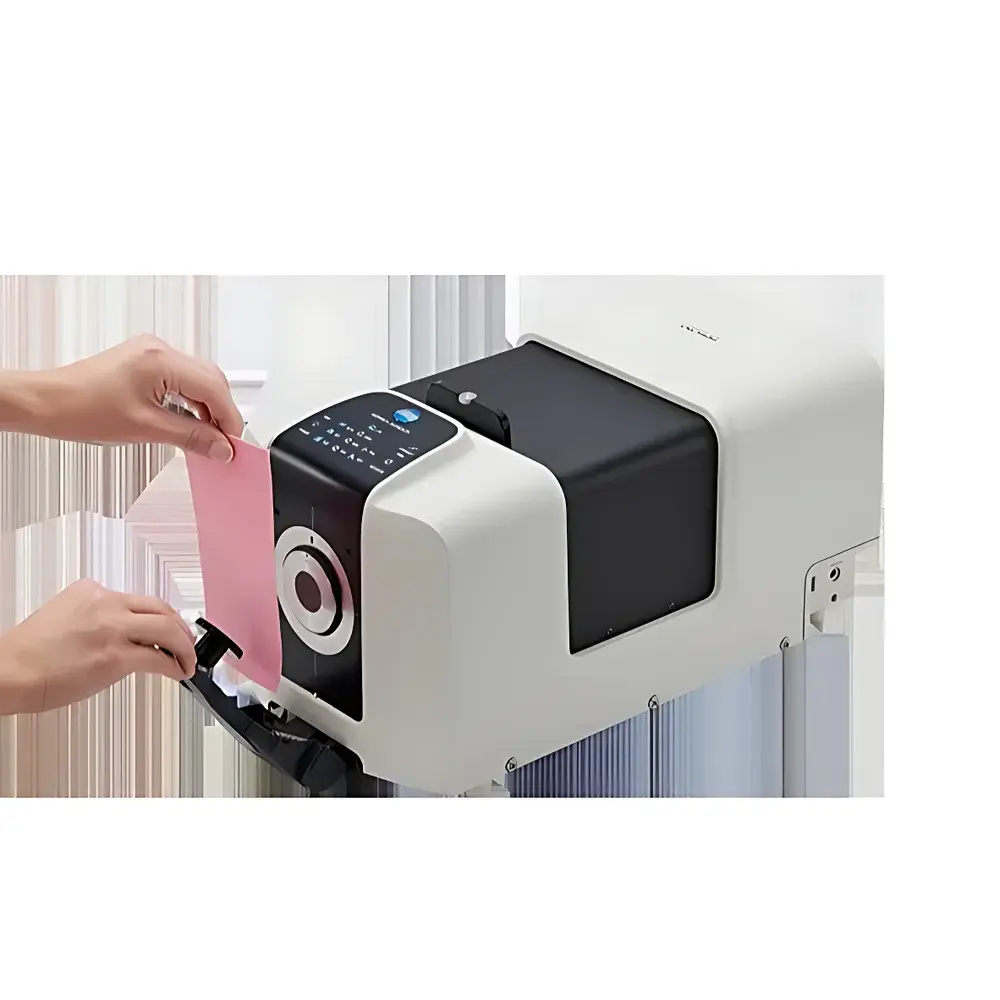
The CM-36dG accommodates a broad range of solid and translucent materials—including painted panels, plastic injection-molded parts, printed labels, coated papers, and liquid-filled cuvettes—through its configurable apertures and dedicated transmission path. For opaque samples, LAV (Ø25.4 mm) ensures representative averaging over texture variations; for fine-detail surfaces like textured leather or embossed films, SAV (Ø4 mm) provides localized assessment. Transmission measurements support glass, PET, polycarbonate, and solution-based samples using optional cuvettes (2/10/20 mm path lengths, glass or plastic). All optical geometries and reporting metrics comply with ISO, ASTM, DIN, and JIS standards relevant to colorimetry and gloss metrology. The instrument satisfies requirements for GLP-compliant documentation when used with SpectraMagic NX Pro software configured for audit trail logging per FDA 21 CFR Part 11 Annex 11 guidelines.
Software & Data Management
The CM-36dG operates natively with SpectraMagic NX v3.2 or later—a platform designed for regulated and cross-functional color workflows. It supports full spectral data export (CSV, XML), delta-E vector analysis, pass/fail tolerance mapping, and batch report generation with embedded image capture from the built-in camera. When paired with SpectraMagic NX Pro, users gain access to advanced features including WAA licensing, custom illuminant definition, multi-instrument network calibration, and electronic signature-enabled workflow approval. All measurement history—including operator ID, timestamp, aperture selection, UV setting, and gloss reading—is stored with immutable metadata. Data integrity is reinforced through checksum validation, version-controlled configuration files, and optional encryption for sensitive color formulation databases.
Applications
- Automotive OEMs and Tier-1 suppliers validating paint finish uniformity across body panels and interior trims under SCI/SCE modes, while correlating gloss values to tactile perception thresholds.
- Pharmaceutical packaging labs verifying color consistency of blister foils and child-resistant cartons per USP and ISO 11664-4 compliance requirements.
- Printing and packaging converters performing spectral match verification for brand-critical assets, with simultaneous gloss evaluation to detect varnish inconsistencies invisible to color alone.
- Plastics compounders characterizing pigment dispersion stability in polyolefins and engineering resins using transmission mode on molded plaques and extruded sheets.
- Academic and industrial research groups conducting appearance modeling studies that require synchronized spectral reflectance, transmittance, and specular gloss datasets for predictive rendering algorithms.
FAQ
Does the CM-36dG require annual recalibration by Konica Minolta service engineers?
No mandatory annual recalibration is specified; however, Konica Minolta recommends biannual verification using certified reference tiles (BCRA Series II, NIST-traceable) and gloss standards. Full factory recalibration is advised every 24 months or after physical impact or environmental exposure exceeding operational limits.
Can the CM-36dG measure metallic or pearlescent coatings accurately?
Yes—the instrument’s di:8°/de:8° geometry with SCI/SCE switching enables reliable measurement of gonioapparent materials when used with appropriate aperture selection (typically LAV or LMAV) and consistent sample orientation. For full angular dependency analysis, complementary goniospectrophotometry is recommended.
Is SpectraMagic NX software validated for use in FDA-regulated environments?
SpectraMagic NX Pro supports 21 CFR Part 11 compliance when deployed with role-based access controls, electronic signatures, and audit trail configuration enabled. Validation documentation (IQ/OQ protocols) is available upon request from Konica Minolta’s Regulatory Affairs team.
What is the warranty coverage for the CM-36dG?
The instrument carries a standard 24-month limited warranty covering parts and labor for defects in materials and workmanship under normal use, excluding consumables (e.g., calibration tiles, dust covers) and damage from misuse or unauthorized modification.
How does the CM-36dG handle UV-sensitive samples during measurement?
The UV digital adjustment function allows real-time modulation of UV energy output from 0% to 100% in 1% increments—eliminating mechanical filter swaps and enabling precise simulation of daylight (UV-rich) versus indoor lighting (UV-depleted) conditions for photo-stability assessments.




