
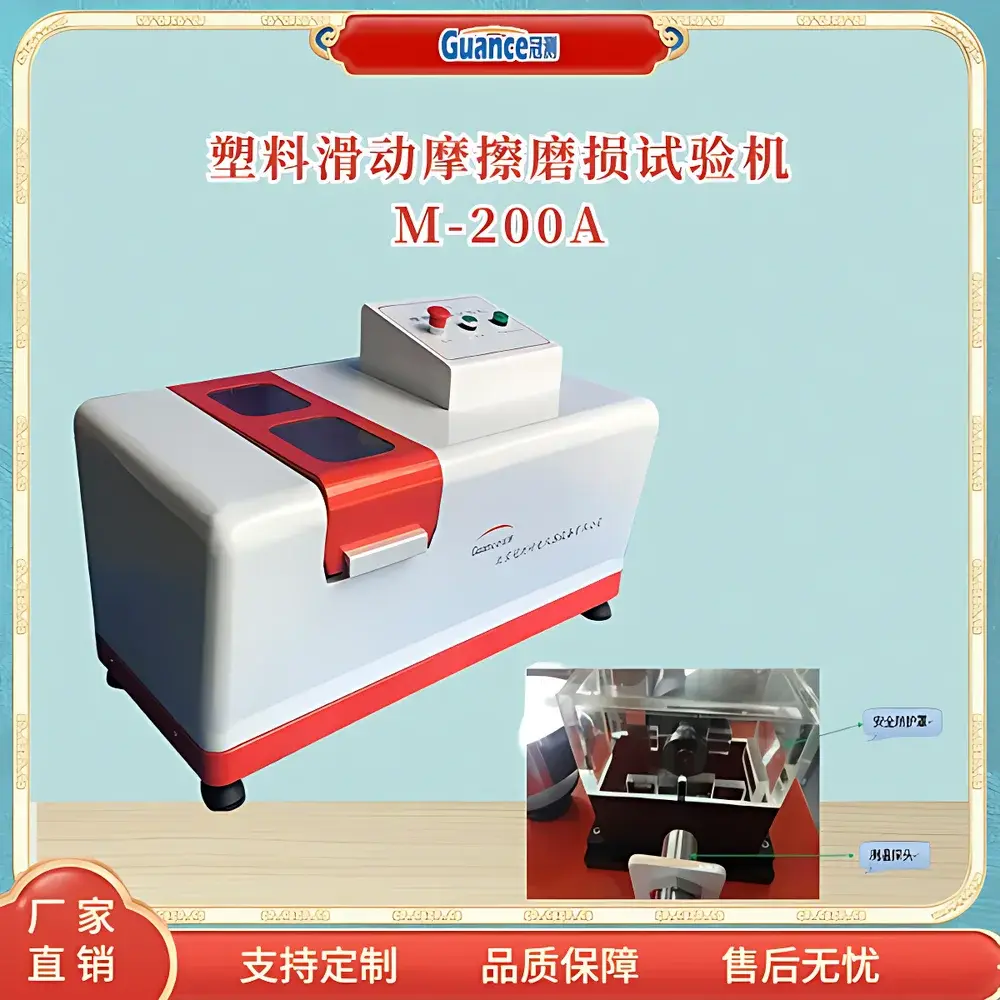

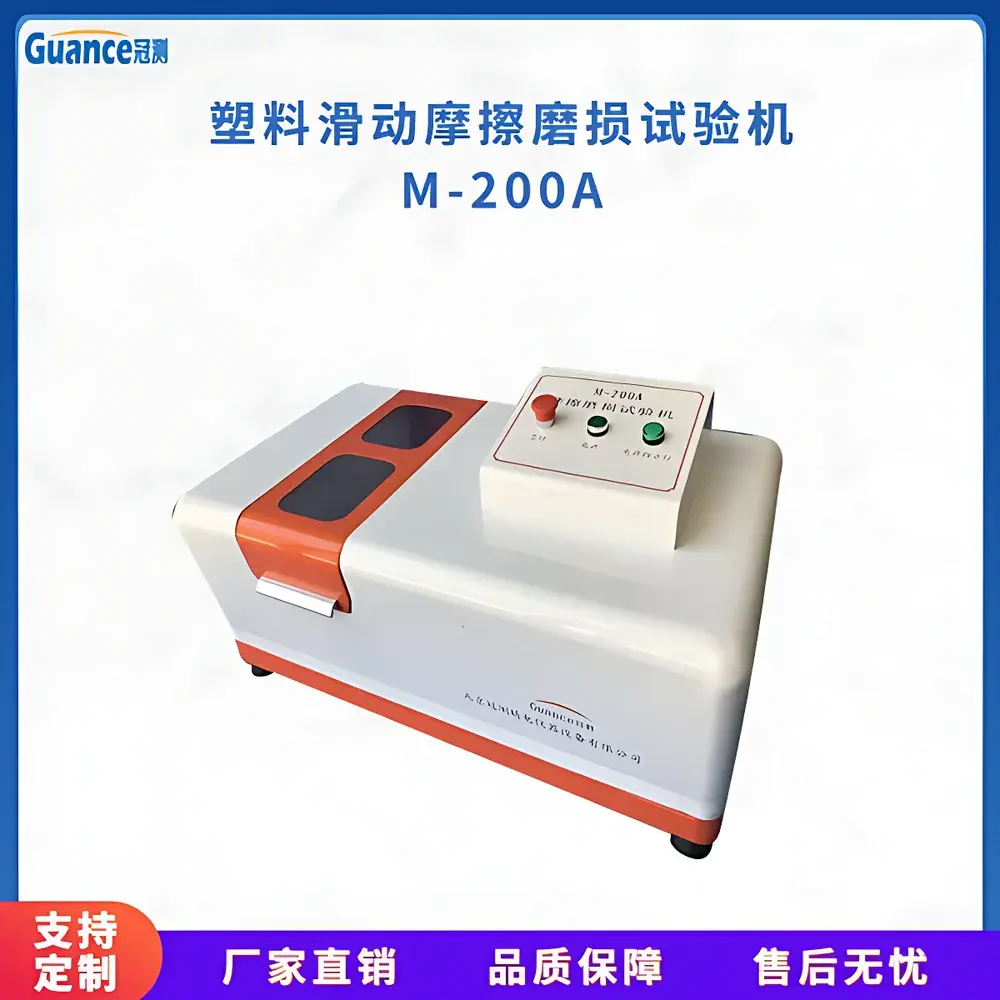
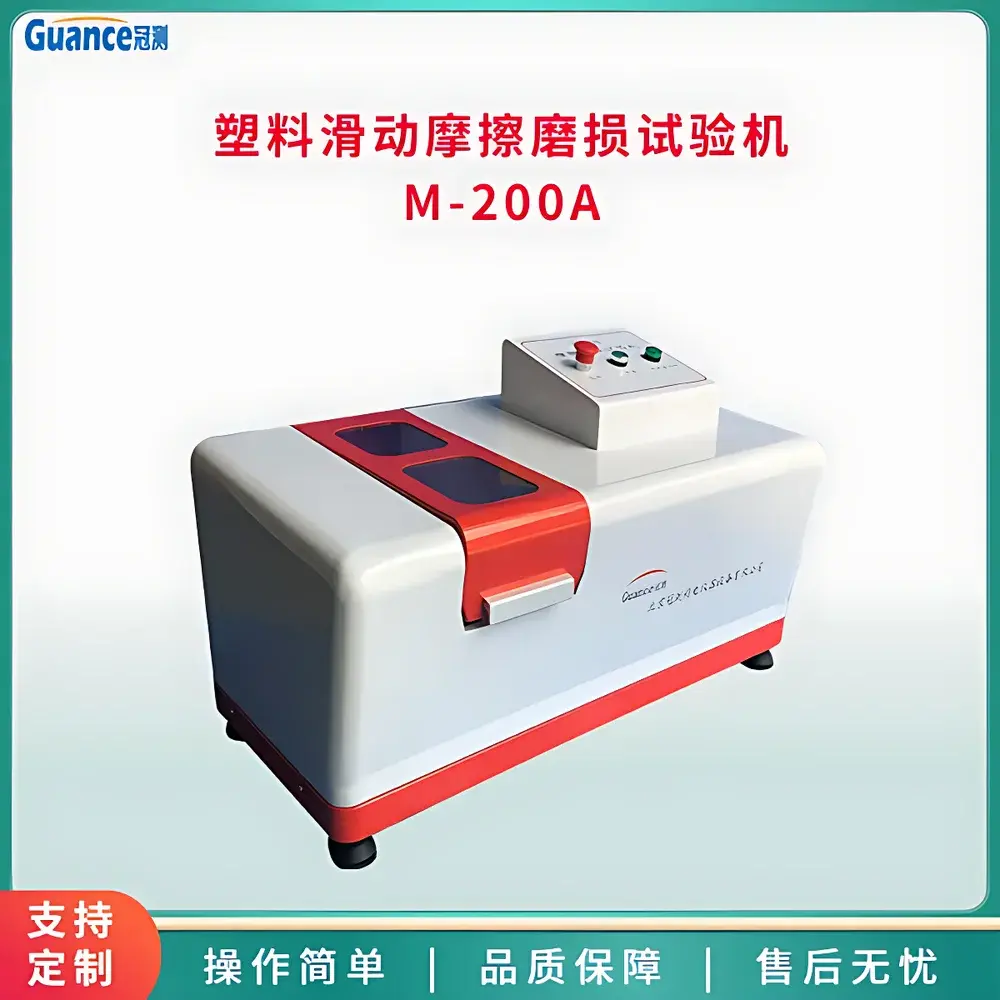
GuanCe Instruments M-200A Tribological Tester for Sliding Friction and Wear Testing
| Brand | GuanCe Instruments |
|---|---|
| Origin | Beijing, China |
| Model | M-200A |
| Maximum Friction Force | 300 N |
| Friction Force Resolution | 1% of full scale |
| Maximum Test Temperature | 800 °C |
| Rotational Speed Range | 0–200 rpm (adjustable) |
| Load Capacity | 196 N ± 0.1% (extendable to 392 N) |
| Friction Torque Range | 0–4 N·m |
| Sample Dimensions | 30 mm × 7 mm × 6 mm |
| Friction Ring | Ø40 mm × 10 mm, hardened 45# steel (HRC 40–45), surface roughness Ra ≤ 3.2 µm |
| Load Accuracy | ±0.5% FS |
| Speed Accuracy | ±1% |
| Torque Measurement Accuracy | ±1% FS |
| Sensor Accuracy | ±1% FS |
| Counter Timing Resolution | 1 s |
Overview
The GuanCe Instruments M-200A Tribological Tester is a microcomputer-controlled sliding friction and wear testing system engineered for precise, repeatable evaluation of tribological behavior in polymeric, elastomeric, graphite-based, and composite materials under controlled mechanical and thermal conditions. Based on the classical pin-on-disk configuration—compliant with ASTM G99 and ISO 7148-1 principles—the instrument measures real-time friction force, calculates dynamic and static coefficients of friction (COF), and quantifies volumetric or mass wear loss through integrated torque sensing and programmable load application. Its modular architecture supports both ambient and elevated temperature operation up to 800 °C, enabling simulation of service environments ranging from automotive brake linings to high-temperature sealing components. Designed as an evolution of the legacy M-200 platform, the M-200A integrates digital signal conditioning, closed-loop rotational speed control, and high-stability load actuation to meet the metrological rigor required by ISO/IEC 17025-accredited laboratories.
Key Features
- Microprocessor-based control system with real-time display of friction force, torque, rotational speed, elapsed time, and cumulative test cycles
- Adjustable rotational speed range from 0 to 200 rpm with ±1% accuracy and smooth acceleration/deceleration profiles
- Precision load application via calibrated deadweight system: standard 196 N (20 kgf) ±0.1%, extendable to 392 N using modular 1 kg and 4 kg weights
- High-fidelity torque transduction (0–4 N·m range) with ±1% full-scale accuracy and 1% resolution for low-force regime characterization
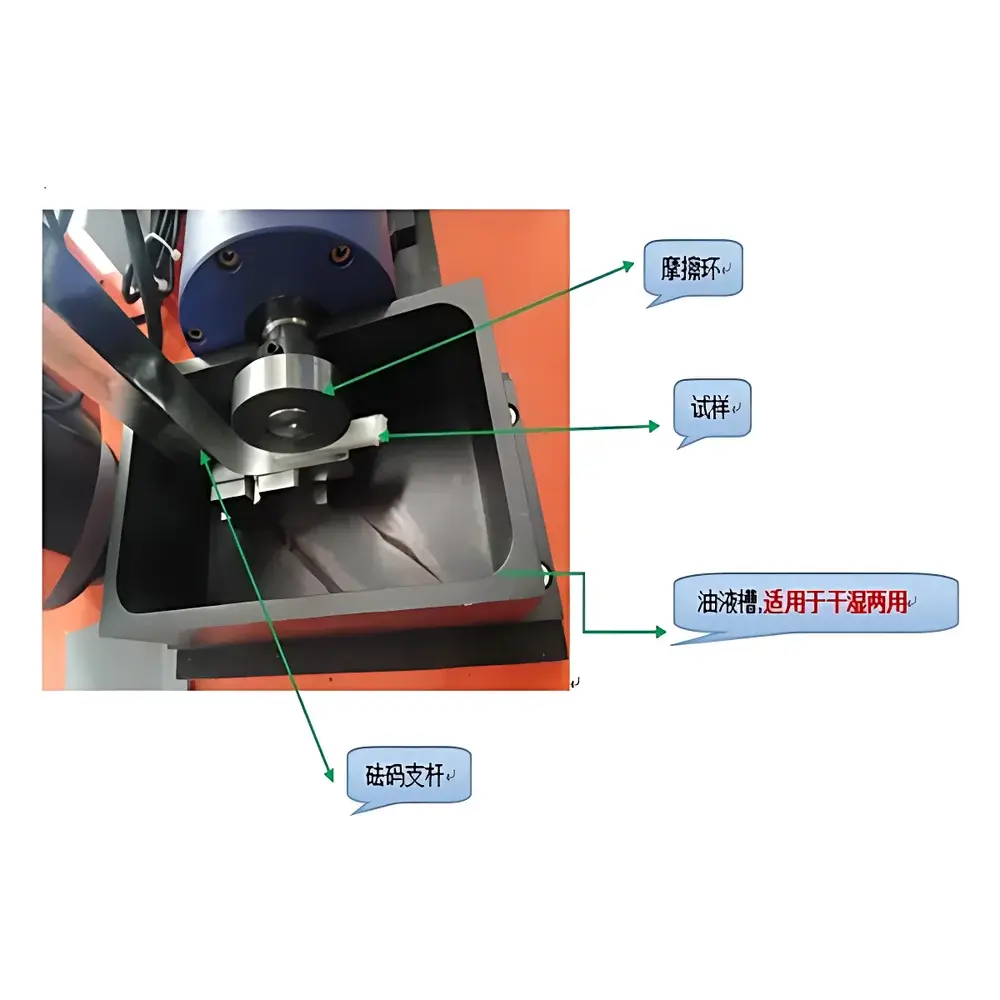
- Dedicated friction ring assembly: Ø40 mm × 10 mm hardened 45# steel (HRC 40–45), concentricity <0.01 mm, surface finish Ra ≤ 3.2 µm
- Standardized specimen holder accommodating rectangular samples measuring 30 mm × 7 mm × 6 mm per GB/T 3960 and GB/T 9141.8
- Built-in color thermal printer for immediate generation of traceable test reports—including time-series curves, tabulated COF/wear data, and metadata (test ID, operator, date, environmental notes)
Sample Compatibility & Compliance
The M-200A is validated for use with rigid and semi-crystalline thermoplastics (e.g., PTFE, UHMWPE, PA66), elastomers (NBR, EPDM), flexible graphite sheets, carbon-carbon composites, and metal-polymer hybrids. Its mechanical configuration conforms to the geometric and procedural requirements of GB/T 3960–1983 (Plastic Sliding Friction and Wear Test Method) and GB/T 9141.8–1999 (Sliding Friction Coefficient Test for Flexible Graphite Sheets). While not certified to ASTM D3702 or ISO 15143-1 out-of-the-box, its measurement traceability chain—calibrated against NIST-traceable reference loads and torque standards—supports method validation per GLP and internal QA protocols. The system’s thermal module permits ISO 25178-compliant surface degradation analysis when coupled with post-test profilometry.
Software & Data Management
The embedded Windows-compatible control software provides intuitive GUI navigation, customizable test sequences (including multi-step load/speed ramps), and automated data logging at user-defined intervals (10 ms to 10 s). All raw sensor outputs—including analog torque voltage, encoder pulses, and thermocouple readings—are timestamped and stored in CSV and proprietary binary formats. Audit trails record operator login, parameter changes, calibration events, and report generation actions—supporting compliance with FDA 21 CFR Part 11 when deployed with networked domain authentication and electronic signature modules. Exported datasets integrate natively with MATLAB, Python (Pandas), and JMP for statistical wear rate modeling (e.g., Archard’s law regression) and Weibull reliability analysis.
Applications
- Quality assurance of polymer bushings, gears, and bearing surfaces in automotive and aerospace supply chains
- Development of low-friction coatings and filler-reinforced composites for medical device articulation joints
- Screening of solid lubricants (MoS₂, h-BN, graphene) under boundary lubrication regimes
- Accelerated wear life prediction for seals operating in high-temperature chemical processing environments
- Evaluation of third-body wear mechanisms in electric vehicle motor insulation systems exposed to arcing debris
- Academic research on temperature-dependent transition from adhesive to abrasive wear modes in thermosets
FAQ
Does the M-200A support automated wear scar measurement?
No—the instrument measures frictional force and torque only; post-test wear scar analysis requires external optical profilometry or SEM imaging.
Can the system operate under inert gas or vacuum conditions?
Not natively; chamber integration requires custom engineering and is outside standard warranty coverage.
Is firmware upgrade capability available remotely?
Yes—USB-based field updates are supported via GuanCe’s authorized service portal with version-locked cryptographic signing.
What calibration certificates are supplied with delivery?
Each unit ships with factory-issued torque and load calibration certificates traceable to CNAS-accredited standards (certificate number and uncertainty budget included).
How is thermal drift compensated during extended high-temperature tests?
The system employs dual-point thermal zeroing: initial tare at ambient, followed by dynamic offset correction at target temperature using pre-characterized sensor thermal coefficients.



